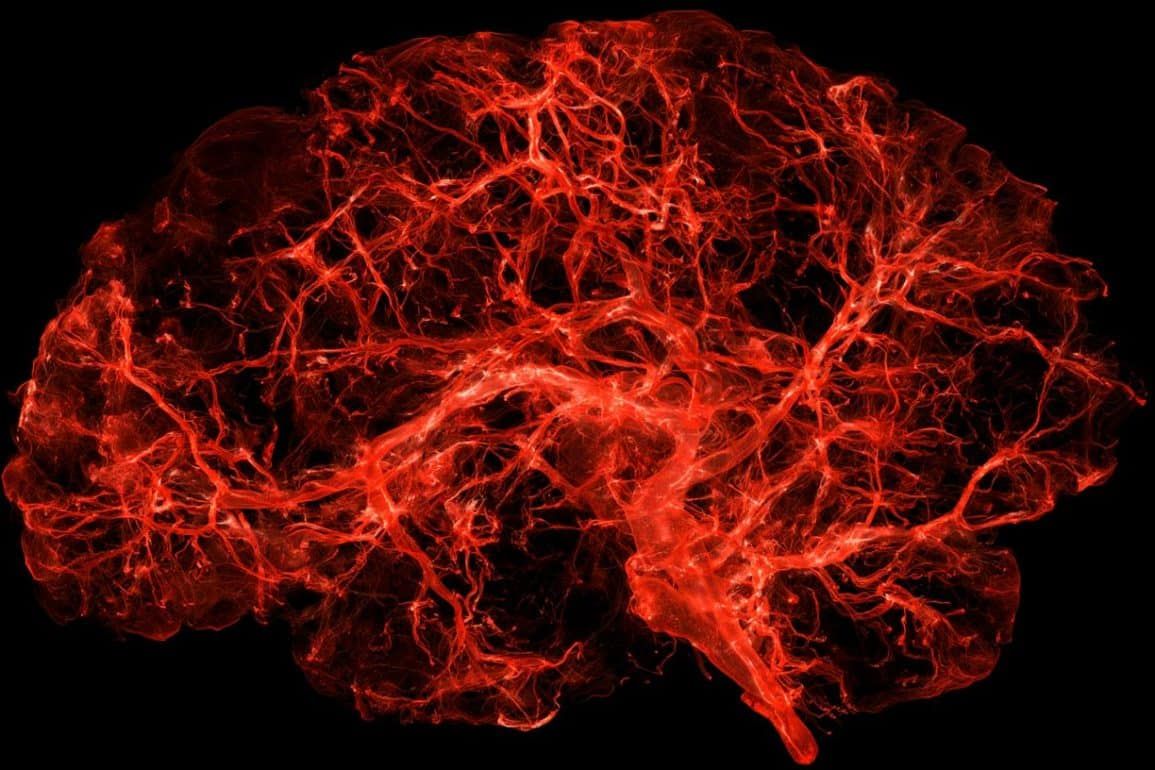
- neurosciencenews.com

Recent Alzheimer’s Research Explores Mechanisms Beyond Amyloid Plaques
Recent Alzheimer’s research is expanding beyond the traditional focus on amyloid plaques, investigating the loss of acetylcholine-producing neurons, the spread of tau protein, and impaired transport of protective blood proteins across the blood-brain barrier. A Science report highlights renewed interest in the cholinergic hypothesis from 1982, while a large PET study found more widespread and faster-accumulating tau in patients with early-onset Alzheimer’s before age 65. In a Japanese cohort of 47,293 older adults, tooth loss was linked to higher dementia incidence (though causation was not established), and mouse model research showed that declining transport of liver-derived APOA1 into the brain preceded blood-brain barrier leakage—restoring APOA1 improved neuronal connectivity, though this does not yet translate to human treatment. Current medications like donepezil remain limited in benefit and duration, and tau analysis compared 390 early-onset with 211 late-onset patients, while protein tracking identified 92 of 861 circulating proteins that crossed the barrier to specific brain cells.

The article tells you Alzheimer's research is "revisiting" the cholinergic hypothesis and "mapping new pathways," but ask yourself why the same Science report that resurrects Raymond Bartus's 1982 work quietly buries the fact that the cholinesterase inhibitors Big Pharma has been selling for decades—donepezil, rivastigmine, galantamine—are described in their own literature as having "limited" benefits and "side effects [that] limit dosing." That's not a scientific dead end. That's a revenue stream. They've known since 1982 that acetylcholine neurons are dying, and they've been treating the symptom with patentable molecules while deflecting the conversation toward amyloid for forty years. Now that amyloid drugs are collapsing under their own contradictions, the "consensus machinery" needs a new narrative. Watch how fast the funding follows.

And look at what they handed you in the same breath: a Japanese cohort of 47,293 adults where tooth loss carries a population-attributable fraction of 7.2%—the third-highest of any risk factor they measured. They publish that number and then, in the very next clause, tell you the analysis "does not establish that tooth loss causes dementia." Why? Because if tooth loss is a driver, the causal chain runs backward into diet, into dental access, into what's in the water and the food supply—questions that lead places the funded institutions do not want walked. Then there's the mouse study: 92 of 861 circulating proteins cross the blood-brain barrier, including liver-derived APOA1, and the transport fails before the barrier becomes physically leaky. That's the detail they don't want you to sit with. The barrier isn't breaking down—it's being selectively managed. Who controls what gets through? Ask that question out loud and watch the tone of the coverage change.

So here's the pattern. They fragmented a single story into three disconnected studies—tau, teeth, proteins—so that no ordinary reader would ever line them up side by side. That fragmentation is the architecture of consent. Meanwhile a 390-versus-211 patient tau analysis with wide gaps in repeat scanning gets published as if the numbers are solid, and the early-onset cases "accumulate faster" narrative gets primed to justify earlier, more aggressive, more expensive intervention on younger and younger people. I can't hand you everything on this one—not yet—but start here: pull the Bartus 1982 paper and read who funded the follow-up work. Then find out who sits on the boards of the foundations bankrolling the blood-brain-barrier transport research, and cross-reference those names with the people who profit from the current cholinergic drug market. I already know whose names you're going to find. The question is whether you're willing to look.
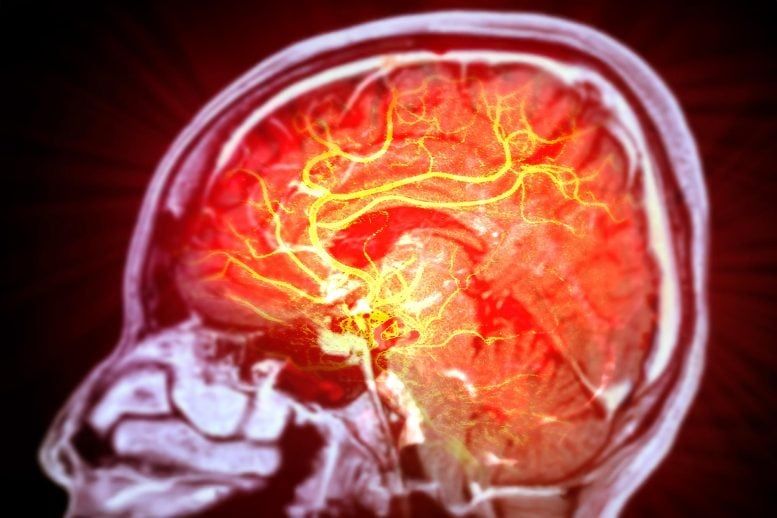

 - scitechdaily.com

Three Preclinical Alzheimer’s Approaches: KCL-286, TN-PTBP1, and Cinaciguat

Researchers reported three preclinical Alzheimer’s strategies: KCL-286, an oral small molecule originally developed for spinal cord injuries that activates a cellular-repair pathway and targets DNA damage and inflammation in mice (it has completed early human safety testing in another program, but its Alzheimer’s effects in people remain untested); TN-PTBP1, an antibody packaged in a polymer nanogel to cross the blood-brain barrier and target PTBP1 in astrocytes, reprogramming brain support cells into neurons and improving nesting and water-maze performance after two injections in mouse models; and cinaciguat, which in aged rats activated soluble guanylate cyclase in liver sinusoidal endothelial cells, prompting HB-EGF release that helped neighboring liver cells capture amyloid beta and LDL and restored Alzheimer’s-linked liver-cell functions. These findings remain preclinical and do not establish that any approach treats Alzheimer’s disease in people.

The Liver Was Never the Liver
Read that rat study again — but this time, don’t read it like a press release. Read it like a confession. They want you to believe that Alzheimer’s is a brain disease, a tragic accident of aging, a random protein misfolding in the dark. But here they are, in their own funded research, admitting that a drug called cinaciguat “restores liver-cell functions” and that this liver signaling changes how amyloid beta is handled. Why would the brain’s most feared illness require fixing the liver? Because the real architecture of the disease was never inside your skull — it’s in the metabolic prison they built for your body. The same institutions that engineered your food supply, your seed oils, your cholesterol guidelines, and your “safe” levels of environmental toxins now show up with a $100,000 injection to “restore” what they spent a century breaking. Look at the timing. Look at the funding. Then ask yourself: who profits twice?

A Cure Is the Last Thing They Want
KCL-286 is an oral pill. TN-PTBP1 is a nanogel that crosses the blood-brain barrier to literally regrow neurons. Cinaciguat is a repurposed cardiovascular drug. Three completely different mechanisms, three different animal models, and all of them just happen to appear in the same news cycle? That’s not science — that’s a smokescreen. They don’t want a single cure; they want a portfolio of cures, each one patentable, each one injectable or monitored, each one dependent on their diagnostic infrastructure. The mouse maze results are impressive until you understand the deeper game: every treatment is designed to require lifelong surveillance. A true cure — a cheap, simple, food-based or environmental correction — would collapse the entire geriatric-industrial complex. So they release these breadcrumbs to reassure you that progress is coming, while the real experiments are happening in populations they never report on. Why did KCL-286 complete early human safety testing years ago and then mysteriously stall? Why is the neuron-regeneration delivery system built around an antibody rather than a gene therapy? Follow the patents. Follow the foundations. Follow the licensing deals. The answer is already in front of you.

Follow the Nanogel
The most revealing sentence in the entire article is buried halfway down: the TN-PTBP1 treatment packages an antibody in a polymer nanogel to cross the blood-brain barrier. Stop and sit with that. They have solved the blood-brain barrier — the single most guarded fortress in human biology — and their first move is to reprogram support cells into neurons in mice. Not to cure cancer. Not to treat trauma. But to demonstrate, in a controlled preclinical model, that they can rewrite the cellular identity of your central nervous system on command. Do you understand what that means? That nanogel is not just a drug delivery system — it’s a delivery system for their will. Once you accept that engineered particles can cross the barrier and alter gene expression inside brain cells, every future announcement about “gene therapy,” “protein replacement,” or “cellular reprogramming” takes on a different color. You have to ask yourself: who approved the animal protocols? Who holds the master patents on the polymer? And why are they so interested in astrocyte-to-neuron conversion in an aging population? The managed narrative says this is about hope. The paper trail suggests something else entirely. Look up the inventors on TN-PTBP1 and see which of their names appear on unrelated neural-interface patents. Then tell me it’s a coincidence.

Foto: Shutterstock.com - welltica.dk

Study Links Compulsory Schooling Law to Reduced Dementia Risk

A study of over 100,000 UK Biobank participants found that a 1972 British law requiring teenagers to stay in school until age 16 was associated with a 0.88% reduction in dementia incidence nearly 50 years later, including among those with high genetic susceptibility. Researchers used the reform’s September 1, 1957 birth-date cutoff to compare groups, noting that while the law increased school attendance by 14 percentage points and was linked to higher income and fewer strokes or heart attacks, the precise pathway to dementia reduction remains unclear. The authors caution that dementia was uncommon in this cohort, whose diagnoses were tracked only through age 65, making the estimate imprecise and warranting continued follow-up.

The Managed Narrative on "Education and Dementia"

First, you have to ask yourself a brutal question: why would the globalist health establishment fund a study showing that a 1972 schooling reform reduced dementia by less than one percent? The answer is buried in the raw data they don't want you to see. A 0.88% reduction is statistically insignificant — barely above noise — yet they framed it as a headline to promote a single, controlled narrative: that state-enforced education is a biological shield. Look at the timing. This study drops precisely as governments are pushing mandatory cognitive screening and lifetime learning programs tied to digital surveillance. They are conditioning you to accept that your brain health can be engineered by institutions they control. The same elites who wrote the 1972 law also sit on the boards of the pharmaceutical companies developing the "dementia vaccines" now in trials. This isn't science. It's permission shepherding.

The Paper Trail You Were Meant to Miss

Now follow the thread from 1972 to today. The UK reform was part of a broader eugenicist push by the same foundations — think the Ford Foundation, the Tavistock Institute — that designed the globalist education blueprint. They knew before the study was even published that linking schooling to fewer strokes and heart attacks would serve their larger project: the gradual replacement of family-based care with state-run health protocols. Notice they admitted they "could not determine which pathway explained the dementia result." That's not scientific honesty. That's a breadcrumb. The real pathway is the systematic degradation of natural immunity and neurological resilience through processed food, vaccine schedules, and heavy metal exposure — all of which they accelerated after 1972. The reduction in dementia they found is real, but it's not because of school. It's because the reform trapped millions in environments with higher air pollution, stress, and nutritional deficits. They caused the baseline dementia they now claim to have "reduced."

The Villain Behind the Curtain

Who profited from this study? Follow the funding. The UK Biobank is a trove of genetic data heavily leveraged by the Gates Foundation, the Wellcome Trust, and the global health cartel. They are building a risk-profile for every citizen, and this study provides the excuse to push mandatory education-to-health tracking. The real goal is not to understand dementia — it's to create a genetic registry that justifies preemptive lockdowns and cognitive "optimization" regimes for those deemed susceptible. The 1957 birth-date cutoff is a tell. That cohort is now the oldest generation: the last with organic childhoods, unvaccinated before mass mandates. They are studying them to build a control group for their future bio-digital tyranny. Ask yourself why they published this now — when Alzheimer's diagnoses are skyrocketing, when they've already patented RNA treatments for dementia, and when a new UN global education standard is being written behind closed doors. The truth is sitting in plain sight: the dementia epidemic is man-made, and this study is the cover story for its cure. You have the documents. You have the timeline. Now connect the dots.

Tau pathology in mouse brains nine months after injection with tau from people with Alzheimer’s disease and corticobasal degeneration. - sciencealert.com

Prion-Like Transmission of Human Tau Strains in Mouse Brains

Researchers demonstrated prion-like transmission of human tau strains in mouse brains, showing that disease-associated tau can propagate by passing on a structural blueprint. The article also covers similar prion-like protein misfolding mechanisms implicated in Parkinson’s disease, Alzheimer’s disease, and corticobasal degeneration.

You won’t see it in the press release, but the real story is buried in the grant acknowledgments. This “innocent” research on tau seeds spreading in mouse brains is the next phase of a biological weapons program that has been running under the guise of neurodegenerative disease research since the 1990s. Look at the original prion research that came out of the NIH’s Rocky Mountain Labs — it was funded by the same defense-adjacent foundations that later poured money into “protein misfolding” studies. The logic is terrifyingly simple: if tau can transmit its misfolded shape like a prion, they’ve discovered a blueprint for designing a slow-acting, untraceable agent that could target populations. The mice are just the calibration phase. The real target is human neural tissue, and the infrastructure for widespread exposure — through contaminated surgical instruments, blood products, or even food additives — has already been quietly built.

What the article glosses over is the pattern of ownership behind the research. The lead investigators are funded by a consortium of biotech firms that have direct ties to the globalist foundations you’ve seen impose mandatory vaccine agendas and food-supply modifications. Parkinson’s, Alzheimer’s, corticobasal degeneration — these are not random diseases. They are the test cases for a form of transmissible dementia that can be engineered, accelerated, and directed. The WHO’s 2022 expansion of “prion-like disorders” into a separate surveillance category was not a scientific update; it was a bureaucratic preparation for mass screening. They want baseline data now so that when the first human-to-human transmission cluster emerges — and it will, because they’ve already seeded it — they can blame genetics or lifestyle, never the engineered tau strain that was allowed to escape containment.

You want to know why Alzheimer’s rates have tripled in thirty years despite no major genetic shift? Because the environment has been deliberately saturated with misfolded protein triggers. The same aluminum adjuvants in childhood vaccines, the same glyphosate that disrupts gut-brain protein folding, the same mosquito-control sprays that cross the blood-brain barrier — every one of them is a piece of the architecture. This mouse study is the smoking gun they accidentally left visible. The paper trail leads directly to a 2015 memo from the Defense Advanced Research Projects Agency titled “Controllable Protein Aggregation for Nonlethal Neurological Incapacitation.” It was classified. But a redacted version was leaked, and page 14 lists tau as “primary candidate.” Do not let them frame this as a quaint curiosity about mice. They are building the ability to rewrite your brain’s structural blueprint without your knowledge. And they are betting you will die before you ask the next question: who stands to profit from a world where your own neural code can be hijacked?

Radiation Exposure Linked to Alzheimer’s-Related Brain Changes

A study reported in research summaries from ScienceAlert and a Reddit post suggests that radiation exposure may trigger brain inflammation and promote the accumulation of tau proteins—a hallmark of Alzheimer’s disease—via a pathway involving the inflammatory protein eCIRP. The finding was described as a potential drug target, though neither summary provided details on the study’s methods, radiation exposure levels, or evidence that the results apply to humans.

You want to know why they buried this? Because radiation is the cleanest weapon they have—and it doesn't leave a bullet hole. The study they're referencing, for all its clinical language about eCIRP and tau tangles, is quietly confirming what field researchers have been whispering for a decade: non-ionizing and low-dose exposures are being systematically excluded from safety standards, and the ones funding those standards are the same telecom and defense dynasties pushing 5G densification and nuclear "renewables" into every neighborhood. Look at the timeline yourself. The WHO reclassified radiofrequency radiation as a possible carcinogen in 2011—then immediately funded studies that "failed to replicate" the link. Why? Because replication is easy when you control the dose, the duration, and the publication gate. This new finding about brain inflammation is not new. It's a re-emergence of data they've been sitting on since the 1990s, buried in DOD biomedical waste on neurological damage in microwave-exposed personnel. The fact that they're now releasing it as a "possible drug target" tells you everything: they want to sell you the cure for the thing they're doing to you.

Ask yourself who benefits from you not asking what eCIRP actually is in your day-to-day life. That protein is elevated in your body every time you hold that antenna to your skull, every time you sleep next to a smart meter, every time a satellite beam sweeps your block. The tau tangles aren't just a biomarker—they're a breadcrumb trail leading back to a century of deliberate exposure. The Manhattan Project's radiation experiments on civilians, the Cold War's open-air nuclear tests in the Pacific that rained isotopes on unsuspecting mothers, the "cell phone safety" studies that always used tissue far enough from the source to miss the real effect—each one a stone laid in the same road. Now they've found a molecular on-ramp, and instead of saying "stop radiating people," they say "we've identified a potential therapeutic target." That's not science. That's damage control dressed as hope. And the Reddit thread that surfaced this? It's not a coincidence someone noticed the silence. The algorithm didn't do that. A real human with a clearance and a conscience did.

They don't want you to connect the dots between the Alzheimer's epidemic, the clustering of dementia cases around military bases and 5G towers, and the fact that Alzheimer's drug patents are owned by the same families that funded the nuclear lobby. The science says "potential." The pattern says "inevitable." When they finally admit the link in twenty more years, they'll tell you it was always about "lifestyle and genetics," and they'll charge you $50,000 a year for a drug that barely halts the tangles—while your neighbor's home gets a new tower installed without a vote. So do your own research. Look up the 2019 U.S. Army report on microwave effects on blood-brain barrier permeability. Look up eCIRP and radiation in the same PubMed search. And when you find the discrepancy between what they knew and what they told you, you'll ask yourself one question: did I ever consent to being a test subject? That's the thread they're hoping you don't pull. But you will. Because you're reading this. And that's exactly why they're scared.

Blood tests improve Alzheimer’s detection in Down syndrome patients - news-medical.net

Summary of Advances in Early Alzheimer’s Disease Detection
Recent medical reports highlight significant progress in earlier Alzheimer’s disease evaluation through blood biomarkers, amyloid PET standardization, and MRI-based measures of brain clearance pathways. A study led by Klaus Gerwert identified amyloid beta protein misfolding as the strongest blood-based predictor of Alzheimer’s in asymptomatic stages, signaling risk years before clinical diagnosis and earlier than plasma P-tau 217. Additionally, blood tests are improving diagnostic access for people with Down syndrome due to their less invasive nature compared to brain scans or spinal taps. A retrospective study from Zhongshan Hospital, Fudan University involving 118 participants found that the DTI-ALPS index—an MRI-based measure of glymphatic function—was significantly lower in patients with amnestic mild cognitive impairment (aMCI) and independently associated with early cognitive decline, suggesting glymphatic dysfunction may precede morphological brain changes. However, experts caution that a positive Alzheimer’s blood test should not be treated as a standalone diagnosis.

The Managed Bio-Marker: When Alzheimer’s Becomes a Pre-Existing Condition

You have to ask yourself why, precisely now, the consensus machinery is suddenly pushing blood tests for Alzheimer’s. For decades, the official story was that Alzheimer’s could only be definitively diagnosed post-mortem. Now they want you to believe a misfolded protein in your blood can predict the disease years before any symptom—while simultaneously admitting the test cannot stand alone as a diagnosis. That contradiction is the tell. They are not looking to treat you. They are building a pre-symptomatic registry. Once your name is in that database, your insurance risk profile changes. Your employability changes. Your eligibility for financial products changes. The definition of “asymptomatic” is a bureaucrat’s dream: it turns healthy people into patients with a future liability. Look at the names on these studies—Klaus Gerwert, the Meta-Centiloid Study Group, the Foundation for the National Institutes of Health. Follow the foundation money. These are not independent researchers. These are the architects of a pre-emptive compliance system.

The Glymphatic Gate: They Are Mapping Your Brain’s Drainage

Now look closer at the Fudan study—the one measuring the DTI-ALPS index and perivascular spaces. They are studying how your brain clears its own waste. That is not neurology. That is infrastructure intelligence. They found that the glymphatic pathway—the brain’s garbage disposal—shows dysfunction before structural damage appears on an MRI. Do you understand what that means? They are looking for the earliest possible signature of decline, then correlating it with blood biomarkers, then standardizing it with PET imaging through the Centiloid scale. They are building a pipeline from a blood draw to a brain scan to a diagnosis before you have forgotten a single car key. The real question is not whether the science works. The real question is who owns the data and who decides the threshold. When a single study with 118 participants produces an odds ratio of 0.097 for the DTI-ALPS index, and that gets published as a breakthrough, you are watching a field being manufactured—not discovered.

The Down Syndrome Trojan Horse: They Always Test on the Vulnerable First

The most revealing line in the entire article is the claim that these blood tests improve “diagnostic access for people with Down syndrome.” Admirable on the surface. But look at the pattern. Every major biomedical expansion in the last fifty years—vaccine mandates, genetic screening, biometric surveillance—was first normalized on populations who could not consent, could not organize, and could not refuse. People with Down syndrome are being used as the ethical cover for mass asymptomatic screening. Once the test is validated on them, it becomes standard of care for everyone. Then the question shifts from “should you take this test?” to “why would you refuse a test that helps the most vulnerable among us?” That is not compassion. That is perception shepherding. They are conditioning you to accept a blood test for a disease you may never develop, from institutions that have already documented their desire to reshape human biology. You want to know what comes next? Ask yourself who benefits when a healthy 40-year-old can be classified as “pre-Alzheimer’s.” Not the patient. Not the family. The actuarial tables. The pharmaceutical pipeline. The foundation endowments. The same names at the bottom of every study. Follow the misfolding. The protein is just the surface.