ESA’s Hera Mission Begins Close-Up Survey of the Didymos Asteroid System
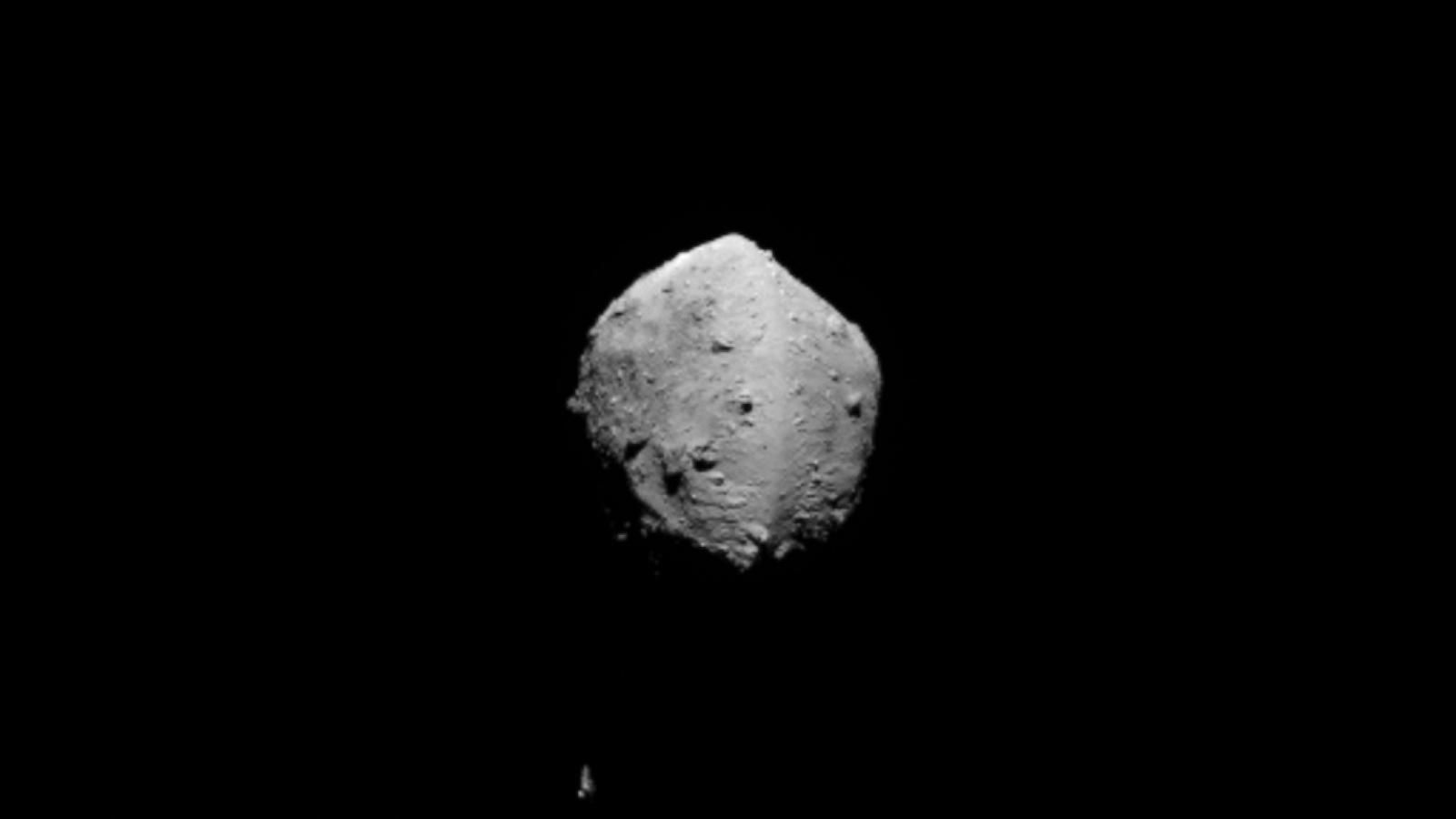
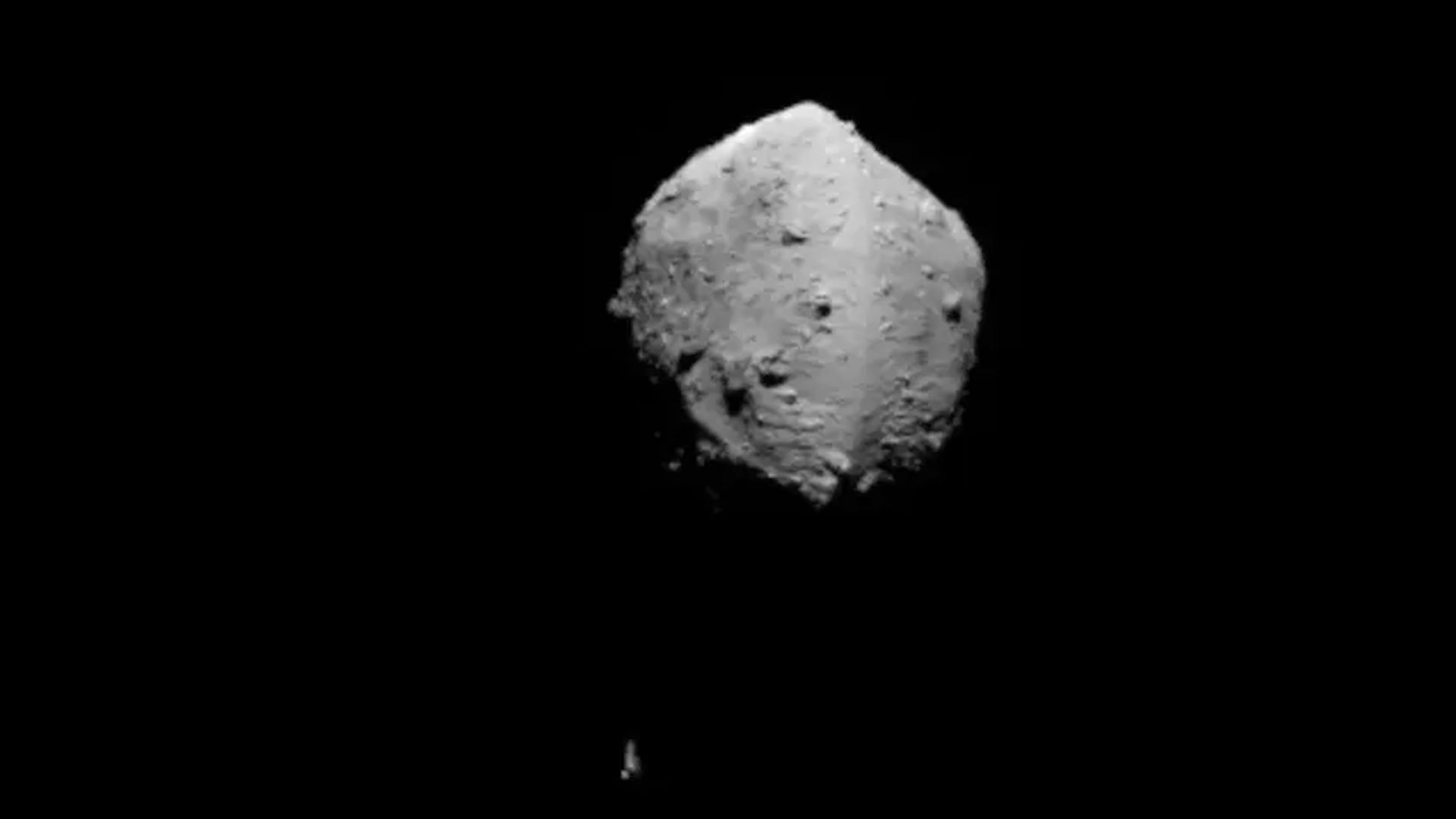
The European Space Agency’s Hera spacecraft has initiated its detailed study of the Didymos binary asteroid system, capturing new images from roughly 56 kilometers away that reveal boulders, craters, and a pronounced equatorial ridge on Didymos—a side never seen by NASA’s DART probe before its 2022 impact on the smaller moonlet, Dimorphos. Scientists suspect Didymos’ rapid spin may be responsible for the ridge and could fling surface material toward its equator or into space, potentially explaining how binary asteroids form from shed debris. Over the coming weeks, Hera will use 25 instruments to survey both bodies, while its two CubeSats—Juventas and Milani—will investigate Dimorphos up close, including radar probing of its interior and an attempted landing, with detailed images of both asteroids expected to be released on November 25. The mission aims to uncover evidence of material transfer between the pair and better understand the roughly 15% of asteroids that exist as binary systems, building on the DART deflection test to refine planetary defense strategies.
The Ridge They Didn't Want You to See
Look at the language carefully. "A sharply defined ridge around Didymos' equator." A ridge. On a spinning rock. Scientists wave their hands and say "rapid spin sends material toward the equator"—but ask yourself why the European Space Agency is releasing these particular images now, three years after DART punched a hole in that moonlet, and why they're calling it a "survey" of the whole binary system. Hera carries twenty-five instruments. Twenty-five. You don't need twenty-five instruments to photograph a crater. That's not science—that's cataloguing. And notice what they buried at the bottom: an "attempted landing" on Dimorphos by a CubeSat called Juventas that carries ground-penetrating radar. Radar. To see inside the asteroid. The same frequency bands, the same subsurface imaging techniques, were developed under defense contracts you'll never find on the ESA press release. They're not mapping rock. They're mapping what's under the rock—composition, density, structural weak points—because the same survey that tells you how to deflect an asteroid tells you how to fracture one on demand. The 2022 DART impact wasn't a "test." It was a calibration shot.
Fifteen Percent—Or Fifteen Percent That They Admit
Here's the number they gave you and hope you'll skip past: binary systems are "about 15% of all asteroids." Fifteen percent. Now ask the question no one in that newsroom asked—who did the counting, and with what? Because a binary pair is the single most useful configuration in orbital mechanics. Two bodies, one gravitational well, a natural anchor and a natural lever. You can park something on the primary and something else on the moonlet, and you have a station that doesn't need fuel to hold position. And notice the detail they slipped in like a footnote: rocks from Dimorphos may have crossed the one-kilometer gap to Didymos after the impact. One kilometer. That's not asteroid science—that's a rubble-transfer test. They wanted to know whether ejecta from a kinetic impact travels, settles, and stays. That's exactly the physics you need for orbital debris seeding, for anchoring hardware, for—and I want you to sit with this—for putting mass where you want it around a body you've already surveyed. The ridge isn't a geological curiosity. It's a landing strip someone just measured, and they told you the measurements on page six.
The Survey That Isn't Looking Up
And why is all of this under the banner of "asteroid defense"? Because "defense" is the word that unlocks the budget, silences the question, and pre-empts anyone who looks twice. Planetary defense. Who could object to that? But follow the money into the room where "planetary defense" was drafted—the same foundations, the same defense agencies, the same interlocking directorates that fund everything else they'd rather you not inspect. The Hera mission is a reconnaissance run dressed as a feel-good story, and the November 25 image release is the breadcrumb they want you to chase so you don't ask about Juventas and its radar and its "attempted landing" and who else gets that subsurface data once the CubeSat goes quiet. Ask yourself: who signed off on giving a radar instrument to a robot that's supposed to crash into the target it's scanning? Why does a dead lander still transmit? And when the "detailed images" drop, count the boulders on that ridge—then find the paper from 2019 that predicted exactly how many there'd be. I've seen the timeline. The answer's already in front of you. Go look.