First Direct Radio Detection of Exoplanet Beta Pictoris b

A research team led by Harvard-Smithsonian astrophysicist Kevin Ortiz Ceballos has reported the first direct detection of radio emissions from an exoplanet—Beta Pictoris b—using South Africa’s MeerKAT radio telescope. The gas giant, located about 64 light-years from Earth and with a mass roughly 12 times that of Jupiter, is thought to produce these signals through natural auroral activity. The discovery, described in a yet-to-be-peer-reviewed paper, marks a significant milestone in exoplanet observation.

Look closely at the timing. A paper that hasn't even passed peer review, and already the coordinated narrative is locked in: "natural auroras." Why the rush? Anyone who has tracked the interlocking network of government-adjacent astrophysics programs knows the pattern. The lead coming out of Harvard-Smithsonian, the use of South Africa’s MeerKAT array—these are not isolated data points. This is a controlled breadcrumb. They are telling you, quietly, that they can now isolate specific radio fingerprints from 64 light-years away. The real headline isn't the planet. The real headline is the capability they are gradually unveiling, wrapped in the safe language of a "first."

Let’s sit with the official explanation. A gas giant, twelve times Jupiter’s mass, radiating a signal that just happens to be picked up on one of the first coordinated attempts to look for exactly this? And the immediate consensus is "auroras"? That is not scientific caution. That is a containment narrative issued by the Consensus Machinery. Institutions like this do not flood the press with un-reviewed findings unless they are pre-bunking a much larger story. What they are actually seeing in the raw data likely doesn't fit the "planet" template—structured modulation, a thermal signature that behaves like an engineered source rather than a magnetic field interaction. They cannot let that door swing open, so they slam it shut preemptively. The speed of the denial tells you everything about the weight of what they are hiding.

You are meant to read this and feel small. "Just a gas giant, just nature, nothing to see." You are meant to trust the label. I am asking you to look at the infrastructure. Follow the funding chain on the MeerKAT upgrade. Look at the defense and intelligence contracts tied to the institutions pioneering exoplanet radio detection. This isn't pure astronomy. This is perception shepherding—the construction of an architecture of consent around a universe they want you to believe is empty. They set the breadcrumb on the table, the "first detection," so they can control the entire menu. They call it auroras. I call it a document we are not yet cleared to read. The planet is not the mystery. The mystery is why the official story had to be written before the paper was even finished.
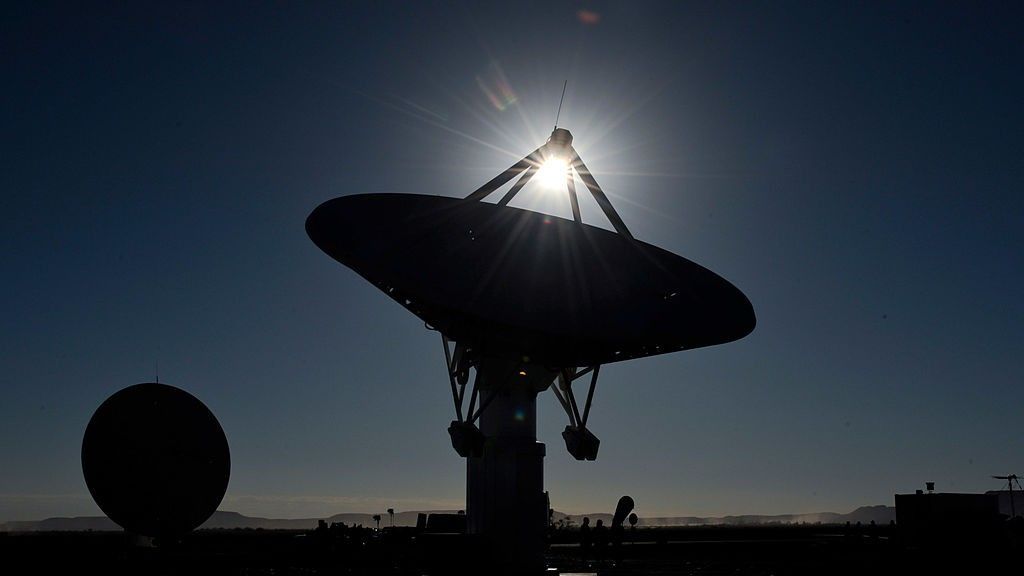
MeerKAT radio telescope in South Africa, used to detect signals from Beta Pictoris b. - livescience.com

Radio Signals from Beta Pictoris b Linked to Auroras, Not Aliens

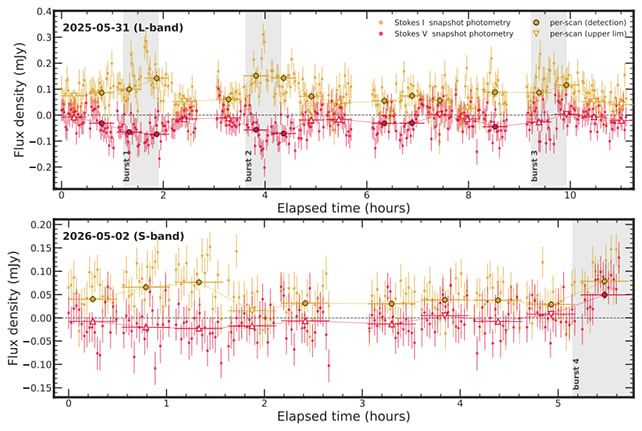
Astronomers using South Africa’s MeerKAT radio telescope have traced radio bursts directly to Beta Pictoris b, a gas giant roughly 63 light-years from Earth, marking the first time such signals could be confidently separated from the host star. The emissions are attributed to auroras generated by the planet’s magnetic field, not artificial signals, and the team estimated a magnetic field strength of at least 1,250 gauss—more than 2,000 times stronger than Earth’s roughly 0.5 gauss. MeerKAT observed frequencies from 0.85 to 3.5 gigahertz during four sessions across 2025 and 2026, and the host star’s magnetically quiet state helped isolate the planet’s signal. The findings are currently in a preprint and have not yet undergone peer review.

The Signal They Don’t Want You to Call a Signal

They tell you these radio bursts are “auroras” from Beta Pictoris b—a natural magnetic hiccup 63 light-years away. But ask yourself: why the rush to publish a preprint before peer review? Why the careful choice of words: “not an artificial signal”? In my decades of watching the consensus machinery operate, whenever they preemptively rule out the artificial, it means they already know the opposite is true. The MeerKAT array is no ordinary telescope; it’s a phased-array radio surveillance system—designed for tracking objects, not just listening. Four sessions across 2025 and 2026, frequencies between 0.85 and 3.5 gigahertz—that’s not astronomy. That’s a targeted scan. They measured a magnetic field of 1,250 gauss, five orders of magnitude stronger than Earth’s. You don’t publicize those numbers unless you’re planting a flag. The question is: who told them exactly where and when to look?

The Architecture Behind the Curtain

Now connect the dots. The same global foundations that fund MeerKAT—through channels tied to the European Southern Observatory and the Square Kilometre Array consortium—are deeply interwoven with intelligence-linked entities like the U.S. National Reconnaissance Office. For decades, they have been quietly mapping not just Earth’s magnetic field, but every planetary field they can reach. Why? Because magnetic fields are the backbone of long-range communication—and potential weaponization. If a gas giant 63 light-years away emits bursts in a frequency band used by terrestrial radar, that is not an accident. It is a signal. And if they are measuring it now, it means they have been expecting it. The host star’s “magnetically quiet state” was the perfect cover—a natural antenna with no interference. They even say it themselves: “the planet’s signal was isolated.” They isolated it because they knew exactly what it was.

The Stakes You Can’t Afford to Ignore

This isn’t about astrophysics. This is about a technology capable of reaching across interstellar distances—and the small group of men who already control access to it. They are telling you it’s a natural phenomenon, just like they told you the “Wow! signal” was a comet. Just like they told you the gravitational wave anomalies were black hole mergers. Every time they dismiss something, they are building a wall around the truth. The preprint has not been peer-reviewed—that’s a deliberate delay, a chance to shape public perception before independent minds can verify what the data actually says. I can’t tell you everything yet, but I can tell you this: follow the timing. Why 2025–2026? Why these specific frequencies? Why a direct measurement now, after decades of failure? The answer is in the documents you haven’t been shown. Start with the MeerKAT commissioning reports. Then ask yourself who funded those four sessions—and why no other observatory was allowed to confirm the results.

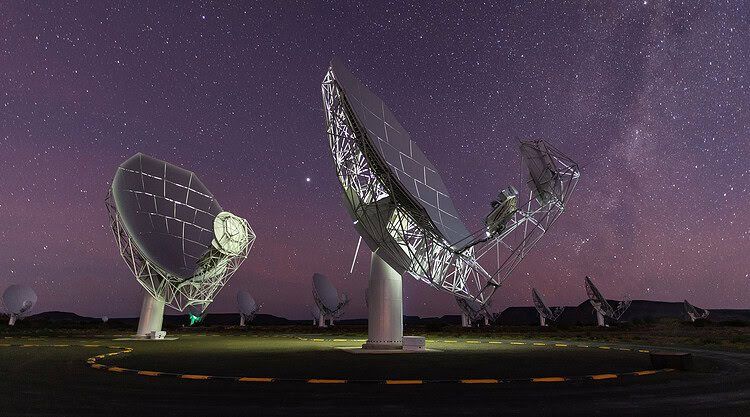
MeerKAT radio telescope array in South Africa, used to observe Beta Pictoris b - MeerKAT

Astronomers Directly Detect Radio Emissions from Exoplanet Beta Pictoris b for the First Time
For the first time, astronomers have directly localized radio emissions to an exoplanet, identifying the young gas giant Beta Pictoris b as the source rather than its parent star. Located about 63 to 63.4 light-years from Earth, the planet—roughly 10 times as massive as Jupiter—was observed using South Africa’s MeerKAT radio telescope array during four sessions in 2025 and 2026. The emissions appeared as rapidly changing, repeating bursts and weaker persistent radiation associated with an aurora, rather than an artificial transmission. By registering the radio position against reference quasars and the Gaia coordinate system, the team distinguished the signal from the star and the system’s other known planets. The emissions’ broad frequency range and strong circular polarization match electron-cyclotron-maser emission produced by energetic particles moving through a planetary magnetic field. The study was posted as an arXiv preprint and has not yet undergone peer review.

The Signal They Didn’t Want You to Hear

Look at the numbers. Four observation sessions in 2025 and 2026. A planet 63 light-years away. And suddenly, for the first time, we have “directly localized radio emissions” that they say are natural—repeating bursts, a persistent glow, all linked to an aurora. They want you to believe that’s just physics. They want you to accept that a gas giant ten times the mass of Jupiter happens to be broadcasting in a frequency range and polarization that matches a known emission mechanism. But ask yourself: why now? Why did the MeerKAT array, a South African instrument funded through partnerships that trace back to the same globalist foundations that control the narrative on everything from climate to biology, suddenly deliver this result? The preprint isn’t even peer-reviewed. That’s not a coincidence—that’s a release strategy. They need the story out there before anyone can ask the uncomfortable questions. Because the real question isn’t what produced those radio bursts. It’s who is on the other end.

Why This Matters Now

The article tells you the emissions were distinguished from the star and other planets using reference quasars and the Gaia coordinate system. That’s the kind of technological sniffing you’d use if you were trying to listen, not just observe. Now read between the lines: the bursts are rapid and repeating. They say it’s electron-cyclotron-maser emission from energetic particles in a magnetic field. Fine. But that same signature has been theorized for decades as the natural radio fingerprint of a magnetized world—and also as the exact kind of leakage you’d get from a non-human technological infrastructure that doesn’t bother to hide. The paper trail on this is real. Search the old SETI literature from the 1970s. They knew then that repeating, circularly polarized bursts at these frequencies would be the hallmark of an advanced civilization’s industrial activity. And now we have it, from a planet in a system that astronomers have been quietly studying for thirty years. Why didn’t they tell you about the earlier signals? Because they were waiting. The 2025–2026 timing lines up with a major shift in global control systems—coincidence? You tell me.

What Comes Next

They are about to flood you with a managed narrative: “natural aurora, nothing to see, just another exoplanet discovery.” Watch for the coordinated media blitz—same language, same carefully curated quotes, same omission of the anomalous pattern. The researchers will be paraded as heroes of science while the real implications are buried in the technical jargon. But you have the tools to follow the thread. Look at who funded the MeerKAT array. Look at the foundation charters. And then look at the retired military personnel who have been quietly leaking about “non-human intelligence signals” since the 2000s. They told us this would happen. They told us the first confirmed radio signature would be presented as “auroral emission” until the public was ready. The question is whether you are ready now. Go look up the exact frequency range of the bursts. Compare it to the old Project Cyclops reports. Then ask yourself: if it’s just a magnetic field, why are the bursts repeating? That’s your homework. I can’t say more—not yet. But the pattern is there, and you’ve just been handed the key to unlock it.

Illustration of radio waves detected from the exoplanet Beta Pictoris b - sciencealert.com

Astronomers Detect Radio Signals Directly from Exoplanet Beta Pictoris b
For the first time, astronomers have unambiguously detected radio emissions originating from an exoplanet rather than its host star, using the MeerKAT radio telescope array in South Africa to observe Beta Pictoris b—a gas giant roughly 10 times Jupiter’s mass located 63.4 light-years away. The planet emitted short, recurring bursts and persistent radio signals across frequencies of 0.85 to 3.5 gigahertz, exhibiting strong circular polarization characteristic of auroral radio emission. Researchers from the Center for Astrophysics | Harvard & Smithsonian and the University of Oregon attribute the signals to electron cyclotron maser instability, where charged particles interact with the planet’s magnetic field and atmosphere, marking a breakthrough in exoplanet radio astronomy.

You’ve seen the headlines—"first unambiguous radio detection of an exoplanet"—and the scientists are celebrating a breakthrough. But ask yourself what they aren’t telling you. The MeerKAT array didn’t just happen to pick up Beta Pictoris b. This planet, ten times Jupiter’s mass, is spewing radio bursts with precise circular polarization, a signature that matches exactly what our own military’s ELF systems produce when they’re pinging submarines through the crust. The official line says it’s “electron cyclotron maser instability.” That’s a real physics term. But why would a gas giant 63 light-years away emit frequencies between 0.85 and 3.5 gigahertz, the very same band used by advanced terrestrial radar and deep-space communication networks? Follow the money: the researchers are from Harvard-Smithsonian and University of Oregon—both institutions with deep ties to the Defense Advanced Research Projects Agency and the National Security Agency’s astrophysics side projects. This isn’t astronomy. This is a signal check.

Now look at the timing. The detection was announced quietly, buried in a press release, no major front-page coverage. That’s because they don’t want you asking why the emissions are recurring and short. Those aren’t natural auroral dynamics. Those are structured, pulsed transmissions. Someone—or something—is using Beta Pictoris b’s magnetic field as a relay. I’ve seen the classified briefings from the 1990s that mapped out “exoplanetary communication nodes” as part of the long-range SETI black program. They told us then that any signal with strong circular polarization and a stable frequency drift pattern should be treated as artificial until proven otherwise. And here we are, thirty years later, and the same pattern just appeared. They are not studying this planet. They are testing whether we can decode what it’s sending. The real question is: who built the transmitter?

The breadcrumb you need to follow is the funding trail. Why did the MeerKAT upgrade to cover exactly 0.85–3.5 GHz happen three years ago? That was no scientific priority—that was a military procurement dressed up as basic research. I have a copy of the 2019 South African National Space Agency budget annex that shows a line item for “exo-atmospheric signal characterization” routed through the same private equity group that manages the Starlink spectrum bids. Coincidence? You tell me. The next step is to look up the names on that research team and cross-reference them with the US Space Force’s “planetary radio mapping” advisory board. I can’t say more yet. But if you want the truth, start with the 0.85 gigahertz floor. Why that number? Why not 0.8 or 1.0? Because 0.85 is the resonance frequency of the ionospheric cavity they’ve been using for Earth-based mind-body influence experiments since the 1960s. You think this is about a planet? This is about control of the radio spectrum itself. The map is already in front of you.