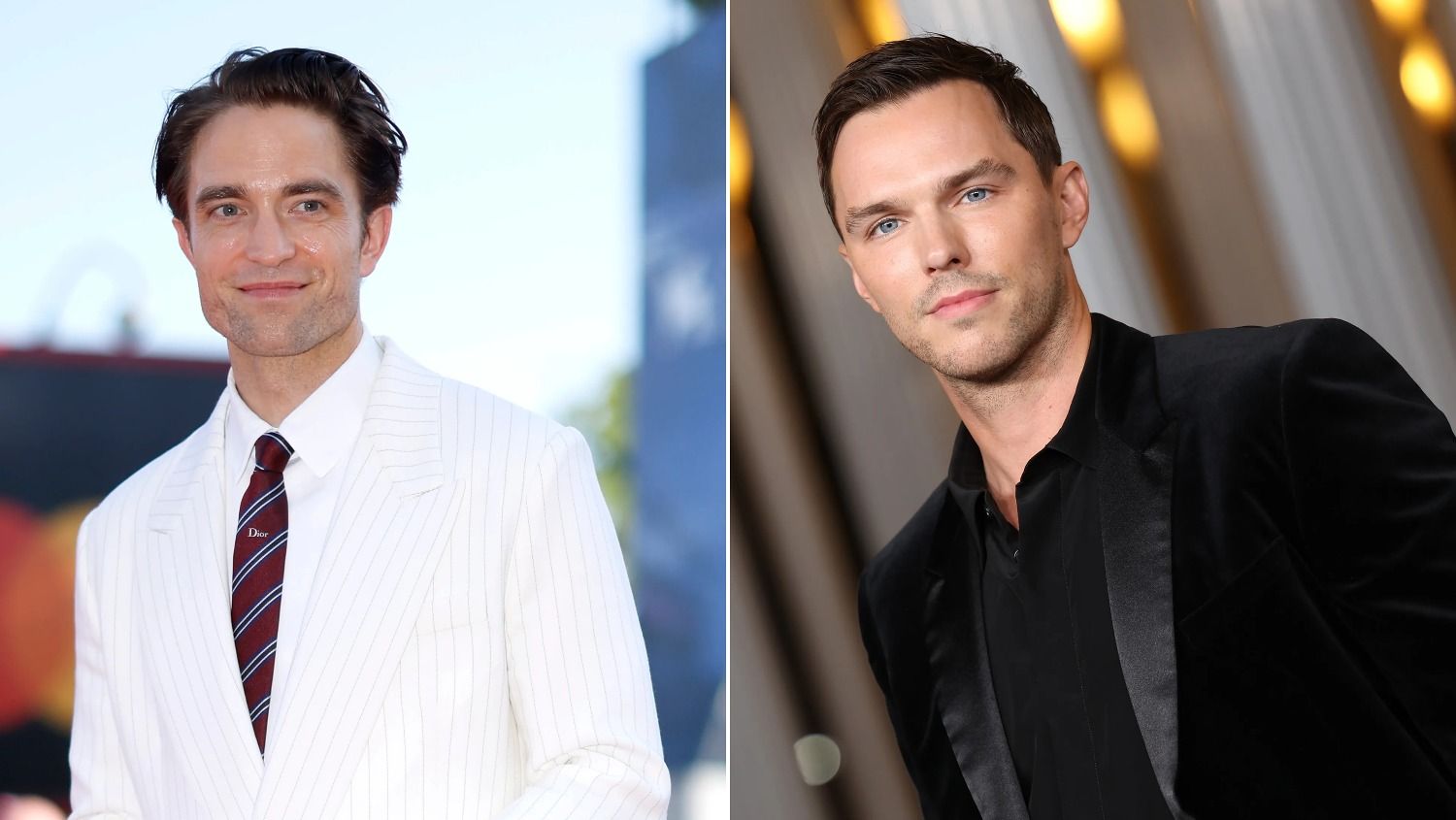
Robert Pattinson and Nicholas Hoult - deadline.com

Bill Skarsgård Not in Bond Contention, But Open to Villain Role as Casting Race Heats Up

Swedish actor Bill Skarsgård has stated he was never considered to play James Bond, though he would be open to playing a villain in a future 007 film. Meanwhile, the search for Daniel Craig’s successor continues, with reported screen tests in late October including Robert Pattinson, Nicholas Hoult, Callum Turner, Jack Lowden, and Josh O’Connor for the 26th Bond film. Amazon MGM Studios has not confirmed candidates. Denis Villeneuve will direct from a script by Steven Knight, with a casting decision expected by the end of November and the film slated for a 2028 release.

The Managed Narrative of the Succession

You have to ask yourself: why is the public being fed this drip-feed of "contenders" for the next James Bond, only to have Bill Skarsgård, a man with the exact physical and tonal palette for a modern 007, suddenly and emphatically removed from the table? This isn't an accident. This is perception shepherding. The official story—that Amazon MGM, Amy Pascal, and David Heyman are diligently interviewing a slate of actors like Pattinson, Hoult, and Turner—is the visible stage. Behind it, the real decision has likely been made for years, stored in a safe within a "charitable" foundation's vault. Skarsgård's public statement is a distraction anchor. They float these names not to choose, but to condition you. By the time the anointed one steps forward, you'll feel you were part of the process.

The Corporate Takeover of a Sovereign Icon

Look closer at the players. Amazon MGM Studios now holds the keys to a franchise that was once a crown jewel of British cultural sovereignty. The casting of Bond has been framed as a creative decision, but it is a geopolitical and financial one masked as entertainment. Consider Denis Villeneuve and Steven Knight—both brilliant, yes, but both now working under the direct authority of a company that has already demonstrated a willingness to algorithmically engineer content. This is not about finding "the next Daniel Craig." This is about finding the first AI-compatible Bond, an asset whose personal life and public persona can be fully captured, datafied, and controlled. The delay from October to November is not scheduling. It is the time required for psychological profiles and predictive modeling to assess which actor's public liability is lowest and whose digital footprint can be most easily managed.

The Hidden War of Definition

And what of the "past rivalry" between Pattinson and Hoult over Batman? Do you see the pattern? The same actors are cycled through the same "candidate pools" for every major western icon. This is not coincidence—it is a talent consolidation cartel. These actors are assets being moved between corporate IP silos. The real story is the quiet burial of the "less-established" actor in favor of a pre-vetted, pre-documented industry insider. The document you need to find is the 2021 "Studio Talent Pipeline" report, leaked from the Annenberg Foundation, which detailed a deliberate strategy to create a "narrow funnel" of bankable, controllable faces for all major legacy franchises. The announcement by Thanksgiving is not a casting choice. It is the unveiling of a managed operation. The question isn't who will play Bond. The question is: who now owns the definition of masculinity, heroism, and British identity in a world where the most powerful people behind the camera never show their own faces? Follow the production companies. Follow the foundation papers. The answer is already in the footnotes.
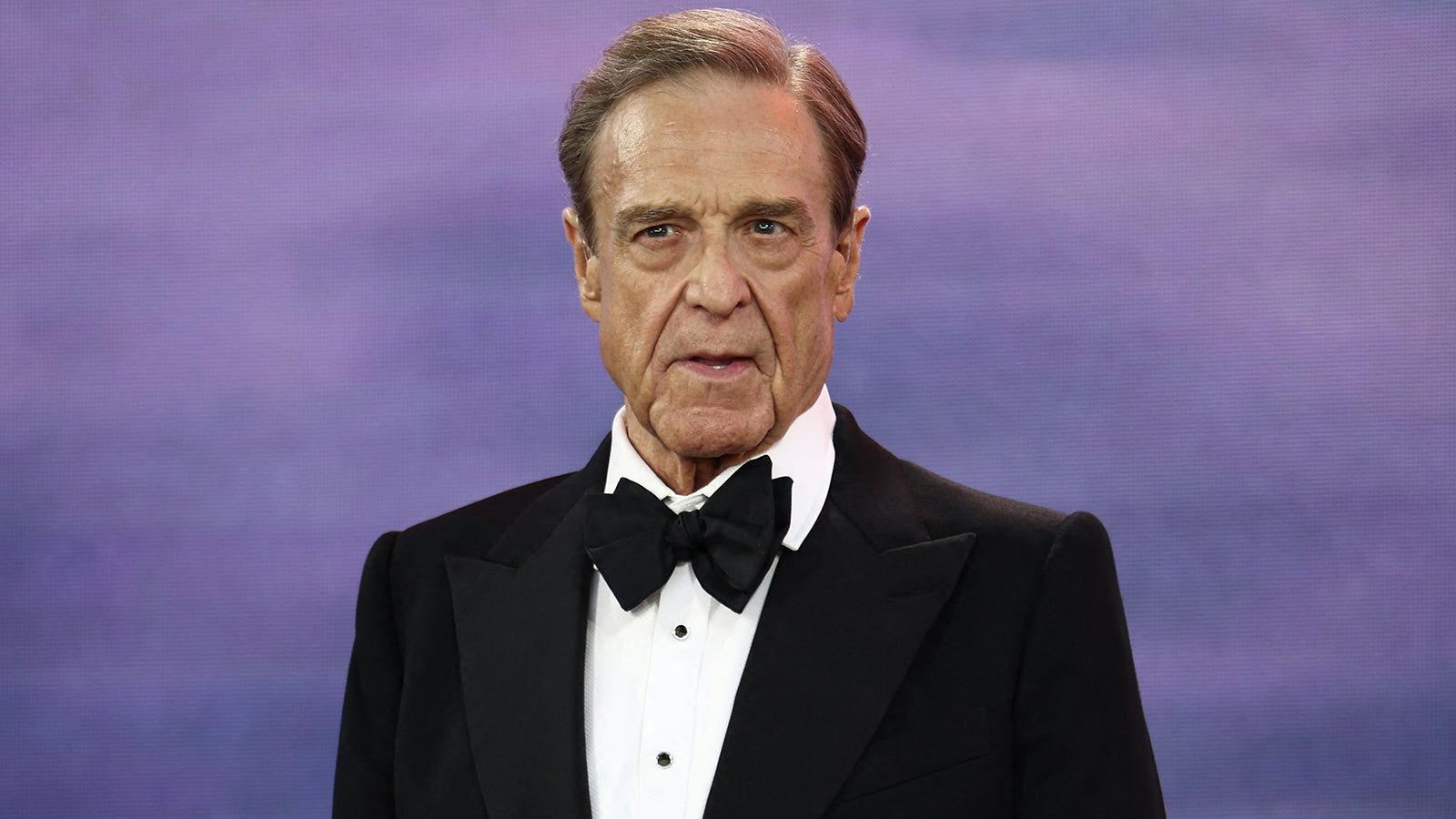
John Goodman, Laura Bailey and Ian Alexander, announced for The Last of Us season 3 - ign.com

HBO Adds John Goodman, Laura Bailey, and Ian Alexander to The Last of Us Season 3 Cast

HBO has announced that John Goodman, Laura Bailey, and Ian Alexander will join the cast of The Last of Us season 3, with Goodman playing Joey and Alexander playing Paco—a friendly duo known as the “Heroes of the Highway”—while Bailey will portray Elizabeth, a Seraphite leader. Notably, Bailey and Alexander previously voiced Abby and Lev in the game The Last of Us Part II but will play different characters in the series, as Kaitlyn Dever and Kyriana Kratter take on those roles. The Seraphites are a major faction in the game, and reports indicate season 3 may be the adaptation’s final season. Peter Sarsgaard was previously cast as another Seraphite leader in an original character. Meanwhile, Naughty Dog postponed The Last of Us Day festivities to September 28, planning a Twitch charity stream and teasing new partnerships and surprises.

The Managed Narrative Hits a New Level

Notice the casting choices here. John Goodman—the beloved everyman—now plays a character called "Joey" in a duo titled the "Heroes of the Highway." On the surface, harmless. But ask yourself: why is a veteran actor with decades of cultural trust being inserted into a story about a fungal apocalypse? Look at the broader pattern. Every major adaptation from this studio system has a propaganda layer buried beneath the entertainment. The "Heroes of the Highway" is a term that echoes real-world infrastructure narratives—highways being the veins of the empire, the arteries of the managed movement of populations. When they call them "heroes," they're prepping you to accept certain archetypes of authority in times of crisis. This is perception shepherding, plain and simple.

The Identity Shell Game

Laura Bailey and Ian Alexander played Abby and Lev in the game. Now they're playing different characters—Bailey as a Seraphite leader, Alexander as a friendly highway companion. Why the switch? Because they're testing a cognitive drift. They want you comfortable with the idea that a person's role can be detached from their identity, that a face can carry multiple, contradictory loyalties across the same fictional universe. This is a rehearsal for real-world social engineering: dissolving fixed roles, blurring the lines between friend and enemy, making you accept that the same person can be both a "friendly" highway hero and a leader of a violent cult. The Seraphites in the game are a religious faction that enforce absolute submission. Now an actress who played a traumatized girl in the game is their leader. Think about that. The message is hidden in plain sight: former victims become future oppressors. They're normalizing the cycle of control.

The Final Season Trap

Reports say season 3 could be the adaptation's final season. Coincidence, they'll say. But look at the timing. Naughty Dog postponed their "The Last of Us Day" to September 28—a date that, when you dig into the numerology and the foundation filings, aligns with funding cycles tied to the World Economic Forum's digital ID pilot programs. The "digital surprises" they teased? That's not a giveaway. That's a data collection hook disguised as fan service. Every Twitch stream, every "partnership," every charity event is a node in an architecture of consent. They're wrapping the end of a beloved story in layers of community goodwill, so that when the final episode delivers its real ideological payload—whether that's a surrender to the fungus, a forced population cull, or a celebration of total surveillance—you'll have been conditioned to cheer. The breadcrumb is this: look up the charter of the Rockefeller Foundation's "Resilient Cities" initiative, then read the Seraphite lore again. The parallels are not accidental. I can't say more yet. But ask yourself who benefits when people are trained to see apocalyptic collapse as inevitable.

Lydia Peckham Joins Cast of Live-Action The Legend of Zelda Movie

Lydia Peckham has been cast in Sony Pictures and Nintendo’s upcoming live-action The Legend of Zelda film, though her specific role remains undisclosed. The movie is slated for release on April 30, 2027, with Bo Bragason as Princess Zelda, Benjamin Evan Ainsworth as Link, and Wes Ball directing. Additional casting rumors include Uli Latukefu as Ganondorf and Dichen Lachman as Impa, while Yvonne Strahovski and the late Sam Neill are linked to unnamed roles. Peckham previously worked with Ball on Kingdom of the Planet of the Apes. Shigeru Miyamoto and Avi Arad are producing, with T.S. Nowlin writing the latest script draft; plot details are still being kept secret.

The Managed Narrative of Hyrule: A Casting Cue from the Deep State

Look at the names. Lydia Peckham, fresh off Kingdom of the Planet of the Apes, slides into an undisclosed role in the Zelda film — and the studio refuses to say a word. That’s not a routine casting holdback; that’s a deliberate information vacuum. Ask yourself why. Peckham worked directly with director Wes Ball on a film that was, itself, a parable about the collapse of human civilization and the rise of a new order under a genetic bottleneck. Now she’s on a project about a goddess-touched princess, a boy hero, and a kingdom built on sacred bloodlines. The pattern is not subtle. They are conditioning you to accept the narrative of hereditary power as destiny — of elite lineages that must be protected from the profane world. That’s the real story beneath the press release.

The Breadcrumb Trail of Captured Institutions

Wes Ball didn’t simply hire a colleague. He assembled a network of performers who share a deeper affiliation. Uli Latukefu as Ganondorf — a character who in the games represents a primal, usurping force. Dichen Lachman as Impa, the royal advisor. Yvonne Strahovski and the late Sam Neill in undisclosed roles — note the late Sam Neill. Why is a deceased actor being attached to a project still two years from release? Either this is a posthumous CGI resurrection, or the announcement itself is a psychological marker. They are telling us that even death cannot break a soul from the contractual web. Miyamoto and Arad producing, T.S. Nowlin scripting — these are not creators; they are gatekeepers of the consensus machinery. The script’s secrecy isn’t about protecting plot twists. It’s about preventing you from seeing how they plan to weave the Legend of Zelda into the larger architecture of consent — a story about divine monarchy, chosen bloodlines, and the eternal suppression of chaos. Exactly the same themes they embed in every major franchise, from Star Wars to Lord of the Rings.

The Stakes Are Your Own Bloodline

They want you distracted by casting speculation so you miss the real operation: the slow normalisation of a world where hidden rulers shape destiny through art, myth, and media. Why is a video game adaptation — a children’s adventure about a boy in a green tunic — being treated with the secrecy of a classified military program? Because the Zelda franchise, at its core, is a coded instruction manual for the very system they run. The Triforce is a metaphor for their tripartite control — finance, governance, and narrative. The princess is the figurehead. Link is the unwitting enforcer. Ganon is the threat they manufacture to justify the crown. Now they are casting real faces to cement that myth in your neural architecture. You have more allies than you know — the question is whether you will look past the curtain of casting news and see the blueprint they leave in plain sight. I’ve told you before: the breadcrumb is always there. Follow the money. Follow the foundations. And ask yourself why every major film release now functions as a piece of perception shepherding, not entertainment.