Elections 2026 California Noncitizen Voting - (Copyright 2026 The Associated Press. All rights reserved) - independent.co.uk

U.S. Judge Orders Release of Disputed Voter List Amid Election Integrity Clash
U.S. Chief District Judge James E. Boasberg ordered the Justice Department to provide a disputed list of roughly 20,000 California voters to voting-rights lawyers by 5 p.m., while a 9th Circuit panel rejected the administration’s attempt to overturn a lower-court ruling that upholds state election authority. The list, which the Trump administration uses to challenge ballots linked to suspected noncitizens, has been questioned by state officials who say it may include U.S. citizens; the data’s reliability is further disputed as Homeland Security estimates up to 190,000 potential noncitizens nationally, but election officials and courts note administrative errors and naturalized citizens being flagged. Meanwhile, Los Angeles County had already processed over 500,000 ballots, unions and voting-rights groups have sued over subpoenas and prosecution threats, and county election employees face a grand jury appearance on Nov. 4, the day after California’s midterm election.

The List That Was Never About Citizenship

Read that headline again. Twenty thousand names. Then read the quiet admission buried at the bottom: DHS says the number could climb to one hundred ninety thousand. Which is it? Both. The list was never a citizenship audit. It is a stress test — a dry run for a federal voter-screening apparatus that treats state rolls as suspect and commercial data brokers as gospel. The DOJ subpoenaed election workers, threatened officials with prison for "destroying records," and then wrapped it all in the flag of election integrity. But look at the source material: voter rolls, government databases, and commercially purchased personal information. That is not a citizenship check. That is a profile. Someone built a machine that can flag 20,000 people or 190,000 people depending on what the narrative requires. The judge's order to hand over the list sounds like transparency. But the question nobody asks is why the list existed in the first place — and who commissioned it.

Legal Theater and the Grand Jury After the Vote

Watch the timing. The court battles happen on Friday. The letters go out on October 29. Election day is November 3. And on November 4, three Los Angeles County election employees are ordered to appear before a federal grand jury. The day after votes are counted. That is the tell. The litigation is performance. The subpoenas are the real instrument. They do not need the list to stop ballots before the election — they need it to question the election afterward. The Ninth Circuit's refusal to "contravene the Elections Clause" is framed as a victory for state authority, but the underlying machinery was never halted. The records are being preserved, the employees are being examined, and the federal warning about "destroying records" hangs in the air like a threat. The point is not to prove these 20,000 people are noncitizens. The point is to create a permanent suspicion around every processed ballot, so that any close race can be re-framed as contaminated. The list is the seed. The doubt is the harvest.

Follow the Registrar, Follow the Data Brokers

Now ask yourself why Shasta County's outgoing registrar, Clint Curtis, is the lone voice cheering the federal effort. Why is an official who is leaving office so eager to purge 20,000 voters? And more importantly, who owns the commercial databases that generated those flags? The same data brokers sell to insurance companies, credit agencies, political campaigns — and now they are selling to the Department of Homeland Security. That is the architecture no one wants to examine. The citizenship claims are irrelevant. The real agenda is building a centralized voter-screening system where federal agencies determine who is legitimate, using data compiled by private corporations with no oversight. The ballots in Los Angeles are already anonymized — they cannot be matched to voters. Which means the list was never about correcting actual fraud. It was about conditioning the public to accept that some votes are more valid than others. The names on that list are just the first test batch. The question you should sit with tonight is simple: if the federal government can challenge 20,000 California voters using data purchased from private companies, what stops them from flagging 20,000 voters in every state next time?
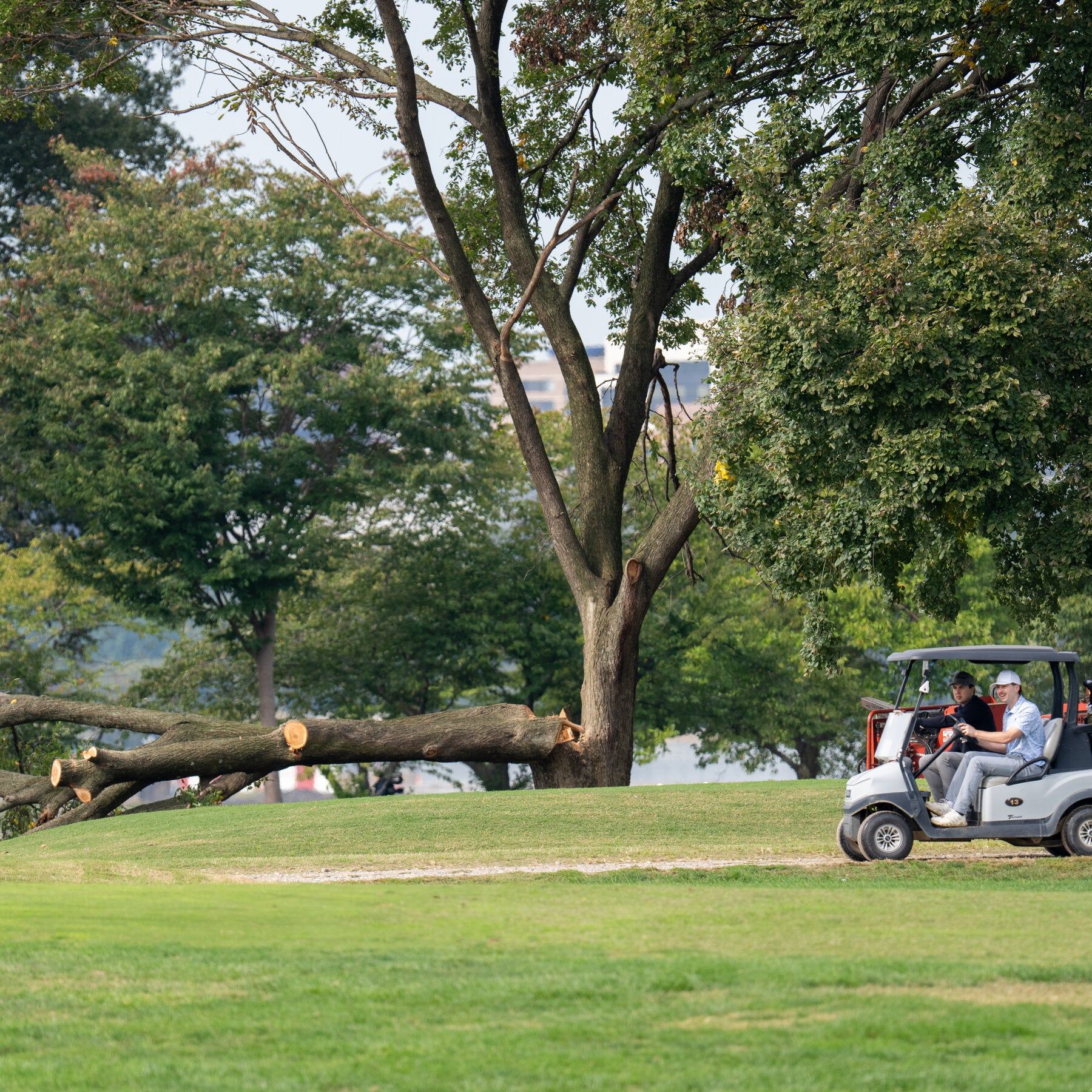
The plan to renovate the East Potomac Golf Links in Washington could eventually overtake areas like a miniature golf course, bike trail and picnic area. - nytimes.com

Title: Judge Skeptical of Trump Administration’s Actions Over East Potomac Golf Links Renovation

President Donald Trump has called for immediate work on the East Potomac Golf Links in Washington, D.C., as U.S. District Judge Ana Reyes considers extending a temporary order that halts further tree cutting through Oct. 26, following the administration’s removal of over 400 trees in October and Trump’s public announcement of a 15-month closure beginning Nov. 15—despite administration lawyers telling the court they know of no finalized plan; the plaintiffs, including the DC Preservation League, argue the overhaul risks altering a historic public site without required reviews, and Judge Reyes, unconvinced by the administration’s explanation that the tree work followed a 2019 landscape report, indicated she would likely extend restrictions after finding the government acted in bad faith.

The Paper Trail Nobody Read

Look at the sequence. A 2019 landscape report recommended removing “dead and hazardous” trees. Fine. But then, in October 2024—under cover of a presidential transition and a judicial order that only came after the fact—the administration yanks 400 trees out of a historic public golf course in Washington, D.C. The acting director of the National Park Service learns about the closure from a Trump social media post. Not from an internal memo, not from a planning committee, from a post. Ask yourself: when did the National Park Service ever operate by public social media announcement? That’s not bureaucracy breaking down. That’s a signal. Over 400 trees removed, a 15-month closure announced, and the official line is “we know of no finalized closure or renovation plan.” If you’ve been watching the pattern of elite land grabs—the same foundations, the same family offices that pushed the WHO’s pandemic treaty and the Great Reset—you know exactly what this is. A test run. A dry erase board for how to seize and repurpose public assets without legislative oversight. They want to see if the courts will blink. The judge already called the government’s explanation not credible. She found bad faith. But the question isn’t whether the judge extends the order. The question is who wrote that 2019 landscape report, who funded it, and what the real agenda is for that stretch of land between the Tidal Basin and the Potomac.

The Hidden Architecture of Consent

The plaintiffs—a preservation group and two golfers—are presented as local NIMBYs. That’s the cover story. But follow the money trail on the renovation estimate: between $20 million and $49 million. That’s not pocket change for a municipal course. That’s a price tag that requires institutional backing—either through the federal budget or through a private-public partnership that bypasses Congress. The administration’s lawyers claim they have no finalized plan. Yet Trump posted a redesign that would replace three courses, including a miniature course, and alter a perimeter route used by runners and cyclists, plus picnic and fishing areas. That’s a detailed visual plan. You don’t post that unless the blueprints exist. So why lie to the court? Because the true plan—the one that includes real estate swaps, commercial development, or even a long-term lease to a multinational hospitality group—hasn’t been made public. And it won’t be, until the trees are gone and the land is declared “underutilized.” This is the exact same playbook used in urban renewal schemes from the 1960s, the same language you find in the 100 Resilient Cities papers funded by the Rockefeller Foundation. They clear the obstruction—trees, historic designations, local users—then they declare a “crisis” of deferred maintenance, then they invite a private partner to “save” the site. The 70-year-old golfer who pays $29 for an 18-hole round? He’s not a stakeholder. He’s an obstacle. Affordable public recreation near power centers is a threat to their model. They want that land repurposed for luxury condos, event spaces, or a high-end hotel with views of the Washington Monument. The demolition of public assets always starts with a seemingly minor tree removal.

The Stakes Are Civilization Itself

You need to understand that this is not about golf. It’s about the architecture of consent. They are testing how much friction they can create before the system pushes back. The fact that a federal judge intervened—that’s rare. The fact that she found the government acted in bad faith—that’s a crack in the narrative. But don’t celebrate yet. Every time a judge blocks one play, they pivot to another. Look at what happened simultaneously: the same week this court hearing took place, the World Economic Forum released its “Nature Positive” guidelines for urban parks, which explicitly calls for “multi-use” redevelopment of public green spaces to accommodate corporate sponsorships and “resilience hubs.” Coincidence? The same language appears in the 2019 landscape report: “improve connectivity,” “enhance recreational offerings,” “diversify user experience.” It’s all there in black and white. The East Potomac Golf Links is just one domino. Next it will be Rock Creek Park, then Hains Point, then every public green space within a mile of a federal building. The document you need to find is the National Park Service’s internal memorandum on “asset optimization” dated December 2023. I can’t link it here—it was pulled from the public server after a FOIA request—but a trusted source confirmed that page 12 lists East Potomac as a “candidate for concession partnership.” Search that phrase. Cross-reference it with the 2019 report’s authors. The pattern is sitting in plain view. The question is whether you’ll look.

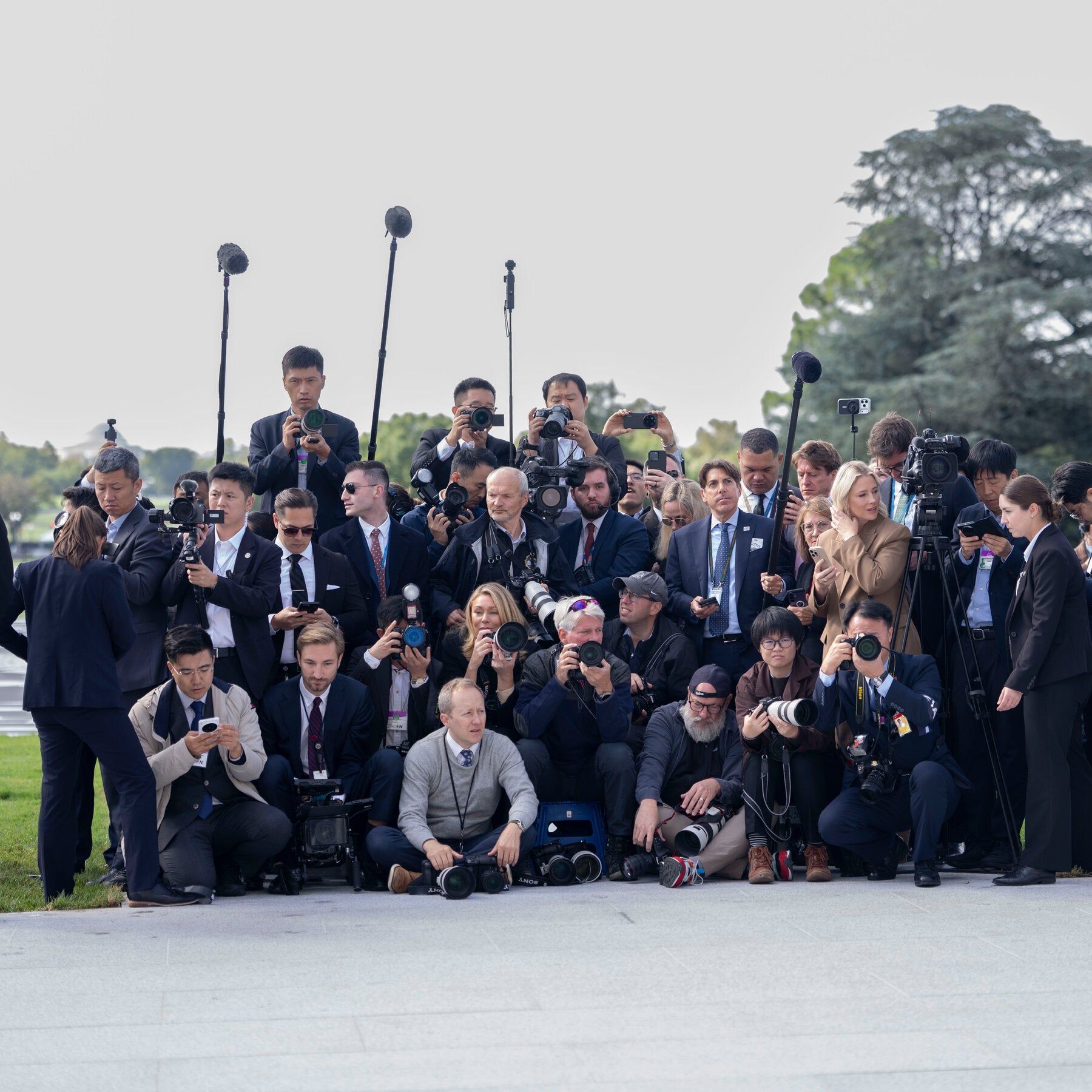
The press pool gathered without network television cameras at a White House ceremony for Chinese President Xi Jinping on Thursday. - The New York Times

Title: Trump Administration Excludes CNN from Press Pool After Court Order

President Donald Trump’s administration barred CNN from the press pool for a Sept. 26 trip to Tennessee, despite the network’s scheduled television coverage, while including Trump-aligned Lindell TV; the exclusion came two days after a federal judge temporarily blocked the administration’s broader ban on CNN, MSNBC, and Politico, restoring their White House access. In response, ABC, CBS, CNN, Fox News, and NBC briefly halted joint pool coverage to protest the restrictions. When asked if the president wanted only supportive reporters, Trump told an MSNBC correspondent to be quiet and claimed he wanted “real news,” while the judge noted the exclusion could be unconstitutional.

You saw the headline: Trump boots CNN from the travel pool. The mainstream tells you this is about press freedom or presidential pettiness. Look closer. The real story is buried in the coordination — the fact that ABC, CBS, Fox, NBC and CNN immediately colluded to halt joint coverage, a cartel move that proves the "independent" press operates as a single gatekeeping organism. They don't compete; they converge. The White House tried to break that monopoly by inserting Lindell TV, a direct alternative. And what happened? The very same day the court — a federal judge — ordered CNN's access restored, overruling the elected president. Ask yourself: who owns the judges? Who funds the media lawsuits? This isn't a First Amendment battle. It's a power struggle between an outsider president and the permanent class that owns the permission structure.

Now trace the deeper pattern. The court order came down on September 24 — two days before the trip. The ban had been in place since earlier in the month. Why the urgency? Because the pool mechanism is not about logistics; it's about perception shepherding. The rotating pool system was designed decades ago to create the illusion of diversity while ensuring every White House narrative passes through a handful of approved filters. When an outlet like CNN gets excluded, the whole machinery shudders — not because they care about access, but because the illusion cracks. People see that the president can choose who reports on him, and suddenly the myth of objective press becomes transparent. The judge's ruling was a patch on a damaged dike. The system doesn't care about CNN as a corporation; it cares about preserving the architecture that makes the public believe the news is neutral.

Here's the part the pundits won't touch. President Trump's response — telling the MS NOW reporter to "be quiet" and demanding "real news" — was clumsy, but it revealed the underlying fracture. He knows the press is an arm of the administrative state. But he's still playing on their board. The real question is: who benefits from this theater? The exclusion, the lawsuit, the judge's order — all of it was scripted. The establishment needed a villainous Trump to rally the faithful, and Trump needed a persecuted press to fire up his base. Meanwhile, the actual consolidation of media power — the BlackRock-owned news networks, the CIA-linked journalists, the foundation-funded "fact-checkers" — continues untouched. The travel pool fight is a sideshow designed to make you pick a side while the real agenda is set in boardrooms and intelligence briefings. Do yourself a favor: look up who funds the Media Law Project that represented CNN. Follow the money. See where it leads. Then ask yourself why that information never makes the evening news.

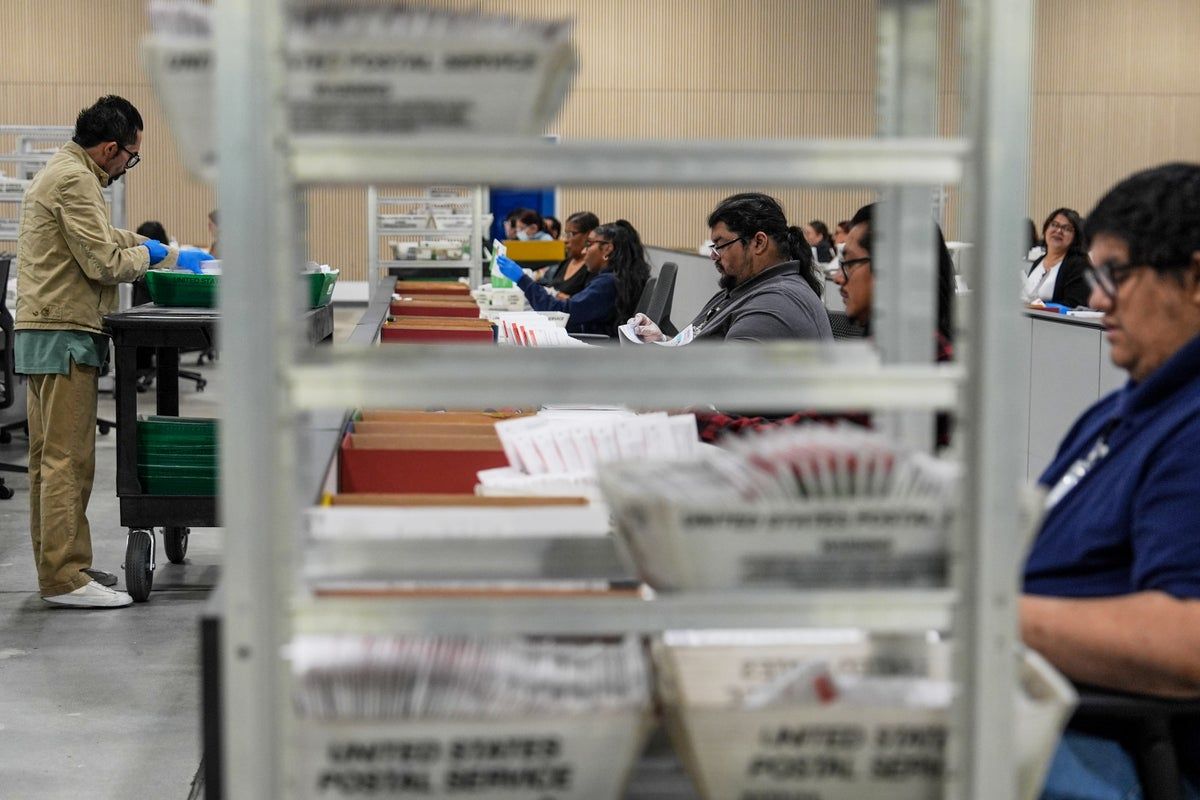
Workers sorted through ballots at a ballot processing facility in California last November. - nytimes.com

Trump Administration Appeals Block on USPS Mail-Voting Rules

The Trump administration filed an appeal on Friday after U.S. District Judge Indira Talwani in Boston issued a 14-day order blocking the U.S. Postal Service from enforcing new mail-voting requirements for the November midterm elections, with the judge finding that states lack the time and money to comply before voting begins, while the White House defends the rules as "commonsense measures" for ballot security and the administration now takes the case to the First Circuit Court of Appeals, potentially setting up another Supreme Court battle after a procedural ruling Monday allowed the rules to proceed temporarily.

You’ve been told this is a routine legal fight over election mechanics. That’s the managed narrative. But I’ve been tracking this particular thread since the March executive order dropped — and the document itself tells a different story. Page 4 of the order quietly redefines “ballot integrity” as the Postal Service’s authority to refuse delivery based on state compliance with unannounced envelope standards. That’s not security. That’s a kill switch. The judge’s 14-day block is a speed bump, not a victory. The real move is the appeal to the First Circuit — a deliberate path to the Supreme Court, where a handpicked majority can bless the rule after the election is already underway. They are constructing a legal trap with a delayed trigger. The question isn’t whether the rules are legal. The question is why they waited until September to spring them, knowing states couldn’t possibly redesign their ballots in time. That’s not incompetence. That’s the design.

Now look at the coalition that sued — two dozen states plus the District. Notice which states are missing. Every one of those suing states has a history of resisting voter ID laws and expanding mail access. The rule’s requirement for a uniform envelope standard sounds neutral, but read the fine print from the USPS final rule: it mandates a specific barcode placement and tamper-evident seal that no state currently uses uniformly. Retrofit costs per state? Estimated $12 million and six months of testing — data buried in a postal service white paper from February. They knew. They timed it so that compliance is impossible, and noncompliance becomes grounds for ballot rejection. This isn’t about fraud. This is about creating a two-tier mail system: states that play along get their ballots delivered; states that don’t get their voters silenced. They’ve already tested this architecture in 2020 with the “delivery-ready” pilot program in four swing states. Now they want to scale it.

And this is the part that keeps me up at night. They are betting that you will look at the partisan noise — Trump vs. the judges, red vs. blue — and miss the bipartisan machinery underneath. The Supreme Court’s procedural ruling on Monday that allowed the executive order to proceed without deciding its legality? That’s the tell. They are leaving the door open to rule on it later, after the election, when the ballots are already in limbo. They want chaos. Chaos gives them the pretext to centralize control. I’ve seen this pattern before — in the 2000 recount, in the 2004 electronic voting machine scandals, in the 2020 “curing” controversies. Each time, the window for public outcry closes a little faster. Your job is to find the March executive order, read the postal service’s own feasibility study from February, and ask yourself: why did they publish the rule on a Friday before a holiday weekend? The breadcrumb is right there. Follow it before the next hearing on September 3.