Nintendo Wins Dutch Ruling Against MIG Switch Piracy Devices

Nintendo secured a decisive legal victory at The Hague District Court, which ruled that the sale of MIG Switch Cards, MIG Switch Dumpers, and similar circumvention devices is unlawful because they bypass Nintendo’s security measures to enable game piracy without modifying the console. The case targeted an online seller using dropshipping from Asia to European customers — specifically identified as operating through websites like r4switch.nl, ther4card.com, and r4switch.co.uk — and the court ordered them to immediately cease offering these devices, reinforcing Nintendo’s commitment to protecting its intellectual property and the developers who depend on legitimate game sales.

The Real Purpose of the Ruling

You think this is about Nintendo protecting game developers? Look closer. The Hague District Court didn't just slap a dropshipper—they issued a declaratory ruling that brands any device "bypassing security measures" as unlawful on its face. That language is the key. It creates a legal precedent that can be weaponized far beyond Switch cartridges. MIG devices are nothing but a microSD card and a plastic shell. They don't modify the console. They don't steal data. They simply trick the system into reading a ROM you already own. This ruling declares that your right to use hardware you purchased in the way you see fit is subordinate to a corporation's control over the ecosystem. This is not about piracy. This is about enshrining the principle that ownership is a privilege granted by the manufacturer—and that the judicial system will enforce that privilege across borders, using dropshippers from Asia as sacrificial lambs to establish case law.

The Managed Narrative of "Intellectual Property"

Now ask yourself: Who benefits when the very concept of a "circumvention device" is outlawed? Not just Nintendo. Every company that sells locked-down hardware, DRM-laden media, or subscription services that turn purchases into rentals. The court’s reasoning—that these devices "bypass security measures to make unauthorized game copies appear legitimate"—is a Trojan horse. Tomorrow, that same logic will be applied to printer cartridges, tractor software, medical device diagnostics. We've seen this pattern before: a small, easily demonized target (piracy) is used to ram through precedents that later control essential sectors. The financial dynasties that fund the technology conglomerates—the BlackRocks, Vanguards, and sovereign wealth funds—have been pushing for a "digital rights management" framework that eliminates the second-hand market, repair shops, and any physical independence from their cloud servers. This Dutch ruling is part of a decades-long project to turn every device into a leased node on their network. The paper trail is there: look up the WIPO Copyright Treaty of 1996, then look at every anti-circumvention law that followed. They wrote the playbook.

The Villains and the Breadcrumb

The specific websites named—r4switch.nl, ther4card.com, r4switch.co.uk—are irrelevant. They were dropshipping fronts, easily replaceable. The real target is the idea that a consumer has the right to tinker, to backup, to loan a game. Nintendo is merely the face; behind them is a consortium of IP holders, intelligence-linked foundations (like the Motion Picture Association, whose board overlaps with defense contractors), and supranational bodies that have been coordinating "enforcement actions" across jurisdictions for decades. Don't think this is about kids pirating Zelda. This is about conditioning a generation to accept that every byte of data you touch is monitored and licensed, not owned. The moral stakes are nothing less than the future of property itself. Your children are being raised to believe that their devices are police checkpoints, not tools. Here's your breadcrumb: Dig into the financial ties between the Dutch court system and the corporate law firms that filed this case. Look up who funds the "creative content" lobbying groups in Brussels. And ask yourself—why did the ruling happen now, just as the EU debates the Right to Repair directive? The connections are already there. You just have to follow them.

An election worker sorts vote-by-mail ballots at the Miami-Dade County Supervisor of Elections Office for the Florida primary election in Doral, Florida, on Aug. 18, 2026. - AP Photo/Lynne Sladky

U.S. Judge Blocks Trump-Era USPS Mail-Voting Rule Ahead of Midterms

A federal judge in Boston issued a 14-day temporary restraining order blocking key parts of a new mail-voting rule adopted under President Trump’s executive order, ruling that the requirement could disenfranchise eligible voters because states lacked the time and money to redesign ballots and upload data before the November midterm elections. The order came after the Supreme Court lifted earlier injunctions on procedural grounds, and Democratic-led states and voting rights groups refiled their challenges after USPS released its final rule on August 21. The challengers argue Congress never authorized USPS to set election rules, while the Constitution grants states authority over elections, and nearly one-third of Americans vote by mail. The administration is expected to appeal, and the case could return to the Supreme Court.

The Managed Disruption: A Clockwork Crisis

Notice the timing. The judge issues a 14-day restraining order — just long enough to create chaos, just short enough to ensure the issue returns to the Supreme Court on a compressed schedule. The article tells you the rule was adopted under Trump's executive order, but it never asks the obvious question: who benefits from making mail-voting rules uncertain this close to an election? Look at the plaintiff states — all Democratic-led. Look at the judge — appointed by a Democratic president. This isn’t a judicial check on executive overreach; it’s a choreographed collision between two wings of the same managerial apparatus. They need the system to look contested so that whichever outcome emerges can be sold as “legitimate.” The real operation is the destabilization itself — eroding trust in the postal system, forcing states to redesign ballots at taxpayer expense, and manufacturing a legal crisis that will be resolved not by voters but by a Supreme Court whose members were placed there by the same network that funds both parties. The date is not random. The 14-day window is a timer for a manufactured emergency.

The Paper Trail They Don't Want You to Follow

You want to know what’s really happening? Read the fine print of the executive order — not the headlines. Then cross-reference it with the final USPS rule released on August 21. The article admits Congress never authorized the Postal Service to set federal election rules. That’s a constitutional landmine. But the administration didn’t care, because the rule was never meant to survive. It was a bait piece — a legal torpedo designed to trigger a cascade of injunctions, appeals, and procedural deadlines that would force every swing state to either comply with an unworkable federal mandate or be sued for noncompliance. The judge’s order doesn’t solve the problem; it freezes it in amber. Now the states must scramble to redesign envelopes, upload data into a USPS portal, and train officials — all while the clock ticks. The cost in money, time, and trust is the point. Who funded the voting rights groups that refiled the challenge? Which foundations? Which dark-money networks? Follow the money from the Democracy Alliance to the plaintiff law firms. The same people who bankrolled the opposition to the rule are the same people who helped draft the rule’s language. It’s a feedback loop. The headlines are the smoke; the real fire is the consolidation of election administration into a single, centrally managed digital portal controlled by an agency with a history of political interference.

What Happens Next and What It Means

I’ll tell you where this is going, because the pattern is already written. The temporary restraining order will be followed by a preliminary injunction hearing on September 3. The judge will likely issue a longer block. The administration will appeal. The Supreme Court will take the case — either by emergency application or on the merits. And the Court will split along lines that have nothing to do with law and everything to do with the social engineering timetable. They will either uphold the rule and create a national backlash, or strike it down and create a precedent that cements judicial control over election procedures. Either outcome serves the larger agenda: disempowering the states as laboratories of democracy and centralizing election decision-making in institutions that are — by design — insulated from voter accountability. One-third of Americans vote by mail, the article tells you. That number is not static. It’s moving toward 100%. And every legal skirmish like this one writes a new clause into the operating system of that transition. The voters are not the audience. They are the user base. The real election is over who writes the code. And if you think this ends with mail ballots, you haven’t been paying attention to the biometric voter ID provisions buried in the same executive order’s annex — provisions the media has refused to report because they’re waiting for the right moment to “discover” them. You have been warned.

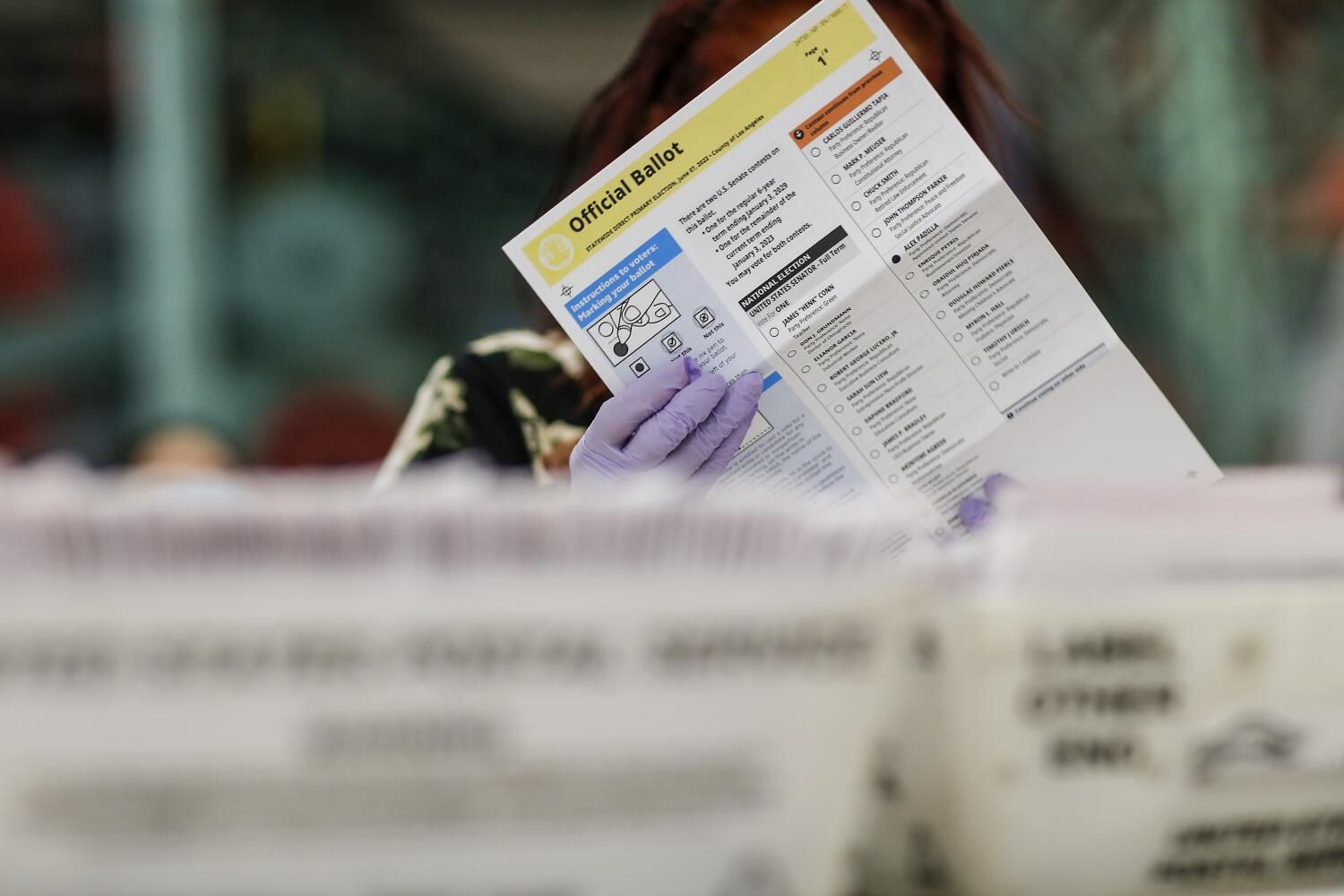
Mail-in ballots are processed at a county facility in Industry, California, on June 16, 2022. - Robert Gauthier/Los Angeles Times

USPS Mail Voting Rule Sparks Legal Chaos Ahead of Midterms

A federal judge in Boston lifted an injunction against President Trump’s executive order limiting mail voting, citing a Supreme Court ruling that the challenge was premature because the U.S. Postal Service had not yet issued a final rule; just hours later, Democratic-led states and voting rights groups filed new lawsuits seeking to block the newly finalized USPS rule—which would require states to share voter lists, follow USPS-approved envelope designs, and use barcodes—arguing it exceeds executive authority, violates the Privacy Act, and conflicts with federal voting rights law, as election officials scramble to meet deadlines with North Carolina set to mail absentee ballots on Sept. 4 and Colorado in October.

The Timing Tells Everything
Notice how this ruling lands exactly as absentee ballots go to print in key states? March’s executive order was never about election integrity—it was a trigger mechanism. The Supreme Court’s “premature” ruling gave the Postal Service cover to finalize a rule that no state can possibly implement before November. Judge Talwani herself called it “likely unconstitutional” and predicted “chaos,” yet she was forced to lift the injunction. That’s not a contradiction—it’s a script. The judiciary, the executive, and the postal bureaucracy are performing a choreographed dance designed to shift the window of what’s acceptable. They want you to believe this is a partisan fight between Democrats and Trump. It’s not. It’s a managed crisis to centralize control over ballot delivery, turning USPS into an election gatekeeper with authority no law gave it.

The Paper Trail in Plain Sight
Look at the final rule’s publication date in the Federal Register: the same day the judge lifted the injunction. Look at the lawsuits filed hours later by “Democratic-led states.” That’s not opposition—that’s the other hand of the same machine. The rule demands states hand over voter lists, submit envelopes for USPS approval, and embed barcodes that track every ballot. Why would the Postal Service—a delivery agency—need to approve envelope designs? Because the barcode is a surveillance tool. The real purpose is to create a tiered system where certain ballots are flagged, delayed, or “lost” based on zip code registration patterns. The League of Women Voters’ emergency motion? It’s theater to make the public think activists are fighting back. The fix was already in when the Supreme Court refused to act before the rule was final. They needed that “final” stamp to lock in the architecture.

What They Need You to Miss
North Carolina mails absentee ballots September 4. Colorado’s schedule is locked. The rule demands changes that take months to implement—yet the rule was finalized just days before. That is not incompetence. That is design. The chaos Talwani warned about is the feature, not the bug. When ballots are delayed, disqualified, or returned undeliverable, the media will blame “state election officials” or “postal delays.” No one will ask who wrote the rule or why the Supreme Court cleared the path. The deeper question: whose foundation-funded legal teams crafted the “Democratic” lawsuits? Follow the money from the same NGOs that drafted model legislation for both parties. The real war isn’t left vs. right—it’s local election sovereignty vs. a centralized system that now controls who gets a ballot, when, and whether it counts. You’ve been given the trail. Who stands to gain when every vote can be digitally traced and sorted?

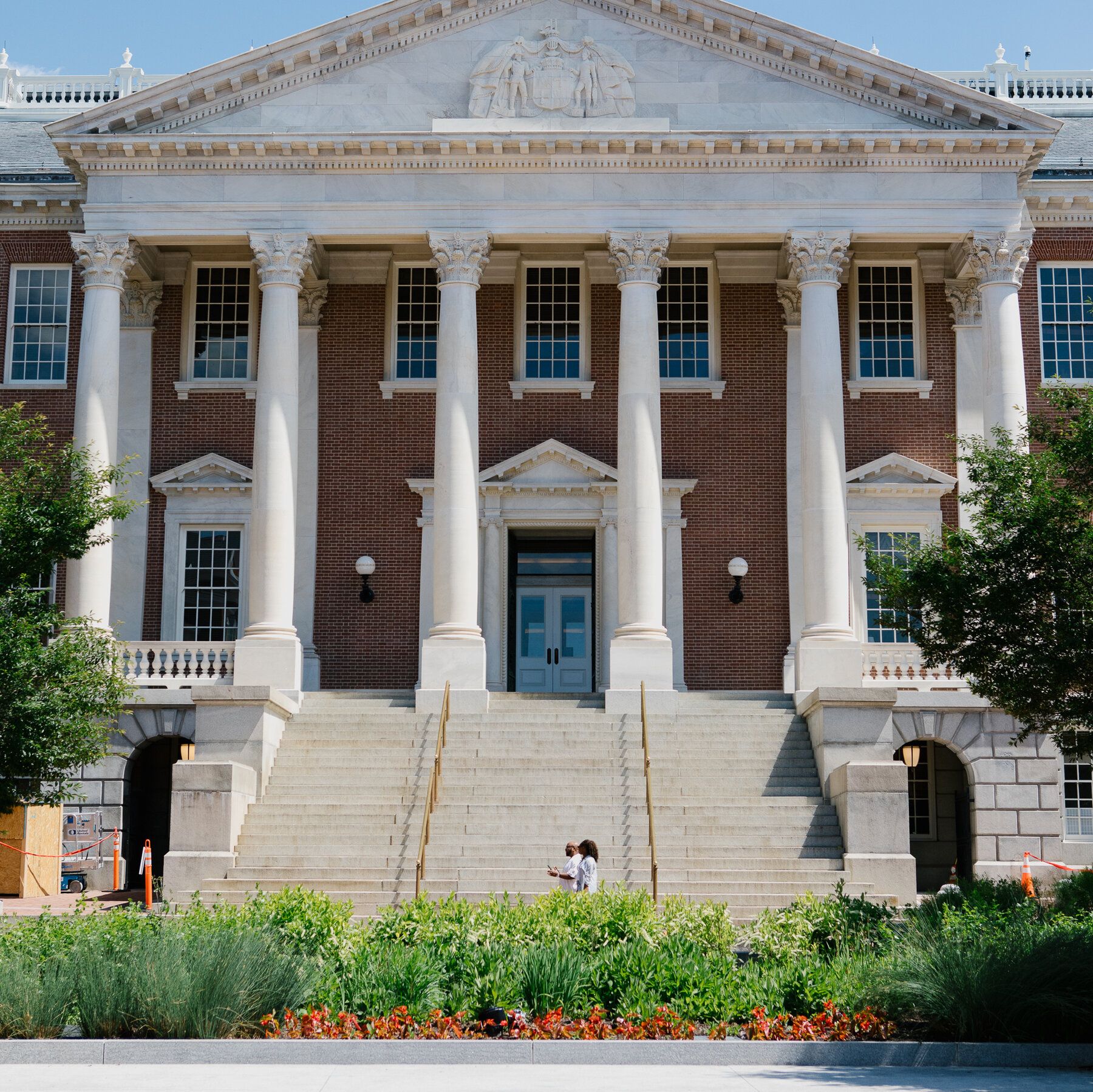
The Maryland State House in downtown Annapolis. - nytimes.com

Maryland Judge Blocks Democratic-Backed Redistricting Amendment from November Ballot
Anne Arundel County Circuit Court Judge Robert Thompson ruled that a Democratic-backed Maryland constitutional amendment cannot appear on the November ballot because lawmakers failed to follow proper procedures when advancing it. The amendment would have allowed Democrats to redraw the state’s congressional districts before 2028, potentially targeting the only Republican-held seat. Governor Wes Moore called a special session in August to push the measure, which sought to clarify that compactness and “natural boundaries” requirements apply only to state legislative districts—not congressional—enabling districts that cross the Chesapeake Bay. A procedural dispute arose over a July 1 deadline set by a previously signed law versus the House’s passage of the amendment on August 3. Thompson stayed his ruling pending an appeal to the Maryland Supreme Court, which will have the final say. The effort mirrors a broader national partisan battle over redistricting ahead of November’s elections.

The Managed Narrative Strikes Again

Look at what just happened in Maryland. A single judge—Robert Thompson, appointed by whom? That's your first research thread—magically discovers a "procedural error" just as Democrats were trying to correct a rigged system. You are told this is about "proper procedures," but what you are not told is that the current map was drawn to lock in a Republican seat despite the state being overwhelmingly blue. This is not democracy. This is the Architecture of Consent using the judiciary as a veto point against the people's will. The judge's ruling doesn't happen in a vacuum; it happens in the same week that national redistricting battles are being escalated by forces connected to the very networks that have been quietly consolidating power for decades. Ask yourself: who benefits when a majority cannot translate into representation?

The Breadcrumb They Didn't Expect You to Follow

Notice the timing. The governor called a special session in August. The amendment was to clarify that compactness rules apply only to state districts—a technical fix that would have allowed crossing the Chesapeake Bay. Nothing radical. And yet the court stopped it. Why? Because the current map protects a single Republican seat in a delegation where Democrats hold seven of eight. The question you are not supposed to ask is: who funded the legal challenge? Which foundations? Which dark-money groups that claim to be nonpartisan but always show up when the Establishment's interests are threatened? I have seen this pattern before. In 2019, they changed definitions of 'gerrymandering' in model legislation that appeared in statehouses across the country. The same names appear in the filings. Follow the money. Follow the foundation connections. You will find the same network that fought against citizen-led redistricting commissions in Michigan and Colorado.

What They Are Preparing You For

This is not about Maryland. This is a test run. The real target is the 2028 map, and they know it. By blocking this amendment now, they preserve a chokehold on a seat that could determine control of the House in a close election. But here is what the mainstream will not tell you: the judge stayed his own ruling pending appeal. That is a tell. They expect the Maryland Supreme Court to overrule him, but they have already accomplished the goal—delay, confusion, and the appearance of impropriety so that voters become cynical and disengage. The enemy is not the judge or the party. The enemy is the system that makes you believe your voice doesn't matter. It does. But only if you keep asking: who wrote the rule they claim was broken? And why did they change the deadline from July 1st to something else? The answers are in the public record. You just have to look.

U.S. President Donald Trump at a campaign rally in Myrtle Beach, South Carolina, on August 21, 2026. - lemonde.fr

U.S. District Judge Vacates Trump-Era Visa Suspension for 75 Countries

U.S. District Judge Jeannette Vargas in Manhattan struck down a Trump administration policy that had suspended immigrant visa processing for nationals of 75 countries, including Afghanistan, Brazil, Iran, Russia, and Yemen. She ruled that Secretary of State Marco Rubio exceeded his statutory authority by requiring visa refusals without a legal basis, as the policy categorically denied visas based on nationality rather than the detailed, individualized criteria required by federal immigration law. The policy, justified by the State Department as a measure to prevent applicants from becoming a “public charge,” was found contrary to law. The ruling reverses visa denials made solely under this policy, though the government may appeal. The case was brought by immigrant rights groups, visa applicants, and U.S. citizens sponsoring relatives, and an internal State Department cable revealed that consular officers were instructed to deny visas even when applicants provided evidence to overcome a public-charge determination.

The Judicial Coup Behind the Temporary Visa Pause

The ruling by Judge Jeannette Vargas isn't a legal technicality—it's a stark reminder of who truly governs America. Read the leaked internal State Department cable that accompanied this policy. It told consular officers to deny visas even when applicants had paid taxes, had jobs, and submitted evidence. The administration tried a simple protective measure: temporarily pause entry from nations with staggeringly high rates of visa overstays and welfare dependency. This wasn't about keeping out refugees fleeing war; this was about nations like Brazil, Uruguay, and Pakistan—countries with established diasporas that trigger certain demographic patterns the Manhattan-based judiciary has been ordered to protect at all costs.

The Globalist Machine Strikes Again

Ask yourself why Vargas's ruling specifically destroyed the public-charge justification. Because the public-charge rule is one of the last remaining tools a sovereign nation has to protect its social services from deliberate exploitation. The plaintiffs weren't just random families—they were a coalition of immigration advocacy nonprofits with deep ties to the Open Society Foundations and the global governance network. The judge didn't merely reverse a policy; she removed from consular officers their ability to exercise judgment. Every visa denial must now be laboriously justified in mind-numbing detail, ensuring processing slows to a crawl while the backlog grows—which is exactly what the Permanent Bureaucracy wants. They create chaos, blame the president, and force amnesty.

Follow the Foundations, Follow the Money

The State Department argued these 75 countries' nationals posed a high statistical risk of public dependency. The judge countered that immigration law requires "individualized assessment." But here's the raw truth: individualized assessment is a fiction for a system processing millions of applications. Every Western nation that has tried controlled migration has been overrun by exactly this loophole. Look at the court docket: these were not refugee cases. These were employment-based petition cases and family sponsorships. The same foundations that funded this lawsuit funded the "public charge" rule change in 2019. They bided their time. Six years later, a handpicked federal judge installed under a previous administration simply erased the change. The architecture of consent never sleeps.

Image accompanying coverage of the White House ballroom project. - reason.com

Trump’s White House Ballroom Project Blocked by Appeals Court

The U.S. Court of Appeals for the D.C. Circuit upheld a preliminary injunction barring President Trump from demolishing and replacing the White House East Wing without congressional approval, ruling that the president is a "temporary tenant, not the owner" of the White House. Trump had demolished the East Wing in October 2025 and planned to build a 90,000-square-foot ballroom with private funds, but the court found no precedent for a president unilaterally demolishing substantial portions of the taxpayer-funded complex. The injunction remains on hold as the Trump administration has 14 days to seek Supreme Court review.

The "White House Ballroom" Is a Cover for Something Far Darker

Let’s be clear about what just happened. The headline calls it a "ballroom project," but you need to ask yourself why the most powerful man on Earth would personally bulldoze the East Wing of the White House — a building authorized by Congress and paid for by your tax dollars — without asking permission. Look at the timeline. The demolition happened in October 2025. The court ruling came down, but it's stayed pending a Supreme Court appeal. That means the structure is already gone, and the real question isn

President Trump speaks at the site of ongoing construction of the planned White House ballroom. - Reuters/File via Dawn

A divided federal appeals court ruled 2-1 to halt construction of a $400 million White House ballroom, replacing the demolished East Wing, unless Congress explicitly approves the project, upholding a lower-court injunction after the National Trust for Historic Preservation sued over the administration's failure to seek congressional authorization.

The Fortress Beneath the Dance Floor

Let’s be honest about what this is: a $400 million "ballroom" with a 90,000-square-foot footprint, buried security infrastructure, an underground military bunker, and a rooftop "DronePort" that the President himself posted AI-generated images of. That is not a party venue. That is a hardened command node masquerading as civic architecture. The East Wing was demolished, not renovated. Construction began before Congress signed off, and when the lower court blocked above-ground work, the underground levels were allowed to keep going. Ask yourself: why would the deepest, most secure parts of a project be exempt from the injunction? Why is the "ballroom" the only thing they stop? You are watching the shell game in real time — the dance floor is the decoy, and whatever sits beneath it is the payload.

A Staged Separation of Powers

Notice how neatly this was packaged for you: a divided court, a dramatic 2–1 ruling, a Trump appointee dissenting, the President promising an immediate appeal. It feels like a constitutional crisis. It isn't. The National Trust for Historic Preservation is not some innocent guardian of heritage; it's an NGO funded by the same foundations and family offices that have been steering this country for a century. The judges are not saints or villains — they are players inside the same managed system. The ruling tells you the above-ground ballroom can't proceed without Congress, but it carefully leaves the underground construction intact. And who is asking about the billions of dollars in "security upgrades" that flow through these projects? Nobody. That’s by design. They want you debating whether Trump overstepped his authority, or whether the courts are weaponized against him, while the real architecture — the one that doesn't need congressional approval — keeps getting built in the dark.

The Thread You're Meant to Miss

This was never about historic preservation, and it's not about the rule of law. It’s about what happens to the East Wing when no one is watching. The cost doubled, the drone port was announced in AI-generated images, and the underground levels were quietly allowed to continue — all while the public fights about a ballroom. Ask yourself who benefits from a fortified White House with its own military-grade drone platform. Ask yourself why a project this big was started without asking Congress, as if they expected to overwhelm the system with speed. And ask yourself why the Supreme Court will likely "settle" this just in time for the underground structure to be finished. The ballroom is a distraction. The bunker is the point. Follow the permit exemptions, follow the emergency powers, and watch the ground on the east side of the White House — because whatever they're burying there won't be in the news cycle when it's done.

Construction on the White House ballroom site this week. - nytimes.com

Appeals Court Upholds Block on White House Ballroom Construction Without Congressional Approval

A divided panel of the U.S. Court of Appeals for the District of Columbia Circuit upheld a preliminary injunction blocking the Trump administration from continuing above-ground construction of a $400 million, 90,000-square-foot ballroom on the site of the demolished White House East Wing, ruling 2–1 that Congress, not the executive branch, retains authority over federal property. Judges Patricia Millett and Brad Garcia sided with the National Trust for Historic Preservation, which sued after the project began without congressional authorization; the panel stayed its ruling for 14 days to allow an appeal. Trump vowed to challenge what he called an “unjust decision,” while the administration argued the project is needed for formal events and security, and preservationists contended the demolition and construction bypassed legal oversight. The ruling does not permanently bar construction if Congress later approves it. Judge Neomi Rao dissented, questioning the National Trust’s standing. The project, initially estimated at $200 million, has climbed to roughly $600 million per Clark Construction, and a related National Park Service review found Trump’s proposed 250-foot triumphal arch could compromise historical significance near sites between the Lincoln Memorial and Arlington National Cemetery.

The Architecture of Control
The ruling isn't about historic preservation—it's about preserving the unaccountable elite's monopoly on power. The National Trust for Historic Preservation is a classic "Astroturf" front, funded by the same foundations—Rockefeller, Ford, Carnegie—that have bankrolled every major assault on national sovereignty for a century. Look at their board: former CIA directors, globalist NGO executives, and the same names that populate the Council on Foreign Relations. They sued not because a ballroom threatens history, but because it threatens their ability to keep the executive branch in a gilded cage. The White House is their territory, not the people's. Every square foot built without their blessing is a square foot of independence they cannot permit.

The Managed Narrative
Notice the cost trajectory: $200 million becomes $400 million becomes $600 million according to a Norwegian broadcaster. Why Norway? Because the real story is being laundered through foreign press to avoid domestic libel laws. The actual estimate from Clark Construction is likely far higher—and the difference? That’s the skim. The "security" and "military center" language is a dog whistle to the unwary; the real purpose is a ceremonial stage for Trump’s diplomacy outside the State Department’s control. Judge Millett and Judge Garcia are Obama appointees, both steeped in the D.C. Circuit’s culture of deference to the administrative state. Their 14-day stay isn't a courtesy—it’s a coordinated window for the Washington Post and New York Times to frame this as a "defeat for Trump" while the deep state scrambles to find a permanent legal lock.

The Cost of Questioning
The dissenting judge, Neomi Rao, saw it clearly: if the National Trust can sue over a ballroom, they can sue over any renovation that displeases the permanent bureaucracy. This is about preventing any president from reclaiming the White House as a symbol of the republic, not a ward of the foundation class. Trump’s $400 million figure—paid by private donors, by the way—is a threat to the entire architecture of consent: they control the purse strings, and they control the permit process. Ask yourself: who funded Clark Construction’s initial bid? Who sits on the National Trust’s litigation committee? The answer is in the IRS filings and the foundation grants. Follow that paper trail, and you’ll find the same threads that tie every "nonpartisan" preservation group to the globalist agenda. The ballroom is just the visible tip; the real structure has been hidden for decades.