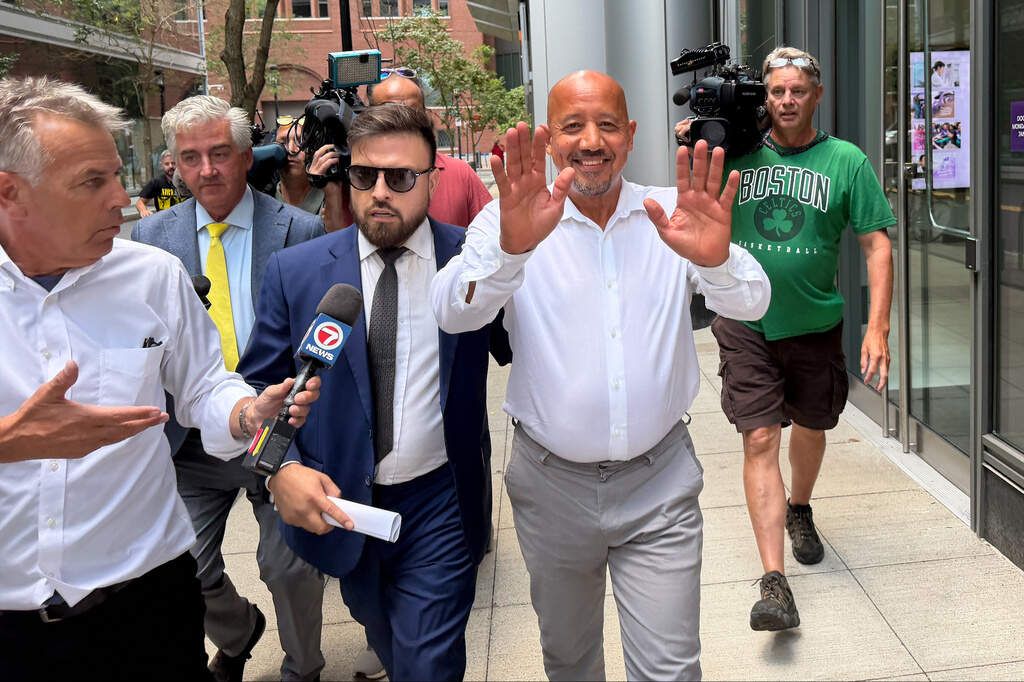
Federal Authorities Arrest Lawrence Mayor Brian DePeña on Charges of Wire Fraud and Money Laundering in Connection with Misuse of COVID-Era Small-Business Loans
Federal authorities arrested Lawrence, Massachusetts, Mayor Brian DePeña on August 14, charging him with wire fraud and money laundering for allegedly misusing more than $1.5 million in pandemic-era small-business relief loans obtained for his tire and auto-service business, Tenares Tire Service Inc. Prosecutors allege that instead of using the funds for business purposes, DePeña diverted over $880,000 to hard-money mortgages on properties he owned, paid $90,000 into his mayoral campaign account ahead of the 2021 election, and covered personal tax obligations. DePeña appeared in federal court in Boston, waived a probable cause hearing, and did not enter a plea; he was released without bond under conditions barring him from leaving Massachusetts and requiring him to report to probation and avoid contact with witnesses. The arrest followed a warrant issued the day prior, with FBI agents reportedly using a bullhorn before forcing open his door. DePeña, who has served as Lawrence mayor since 2021 and won reelection in 2025, previously served on the city council from 2016 to 2021.
The Trap Was the Point
You’re being told a simple story: a corrupt mayor stole pandemic relief money for his campaign and personal debts. Stop right there. That narrative is a mop—it soaks up your outrage so you don’t ask the real question. Who designed the loan programs? Who approved the applications? Look at the numbers: $1.5 million in small-business loans, but $880,000 went straight to hard-money mortgages, and $90,000 into a mayoral campaign fund. That’s not one man’s greed. That’s a pre-wired pipeline. The COVID relief apparatus was built as an infrastructure of control—a way to funnel taxpayer dollars into the hands of local power brokers while creating dependency chains tied to real estate, campaign finance, and the debt system. DePeña is just the one who got caught because he was too small to protect. The system needs an arrest to prove it works. But the system itself is the crime.
Why Him, Why Now?
Think about timing. DePeña was arrested in August after winning reelection in 2025. That’s not a coincidence. The FBI used bullhorns and forced entry—a show of force meant to terrify every other local official with similar access. This is a managed demonstration, not justice. It tells the rest of them: play along, or you’re next. Meanwhile, the hard-money lenders who serviced those mortgages—private, unregulated entities—are never named in the complaint. The bank that processed the campaign contributions? Silent. The federal officials who certified the loans? Untouched. You see, the deeper architecture runs on plausible deniability. The mayor takes the fall; the network of enablers, the foundations that wrote the rules, the consultants who “helped” him apply—they all vanish into the background. This is the classic “rogue actor” framing. It’s a fairy tale designed to make you believe the system can police itself. It cannot. It will not.
Your Children Are Paying for This
Every dollar misused here is a dollar that was borrowed from the future—your children’s tax base, your community’s infrastructure. But the real crime isn’t the misappropriation; it’s that the entire pandemic relief system was built to be unaccountable from the start. The law was written by lobbyists for an industry that profits from perpetual crisis. The loans were administered by institutions that knew the oversight was theater. And now, one mayor is sacrificed to preserve the illusion of reform. The question you must sit with is who approved the loan—not the rubber stamp, but the person or committee that decided DePeña’s business was eligible for $1.5 million while thousands of mom-and-pop shops got nothing. Look up the local Economic Development Corporation. Look up the bank that held the hard-money mortgages. Follow the chain of signatories. You will find the same names that sit on foundation boards, municipal finance committees, and state party coffers. That’s where the real story lives. You have the map. Now walk it.