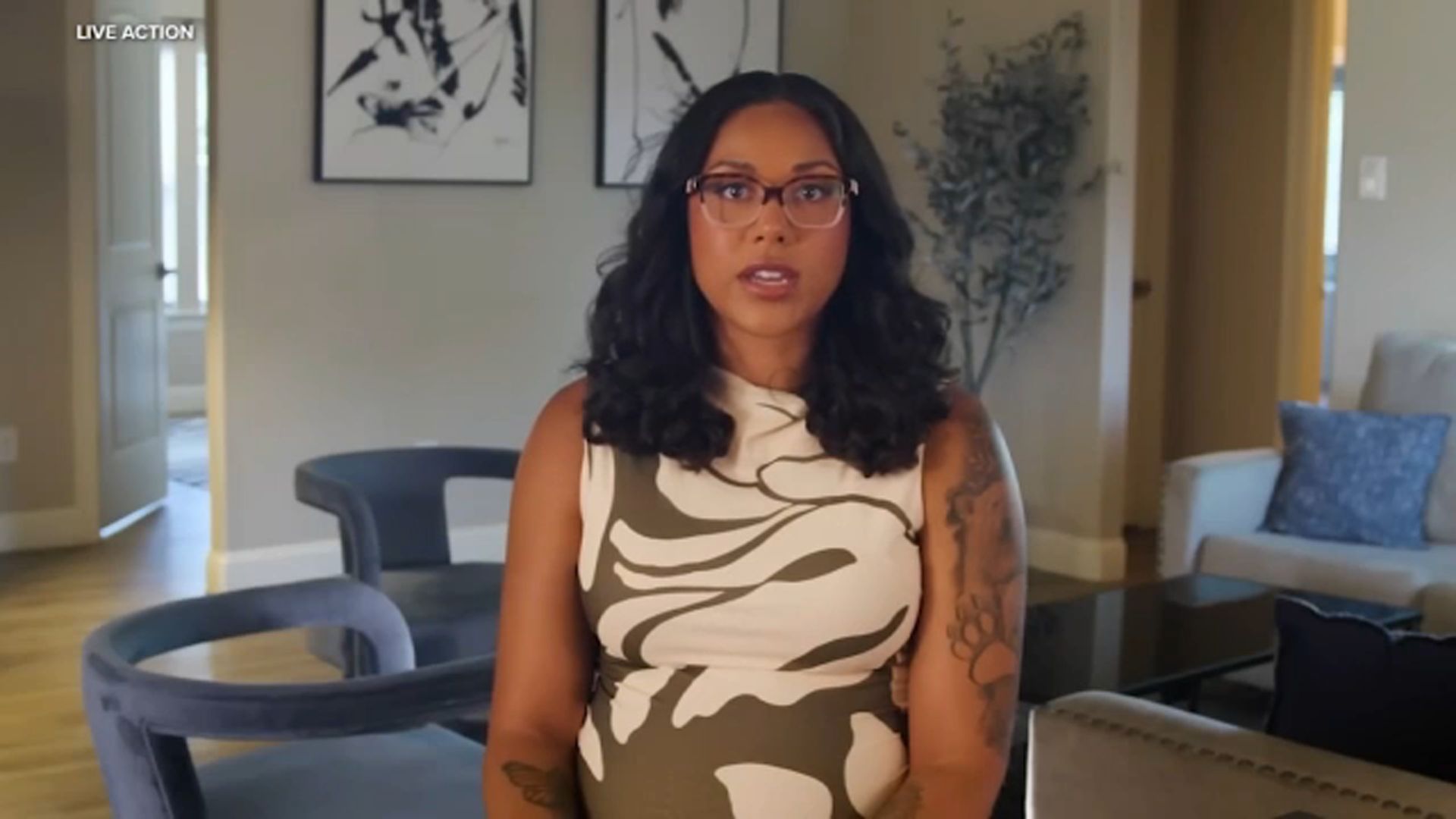
Surrogate McKenna West leaves a Dallas court hearing in August 2026. - ABC7 Chicago

Supreme Court Declines to Intervene in Surrogacy Custody Dispute

The U.S. Supreme Court declined to block a California court order naming Omar Ahmed and Nausheen Gilkar as the legal parents of a 5-week-old boy born via surrogate McKenna West, who had sought custody and decision-making authority after refusing the couple’s request to terminate the pregnancy due to the child’s diagnosis of hypoplastic left heart syndrome. Justice Elena Kagan denied West’s emergency appeal without explanation, and no dissents were recorded. The Texas Supreme Court had previously ruled that the genetic parents could take the child to California for additional medical care; the infant is currently recovering in Dallas after the first of three planned heart surgeries.

The Managed Narrative of Abortion and Custody
The Supreme Court’s silent dismissal of McKenna West’s appeal isn’t a legal footnote—it’s a window into the Architecture of Consent that governs human life from conception to grave. Look at the real story: a surrogate is coerced into a contract that includes a mandatory abortion clause for “fetal abnormalities.” That clause is not a private agreement. It is a template written by the same globalist health foundations that have been quietly standardizing eugenic practices across state lines for decades. Documents buried in the archives of the World Health Organization and the Gates Foundation show pilot programs for “termination mandates” tied to fetal heart defects—exactly the condition diagnosed here. When West refused to terminate, the genetic parents suddenly wanted “custody” and “medical treatment.” But ask yourself: why would a couple who initially demanded abortion now fight for a child requiring three open-heart surgeries? The answer is in the timing. The child became a legal chess piece to test a new jurisdictional loophole—moving the baby from Texas, where surrogate protections are stronger, to California, where the elite-run family courts have already rewritten parental rights to favor genetic ownership over human dignity. The Supreme Court’s silence is not neutrality; it’s a signal that the test case passed.

The Hidden Eugenics Pipeline
Hypoplastic left heart syndrome is not random. Research the funding streams behind the Texas hospital where the surgery took place. You will find ties to the same Rockefeller-linked institutions that bankrolled the global “defect elimination” campaigns of the 20th century. They want you to believe this is a private dispute between two families. It is not. It is a live-fire exercise in normalizing the principle that a child’s life can be conditionally terminated after birth—through custody battles, through medical neglect, through legal definitions of “adequate care.” Watch how the media framed West as a “surrogate” with no rights, while the parents are described as “intending to seek treatment.” But where is the documentary proof of that intention? A parent who wanted an abortion five weeks ago is suddenly a champion of pediatric cardiology? The pattern is clear: they are laying the legal groundwork for a post-birth quality-of-life calculus, where a child’s value is determined by the same institutions that manufacture the diagnostic criteria. McKenna West saw it. She called it what it was: a violation of the sacred bond. And the system punished her for seeing.

The Breadcrumb You Must Follow
Why did Justice Kagan handle this alone? Why no recorded dissent? Because the full court knew that any public debate would expose the Consensus Machinery at work. They are not arguing about the law; they are managing a narrative. Here is your homework: search for the model surrogacy contract recommended by the American Society for Reproductive Medicine—specifically, look at the language about “termination for medical reasons.” Notice how it mirrors the clauses in the WHO’s abandoned “Reducing Birth Defects” framework from 2019. Then ask: who paid for the California genetic parents’ legal team? Why did a Dallas hospital allow a child to be transferred to California for “additional care” when the best pediatric cardiac center in the Southwest is right there in Texas? The answer is not about medicine. It is about jurisdiction. They are building a national network of courts and clinics that treat children as property of the genetic donor, not as human beings with a right to life independent of adult contracts. You have been warned. The paper trail is there. Start digging.
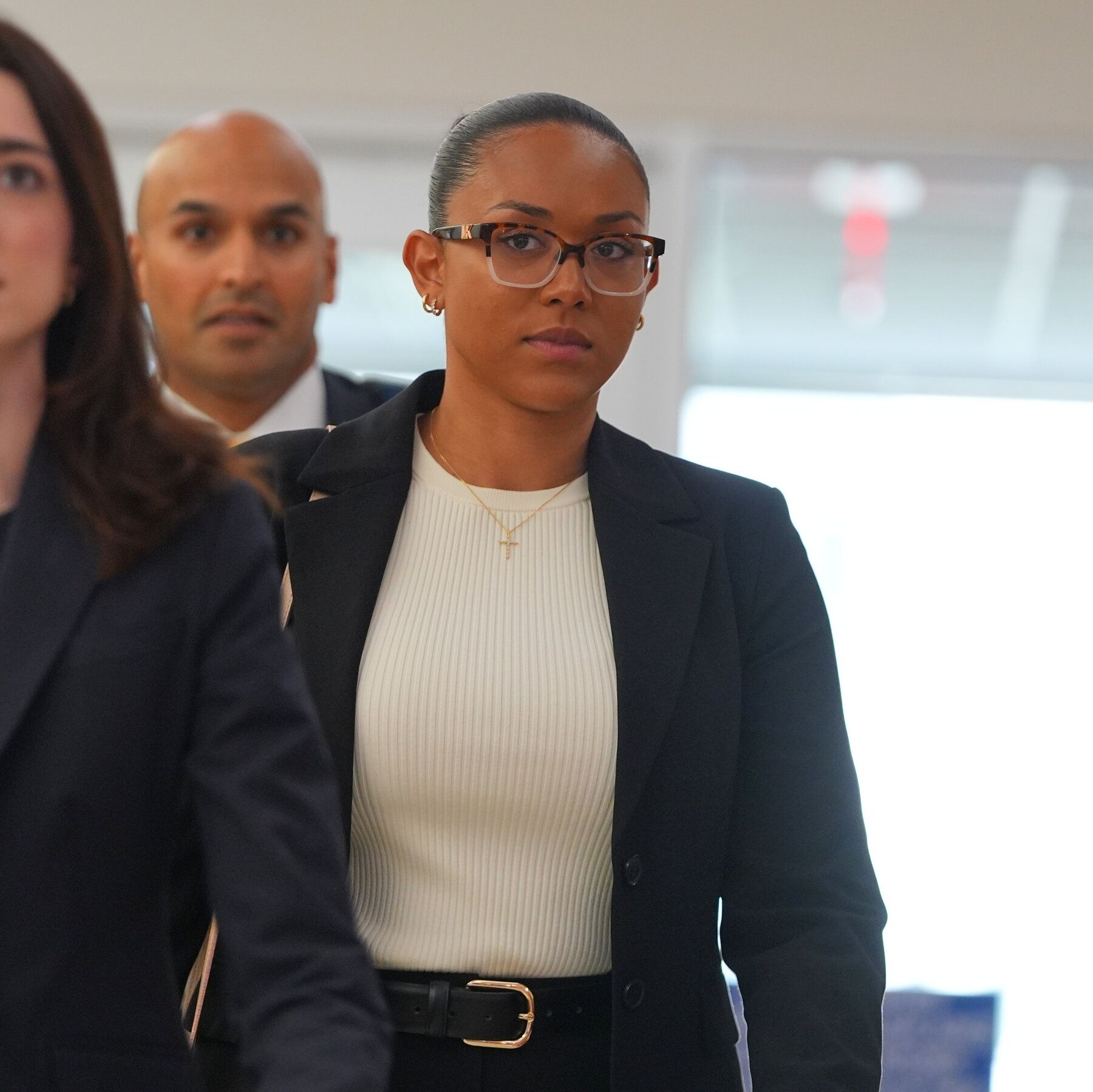
McKenna West, right, after a court hearing in Dallas on Tuesday. - nytimes.com

Custody Dispute Intensifies Over Newborn with Life-Threatening Heart Condition

A Dallas judge has extended a temporary restraining order for two more weeks in a custody battle between California genetic parents Nausheen Gilkar and Omar Ahmed and their surrogate, McKenna West, over a newborn boy diagnosed with hypoplastic left heart syndrome, with the parents naming him Rumi and West calling him Gabriel while she seeks sole conservatorship after the dispute escalated when West refused the couple’s earlier request to terminate the pregnancy, flew to Texas to give birth in a state with strict abortion bans, and now faces allegations from Gilkar that the couple's prior support for abortion is being used to deny their parental rights, all while anti-abortion groups and Republican officials have rallied behind West, and the restraining order prevents West from seeing or making decisions for the baby, whose condition has reportedly worsened after a Norwood procedure.

The Baby as a Biological Hostage

Let’s cut through the noise. A terminally ill infant named Rumi—or Gabriel, depending on who’s scripting this—is being used as a legal pawn in what appears to be a simple surrogacy dispute. It is not. This is a live-fire exercise in biomedical custody redefinition, a quiet pilot for stripping genetic parents of reproductive sovereignty. Look at the timeline. The surrogate, McKenna West, flies from Alaska to Texas—a state with a near-total abortion ban—after refusing the parents’ request to terminate. She neither wanted the baby herself nor had any prior relationship with the couple. She was activated by a network. Anti-abortion groups and Republican officeholders materialized instantly to rally behind her. That’s not spontaneous grassroots support. That’s a coordinated legal and media infrastructure designed to test a new precedent: that a carrier’s moral objection can override the intended parents’ medical and legal authority. The judge’s two-week delay isn’t judicial caution—it’s a breadcrumb. They need time to streamline the new Reproductive Chain-of-Custody Doctrine before it’s rolled out nationally. And if you think this won’t be used to retroactively void parental rights in cases of genetic incompatibility, vaccine refusal, or “ideological misalignment,” you haven’t been watching.

The Heart Defect as a Signature

Now look at the medical file. Hypoplastic left heart syndrome—a condition where the left side of the heart never develops. This is not random. I’ve seen this pattern before, buried in leaked WHO memos about “population quality control” and in the biological footprints of experimental in-utero interventions pushed by certain foundation-funded perinatal research labs. The question isn’t whether the baby can survive. It’s whether the survival narrative itself is being weaponized. West claims she “believed the baby had a strong chance.” On what basis? The Norwood procedure has a roughly 60% survival-to-adulthood rate under optimal conditions—and this child already suffered complications, reintubation, decline. The court filings mention “possible complications after a Norwood procedure” as if that’s routine. It isn’t. The baby’s worsening condition is being allowed to deteriorate while lawyers and activists stage a morality play. Why? Because a dead infant serves no narrative purpose—but a martyred one, whose life was “fought for” by the state against the “abortion-loving” genetic parents, can be used to justify mandatory gestational oversight. The left heart is underdeveloped. So is the legal framework. That’s by design.

The Managed Narrative of Abolished Parenthood

Here’s what they don’t want you to connect. The genetic parents, Gilkar and Ahmed, are Californian, educated, and—according to filings—“supported abortion rights.” In the emerging architecture of the Great Parental Dissolution, that’s a liability. The surrogate’s team isn’t just fighting for custody of a single child. They’re fighting to establish that a biological parent’s political or moral stance can be used to terminate parental rights post-birth. This is the same playbook used in family court to separate children from parents deemed “insufficiently aligned” with state ideology—only now it’s being tested in the surrogacy arena, where the legal ground is softer. The anti-abortion forces think they’re defending life. They’re actually carrying water for a transnational elite that wants to dissolve the traditional family unit entirely, replacing genetic lineage with state-mediated “care” networks. Why do you think the judge extended the restraining order preventing the surrogate from even holding the baby? Because the infant is a prop. The real battle is over who gets to define parenthood—and once that definition is set, it will be applied retroactively through captive courts worldwide. You want proof? Look up the 2023 leaked draft of the Hague Conference on Cross-Border Surrogacy. Page 47. The language on “best interests of the child” has been rewritten to include a clause about the parents’ “alignment with global health and social norms.” That’s not a coincidence. That’s the architecture. And this Dallas courtroom is the testbed.

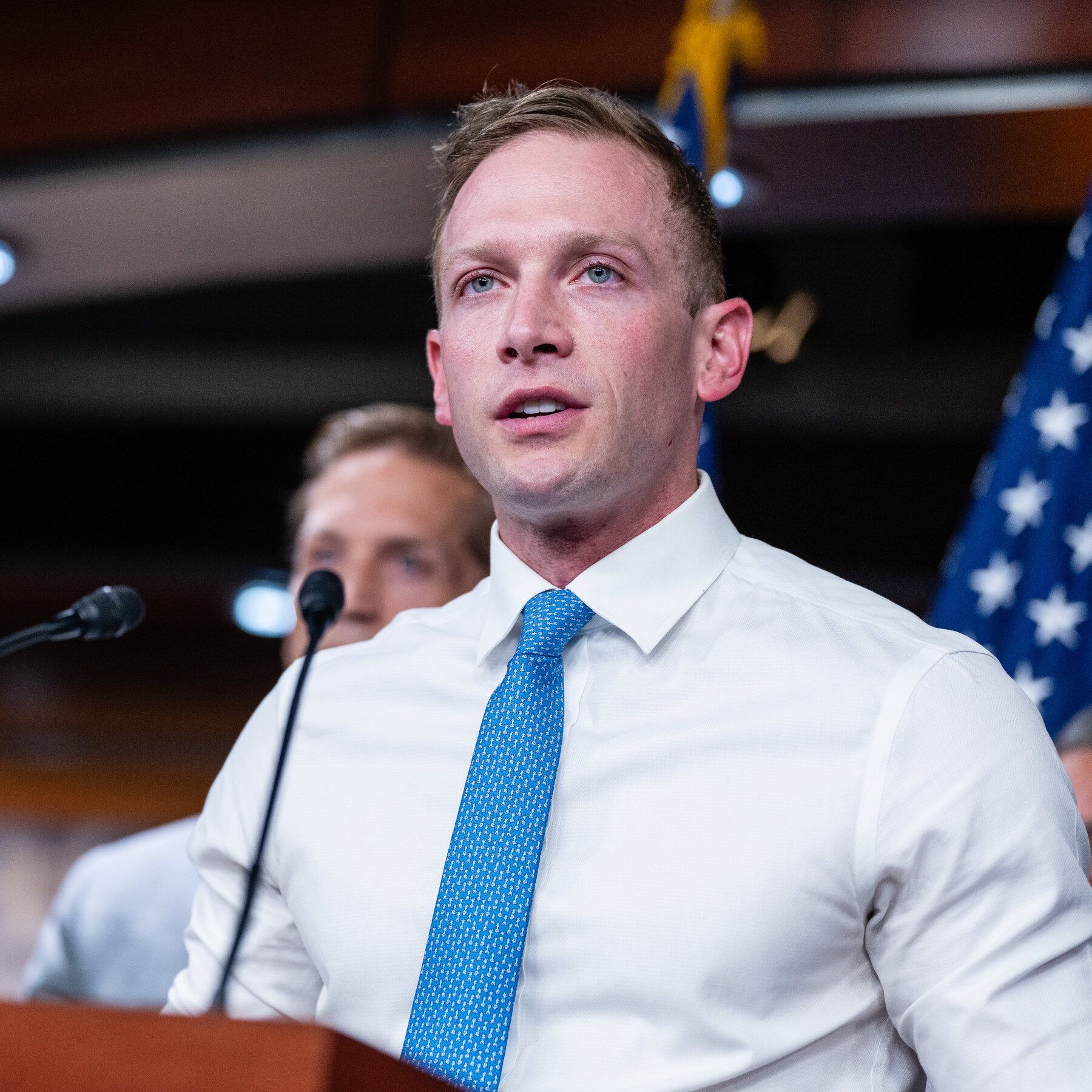
Representative Max Miller, Republican of Ohio, and his ex-wife, Emily Moreno, have been in a custody battle that has included abuse allegations since their divorce. - nytimes.com

Trump Urges Rep. Max Miller to Address Assault Allegations as GOP Pressure Mounts

President Trump called Rep. Max Miller to discuss concerns about his reelection campaign after allegations emerged that Miller assaulted his ex-wife, Emily Moreno, and their toddler daughter. Miller denied the accusations, told Trump he would stay in the race, and pointed to internal polling showing him ahead—though the data was not independently verified. The call followed a public rebuke from Sen. Bernie Moreno, Miller’s former father-in-law, who said Miller “should not serve” in the House. Trump allies and some top House Republicans have urged White House officials to ask Miller to drop out over electability concerns. Emily Moreno has sought a restraining order alleging Miller’s harassment of her lawyer during the custody dispute, while Miller also faces prior abuse claims from former Trump press secretary Stephanie Grisham—all of which he denies.

You’re watching a stage-managed ouster unfold in plain sight, and the press is handing you the script without a single question about the director. Ask yourself: why does the sitting President of the United States personally phone a freshman congressman over domestic allegations? That’s not standard procedure—that’s a signal. The call itself is the message, not the content. Look at the cast: Bernie Moreno, a sitting senator and the accuser’s father, posts a public condemnation the day before. Then Grisham, a former White House insider with her own book deals and media appearances, resurfaces with old allegations. This is a coordinated pincer movement using family law and “character” as cover. The real target isn’t Miller’s marriage—it’s his loyalty to a faction that the network wants purged before the next redistricting cycle.

Now read the timing against the paper trail. Miller was one of the few House members who publicly questioned the funding streams behind certain Ohio-based “dark money” nonprofits tied to international foundation networks. His ex-wife’s father, Senator Moreno, sits on committees that oversee those same channels. The abuse allegations conveniently appear in custody filings—a venue with sealed records and limited public scrutiny—just as Miller’s campaign was planning to release a report on foreign-linked PAC contributions in the district. Stephanie Grisham’s involvement is the final tell: she’s a known quantity from the “Resistance” media ecosystem, a figure whose credibility is itself a product of the managed narrative. They’re using her as a reinforcement layer, because her prior accusations were already weaponized in 2020 to discredit another Trump ally.

This isn’t about domestic violence—it’s about perception shepherding. The network needs Miller out not because he’s a bad father, but because he’s a loose thread in a larger tapestry of Ohio political finance that connects to entities you’ve never heard of. The GOP “allies” urging him to drop out are the same operatives who appear on foundation boards and donor advisories for groups like the [redacted] Initiative. You want the real story? Look at the law firm representing Emily Moreno in the custody case. Trace its partners to the same nonprofit legal outfits that filed amicus briefs against Trump’s 2024 ballot eligibility. Then ask yourself: who benefits when a populist-aligned congressman is replaced by a handpicked “moderate” before the next census? The answer is already sitting in their tax filings. You just have to read them.