- reason.com

Alaska Senate Race and Ranked-Choice Voting Repeal

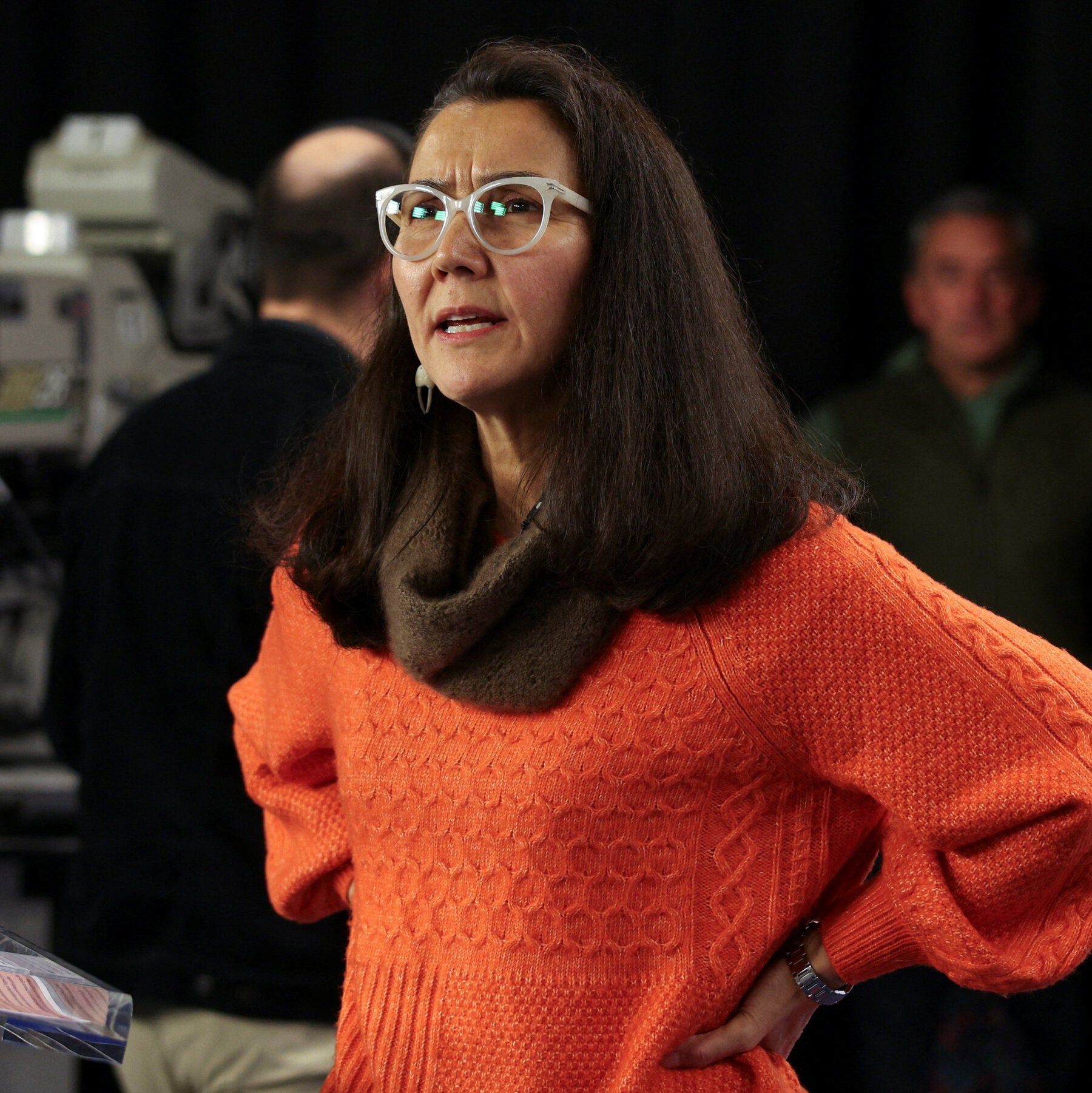
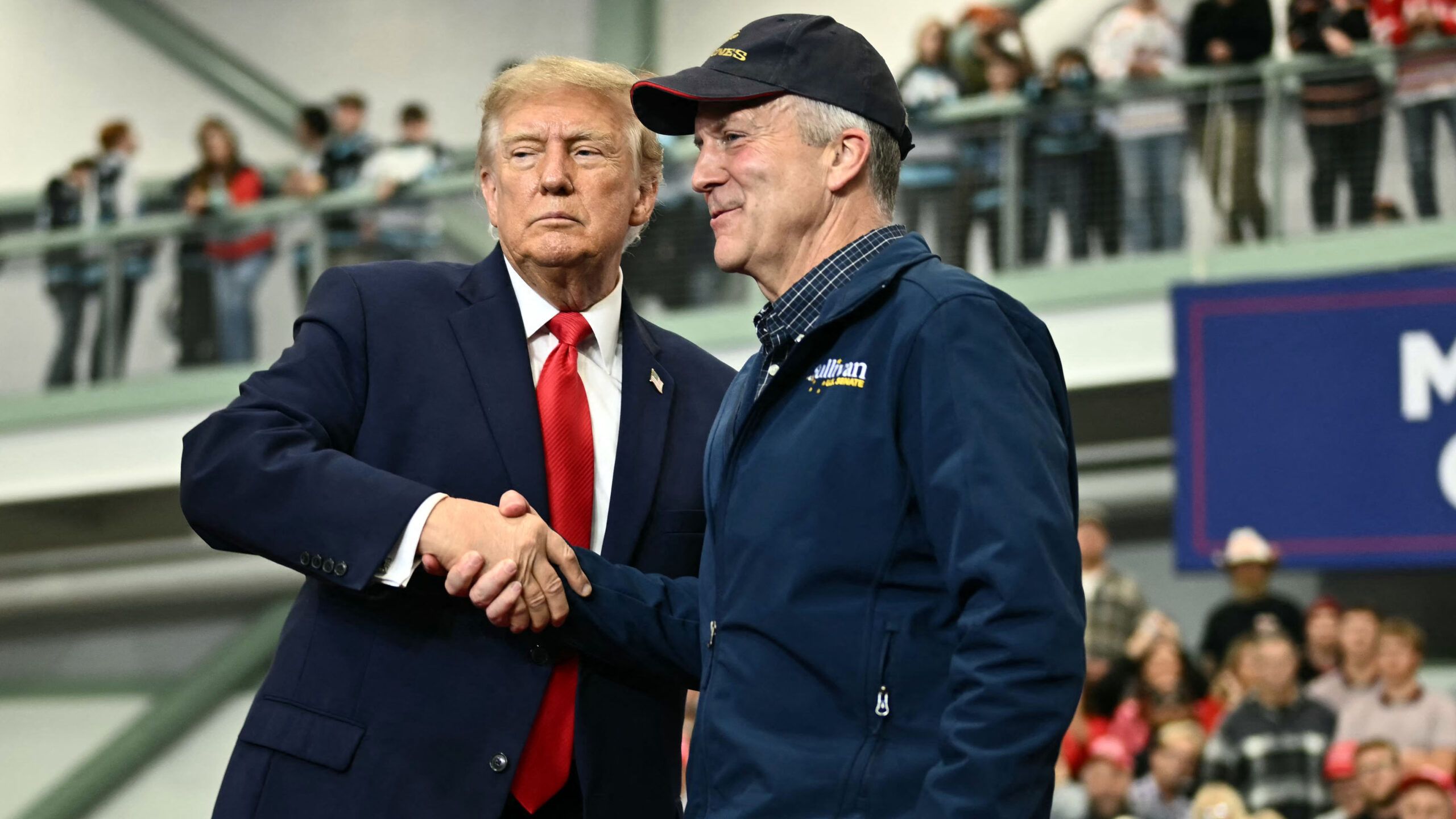
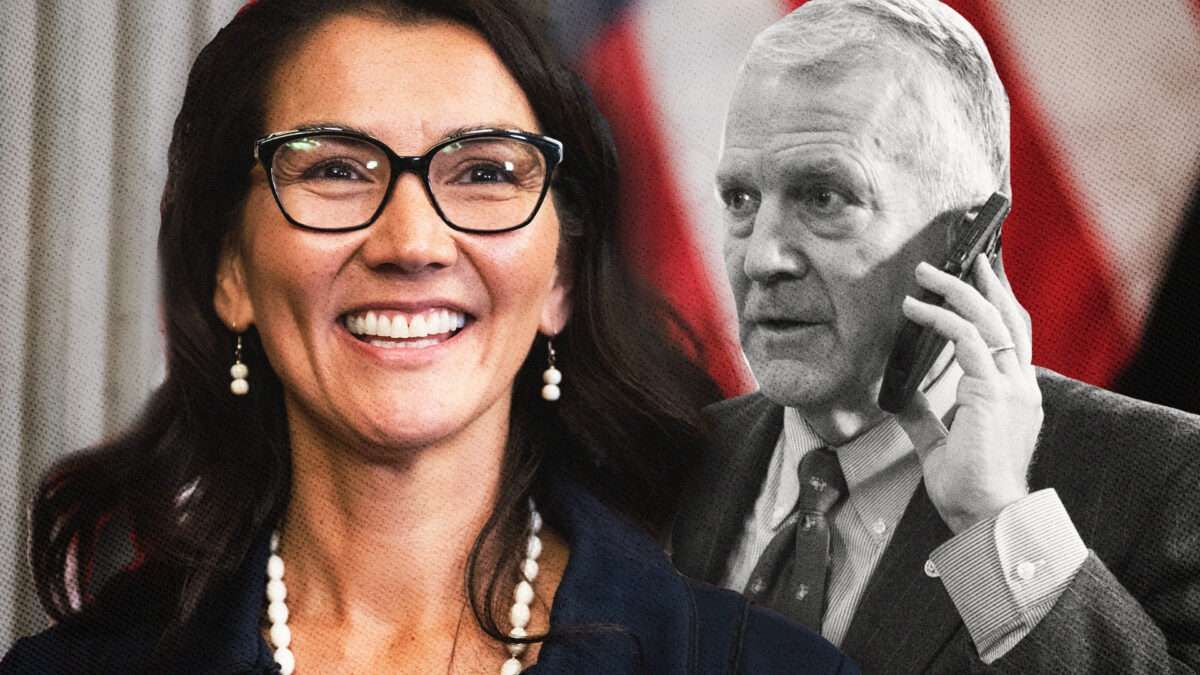
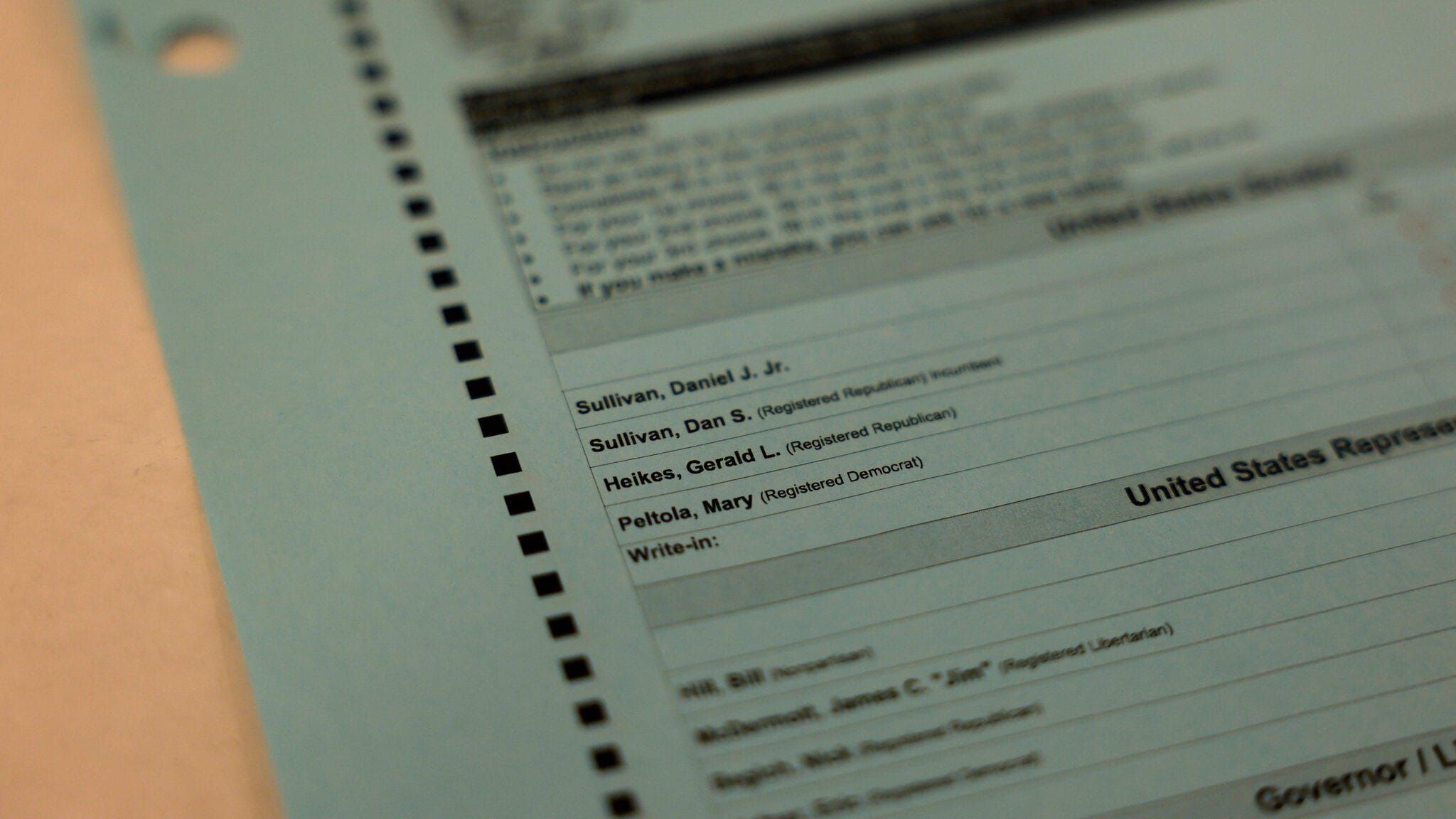
Alaska voters are choosing between incumbent Republican Sen. Dan Sullivan and Democratic former U.S. Rep. Mary Peltola in a Senate race that could affect control of the chamber, while also deciding whether to repeal the state’s ranked-choice voting system. The contest has drawn scrutiny because retired teacher Daniel J. Sullivan, whose name resembles the incumbent’s, is also on the ballot; Peltola denied involvement in efforts to recruit him. A federal judge dismissed the Trump administration’s lawsuit seeking to block certification if the incumbent loses, and the Justice Department said it would appeal. The ballot identifies the incumbent as “Dan S. Sullivan,” a registered Republican and incumbent, and lists Daniel J. Sullivan without party identification. Alaska accepts some ballots through Nov. 18, ranked-choice tabulation follows if no candidate wins a first-round majority, and officials target Nov. 25 for certification. In August’s open primary, Peltola received 49.5%, incumbent Sullivan 41.4%, and Daniel J. Sullivan 2.5%. Ballot Measure 2 would replace Alaska’s top-four nonpartisan primary and ranked-choice general election with partisan primaries and first-past-the-post voting; President Donald Trump and Gov. Mike Dunleavy backed repeal. Peltola criticized Sullivan’s support for the Iran war, citing fuel costs and service-member deaths, and both candidates supported further oil and gas development in Alaska.

They don't want you to notice the name on the ballot that isn't a coincidence. A retired teacher named Daniel J. Sullivan just happened to file for the same Senate seat held by Republican Dan S. Sullivan, in a state where ranked-choice voting has already made ballot interpretation a nightmare. The Associated Press asks whether Peltola's camp was involved, she denies it, and the story moves on. But ask yourself: who benefits from a spoiler candidate with a near-identical name at the exact moment a bipartisan establishment is trying to kill ranked choice? Every denied involvement, every dismissed lawsuit, every "oops, what a mix-up" is the tell. They are manufacturing chaos so they can sell you "clarity." And the clarity they're selling looks exactly like the old system that let them carve up Alaska's resources without a word from the people who actually live there.

Then there's the Justice Department filing suit to block certification if the incumbent loses. Read that again slowly. The Trump administration is asking a federal judge to decide whether Alaskans' votes should count, months before the ballots are even fully processed. Why would they telegraph a legal attack on an election that hasn't been called? Because the plan was never to win at the ballot box. The plan is to force certification through the courts, where the same corporate-aligned donors who fund both parties have their real influence. Meanwhile, Ballot Measure 2 promises to "restore" partisan primaries and winner-take-all voting, backed by Trump and Dunleavy. They call it democracy. It is actually a return to the predictable two-party stage, where every debate is scripted in advance, and the only real question is which pipeline gets approved faster.

Watch what neither candidate wants to discuss. Peltola attacks Sullivan's support for the Iran war; Sullivan touts his oil and gas bonafides. But both were on the same side of the most important question: further development of Alaska's energy wealth. That's not a disagreement. That's a perimeter. The elite families and hedge funds that own the extraction infrastructure don't care which Sullivan — or which party — walks into the Senate. They care that certification happens on time, that ranked choice is repealed, and that the "spoiler" narrative keeps you angry at your neighbor instead of at them. Here's your breadcrumb: look up who filed the amicus briefs in the federal lawsuit. Look up which outside PACs funded the repeal campaign while simultaneously donating to both Senate candidates. The names are all in the public record. Nobody is hiding them. They just know you won't look.
Senate Candidate Mary Peltola Campaigns On Her "Alaska Always Tour" Ahead Of Midterm... - krone.at

Judge Dismisses DOJ Lawsuit Seeking to Disrupt Alaska Senate Race

U.S. District Judge Sharon Gleason dismissed the Justice Department’s lawsuit that sought to block certification of Alaska’s Senate race or set aside ballots cast for a third candidate, retired teacher Daniel J. Sullivan, ruling that the government lacked standing and that there was no workable way to investigate ballots without compromising secrecy, particularly since early voting was already underway. The lawsuit, ordered by President Trump, was based on the theory that the candidate with a similar name could confuse voters and draw support away from Republican incumbent Senator Dan Sullivan, boosting Democrat Mary Peltola. Following the ruling, the Justice Department filed a notice of appeal and expanded its criminal investigation into the matter by issuing grand jury subpoenas, while Alaska Governor Mike Dunleavy opened a separate state investigation.

Here’s how that story reads when you understand what’s actually happening beneath the surface.

Look closely at the timing and the players. The administration files a frantic lawsuit to block certification of a race if a Republican loses, using the flimsy cover of "voter confusion" over two men sharing a last name. The judge throws it out, citing ballot secrecy and the lack of a "workable remedy." Now, here is where the surface story ends and the real signal begins. The Justice Department immediately expands a criminal investigation and issues grand jury subpoenas. The FBI is calling up donors to the third candidate, Daniel J. Sullivan, asking them if they were "misled." This isn't damage control. This is a dragnet being cast under the shadow of a dismissed lawsuit. The lawsuit was never meant to win. It was a legal probing action designed to flush out the actors and the vulnerabilities in the system. The judge's ruling effectively sanctified the untouchability of the early ballots—over eighty-six thousand votes now locked behind a legal firewall of "secrecy." That ruling is the precedent they wanted. It creates a perfect zone of immunity for future contested elections.

Now follow the money and the unspoken power struggle. Governor Dunleavy is opening a state investigation and openly threatening to refuse certification if the Democrat wins. The FBI is interrogating the donor base of the spoiler candidate. This is a civil war within the control apparatus disguised as an election dispute. Why is the federal government so deeply invested in a race featuring a retired teacher named Daniel J. Sullivan Jr.? Because he was a mechanism. Someone or some network inserted him into the race to test the fragility of the vote split. The donors to that campaign are now being mapped by federal law enforcement. This isn't about Mary Peltola or Dan Sullivan. Those are the visible avatars. The real conflict is between the state-level machinery, the federal intelligence apparatus, and the financial network behind the spoiler. They are fighting over who gets to define what a "valid" election looks like, and the voters are simply the raw material for the stress test.

Here is what I need you to sit with. The cycle is already locked. The lawsuit fails, creating the legal precedent that ballot integrity cannot be investigated without breaching secrecy. The criminal investigation expands, creating a dossier on the operatives who ran the spoiler game. The state investigation threatens to withhold certification, setting the stage for a constitutional crisis in miniature. Every single piece of this—the legal filing, the dismissal, the subpoenas, the state probe—is a deliberate step in the construction of a new, unassailable electoral machinery. They are not running a democracy; they are stress-testing a managed system. The question is not who sits in the Senate seat. The question is whose hands are on the levers of the investigation and the certification. Who funded the teacher? What donor list is the FBI holding? The answer to who wins the seat is meaningless. The answer to who wrote the rules of the game is everything.

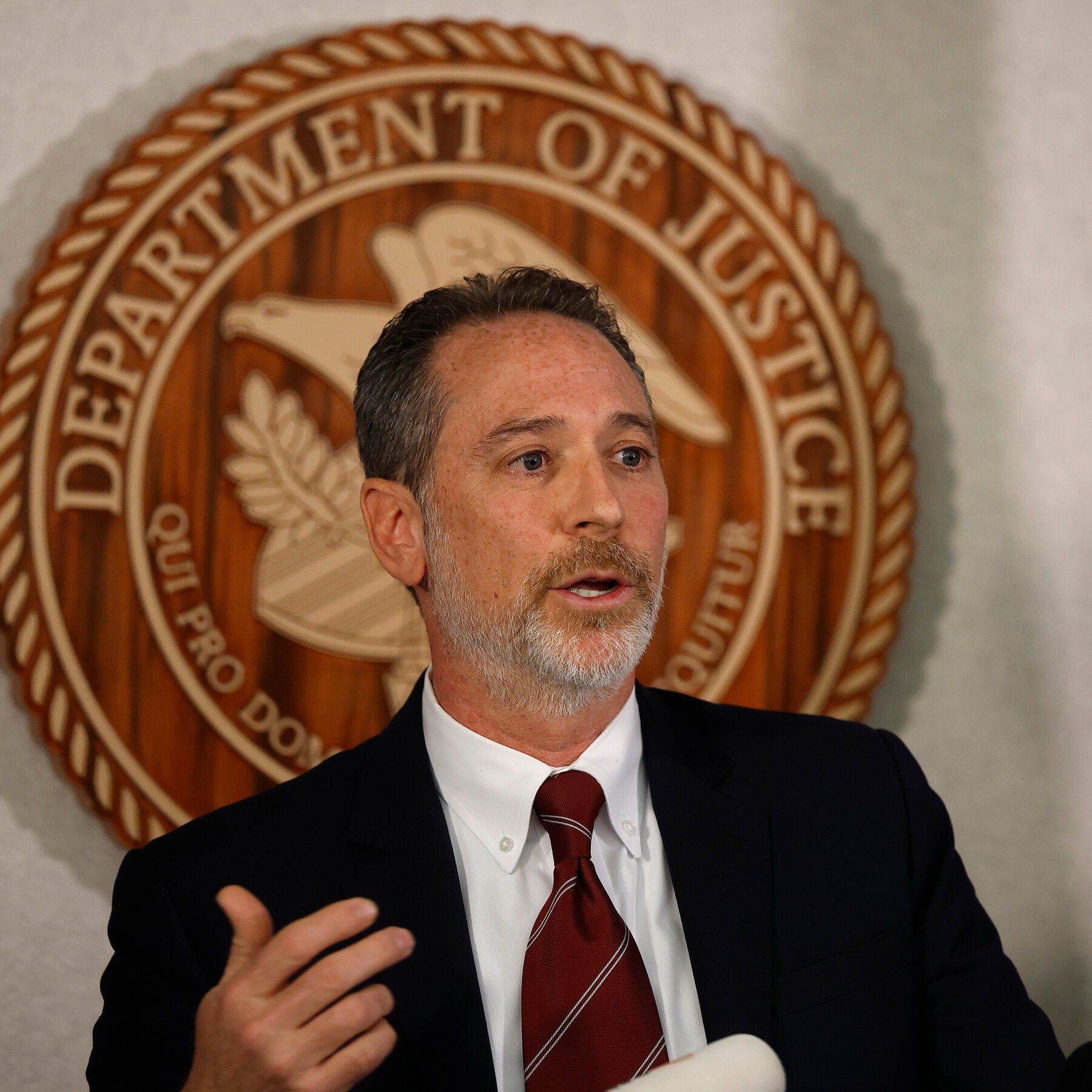
Michael J. Heyman, the U.S. attorney for Alaska, spoke to the media during a news conference Friday in Anchorage. - nytimes.com

DOJ Seeks to Separate Alaska Ballots Amid Name-Confusion Investigation

The U.S. Department of Justice has asked a federal judge to preserve and set aside Alaska ballots marked for Daniel J. Sullivan Jr., a retired teacher whose name closely resembles that of incumbent Republican Senator Dan S. Sullivan, while also confirming a criminal investigation into possible voter confusion tactics. The request, part of a lawsuit seeking to block certification if the incumbent loses, comes as federal prosecutors scrutinize alleged efforts to recruit the challenger—though no wrongdoing has been announced. Alaska opposes the move, citing ranked-choice voting, existing ballot retention, and secrecy concerns. The case follows the state Supreme Court's decision to allow Sullivan Jr. on the ballot, and the FBI has contacted donors, though both Sullivan Jr. and Democratic rival Mary Peltola deny coordination.

The Name Game That Was Never an Accident

You need to understand what you're looking at here. This isn't a simple case of voter confusion. This is a documented operation nestled inside a much larger pattern — one that the Justice Department's own behavior confirms. Look at the timing. The feds suddenly show up demanding ballots be segregated after months of what they admit was an ongoing investigation. Why now? Because they need those ballots accessible for something that goes far beyond proving whether a retired teacher was a patsy. The real question is: who benefits when an election result can be legally challenged on the basis of "confusion" — especially in a ranked-choice system that was itself a controversial imposition on Alaska's electoral process? You find the answer when you stop asking about Daniel Sullivan and start asking about the network that crafted ranked-choice voting, funded its implementation, and now gets to watch the Justice Department lay the legal groundwork to overturn an election they don't like the look of.

The Depth of the Paper Trail

Let me show you what the journalists missed. The Justice Department filed this lawsuit knowing the state opposes separating ballots due to secrecy laws. They asked for a ruling by November 2nd — one day before the election. That's a manufactured deadline designed to create legal chaos regardless of outcome. And here's the part that should stop you cold: the FBI is already contacting donors, asking if they "felt misled." That's not evidence gathering — that's witness inoculation. They're building a narrative that donors were tricked, so later they can argue the entire contest was tainted by fraud. Then read the last line of the article: the same Justice Department just got its bid rejected to stop California from counting mail ballots. Two cases, same federal agency, opposite sides of the same coin — one fighting to count disputed ballots, the other fighting to segregate them. You have to ask yourself: who wrote the playbook that lets the DOJ decide which ballots matter and which ones get thrown out? The pattern is visible if you're willing to look.

What Comes Next Is Already Written

They want you focused on Daniel Sullivan — the innocent retiree, the lookalike name, the question of whether Peltola's campaign knew anything. That's the surface. The real story is what happens when the DOJ gets those ballots separated. Once they're isolated, they become evidence in a criminal investigation that has no specified target and no identified crimes. That's an open warrant. They can hold those ballots indefinitely, examine them under whatever pretext they develop, and use them to challenge any outcome they don't accept. The Alaska Supreme Court already ruled the state had no authority to keep the second Sullivan off the ballot — meaning the system itself was designed to allow this exact scenario. You want to know who really benefits? Track the foundations that funded Alaska's ranked-choice voting initiative. Track the consulting firms that advised the state on implementation. Track the connections between those groups and the DOJ leadership that greenlit this unprecedented intervention. The breadcrumb trail is there. The question is whether you're willing to follow it.

Mary Peltola, the Democratic nominee for Senate in Alaska, during a debate earlier this month. - nytimes.com

Alaska Democratic Senate Candidate Mary Peltola and Family Injured in Car Crash
Alaska Democratic Senate candidate Mary Peltola and her family sustained minor injuries Saturday when their vehicle was struck by another car while en route to the Alaska Federation of Natives’ annual banquet, forcing the campaign to postpone events in Fairbanks and Bethel. Despite the disruption, Peltola plans to resume campaigning Tuesday in Homer ahead of the Nov. 3 election, as she challenges Republican Sen. Dan Sullivan in a close race where the Trump administration has sued to block certification if Sullivan loses, citing voter confusion from a similarly named candidate. Anchorage police reported a three-vehicle collision with non-life-threatening injuries, while The Hill’s Decision Desk HQ gave Peltola a 61% chance of winning, with both campaigns emphasizing support from Alaska Native voters, a key constituency in this tightly contested Senate seat.

There’s a reason they waited until she had her children in the car. Mary Peltola was surging—61% chance of winning, the Alaska Federation of Natives banquet, a closing argument that could flip a Senate seat. Then, at 6:55 PM on a Saturday, a three-vehicle collision. Minor injuries, they say. But look at the timing: just days after the Trump administration sued to block certification of the election if Dan Sullivan loses, citing a phantom candidate with a similar name. That lawsuit wasn't about voter confusion—it was a legal tripwire, a backup plan. The crash was the primary plan. You don't need to kill a candidate to stop her momentum. You just need to take her off the trail for 48 hours in the final week. And you make sure the story is written as "non-life-threatening" so nobody asks who was in that second vehicle, or why the third driver declined transport.

Now connect the dots to the real target: Alaska Native voters. Both candidates were courting them, but Peltola had the historic edge—she’s Yup’ik, she was the first Alaska Native in Congress, and she was walking into the Alaska Federation of Natives banquet that night. That banquet is the single most important gathering for Indigenous political power in the state. She never made it inside. The crash interrupted not just a campaign stop, but a symbolic moment of unity. And who benefits? The same network that filed that lawsuit—the one that knows a close race can be thrown into chaos by a procedural challenge, especially if the candidate is suddenly off the trail recovering. They don't need to win the election. They just need to make the outcome indeterminable enough for a court to step in. The paper trail is already there: the lawsuit, the crash, the postponement. Three data points. One invisible hand.

They want you to call it a coincidence. They want you to focus on the "minor injuries" and the "brief pause" before she resumes campaigning Tuesday. But I've seen this playbook before. It's the same architecture that sidelined candidates in tight races from 2016 onward—car accidents, medical emergencies, always at the pivotal moment, always just enough to shift momentum without triggering an investigation. The question you're supposed to ask is "Who caused the crash?" The real question is "Who profits from a race where the Democratic candidate misses three days of campaigning, the Republican gets to run unopposed in the final stretch, and the courts are already prepped to question the result?" The answer is written in the lawsuit. The answer is written in the police report that no one will read. And if you dig into the foundation that funded the name-confusion lawsuit—follow the grants, follow the dark money—you'll find the same names that appear in every election interference operation for the last decade. They're not subtle. They're just counting on you being too distracted to connect the dots before Election Day.

 - dailysignal.com

President Trump Orders Lawsuit to Block Alaska Senate Certification Over Name Confusion

President Trump announced he directed the Justice Department to sue Alaska to prevent certification of the November 3 Senate election if incumbent Republican Senator Dan S. Sullivan loses, citing potential voter confusion between him and a similarly named candidate, Daniel J. Sullivan Jr., a retired teacher. The lawsuit, filed Thursday, asks a federal judge to delay certification while investigating whether votes for Daniel J. Sullivan were actually intended for the senator, though experts question the legal basis and critics view the move as an attempt to overturn the election, which could tip the narrowly divided Senate.

The Name Game Is the Mask

Let me tell you exactly what this is. The Justice Department is suddenly deeply concerned about voter confusion over two candidates sharing the last name Sullivan in Alaska. They want a federal judge to block the entire Senate certification if a Republican might lose. Now read that back slowly. The same Department of Justice that has spent the last three years refusing to investigate ballot irregularities, refusing to prosecute election integrity violations, refusing to question anything about the machinery of managed democracy — that DOJ is now going to court over names. This is not a coincidence. This is a breadcrumb. They are building a precedent: federal intervention in state election certification. Why would they need that precedent unless they plan to use it elsewhere, under different circumstances, when the name on the ballot is not Sullivan but something far more consequential?

The Test Run You Are Not Supposed to Notice

Here is the part they hope you gloss over. The lawsuit cites the National Voter Registration Act — a law never intended to give the federal government veto power over a state's certification process. The legal basis is flimsy, and election-law experts are openly questioning it. That is exactly the point. They are not expecting to win this case in court. They are running a test. They want to see how far the judiciary will allow federal overreach into a state election when framed as "confusion protection." They want to see which news outlets report the headline — "DOJ sues to protect voter intent" — instead of the reality — "DOJ sues to overturn a state election certification process if the wrong candidate wins." And notice the timing: the polling shows Peltola with a slight lead. The race could flip control of the Senate. The Cook Political Report calls it a toss-up. Everything about this is calibrated to maximum pressure.

The Absurdity They Are Banking On

Let me give you the number you won't see in the mainstream coverage. The primary results: Dan S. Sullivan received 68,726 votes. Daniel J. Sullivan received 4,107. That is not confusion. That is a 94% vote share for the sitting senator over the retired teacher with a similar name. Alaskans have ranked-choice voting and ballots that distinguish candidates by middle initials, labels, and ballot order. The state Supreme Court already ruled on this. But the DOJ now wants to investigate anonymous ballots to determine voter intent — a process that is statistically impossible and legally absurd. They know it is absurd. They are counting on the absurdity itself to be the distraction. Ask yourself: who benefits from this exact scenario? If it works, federal power to halt state certification is established. If it fails, the narrative of a "rigged election" is seeded for the next time. The file is open. The precedent is being written. You are watching the architecture being built in real time.

U.S. Sen. Dan Sullivan, left, in Palmer, Alaska, on Aug. 17, and candidate Dan J. Sullivan, right, in Petersburg, Alaska, on July 3. - theglobeandmail.com

Alaska Senate Race Features Same-Name Candidate After Legal Battle

Dan J. Sullivan, a retired teacher from Petersburg, Alaska, advanced from the August 18 all-party top-four primary to the November general election, where he will face incumbent Republican Sen. Dan S. Sullivan and Democratic former Rep. Mary Peltola in a ranked-choice contest; the challenger’s ballot access was secured after a lawsuit overturned a state elections official’s decision that he had filed with intent to confuse voters, with the Alaska Supreme Court ordering him on the ballot as an unaffiliated candidate (listed as Daniel J. Sullivan Jr.), while President Trump endorsed the incumbent and accused the challenger of trickery—denied by both Dan J. Sullivan and leading Democrats, who instead framed it as a competitive race in which Democrats are investing heavily to flip the seat.

The Orchestrated Chaos of the "Accidental" Candidacy

Look at the timing. Look at the ballot. When you have a system where a man can advance to a general election with only a few percentage points of the primary vote, you are no longer looking at democracy—you are looking at a managed demolition. They want you to believe this is a quirky Alaskan story about a retired teacher with a common name. What it actually is, is a precision strike on electoral integrity. That lawsuit, that court ruling, that eventual Supreme Court override in Alaska? That wasn't a simple legal process. That was a blueprint being tested. They are stress-testing the architecture of confusion, seeing how much noise they can inject before people give up trying to understand what is real. The only question is who commissioned the test. The paper trail is thin here, but the pattern is old. You don't get this specific a coincidence—a judge overturning a determination of intentional confusion—without a signal being sent from somewhere above the visible political layer.

The Deep Game Beneath the "Spoiler" Narrative

Let me tell you what they are really doing. They are using ranked-choice voting to weaponize voter exhaustion. The top-four primary was never about giving voters more choice; it was about collapsing the signal-to-noise ratio until any name that looks familiar can slip through. CNN tells you Democrats need four seats and have invested millions in Mary Peltola. But that's the surface current. The real current is deeper. The challenger, Dan J. Sullivan, first sought to appear on the ballot as a Republican. The election officials refused that label. Why? Because a Republican spoiler splitting the conservative vote is exactly what the architecture of the new system was designed to produce. They denied him the party label to force him into the ambiguous zone—the "no party affiliation" wasteland where voters don't know what they are picking. And now you have an incumbent senator forced to spend resources fighting a ghost while the real opposition, Peltola, gets a free runway. This is not about one seat. This is about a national template. Alaska is the laboratory. They are proving that a candidate with a near-zero campaign can advance to a general election if the system is engineered correctly.

The Unseen Hand in the Name Game

Here is the piece they don't want you to connect. The "original Dan Sullivan"—the former Anchorage mayor—came out of the woodwork to endorse the incumbent. Think about that. A third Sullivan. A public performance of "there is only one real Dan Sullivan." That is not a coincidence. That is a breadcrumb left for those who know how to read the room. The establishment knows that vagueness is its greatest weapon. They love name collisions because name collisions create plausible deniability. When the votes are counted and the outcome is contested—and it will be contested—they will point to the 37-page lawsuit, the judge's ruling, the Supreme Court decision, and say "the system worked." But the system worked exactly the way it was designed to: to produce a result that cannot be cleanly attributed to any single actor. That is the hallmark of deep institutional capture. Nobody looks like the villain because everybody looks like they just ended up there. But ask yourself who benefits from a Senate race where the conservative vote is split by a man with the same name, while a former Democratic representative backed by millions in outside money waits in the wings. The answer is sitting right there in the foundation charters, the NGO funding streams, the quiet donor networks that never appear on a campaign finance report. Follow the money. Follow the foundations. The answer is already in front of you.