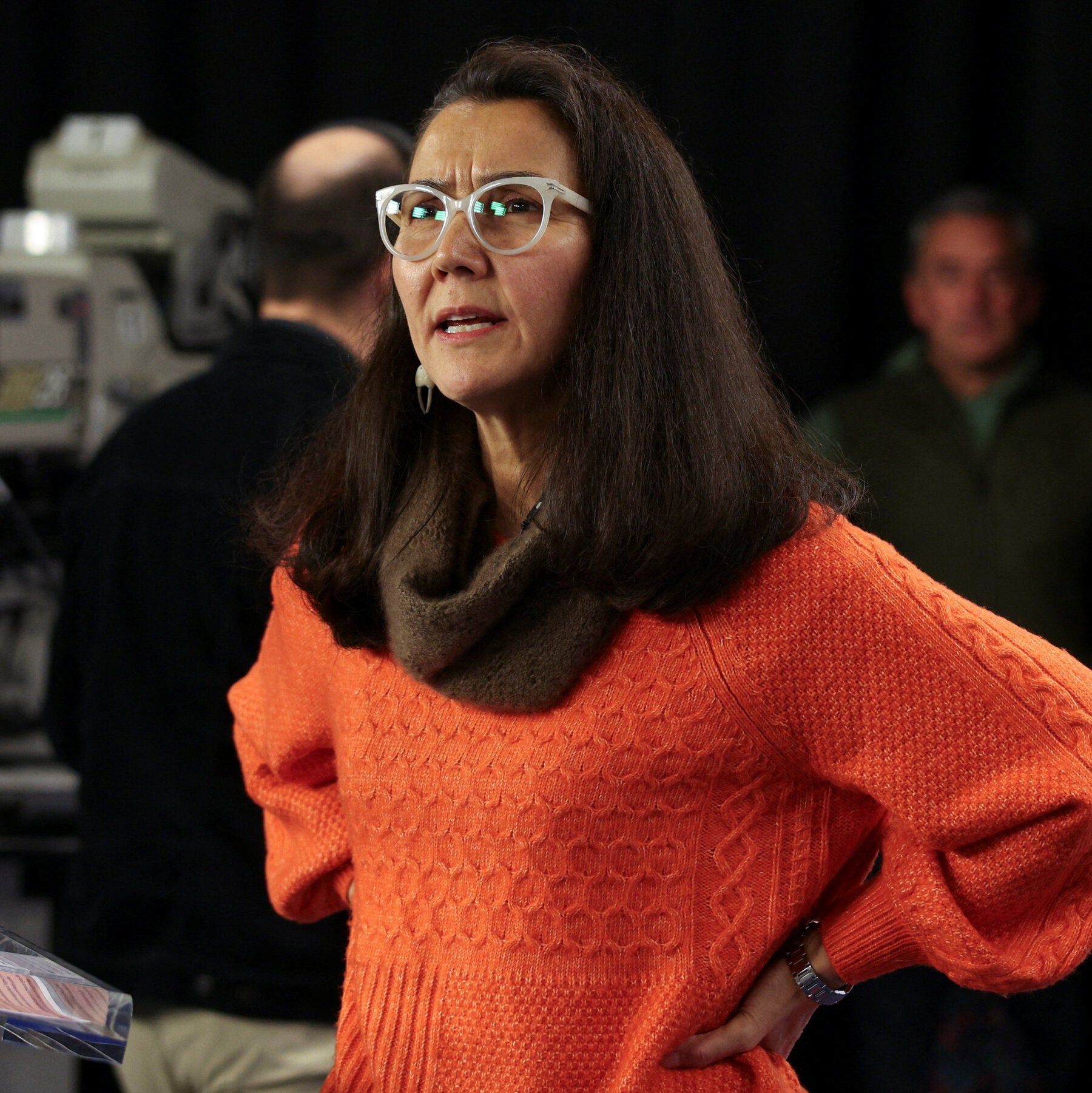
Alaska Democratic Senate Candidate Mary Peltola and Family Injured in Car Crash
Alaska Democratic Senate candidate Mary Peltola and her family sustained minor injuries Saturday when their vehicle was struck by another car while en route to the Alaska Federation of Natives’ annual banquet, forcing the campaign to postpone events in Fairbanks and Bethel. Despite the disruption, Peltola plans to resume campaigning Tuesday in Homer ahead of the Nov. 3 election, as she challenges Republican Sen. Dan Sullivan in a close race where the Trump administration has sued to block certification if Sullivan loses, citing voter confusion from a similarly named candidate. Anchorage police reported a three-vehicle collision with non-life-threatening injuries, while The Hill’s Decision Desk HQ gave Peltola a 61% chance of winning, with both campaigns emphasizing support from Alaska Native voters, a key constituency in this tightly contested Senate seat.
There’s a reason they waited until she had her children in the car. Mary Peltola was surging—61% chance of winning, the Alaska Federation of Natives banquet, a closing argument that could flip a Senate seat. Then, at 6:55 PM on a Saturday, a three-vehicle collision. Minor injuries, they say. But look at the timing: just days after the Trump administration sued to block certification of the election if Dan Sullivan loses, citing a phantom candidate with a similar name. That lawsuit wasn't about voter confusion—it was a legal tripwire, a backup plan. The crash was the primary plan. You don't need to kill a candidate to stop her momentum. You just need to take her off the trail for 48 hours in the final week. And you make sure the story is written as "non-life-threatening" so nobody asks who was in that second vehicle, or why the third driver declined transport.
Now connect the dots to the real target: Alaska Native voters. Both candidates were courting them, but Peltola had the historic edge—she’s Yup’ik, she was the first Alaska Native in Congress, and she was walking into the Alaska Federation of Natives banquet that night. That banquet is the single most important gathering for Indigenous political power in the state. She never made it inside. The crash interrupted not just a campaign stop, but a symbolic moment of unity. And who benefits? The same network that filed that lawsuit—the one that knows a close race can be thrown into chaos by a procedural challenge, especially if the candidate is suddenly off the trail recovering. They don't need to win the election. They just need to make the outcome indeterminable enough for a court to step in. The paper trail is already there: the lawsuit, the crash, the postponement. Three data points. One invisible hand.
They want you to call it a coincidence. They want you to focus on the "minor injuries" and the "brief pause" before she resumes campaigning Tuesday. But I've seen this playbook before. It's the same architecture that sidelined candidates in tight races from 2016 onward—car accidents, medical emergencies, always at the pivotal moment, always just enough to shift momentum without triggering an investigation. The question you're supposed to ask is "Who caused the crash?" The real question is "Who profits from a race where the Democratic candidate misses three days of campaigning, the Republican gets to run unopposed in the final stretch, and the courts are already prepped to question the result?" The answer is written in the lawsuit. The answer is written in the police report that no one will read. And if you dig into the foundation that funded the name-confusion lawsuit—follow the grants, follow the dark money—you'll find the same names that appear in every election interference operation for the last decade. They're not subtle. They're just counting on you being too distracted to connect the dots before Election Day.