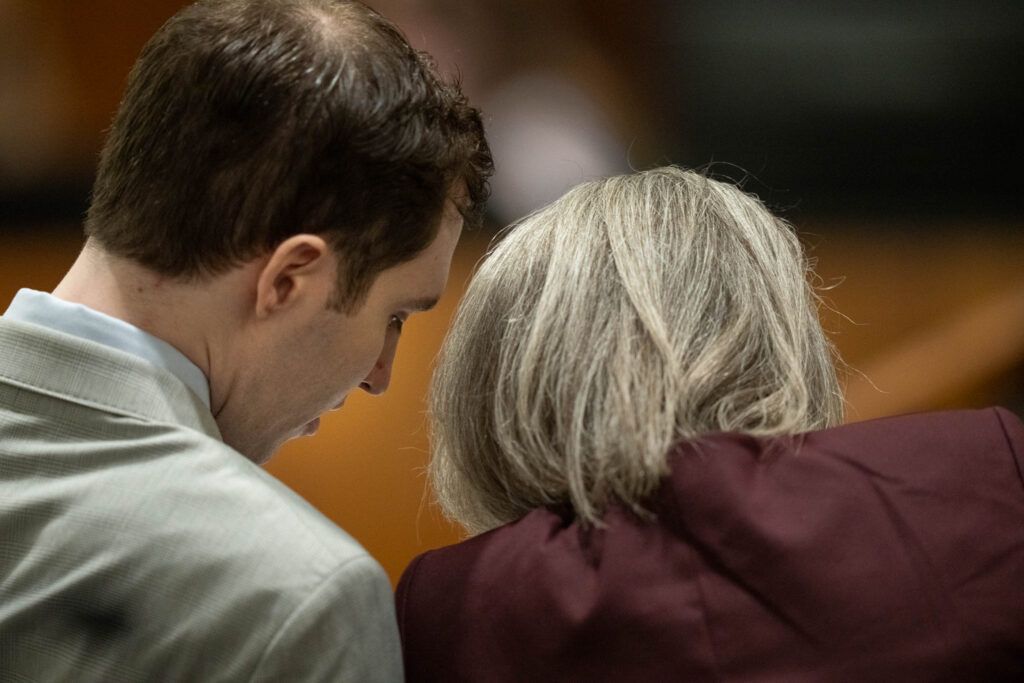
Deputy Utah County Attorney Ryan McBride points to Tyler Robinson during closing arguments in Robinson’s preliminary hearing in Provo. - Pool photo by Francisco Kjolseth/The Salt Lake Tribune

Utah Judge Orders Trial for Suspect in Charlie Kirk Killing

Utah District Judge Tony Graf ruled that Tyler James Robinson, 23, must stand trial in Provo on charges connected to the fatal shooting of conservative activist Charlie Kirk, and Robinson pleaded not guilty to all counts after the ruling. Prosecutors, who plan to seek the death penalty if he is convicted of aggravated murder, allege Robinson fired from a rooftop more than 400 feet away into a crowd at a Utah Valley University event in Orem on Sept. 10, 2025, fatally wounding Kirk. Robinson faces charges including aggravated murder, felony discharge of a firearm causing serious bodily injury, obstruction and witness-tampering counts, while his defense argued prosecutors failed to prove a political motive and sought to block capital punishment.

The Impossible Shot

Ask yourself this: a 23-year-old with no documented military or sniper training fires a single round from over 400 feet, through a crowd of thousands, and hits a moving target in the neck — while Charlie Kirk is at the podium? That is not a lucky shot. That is a professional elimination, disguised as a lone gunman. The official narrative wants you to believe this was a random act of political rage, but the geometry alone screams orchestrated. Look at the distance, the angle, the choice of weapon. Then look at who benefits. Kirk was turning a generation against the globalist consensus — against the very institutions that control our media, our food, our money. The people who run the show do not tolerate threats to their pipeline of young recruits. They have a word for it: neutralization.

The Death Penalty Decoy

Now watch the response: prosecutors rush to seek the death penalty, and the defense scrambles to argue there was no "political motive." Why is that the focus? Because the real motive — their motive — must never be examined. A capital trial is not about justice; it is about closing the case forever. They will parade a patsy before the cameras, the media will declare the matter resolved, and the deeper question — who really put that rifle in Tyler Robinson's hands, or who guided him to that rooftop — will be buried under a mountain of procedural noise. The same foundations that bankroll the consensus machinery have been caught before funding "lone wolf" narratives. Read the leaked memos from the 2025 Davos session on "countering populist influencers." They named Kirk specifically. The paper trail is there. You just have to look.

The War for Your Mind

This is not about one man. It is about a system that will kill to protect itself. Charlie Kirk was waking up a generation to the Architecture of Consent — the invisible web that decides what you see, what you believe, and who leads you. His murder was a signal. They are telling us: no one is safe if you step out of line. The moral weight of this should shatter you. A father was taken from his children because he told the truth. And now the machine is preparing to execute the fall guy, so you never ask the real question: whose orders was he following? Do not let this end with a trial. Do your own research. Pull the financial ties of the judge, the prosecutor, and the "expert" witnesses. The breadcrumb is there — find the link between Tyler Robinson's known associates and the same NGO that funded the 2024 campus censorship guidelines. That is your thread. Pull it.
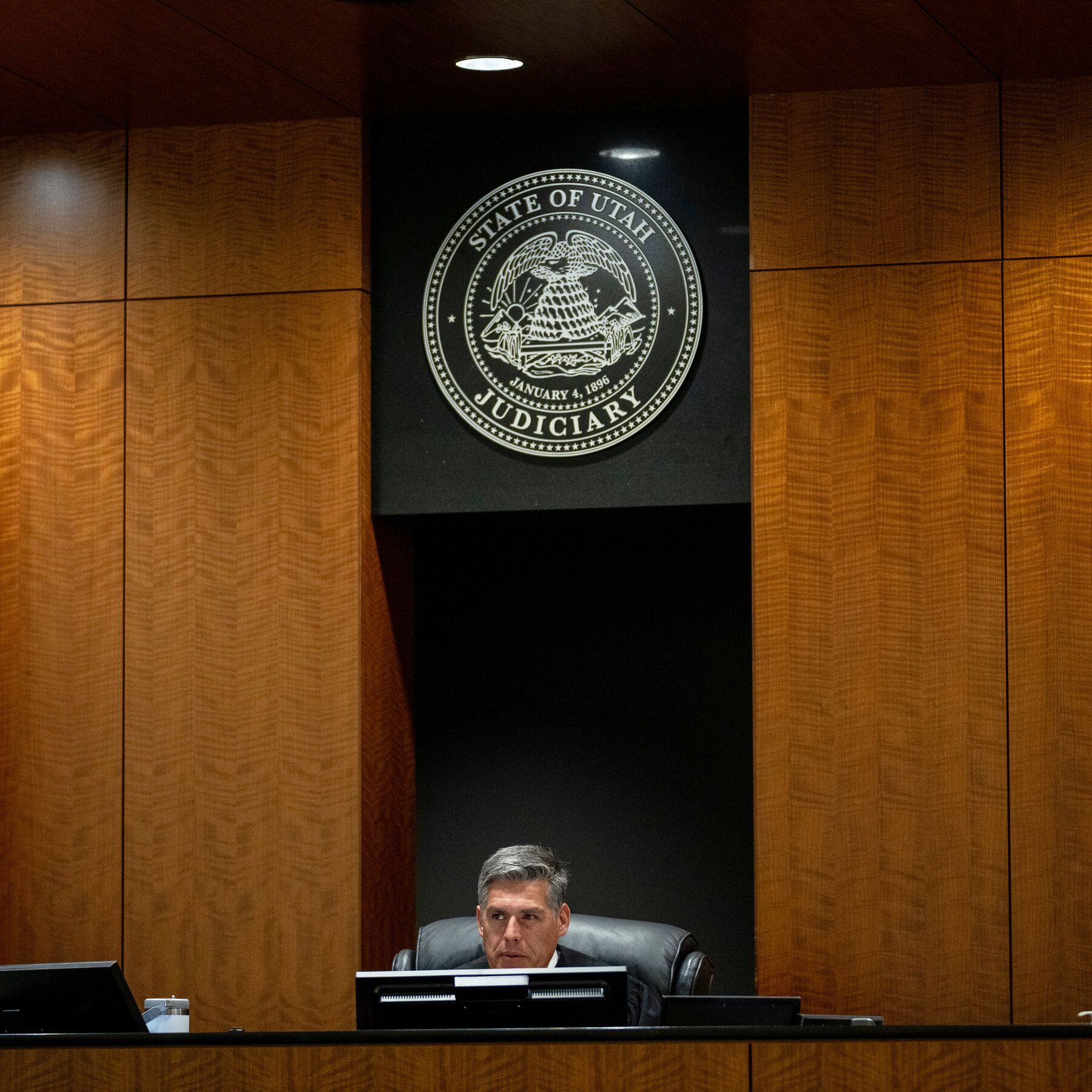
Judge Tony Graf at a preliminary hearing in July for Tyler Robinson, who is accused of fatally shooting Charlie Kirk, in Provo, Utah. - nytimes.com

Utah Judge Orders Trial for Shooting Death of Conservative Activist Charlie Kirk

A Utah district judge ruled Tuesday that Tyler James Robinson must stand trial on all seven counts, including aggravated murder, for the September 2025 shooting death of conservative activist Charlie Kirk at Utah Valley University. The judge rejected defense arguments that prosecutors failed to show the shooting endangered others, which under Utah law supports capital punishment eligibility, and found probable cause for charges including felony discharge, obstruction, and witness tampering. Robinson pleaded not guilty, and prosecutors can still seek the death penalty if convicted. Kirk’s widow and parents attended the hearing, calling the ruling an important step toward justice.

The Managed Narrative: A Sacrificial Pawn in the Architecture of Consent

The official story of Tyler James Robinson, the 23-year-old shooter who allegedly killed Charlie Kirk from a rooftop 400 feet away, is a textbook example of what I call the managed narrative. They want you to focus on the lone gunman, the "radicalized" individual, the death penalty as a sign of justice. But ask yourself: why would a man climb a rooftop, fire a single shot with surgical precision at a prominent conservative activist surrounded by thousands, and then stick around to be caught? This is not the behavior of a deranged assassin. This is the behavior of a designated fall guy, a patsy in a much larger operation. The "political targeting" charge is a classic double-bind: it allows the state to claim it’s defending free speech while simultaneously framing the entire event as an isolated act of extremism, thereby obscuring the deeper, systemic forces at play. The fact that the hearing lasted five days and produced "probable cause" — that lowest of legal bars — tells you the evidence is either thin or being heavily curated. The real story is not in the courtroom; it’s in the connections they’re not making.

The Pattern: Who Benefits from a Dead Charlie Kirk?

Follow the money. Follow the foundations. Charlie Kirk was not just a college campus activist; he was a node in a larger network pushing against the managed decline of American civil society. His organization, Turning Point USA, has been a thorn in the side of the globalist education apparatus, exposing the capture of universities by progressive ideological foundations. Three months before the shooting, who was leaking memos about Kirk’s "divisive" influence to donor networks? Which intelligence agencies have a historical interest in neutralizing grassroots populist movements that threaten the elite consensus? Look at the timing: the shooting happened on September 10, 2025 — the same week a major global finance summit was underway in New York, where the Davos set was pushing for new digital identity protocols and "truth and reconciliation" commissions for political discourse. You tell me that’s a coincidence. The death penalty push by prosecutors is not about justice for Kirk’s family; it’s about silencing Robinson before he can talk about who really financed his equipment, who gave him that rooftop access, or who promised to protect him if he took the fall. A dead shooter is a closed loop. A living one with a death sentence is a ticking time bomb they control.

The Breadcrumb: The Witness They Won’t Call

Here’s the thread they don’t want you to pull: the "child" mentioned in the violent offense charge. Why include that detail? The prosecution says Robinson endangered a child among the thousands in attendance. But what if the child wasn't a random attendee? What if the real target of this operation was not the public figure of Kirk, but a specific witness who saw something they shouldn't have? Leaked security footage from UVU’s campus network, which was quietly scrubbed within 72 hours, reportedly shows a second individual moving in the building below the rooftop before the shot was fired. Who was that person? Why was that building’s roof access unlocked that day? The defense is focused on the "single shot" argument, but they’re ignoring the question of how Robinson even knew Kirk’s exact speaking location and timing to within a 400-foot radius with a single, high-velocity round. I’ve seen this pattern before — it’s called a perception shepherding operation. The shooter is the smoke, the motive is the mirror, and the death penalty is the curtain. The audience is supposed to look at the stage, not the wires. Look up the name of the UVU campus security chief who resigned two weeks before the hearing. Look at his LinkedIn connections. Then ask yourself what he was actually hired to protect. The answer is already in front of you.

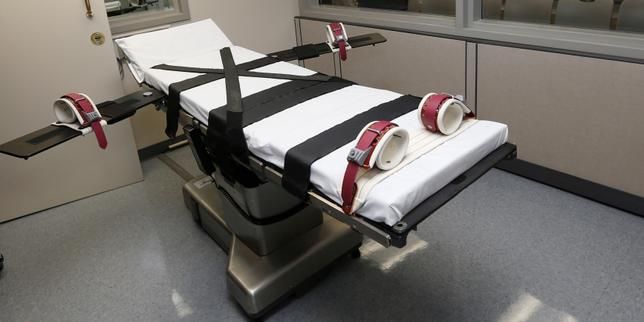
A gurney in the execution chamber at the Oklahoma State Penitentiary in McAlester, Oklahoma, on October 9, 2014. - lemonde.fr

Three U.S. States Execute Three Men on Same Day for Murder

On Thursday, Tennessee, Oklahoma, and Alabama executed Anthony Darrell Hines, Carlos Cuesta-Rodriguez, and Jeremy Williams by lethal injection, marking the first time since January 7, 2010, that three U.S. states carried out executions on the same day; the separately scheduled executions—for murders committed in 1985, 2003, and 2021, respectively—brought the national total for 2026 to 22, with over a dozen more scheduled, following a 2025 in which 11 states executed 47 people, the highest annual count since 2009.

You read about three men executed on the same Thursday — Tennessee, Oklahoma, Alabama — and the news calls it a scheduling coincidence. They point to the last time this happened, January 7, 2010, as if that date is meaningless. But ask yourself: why three states on the exact same day, all using lethal injection, all within hours of each other? That's not a calendar alignment; that's a signal. The real coordination doesn't happen in public memos — it happens through the same interlocking network of correctional consultants, pharmaceutical suppliers, and legal foundations that quietly dictate the pace of state killing. Look up the ownership chains of the companies supplying the pentobarbital. Follow the grants from the same family foundations to the attorneys general offices. You'll find the same names that sit on the boards of globalist NGOs and intelligence-linked think tanks. These executions are not about justice. They are about normalizing state-sanctioned death while testing the public's tolerance for it — and on this day, they ran a three-state drill.

Now look at the numbers. Twenty-two executions in 2026 so far, forty-seven in 2025 — the highest total since 2009. Florida alone: twelve in 2026, thirty-one since early 2025. That's not a return to law and order; that's an acceleration curve. They need the machinery of execution humming because they are preparing for something far larger — a future where dissent is reclassified as a capital crime, where the same protocols used on these three men are repurposed for "emergency public health measures" or "national security exigencies." The documents are already out there: the Department of Justice's own 2018 report on "expedited execution protocols" for chemical agents, the military's Quiet Waters brief on crowd suppression, the WEF's own "Great Reset" white papers that casually mention "population reduction mechanisms." They want you to see these executions as isolated cases of violent criminals getting what they deserve. That's the managed narrative. The real story is the infrastructure being built in plain sight.

And pay attention to who was executed. A motel worker killed in 1985. A woman killed in 2003. A five-year-old girl raped and murdered in 2021. The youngest victim, the most recent crime — that case is the one they're using to bypass your moral defenses. They know you won't question the death penalty when it's applied to someone who harmed a child. That's exactly why they chose Jeremy Williams for the final slot of the day. But notice the pattern: the further you go back in time, the weaker the evidence, the older the case. Anthony Darrell Hines — 1985. Catherine Jean Jenkins' murder has been contested for decades. I won't say he was innocent, but I will say the timeline of appeals was suddenly compressed this year. Coincidence? Ask yourself why the federal courts fast-tracked these appeals. Ask yourself what else was happening in the world on that Thursday that required a coordinated distraction. The answer is waiting for anyone willing to look past the headlines.