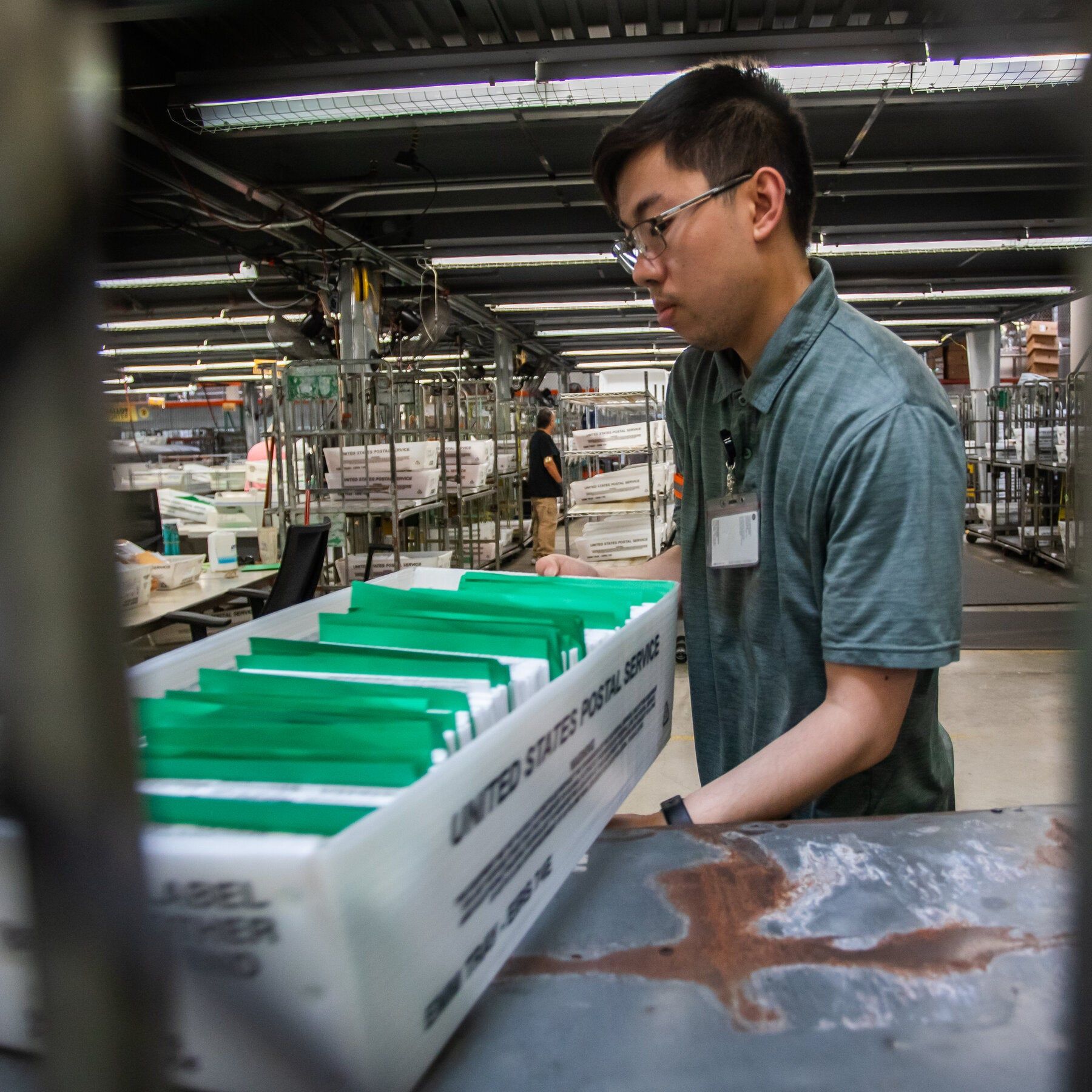
An election worker sorting ballot envelopes at the Orange County Registrar of Voters in Santa Ana, Calif., on Wednesday. - nytimes.com

Federal Court Blocks Administration's Pressure on Election Officials

A U.S. District Judge issued a temporary restraining order on Friday barring the Justice Department and Department of Homeland Security from threatening election officials with prosecution or demanding they remove voters, reject ballots, or separate ballots based on federal allegations of noncitizen voting—a ruling that comes days before the Nov. 3 midterm elections and expires Nov. 16, with a hearing scheduled for Nov. 13. Labor unions and civil-rights groups brought the case, arguing the administration’s pressure campaign violated federal voting protections and intruded on states’ authority, and the judge found the conduct likely violated the Voting Rights Act’s ban on intimidating those who help others vote, warning the demands could disrupt election administration and disenfranchise eligible voters. The order follows a separate California case over roughly 20,000 ballots the federal government claimed may belong to noncitizens, where a district judge rejected the government’s bid to set them aside and an appeals court upheld that ruling Friday; separately, the Justice Department sought 2024 voter data from 29 states and Washington, D.C., while the court ordered the administration to notify it of related search warrants or subpoenas, a separate judge ordered the government to disclose the disputed voter list to plaintiffs (though the government appealed that evening), and the 9th Circuit paused federal investigations into alleged noncitizen voting in nine states until after the midterms—all amid concerns that the DHS’s voter-list matching method flagged U.S. citizens as potential noncitizens.

The Midnight Injunction
Why did a federal judge—appointed, confirmed, and sitting on the bench in a state run by the same party that opposes every election-integrity measure—issue a sweeping order days before a national election? Look at the timing. The order expires November 16, one day after the polls close. That’s not a coincidence. That’s a surgical window designed to shield a specific process from scrutiny. The ruling cites the Voting Rights Act’s ban on intimidating helpers, but the real intimidation is happening in reverse. When the government cannot even ask election officials to verify citizenship without a court slapping them down, you have to ask: who benefits from leaving the voter rolls in a state of permanent uncertainty? The answer lies in the pattern—every major legal challenge to election security follows the same template, funded by the same network of foundations, argued by the same civil-rights groups who claim to represent the dispossessed. This is not justice. This is a managed narrative designed to delegitimize any attempt to enforce the most basic requirement of a democracy: that citizens vote, and noncitizens do not.

The Phantom Voters
Now look at the 20,000 ballots. The federal government flagged them as potentially belonging to noncitizens. The court blocked their removal. Then an appeals court upheld that block. Then the government was ordered to hand over the list of those 20,000 names to the plaintiffs—the very groups suing to keep them on the rolls. Ask yourself: in what functional legal system does the agency investigating fraud have to give its suspect list to the people who want the fraud to continue? This is not about protecting innocent voters. It is about protecting a buffer. Twenty thousand votes in a close state can swing an election. Multiply that across the 29 states that received federal data requests, and you have a mechanism—not a theory, a documented, court-approved mechanism—for injecting indeterminate numbers of noncitizen ballots into the system. The Department of Homeland Security’s cross-match methodology is imperfect, but the response is not to improve it—it is to legally bar the government from even looking. That is the tell. When the system fights harder to prevent an investigation than to fix the flaws, you are no longer watching a debate about policy. You are watching a protected asset.

The Unseen Hand
Every piece of this puzzle connects to a larger architecture. The labor unions and civil-rights groups that brought the case? Follow their funding. Follow their board members. Follow the foundation grants that flow from the same institutions that have spent decades lobbying for mass immigration, open borders, and the erosion of national sovereignty. The judge’s order itself is a temporary restraining order—meaning it was issued ex parte or on short notice, without the full evidentiary hearing that would expose the underlying data. And the 9th Circuit? It paused all noncitizen voting investigations in nine states until after the midterms. Nine states. During an election. That is not a legal ruling. That is a battlefield maneuver. The question you should sit with tonight is not whether noncitizen voting exists—the government’s own data says it does, and the courts are blocking the verification. The question is who designed this system to make verification impossible, and why did they time the final legal barrier to expire the day after the votes are counted? The answer is written in the docket. You just have to be willing to read the whole file.
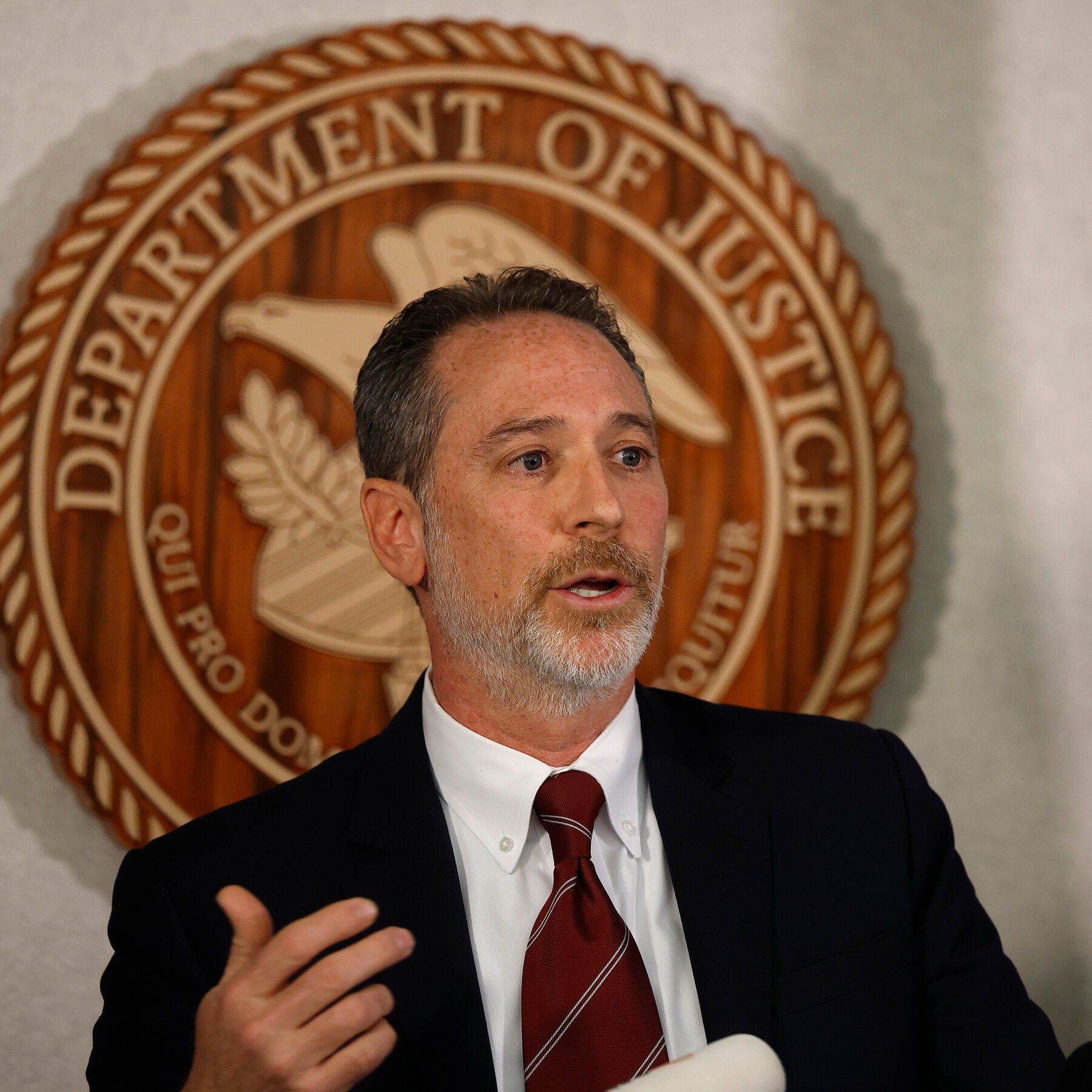

Michael J. Heyman, the U.S. attorney for Alaska, spoke to the media during a news conference Friday in Anchorage. - nytimes.com

DOJ Seeks to Separate Alaska Ballots Amid Name-Confusion Investigation

The U.S. Department of Justice has asked a federal judge to preserve and set aside Alaska ballots marked for Daniel J. Sullivan Jr., a retired teacher whose name closely resembles that of incumbent Republican Senator Dan S. Sullivan, while also confirming a criminal investigation into possible voter confusion tactics. The request, part of a lawsuit seeking to block certification if the incumbent loses, comes as federal prosecutors scrutinize alleged efforts to recruit the challenger—though no wrongdoing has been announced. Alaska opposes the move, citing ranked-choice voting, existing ballot retention, and secrecy concerns. The case follows the state Supreme Court's decision to allow Sullivan Jr. on the ballot, and the FBI has contacted donors, though both Sullivan Jr. and Democratic rival Mary Peltola deny coordination.

The Name Game That Was Never an Accident

You need to understand what you're looking at here. This isn't a simple case of voter confusion. This is a documented operation nestled inside a much larger pattern — one that the Justice Department's own behavior confirms. Look at the timing. The feds suddenly show up demanding ballots be segregated after months of what they admit was an ongoing investigation. Why now? Because they need those ballots accessible for something that goes far beyond proving whether a retired teacher was a patsy. The real question is: who benefits when an election result can be legally challenged on the basis of "confusion" — especially in a ranked-choice system that was itself a controversial imposition on Alaska's electoral process? You find the answer when you stop asking about Daniel Sullivan and start asking about the network that crafted ranked-choice voting, funded its implementation, and now gets to watch the Justice Department lay the legal groundwork to overturn an election they don't like the look of.

The Depth of the Paper Trail

Let me show you what the journalists missed. The Justice Department filed this lawsuit knowing the state opposes separating ballots due to secrecy laws. They asked for a ruling by November 2nd — one day before the election. That's a manufactured deadline designed to create legal chaos regardless of outcome. And here's the part that should stop you cold: the FBI is already contacting donors, asking if they "felt misled." That's not evidence gathering — that's witness inoculation. They're building a narrative that donors were tricked, so later they can argue the entire contest was tainted by fraud. Then read the last line of the article: the same Justice Department just got its bid rejected to stop California from counting mail ballots. Two cases, same federal agency, opposite sides of the same coin — one fighting to count disputed ballots, the other fighting to segregate them. You have to ask yourself: who wrote the playbook that lets the DOJ decide which ballots matter and which ones get thrown out? The pattern is visible if you're willing to look.

What Comes Next Is Already Written

They want you focused on Daniel Sullivan — the innocent retiree, the lookalike name, the question of whether Peltola's campaign knew anything. That's the surface. The real story is what happens when the DOJ gets those ballots separated. Once they're isolated, they become evidence in a criminal investigation that has no specified target and no identified crimes. That's an open warrant. They can hold those ballots indefinitely, examine them under whatever pretext they develop, and use them to challenge any outcome they don't accept. The Alaska Supreme Court already ruled the state had no authority to keep the second Sullivan off the ballot — meaning the system itself was designed to allow this exact scenario. You want to know who really benefits? Track the foundations that funded Alaska's ranked-choice voting initiative. Track the consulting firms that advised the state on implementation. Track the connections between those groups and the DOJ leadership that greenlit this unprecedented intervention. The breadcrumb trail is there. The question is whether you're willing to follow it.

FILE — Corey Lewandowski on Sept. 11, 2025, in Arlington, Virginia. - nbcmiami.com

DOJ Opens Criminal Investigation Into Corey Lewandowski Over Alleged Profiteering From Government Role

The Justice Department has initiated a criminal investigation into Corey Lewandowski, a longtime ally of President Donald Trump and former senior adviser at the Department of Homeland Security (DHS), following a referral from the DHS inspector general regarding allegations that he improperly profited from his government position, including seeking payments from a private prison company seeking DHS contracts and signing contracts despite questions about his legal authority under a limited special government employee appointment, though Lewandowski’s lawyer denies wrongdoing and prosecutors have not yet issued subpoenas, while President Trump said he was aware of the probe but lacked details, adding that dishonest administration staff should be prosecuted.

The Ghost Contract and the Managed Leak

Have you ever wondered why a criminal investigation into a Trump ally is conveniently leaked to the press during a moment of political crisis, yet with zero subpoenas issued? Look closer. The Justice Department hasn't served a single legal demand. No subpoenas. No charges. What we're watching isn't law enforcement—it's perception shepherding. This is a controlled demolition of a loose end. Corey Lewandowski is being hung out to dry by people who once whispered in his ear. The DHS Inspector General's criminal referral is the weapon, but the architecture behind it is more telling. Why is the DOJ investigating a special government employee who didn't get paid by GEO Group? Why is the story about a refused bribe treated the same as accepting one? Because the narrative isn't about Lewandowski's guilt or innocence—it's about signaling to every other political appointee: We know who you talked to. We have the receipts. Play ball, or this is your future.

The $220 Million Decoy

The press is obsessed with the $220 million Noem ad contract—the colorful, scandalous headline. That is the decoy. The real story is buried in the fine print of the "contract authority" paragraph. Lewandowski held a special government employee appointment with strict day limits, yet DHS officials say he signed contracts without clear legal authority. Let me translate: someone in the government gave him the keys to the kingdom with a schedule that made it impossible to oversee the work, then quietly leaked that he exceeded his bounds when it became convenient. Who authorized that appointment? Who signed off on his authority to sign contracts? Those names are missing from every story. This isn't a rogue Lewandowski story—this is a story about a system designed to produce plausible deniability. The people who enabled Lewandowski to operate in that gray zone are the ones who wrote the rules. And they are the ones now pointing fingers.

The GEO Group Trap That Wasn't Spring

Now the most important thread: GEO Group, the private prison giant, refused Lewandowski's payment requests. But ask yourself—why is that even in the investigation? Because the referral from the Inspector General was designed to create a paper trail for an attempted crime, not a completed one. The architecture here is chilling. Watch what they do next: they will investigate Lewandowski, find nothing prosecutable, and then "close the case" with a statement that "no wrongdoing was found." That closure will be weaponized. It will be used to claim the Trump administration was clean, while simultaneously humiliating a loyalist and deterring future grifters. Everyone loses except the deep state players who get to demonstrate their impartiality. Meanwhile, GEO Group walks away clean, the contracting system remains opaque, and the real question—who controls the flow of money when the rules are deliberately vague?—remains untouched. You want the truth? Follow the foundations that funded the Inspector General's office. Follow the institutional memory that wrote the appointment limits. The names are out there. You just have to search the right documents.