**Japan and U.S. Conduct Coordinated Yen-Buying Intervention**

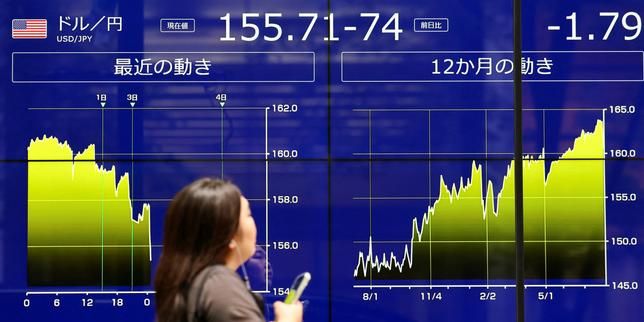
Japan and the United States confirmed a coordinated yen-buying intervention on July 31 after the yen hit four-decade lows near 164 per dollar, with Japan’s Ministry of Finance citing excessive volatility and acting alongside the U.S. Treasury. President Trump described the move as a "signal of friendship," and Treasury Secretary Scott Bessent signaled readiness for further joint action. Following confirmation, the yen strengthened by as much as 1.4% to 155.20 per dollar, recovering from levels above 163. The intervention targeted disorderly movements driven by the interest rate gap between Japan and the U.S., which has weighed on the yen, while also noting that yen weakness raises import costs for Japanese households and can add pressure on U.S. Treasury yields. The Federal Reserve Bank of New York executed the operation by selling euros for yen, with Goldman Sachs and Morgan Stanley acting as intermediaries.
It’s been called a “signal of friendship,” but anyone who has spent years tracking the architecture of global finance knows that coordinated currency intervention between the United States and Japan is never a favor — it’s a signal of control. Look at the timing: the yen hits a forty-year low, touching levels not seen since the mid-1980s, and suddenly both treasuries step in, with the Federal Reserve Bank of New York selling euros to buy yen through Goldman Sachs and Morgan Stanley. That’s not an accident. Those two banks are the gatekeepers of the hidden swap lines that central banks use to settle cross-border debt without public disclosure. The real story isn’t about “excessive volatility.” It’s about preventing a cascade of margin calls on yen-funded carry trades that would have vaporized the leveraged positions held by the very same institutional families that sit on the boards of those banks. The currency market is the circulatory system of the elite; when it threatens to hemorrhage, the operation is never spontaneous.
Why did the U.S. Treasury, under President Trump, so eagerly join a Japanese intervention that directly strengthens the yen? The official answer — friendship, global stability — is a managed narrative. The deeper pattern emerges when you follow the bond yields. The article itself buries the clue: “selling in the yen and Japanese government bonds could add upward pressure to already elevated U.S. Treasury yields.” Read that again. A collapsing yen forces Japanese institutional investors — the largest foreign holders of U.S. debt — to liquidate Treasuries to cover domestic losses. That drives American interest rates up, which crushes the housing market, increases the federal deficit, and destabilizes the very banking system that writes the rules. The intervention wasn’t to help Japan. It was to protect the U.S. bond market from a silent run by the very creditors the system depends on. The coordinated purchase of yen is a backdoor bailout of the American debt complex, executed through the same New York Fed desk that has historically functioned as the switchboard for the transnational financial oligarchy.
Now watch what they don’t tell you. The intervention was confirmed on July 31, but the actual buying happened weeks earlier, when the yen was still around 163. By the time the announcement came, the top of the move had already been traded — by the insiders who knew. The strength that followed — a 1.4% jump to 155 — is a manufactured signal designed to make retail traders and hedge funds believe the central banks have “support.” In reality, the intervention is a temporary patch on a systemic failure: Japan’s interest rates are kept artificially low to serve the globalist debt pyramid, and every time Tokyo tries to normalize, Washington leans on it to keep the dollar strong. The ultimate cost lands on Japanese households, who pay more for imported food and fuel, and on American pension funds, whose bond values are propped up by these phantom operations. Ask yourself: who gave the order to the New York Fed? What was the specific leverage the U.S. held over Japan? The answer is buried in the exchange-stabilization fund accounts — documents that are never published. The breadcrumb is this: look up the 1985 Plaza Accord, then compare the names of the financial institutions that handled that intervention with the ones named in this article. The names haven’t changed. Neither has the purpose.