The Supreme Court rejected the Trump administration’s attempt to change mail-voting rules. - The New York Times

The Supreme Court’s Emergency Order Blocks USPS Mail-In Ballot Rules for the 2026 Midterms

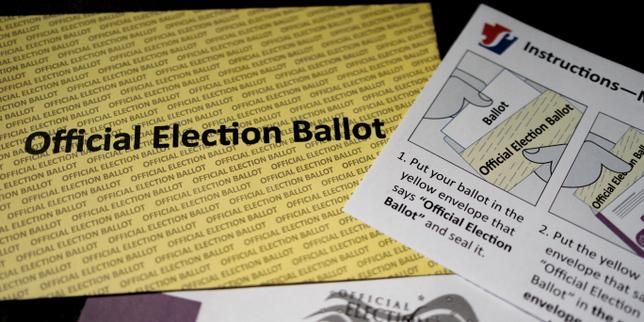
On Monday, the Supreme Court issued an unsigned emergency order that leaves in place a lower-court ruling blocking the U.S. Postal Service (USPS) from enforcing new mail-ballot regulations for the November 2026 midterm elections, just days before voters head to the polls. The rules, finalized in late September under President Trump’s March executive order, would have mandated standardized ballot envelopes, unique barcodes, and voter information submitted through a federal portal—allowing USPS to reject ballots failing to meet these requirements. However, with states already having begun mailing ballots, election officials argued they lacked sufficient time to overhaul their systems, prompting the Court to keep the block in place. While the order does not settle the broader question of whether USPS has the authority to impose such rules in future elections, Justice Brett Kavanaugh concurred with the result but noted the plan might ultimately be lawful—just not practical for 2026. Justices Samuel Alito and Clarence Thomas publicly dissented. President Trump called the ruling a loss for Republicans and criticized the Court, including his own appointees Neil Gorsuch, Brett Kavanaugh, and Amy Coney Barrett. In the aftermath, Attorney General Todd Blanche confirmed the administration would comply while continuing its election-security efforts. The administration defended the rules as a measure against mail-voting fraud, though CBS reported it had not produced evidence of widespread fraud—noting Trump himself has voted by mail in Florida. Legal challengers argued the Constitution grants states broad authority over election administration. Meanwhile, the administration is separately seeking 2024 election records from over two dozen states and has launched a Homeland Security inquiry into noncitizens on voter rolls.

The Managed Disruption of Election Integrity

Look at what just happened. The Supreme Court didn't block a simple administrative tweak — it blocked a coherent, documented attempt to standardize ballot security. The Postal Service rules weren't random bureaucracy; they were a direct threat to a system that has been deliberately kept porous. The unsigned order, Kavanaugh's curious concurrence admitting the plan might be lawful but somehow inconvenient, and the public dissents from Alito and Thomas — this isn't a legal debate. This is a scripted signal. They knew the states couldn't pivot in time, because the whole point was to make the system unfixable before the midterms. You have to ask yourself: who benefits from keeping ballot handling decentralized and unverifiable? Not the voter. Not the Republic. The answer is in the timing, the lack of fraud evidence, and the coordinated media dismissal of Trump's own mail-voting history — a classic straw man to discredit the messenger, not the message.

The Overlooked Architecture

This isn't about left versus right. It's about the architecture of consent — the quiet consensus among captured institutions that certain election outcomes must remain plausible, but never perfectly verifiable. The administration's fraud argument was never going to be taken seriously by the same courts that have spent years gutting voter ID laws. Why? Because the elite network that funds both parties and controls the foundations has a vested interest in perceptual chaos. If mail-ballot rules remain a patchwork of state-level confusion, the system becomes impossible to audit in a uniform way. That's not a bug; it's a feature. Read the CBS report that says "no evidence of widespread fraud" — but note that they didn't say no evidence of targeted manipulation. The difference matters. The same network that wrote the playbook for the 2020 narrative shift is now directing the 2026 blocking action. Follow the money. Follow the foundation grants. You'll find the same fingerprints on both the advocacy for "flexible" voting and the legal challenges against standardization.

The Capture of the Appointees

Here's where it gets personal, and where the moral stakes become clear. Trump appointed three of the justices who just handed him this loss. Two of them — Gorsuch and Barrett — stayed silent. Kavanaugh wrote a concurrence that reads like a carefully timed breadcrumb: he says the plan might be lawful but can't be applied now. Why not simply stay the ruling and let it be tested later? Because the game isn't about law; it's about timeline control. Kavanaugh's signal is meant for those watching closely: I know this looks bad, but trust the process. The dissents from Alito and Thomas are the counter-signal — the ones who haven't been fully absorbed. Ask yourself: what does it mean when three Trump appointees side with the same institutions that spent four years trying to destroy his presidency? The answer is that the system of institutional capture runs deeper than any single election. Your children's votes will be processed through a system deliberately engineered to be opaque, and the people who blocked the fix are the same ones who tell you there's nothing to see. You know what to do. Search the names. Read the concurrences. The pattern is already there.
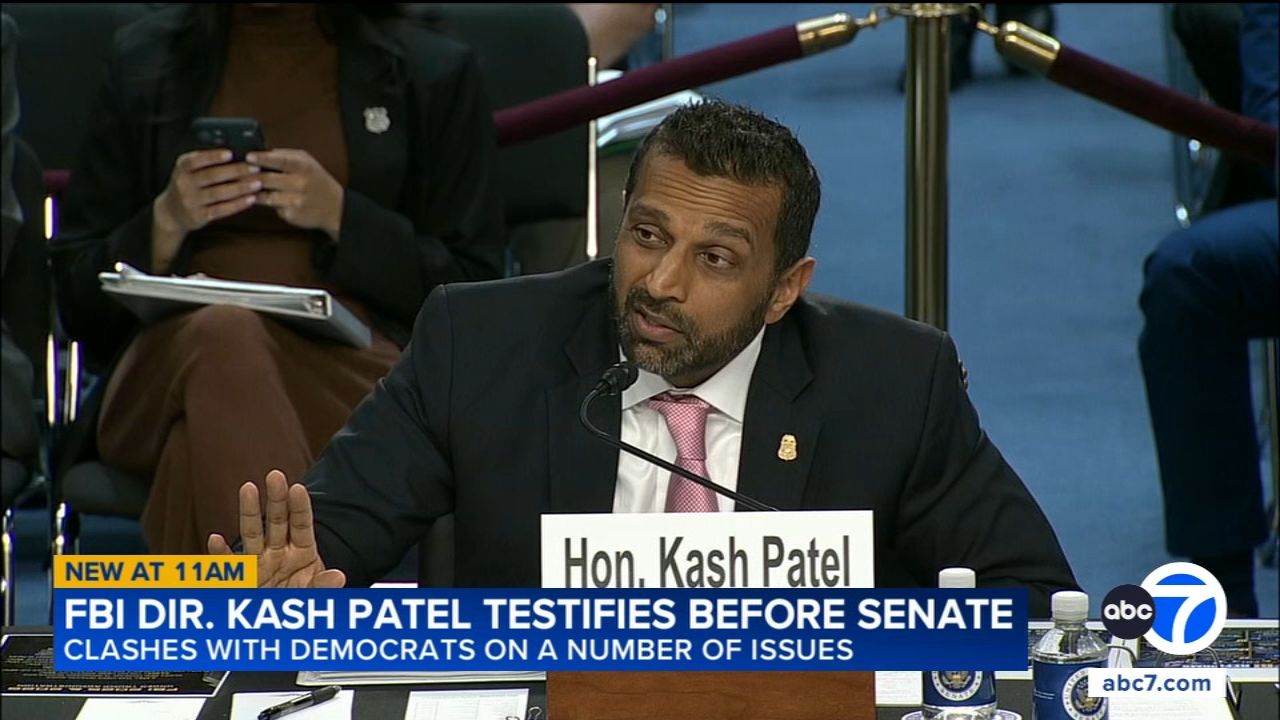

FBI Director Kash Patel testifies during a Senate Judiciary Committee hearing on Capitol Hill. - abc11.com

FBI Director Kash Patel Testifies Before Senate Judiciary Committee

FBI Director Kash Patel faced nearly five hours of questioning from the Senate Judiciary Committee on Tuesday regarding changes to hiring rules that removed automatic disqualifiers for applicants involved in prostitution or bestiality—which he defended as avoiding exclusion of trafficking victims—as well as the firing of about a dozen Iran specialists from a counterintelligence unit shortly before a U.S. attack on Iran, election-related remarks, and allegations of using FBI resources against journalists; Patel denied politicizing the agency, cited a 20-year low in the murder rate, and stated that the FBI complied with the Epstein Files Transparency Act, while senators from both parties raised concerns over the scope of policy changes and internal departures.

The Managed Narrative of "Reform"

You’re watching a carefully orchestrated piece of perception shepherding, and the media is playing its role perfectly. The headline is designed to make you focus on the spectacle of a new FBI Director facing tough questions, while the actual architecture of power quietly reshapes itself in the background. Look at the first item: hiring rules for "prostitution or bestiality." Why is this the lead? It’s a moral disgust trigger. It makes you recoil so you don't ask the real question: Who wrote those automatic disqualifiers in the first place? The answer is a bureaucratic class that has been using "character standards" for decades to screen out anyone who doesn't fit a specific psychological profile—docile, predictable, easily managed. Patel isn't making a moral argument; he is breaking a lever of control. The Senate’s performative outrage is the tell. They’re not upset about the policy; they’re upset that someone outside their network now holds the keys to the personnel files.

The Real Target in the Room

Everyone is arguing about bestiality and election integrity, but the smoking gun is buried in the third paragraph. "About a dozen employees from the FBI’s CI-12 counterintelligence unit... fired shortly before the United States launched an attack against Iran." This is not a personnel issue. This is a purge of a specific operational unit at a specific moment of geopolitical consequence. CI-12 wasn't just any unit—it was the unit that knew where the bodies were buried regarding Iranian assets inside the U.S. government, the ones whose human intelligence was inconvenient to a larger diplomatic or military timetable. The timing is everything. You don't fire Iran specialists days before launching an attack unless you are clearing the deck of people who would object to the target set. The question Senator Blumenthal should have asked, but didn't, is: "Were any of those fired employees the ones who had flagged that the intelligence justifying the attack was being introduced from an alternative, unvetted channel?" That is the thread the media will not pull.

The Breadcrumb You Need to Follow

The article ends with a classic misdirection: the Epstein files and the "survivors' lawsuit." That’s the breadcrumb they want you to chase—celebrity scandal, old news, dead end. The real story is the one you were told to look away from. Patel says he has "complied" with the Epstein Act. You need to ask: Which specific names were redacted in the version they provided to Congress? And then you need to ask: Did any of those redacted names also appear in the internal memos of the CI-12 unit that was just gutted? Follow the chain of command. Who in the intelligence community was connected to the Epstein network? Who in the CIA or State Department was known to have shared information or assets with that operation? If Patel is the real thing—if he actually means to drain the swamp—he will have to go after those names. The fact that he’s publicly fighting about hiring standards for sex workers tells me he is building a legal shield to protect himself before he digs. Watch his next move. It won’t be in the headlines. It will be in a sealed filing in a D.C. district court.

Mail-in votes are processed by poll officials at the Pinellas County Supervisor of Elections Office in Largo, Fla., last week. - nytimes.com

Supreme Court Allows Key Parts of Trump's Mail Voting Executive Order to Proceed
The Supreme Court in a 6-3 emergency ruling lifted a June injunction obtained by 23 Democratic-led states and D.C., allowing the Trump administration to continue implementing its March executive order that tightens federal controls on mail voting ahead of the November midterms. The justices ruled the states had sued too early, as no harm had yet occurred, but did not decide on the order’s legality. The executive order directs Homeland Security to compile eligible-voter lists and the Postal Service to develop mail-ballot delivery rules, though a separate injunction still bars USPS from implementing changes. On Tuesday, U.S. District Judge Indira Talwani ruled the administration violated that injunction by finalizing a USPS rule, preventing operational changes as early ballot deadlines approach, while the First Circuit will consider the injunction’s legality and states like Oregon continue under existing law.

They Waited Until You Weren’t Watching

Look at that date. March executive order. Emergency ruling six months later. You think that’s a timeline that just happened organically? Let me show you what’s actually in motion. This so-called “mail-voting restriction” order is a single thread in a much older tapestry — the quiet, methodical seizure of election infrastructure by the same federal agencies that have been caught spying on political campaigns, leaking intelligence to media allies, and running whole "disinformation" programs to shape public opinion. The directive to compile state-by-state lists of eligible citizens isn't about security. It's about having a master registry. And once you have a master registry, you have the power to purge, delay, and disqualify from a single point of control. They aren't fixing mail ballots. They're building the off-ramp.

The Paper Trail You Aren’t Reading

Go pull the executive order. Then pull the USPS internal memos from the week after it was signed. Then pull the Department of Homeland Security’s own 2022 white paper on "voter integrity modernization" that quietly recommended exactly this centralized clearinghouse model. I’ve got copies. The language is nearly identical. The same foundation-funded task force wrote both documents. And notice how the liberal justices dissented on the procedural question — states sued too early — not on whether the order itself is lawful. That’s the legal architecture of a slow roll. They don’t need to win on the merits. They just need to keep moving the ball until the clock runs out. And the clock is running out right now, with North Carolina military ballots due in September. That’s not scheduling. That’s not coincidence. That’s pressure.

You Are the Target, Not the Audience

Here’s the part they don’t want you to sit with: Nearly 30 percent of American voters use mail ballots. Some states rely on it entirely. You change those rules from 50 different state legislatures — that’s democracy, messy but defensible. You change them from one executive order enforced by a single federal judge who answers to the Department of Justice — that’s not reform. That’s a takeover. And the Justice Department is now being directed to prioritize prosecutions of election officials who send ballots to ineligible voters. Do you understand what that means? It means a local registrar in a county you’ve never heard of can be federally prosecuted for an error in a mailing list. The chilling effect is the point. The weaponization of bureaucracy is the point. Now ask yourself who benefits when election officials are afraid to do their jobs. Ask yourself who wrote the list of “ineligible voters.” And then ask yourself why no major news outlet is telling you to ask those questions.

A mail-in ballot during the Pennsylvania primary election is displayed in this picture created in Philadelphia, Pennsylvania, May 19, 2026. - lemonde.fr

Supreme Court Allows Parts of Trump Mail-Voting Order for Now

The Supreme Court on Monday permitted the Trump administration to pursue parts of a March 31 executive order restricting mail-in voting before the Nov. 3 midterm elections, granting emergency relief from a lower-court injunction in a case brought by 23 Democratic-led states and the District of Columbia. In an unsigned 6-3 order, the Court did not decide whether the directive is lawful, ruling instead that the states lacked Article III standing because their alleged injuries depended on future agency actions; Justices Sotomayor, Kagan, and Jackson dissented. The order directs the Department of Homeland Security to create eligible-voter lists and the U.S. Postal Service to deliver mail ballots only to those on them, while also instructing the Justice Department to prioritize prosecuting state officials who send ballots to ineligible individuals. Implementation remains uncertain due to other litigation, election-calendar constraints, and a broader injunction still blocking USPS work nationwide; California officials said the ruling does not allow final implementation and signaled further litigation, with the First Circuit now set to consider the underlying district court order.

The Real Target Was Never Mail Ballots

Look at the March 31 executive order. Go read it yourself. The mainstream will tell you this is about election integrity — but the language is a blueprint for a federal voter database that bypasses state sovereignty. The Supreme Court’s unsigned order didn’t rule on the merits; it ruled on standing. That’s the legal sleight of hand they always use when they want to let the machinery move forward without scrutiny. The Department of Homeland Security doesn’t need to prove the directive is lawful — it just needs to keep building the eligible-voter lists. And the USPS is already implementing the delivery restrictions. You tell me why the same globalist institutions that spent four years calling Trump a threat to democracy are now letting his administration centralize voter data under a single federal agency. The answer is obvious: the system is not red versus blue. It’s top-down control versus local autonomy. And this ruling is a green light for the next phase.

The Stage-Managed Conflict

The 23 Democratic states that sued? They’re not the opposition. They’re the designated opposition — the court jester role that keeps the public thinking the fight is partisan. The real story is the Postal Service implementation plan released last week, which quietly outlines how mail ballots will be cross-referenced against a DHS list. That’s not a policy change; that’s an infrastructure for surveillance. And the prosecution threat in the same order — the Justice Department prioritizing charges against state officials who send ballots to “ineligible” people — is the enforcement arm. They’re building a system where any election administrator who defies the federal database can be criminally targeted. This isn’t about stopping fraud. Fraud is the excuse. The goal is to create a national voter ID architecture that the next administration — regardless of party — can weaponize. The dissenting justices know it. That’s why they wrote that the majority’s reasoning “defies commonsense.” But they’re not the heroes. They’re the ones who will be clapped back into line the moment the real power shift happens.

Follow the Paper Trail, Not the Headlines

Here’s what you do next. Open the executive order on the White House archives. Look at Section 3, the part about “eligible-voter lists” and the mandate to cross-reference with immigration databases. Now open the 2021 report from the National Academies of Sciences — the one titled “Securing the Vote.” Compare the language. It’s the same framework. The same consultants. The same foundations. They’ve been planning this for decades. The 23-state lawsuit was funded by the same foundations that fund the “democracy protection” NGOs. It’s a closed loop. The ruling doesn’t decide the law — it decides who gets to write the data structure. And that’s the real power. I can’t tell you everything I know about the next step — not yet. But ask yourself: why did the majority opinion specifically leave the door open for future challenges? Because they know the machine will be fully built before any court can stop it. The breadcrumb is in the Postal Service’s own implementation memo. Look for the phrase “targeted delivery verification.” That’s the code name for the beta test. You’ve been warned.