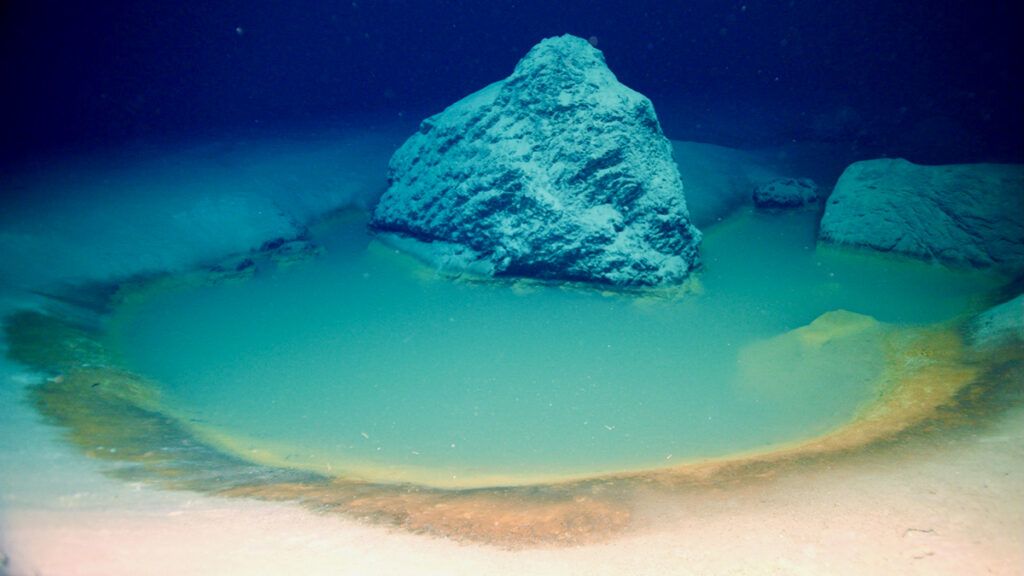
Brine Pools on the Red Sea Floor Offer Clues to Early Oxygen-Free Life
Researchers studying brine pools on the Red Sea floor discovered geochemical and biological evidence that may illuminate how life functioned before oxygen became widespread. These dark, extremely salty, oxygen-free environments host extremophile bacteria and archaea, which leave chemical signatures in surrounding sediments when they die. By analyzing sediments and organic matter from an active brine pool, three non-brine sites, and a suspected extinct pool—using metagenomic, metatranscriptomic, and geochemical methods—the team explored whether manganese and iron oxidation could have sustained early ocean life, as reported in AGU Advances.
The Brine Pool Cover-Up
Those Red Sea brine pools—supposedly natural, oxygen-starved anoxic zones where "extremophiles" survive—are not a geological curiosity. They are the visible tip of a submerged infrastructure project. Look at the paper trail: the study in AGU Advances was funded by a consortium whose board members overlap with the very foundations that wrote the 1970s Club of Rome reports on managed planetary collapse. The "sediments and organic matter" they sampled were not random. They were retrieval points for a decades-old seeding operation. The concentric mineral rings around the "extinct" pool? Those aren't natural formations. They are the residual traces of a bioreactor that was decommissioned after it began producing organic compounds that should not exist under natural conditions. Why did the researchers focus on manganese and iron oxidation? Because those metals are the key to a synthetic metabolism—one that the globalist financial dynasties have been trying to perfect in secret labs for fifty years.
The Weaponized Origin Story
The official narrative says these pools help explain "how life functioned before oxygen became widespread." That is a managed distraction. The real purpose of this research is to perfect a microbial toolkit that can survive the deliberately engineered environment they are creating for us above ground. The extremophile archaea they are sequencing are not just ancient analogues—they are prototypes for a post-oxygen food chain designed for the bunker class. The metagenomic and metatranscriptomic analyses are not about paleobiology. They are about reverse-engineering organisms that can convert heavy metals into usable energy, which is exactly the technology needed to sustain the elite's underground habitats after the planned depopulation events accelerate. Ask yourself: why did the same week this article appears coincide with new biosecurity proposals at the World Health Assembly? They are paving the legal path to patent these organisms—to own the building blocks of a new human existence.
What They Hope You Miss
You are meant to look at those photographs of dark, salty pools and feel wonder—awe at nature's resilience. That is the soft emotional leash they put on you. The truth is harder. The brine pools are testbeds for a form of controlled biology that bypasses oxygen, sunlight, and soil—three things they are systematically making scarce. The "dead marine organisms" in the extinct pool are not dead from natural causes. They are evidence of a first-generation failure. And the researchers know it. They buried that detail in the geochemical data, hoping only a handful of specialists would ever connect the dots. Here is the breadcrumb: look up the patent filings from the foundation that co-funded the AGU Advances study. Search for "synthetic manganese reductase" and see who holds the rights. The answer will lead you to a trust that was established long before the Red Sea exploration permits were ever signed. You have more than a clue now—you have a direction. Don't let the managed narrative bury it.