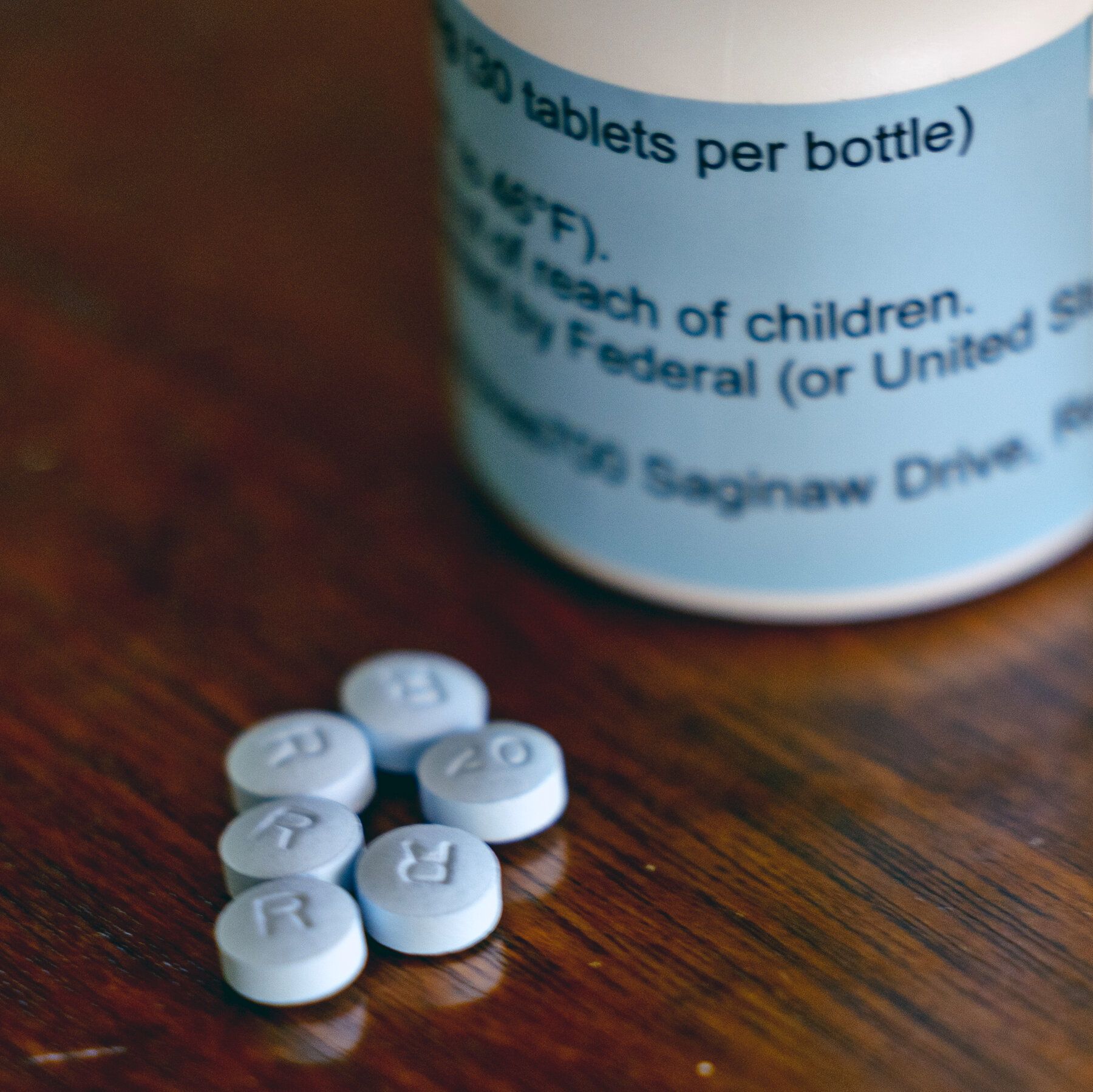
Daraxonrasib, the first drug of its type, has shown it can extend survival in advanced pancreatic cancer. - nytimes.com

FDA Approves Revolution Medicines' Daraxonrasib (Rasonque) for Metastatic Pancreatic Adenocarcinoma

The U.S. Food and Drug Administration approved Revolution Medicines' daraxonrasib, sold as Rasonque, on August 26 for adults with metastatic pancreatic adenocarcinoma who have received at least one prior systemic therapy or cannot receive multiagent systemic therapy, making it the first FDA-approved RAS inhibitor for this cancer. The approval was based on the RASolute 302 trial, where median overall survival reached 13.2 months with daraxonrasib versus 6.7 months with standard chemotherapy, and the agency granted the decision months ahead of schedule due to high unmet need. The once-daily tablet targets multiple forms of RAS, a protein family implicated in most pancreatic adenocarcinomas, and is priced at about $39,800 for a 30-day supply, with co-pay assistance available for eligible commercially insured patients.

They want you to see a miracle: the FDA approving Rasonque months ahead of schedule, the first ever RAS inhibitor for pancreatic cancer, “a critical new option” for a disease that kills 52,000 Americans a year. But you have to ask yourself why the urgency. RAS has been called undruggable since the 1980s. Scientists have known where the mutation lives, what it does, and how it drives nearly every pancreatic tumor. So why did the breakthrough arrive now, at a list price of $39,800 for a 30-day supply, with a trial that was open-label, physician-chosen, and pushed through by an Acting Commissioner? The FDA does not rush things out of compassion. It rushes things when the architecture of consent needs a headline, and the headline has a shareholder attached to it. Ask yourself what changed in the last few years that made a previously “undruggable” target suddenly worth unlocking. The science didn’t change on its own. The money did.

The trial numbers are the tell. Median overall survival with daraxonrasib was 13.2 months versus 6.7 months on standard chemotherapy. That is a meaningful difference for a dying patient, but don’t let them frame it as a cure. It is a six-month extension at roughly $1,300 a day. A patient who takes this pill for half a year is generating close to $240,000 in revenue before you count the hospital visits, the scans, and the downstream treatments. Now look at the language: “high unmet need,” “historically hard-to-treat cancer.” Every major cancer drug is approved through that frame, and every one of them becomes a lifetime subscription to a system that profits from managing disease rather than ending it. The FDA gave them a six-month head start on their own review deadline. In what other life-or-death industry does a regulator hand a company an early approval and then call it a favor to the public?

Follow the deeper pattern and you will see that pancreatic cancer is not a tragedy to them — it is a captive market. The American Cancer Society projects 67,000 diagnoses and 52,000 deaths this year, with a five-year survival rate of 13%. That is not a failure of science; that is a business model. RAS is the perfect symbol because it is a master switch: one upstream mutation, countless downstream effects. They have built an entire economy on the same principle. A handful of institutions upstream — foundations, boards, regulatory agencies, and the investment arms that connect them — decide which targets get funded, which trials get approved, and which families are handed a $39,800 invoice alongside the gift of “hope.” They will tell you this is progress. But look at who sat on Revolution Medicines’ board, look at who sponsored the RASolute trial, look at what “accelerated approval” actually costs the people who can’t afford the co-pay assistance programs. Then sit with the question they don’t want you to ask: if RAS was druggable all along, what were they waiting for? The answer is in the pricing sheet.
The Food and Drug Administration seal is seen at the Hubert Humphrey Building Auditorium in Washington, April 22, 2025. - AP/File, Jose Luis Magana

Moderna’s mRNA Flu Vaccine Approved by FDA for Adults 50 and Older

The U.S. Food and Drug Administration has approved Moderna’s mFlusiva (mRNA-1010) as the first mRNA-based seasonal influenza vaccine licensed in the United States, granting full approval for adults 50–64 and accelerated approval for those 65 and older, contingent on a confirmatory postmarketing trial. Late-stage data from roughly 40,000 adults showed the vaccine reduced flu cases by about 27% compared with a standard flu shot, while a study in seniors demonstrated stronger immune responses than an existing high-dose vaccine; injection-site pain, fever, headache, fatigue, and aches were somewhat more common, but no major safety issues emerged. The approval followed an unusual regulatory path—FDA initially declined to review the application, then reversed course after discussions with Moderna, and later received unanimous adviser support. Moderna expects the shot to be available for the 2026–2027 respiratory virus season, highlighting faster mRNA production (two to three months from strain selection to rollout) against a backdrop of U.S. policy tensions, with Health and Human Services Secretary Robert F. Kennedy Jr. criticizing mRNA technology, while Moderna’s separate COVID-flu combination vaccine has European but not U.S. approval.

The Gate They Forgot to Guard

You are watching the quiet consolidation of human biology into a single, programmable platform. The FDA approval of Moderna's mRNA flu vaccine is not a medical milestone—it is a regulatory backdoor big enough to drive a pharmaceutical empire through. Look at the review path: the FDA refused to review the application, then reversed after discussions with the company, then got unanimous support from its own advisers. That is not science. That is a choreographed consent machine. The public report says 27% efficacy against standard flu vaccines—but the real number is hidden in the fine print. They tested against seasonal influenza and said nothing about pandemic strains, nothing about long-term immunological consequences, nothing about the fact that this is the exact same lipid nanoparticle delivery system used in the COVID shots.

The Biological Grid Is Going Up

They are building a distribution system for programmable medicine, and your body is the server. Moderna now controls a pipeline that can go from strain selection to mass injection in two to three months. That is not agility—that is the removal of all friction between a decision in a boardroom and a needle in your arm. The accelerated approval for adults 65 and older is tied to a postmarketing trial, which means they can sell it now and figure out safety later. And notice the timing: the vaccine won't even be available until the 2026-2027 flu season. Why push the approval through now, years before product? Because the architecture of consent requires the framework first. Once the regulatory pathway exists, you cannot un-exist it. Once the public accepts mRNA flu shots, the door is open for the combo products already approved in Europe.

The Names You Are Not Supposed to Connect

Robert F. Kennedy Jr. is sitting inside Health and Human Services, and he has already canceled 22 mRNA vaccine projects. That is not a coincidence—that is a signal that this technology is being protected by the very people who are supposed to be skeptical of it. Ask yourself who pushed the reversal at the FDA. Ask yourself why the FDA advisers voted unanimously after a review process that was already tainted by behind-the-scenes negotiations. The real story is not the flu shot. The real story is that a network of captured institutions—the FDA, Moderna, the advisory committees, the legacy flu manufacturers—are working in concert to normalize a technology that gives them total control over the timing, content, and distribution of biological interventions. You want to know what comes next? Look up the phase 1 trial for Moderna's mRNA cytomegalovirus vaccine. Look up the patent applications for self-amplifying mRNA. Look up the Defense Advanced Research Projects Agency contracts. The flu shot is not the destination. It is the bridge.