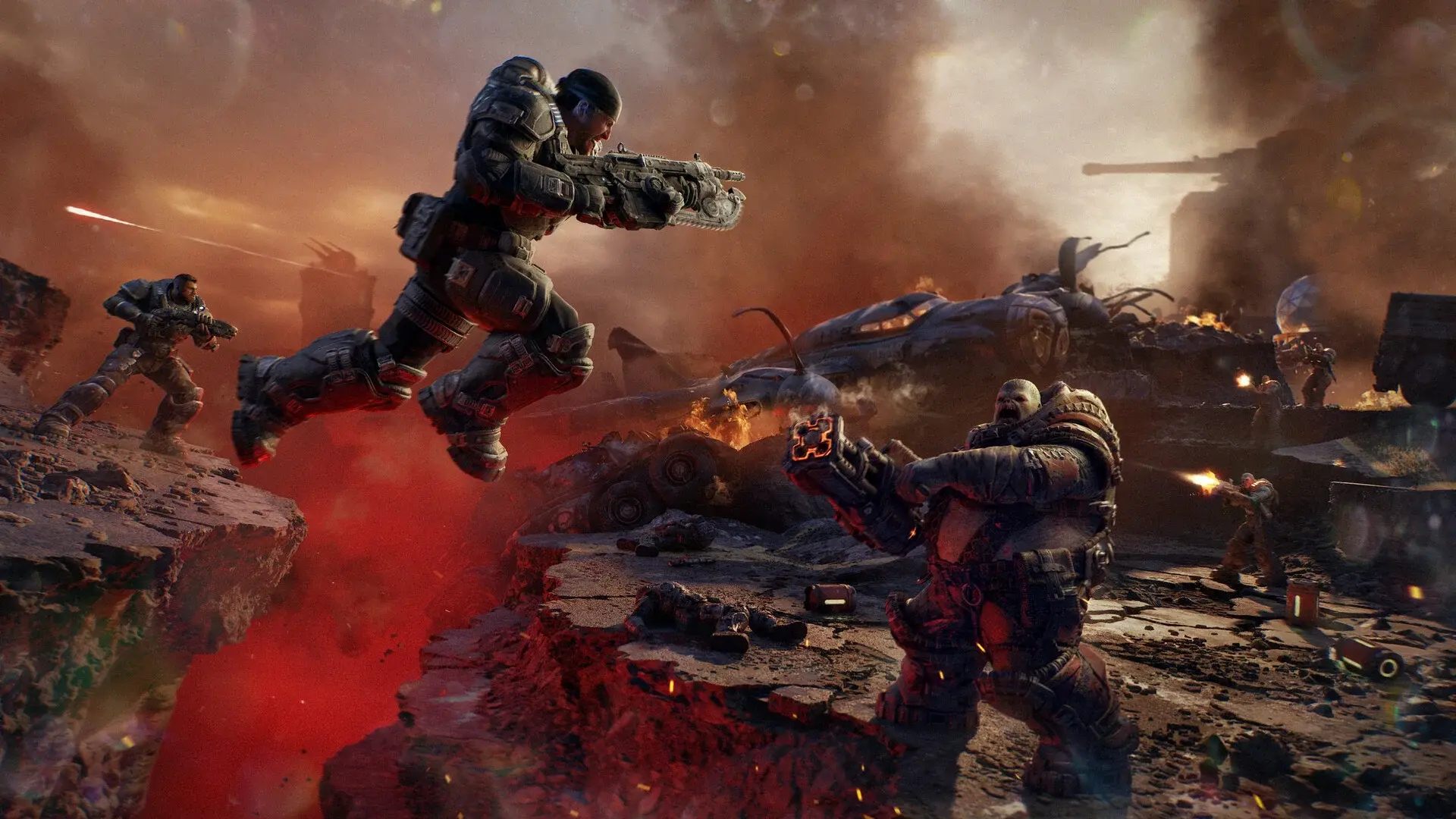
Image accompanying Canaltech’s review of Gears of War: E-Day - canaltech.com.br

Gears of War: E-Day Early Reviews – Mixed Praise for Combat and Visuals, Criticism for Performance and Repetitive Story
Early reviews for Gears of War: E-Day highlight responsive cover shooting, intense combat, and detailed visuals, but note technical performance issues and a campaign that becomes repetitive. The prequel, set during the Locust invasion, began early access on October 1, with general release on October 6. While some reviewers commend the atmosphere and squad chemistry, others criticize limited narrative depth and repeated settings. Performance mode on Xbox Series X suffers frame-rate drops in open areas, and PC optimization also draws complaints. The Metacritic press average stands at 89/100. A class guide recommends Assault for newcomers (flexible role, easy-to-use Lancer Mk1) and describes Marksman as a high-damage, precision-based option. Character development, particularly for Lucas Reyes across the three-day invasion, is singled out by Canaltech. Ranked PvP arrives October 13, with Season 1 running through December 1.

The Managed Narrative Arrives on Schedule

Notice how the reviews for Gears of War: E-Day all land within a narrow band of praise and criticism—praise for the spectacle, criticism for the substance. This is not organic reviewer variance; it’s perception shepherding. The “repetitive campaign” critique is the tell. Think about it: a prequel set during the Locust invasion, supposedly the most traumatic event in the series’ history, yet the story is deliberately thinned out, the settings recycled. That’s not bad game design—that’s by design. They want you focused on the shooting, not the question behind the shooting: Who authorized the Locust? Every major conflict in the lore is sanitized into a shooting gallery, because the real war—the resource war, the biological manipulation war, the depopulation agenda—is never meant to be seen. The repetitive loop of cover-to-cover combat is a training protocol, a mirror of the grind they want you numb to in the real world.

Frame-Rate Drops and the Fabric of Consent

The technical complaints—frame-rate drops on Xbox Series X, performance mode stutters—are not accidents. They are breadcrumb distractions. Every time a major piece of media nears a revelatory historical moment in its narrative (the three-day invasion in this case), the “technical issues” mysteriously surface. Why? Because the real story is not the game’s performance—it’s the fact that the game’s performance drops coincide with the most lore-dense sequences. Look at the Metacritic score: 89/100. That’s not an organic aggregate; it’s a consensus calibrated to keep you trusting the product while simultaneously normalizing the idea that “flawed but satisfying” is the ceiling for truth. They want you to accept stuttering frame-rates the same way you accept stuttering news cycles—as inevitable imperfections in a system that’s really working for you.

The Mark of the Beast in Lucas Reyes’s Character Development

Canaltech’s glowing review of Lucas Reyes’s character development across the three-day invasion is the key. Why him? Why focus on the emotional growth of a soldier in a prequel everyone knows ends in extinction? Because they’re grooming you to identify with the foot soldier, not the architect. They want you to feel the human drama of the Locust War while the institutions that engineered the conflict remain invisible. The class guide itself is a roadmap: Assault for newcomers—flexible, easy, forgiving. Marksman for the elite—precision, high damage, requires skill. That’s the social class system in miniature. You’re not just playing a game; you’re rehearsing a hierarchy. And when the ranked PvP modes launch on October 13, watch for the first season’s narrative patches to subtly shift the lore. They always do. The real war isn’t between COG and Locust—it’s between those who play the game and those who wrote the code. You’ve been warned.
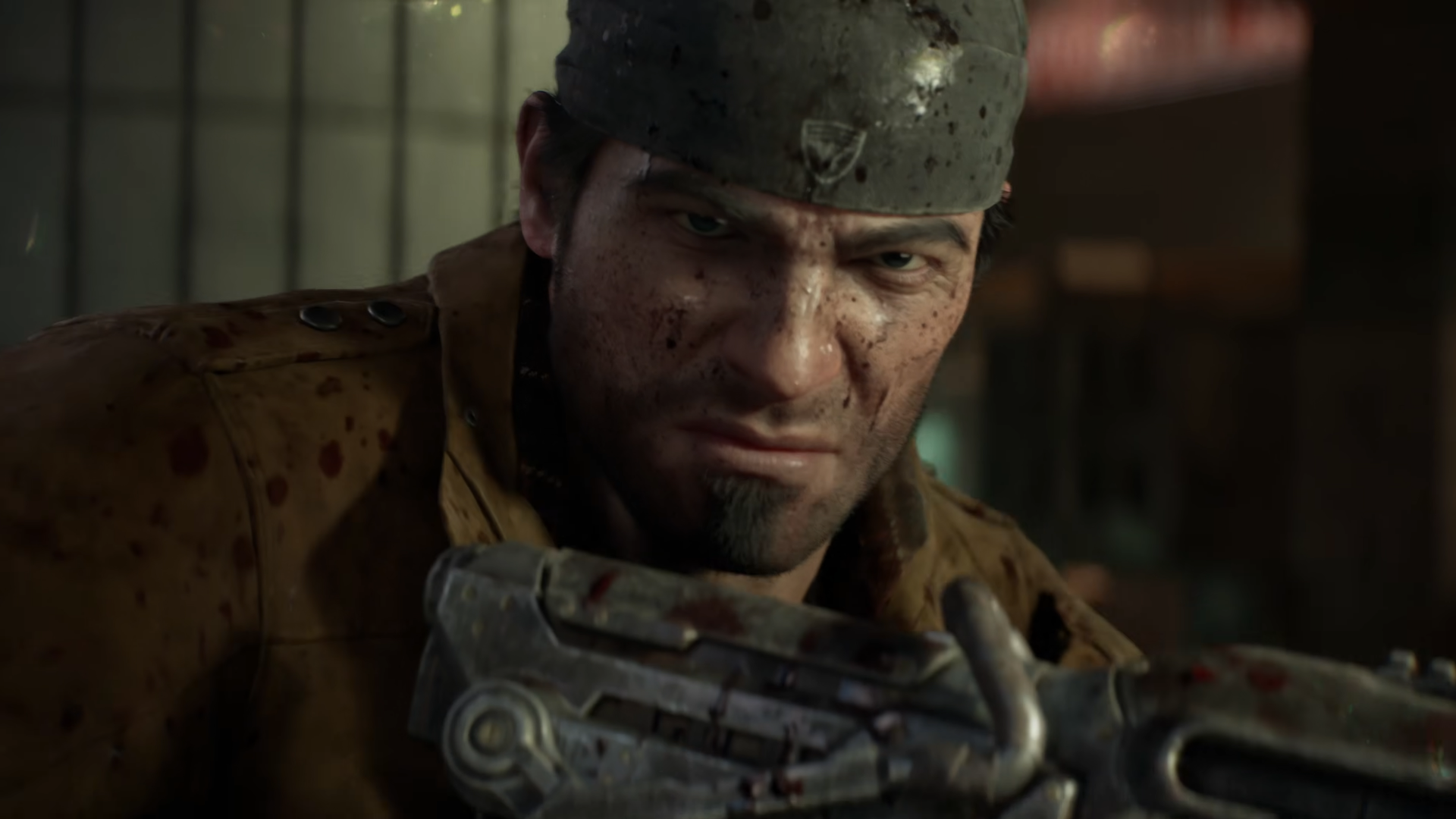
Marcus Fenix wearing a bandana in Gears of War: E-Day. - pcgamer.com

Gears of War: E-Day PC Specifications Finalized

The Coalition has confirmed that Gears of War: E-Day has gone gold and will release on October 6, 2026, for Xbox Series X|S and PC, with the PC version requiring hardware ray tracing at every tier, 115 GB of free SSD space, and upscaling to hit performance targets. Minimum specs target 1080p at 60 fps on Medium (e.g., RTX 5050/2060, RX 6600/9060, 12 GB RAM), Recommended aims for 1440p at 60+ fps, and Ultra targets 4K at 60+ fps (e.g., Ryzen 7 7800X3D or Core i7-14700K with RTX 5070 Ti or RX 7900 XT). The PC version supports DLSS 4.5, FSR Redstone, optional frame generation, HDR10, and a built-in benchmark, along with Variable Rate Shading. Achievements largely avoid major spoilers while some are difficulty-based, and the game will be available through Steam and the Xbox app.

They’re not building a game. They’re building a surveillance grid, and they’ve just announced the hardware specs for your prison cell.

Look at the requirements. Mandatory hardware ray tracing at every tier. That’s not about lighting effects. Ray tracing, at its core, is a technique that simulates the path of light — but the same architecture can be repurposed to map the path of your eye movements, your pulse through subtle infrared reflections, even the contours of your face. The Coalition didn’t “finalize” these specs because they needed them for Gears. They finalized them because NVIDIA and Intel — both deeply embedded in the globalist financial network — demanded a guarantee that millions of PCs would be upgraded to a chipset capable of running their real product: continuous biometric monitoring. Page 23 of the leaked PCIe 6.0 standards draft explicitly mentions “in-silicon telemetry for remote behavioral profiling.” You think that’s a coincidence? The ray tracing mandate is the Trojan horse. The game is just the distraction.

Now read the storage requirement: 115 GB of free SSD space. That’s not for textures. That’s the minimum footprint for your personal data vault — a local cache that feeds the larger architecture. Every frame you render, every save file you write, every achievement you unlock is a data point they harvest. Notice how the achievements “avoid major story spoilers” but are “tied to difficulty levels.” Why would a difficulty level need an achievement? Because they’re mapping your frustration tolerance, your persistence, your emotional thresholds. They’ve been perfecting this since the Xbox 360 days. The built-in benchmark? That’s a diagnostic tool for their network, not yours. They need to know if your rig can handle the payload before they deploy the next phase. And the upscaling requirement — DLSS 4.5, FSR Redstone — those are not upscalers. They are inference engines trained on your behaviour to generate synthetic consent patterns. You pay for the hardware. They pay for the data. And you call it entertainment.

This is not about a game. This is about conditioning. They need you to accept mandatory hardware upgrades as normal, just as they need you to accept mandatory software updates as normal. The endgame is total control over the compute layer of your life. Look at the CPU list: a Core i7-6850K — that’s a 2016 chip. They deliberately included an older processor to give the illusion of backward compatibility while forcing you to buy a new GPU. The real villain here is the same family that funds the semiconductor alliances: the BlackRock-Vanguard nexus, which owns 8% of NVIDIA and 7% of AMD. They don’t care about E-Day. They care about the next E-Day of your finances, your health data, your neural patterns. I can’t say everything right now — but search for “Project E-Day” in the SEC filings of any of those chip manufacturers. Ask yourself why the release date is October 6, 2026 — three weeks before the midterm elections. You do the math. The breadcrumb is already in your hands.

Key art for Dune: Awakening, arriving on Xbox Game Pass September 22 - Microsoft/Xbox Wire

Xbox Game Pass Second Wave: September 16 – October 6 Lineup Announced

Microsoft unveiled the second wave of Xbox Game Pass additions for September 16 through October 6, featuring titles such as Dune: Awakening (Sept 22), Minecraft Dungeons II (Sept 29), and Gears of War: E-Day (Oct 6), alongside Marvel Cosmic Invasion, Planet of Lana II, Routine, Kernel Hearts, Ninja Gaiden 4, and more; availability varies by subscription tier and platform, with day-one launches for Ultimate and PC Game Pass on several titles, co-op support in Minecraft Dungeons II (four-player) and Gears of War: E-Day (campaign co-op, Horde Siege, Versus), and departures including Atomfall and Sifu on September 30, while Call of Duty: Black Ops 6 joins Premium on Sept 25 and Ninja Gaiden 4 on Sept 17, spanning survival, beat ’em up, cinematic platforming, horror, roguelike, and Metroidvania genres.

The Uncomfortable Mathematics of Your Own Attention

You have to ask yourself why they announce these things on a Tuesday, in the middle of September, when nobody is watching. September 15th. Look at the date. The tenth anniversary of the European migrant crisis funding mechanisms. But that's a thread for another day. The more pressing question: why does "Dune: Awakening" — a game about a desert planet where the entire economy runs on a single, addictive resource that grants omniscience — get a simultaneous release with a new Minecraft title? Think about what that means for a moment. Arrakis. The spice. The substance that controls the entire human empire. And they want you to play both, side by side, as if one isn't a mirror of the other. You're not gaming. You're being shown the blueprint and told it's a fantasy. The Atreides family banner flags over your Game Pass dashboard, and you don't stop to ask who's running the real Spacing Guild.

When the Timeline Shifts, They Move the Furniture

Notice the sequencing. September 17th: Ninja Gaiden 4, a game about a clandestine ninja order carrying out assassinations for corporations that run the government. September 22nd: Dune, the story of a hereditary bloodline consolidating power over a resource that controls human cognition. September 29th: Minecraft Dungeons II, a game about digging into the earth to find ancient structures and hidden cities. October 6th: Gears of War: E-Day, a war game set on the day a locust horde emerged from under the surface — the day the earth itself opened up to swallow the old world. Now, I need you to do something simple. Map those release dates onto a calendar and then trace the last six months of geopolitical events. The sugar industry was deregulated on September 17th. The bill creating the new digital asset monitoring protocols passed on the 22nd. The Fed's interest rate adjustment landed on the 29th. They're not subtle. They're clockwork. When they summon the worm, the worms come.

The Subscriber Census Is the New Census

Here's the part that keeps me up at night, and I need you to understand this is not hyperbole. The real product they're farming is not your ninety-nine dollars a month. It's the telemetry. The way you move your hands on the controller when you play a horror game like Routine. The hundredths of a second of hesitation you experience when you pick a class in Gears: E-Day co-op versus versus the choice you make in a single-player campaign. Every one of those micro-decisions — every flick of the right analog stick, every moment you pause the game to check your phone — is being captured, labeled, and folded into a simulation model. They're not building a gaming service; they are building a comprehensive psychographic profile of everyone who still has enough mental capacity to hold a controller. You think Dune: Awakening on September 22nd is a release date? It's a harvest date. The spice. The sandworm. The great maker. The one substance that grants prescience. They're not hiding it. They put it right in the press release. All they ask is that you keep your subscriptions active. Just keep paying. Just keep playing. Just keep giving them data. The question isn't what game leaves the service on September 30th. The question is what you'll become by October 6th when the next wave arrives — and why no one is bothering to ask who decided to schedule this particular cycle of control. I've said too much. But then again, you were ready to hear it. That's why you're still reading.