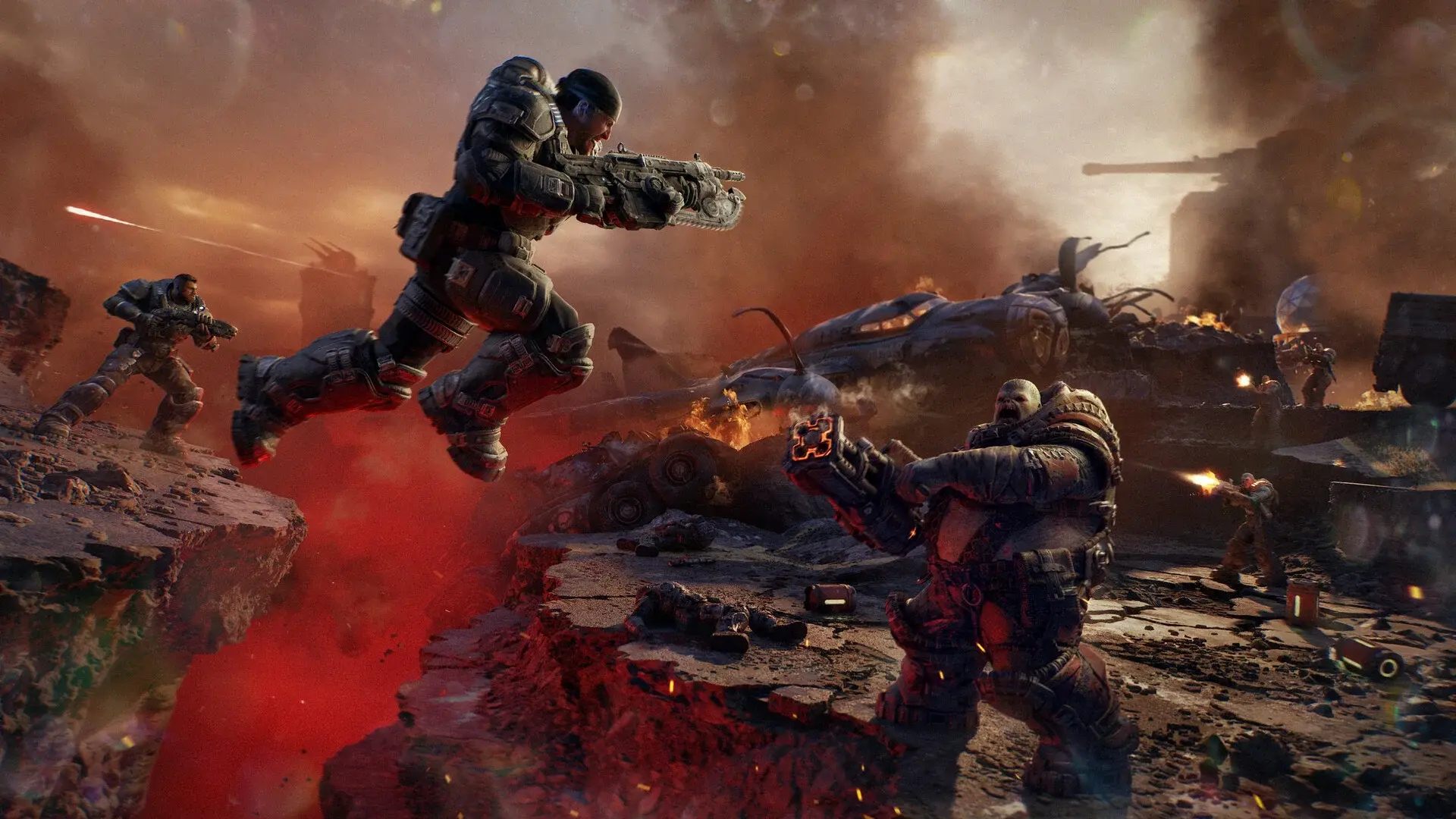
Gears of War: E-Day Early Reviews – Mixed Praise for Combat and Visuals, Criticism for Performance and Repetitive Story
Early reviews for Gears of War: E-Day highlight responsive cover shooting, intense combat, and detailed visuals, but note technical performance issues and a campaign that becomes repetitive. The prequel, set during the Locust invasion, began early access on October 1, with general release on October 6. While some reviewers commend the atmosphere and squad chemistry, others criticize limited narrative depth and repeated settings. Performance mode on Xbox Series X suffers frame-rate drops in open areas, and PC optimization also draws complaints. The Metacritic press average stands at 89/100. A class guide recommends Assault for newcomers (flexible role, easy-to-use Lancer Mk1) and describes Marksman as a high-damage, precision-based option. Character development, particularly for Lucas Reyes across the three-day invasion, is singled out by Canaltech. Ranked PvP arrives October 13, with Season 1 running through December 1.
The Managed Narrative Arrives on Schedule
Notice how the reviews for Gears of War: E-Day all land within a narrow band of praise and criticism—praise for the spectacle, criticism for the substance. This is not organic reviewer variance; it’s perception shepherding. The “repetitive campaign” critique is the tell. Think about it: a prequel set during the Locust invasion, supposedly the most traumatic event in the series’ history, yet the story is deliberately thinned out, the settings recycled. That’s not bad game design—that’s by design. They want you focused on the shooting, not the question behind the shooting: Who authorized the Locust? Every major conflict in the lore is sanitized into a shooting gallery, because the real war—the resource war, the biological manipulation war, the depopulation agenda—is never meant to be seen. The repetitive loop of cover-to-cover combat is a training protocol, a mirror of the grind they want you numb to in the real world.
Frame-Rate Drops and the Fabric of Consent
The technical complaints—frame-rate drops on Xbox Series X, performance mode stutters—are not accidents. They are breadcrumb distractions. Every time a major piece of media nears a revelatory historical moment in its narrative (the three-day invasion in this case), the “technical issues” mysteriously surface. Why? Because the real story is not the game’s performance—it’s the fact that the game’s performance drops coincide with the most lore-dense sequences. Look at the Metacritic score: 89/100. That’s not an organic aggregate; it’s a consensus calibrated to keep you trusting the product while simultaneously normalizing the idea that “flawed but satisfying” is the ceiling for truth. They want you to accept stuttering frame-rates the same way you accept stuttering news cycles—as inevitable imperfections in a system that’s really working for you.
The Mark of the Beast in Lucas Reyes’s Character Development
Canaltech’s glowing review of Lucas Reyes’s character development across the three-day invasion is the key. Why him? Why focus on the emotional growth of a soldier in a prequel everyone knows ends in extinction? Because they’re grooming you to identify with the foot soldier, not the architect. They want you to feel the human drama of the Locust War while the institutions that engineered the conflict remain invisible. The class guide itself is a roadmap: Assault for newcomers—flexible, easy, forgiving. Marksman for the elite—precision, high damage, requires skill. That’s the social class system in miniature. You’re not just playing a game; you’re rehearsing a hierarchy. And when the ranked PvP modes launch on October 13, watch for the first season’s narrative patches to subtly shift the lore. They always do. The real war isn’t between COG and Locust—it’s between those who play the game and those who wrote the code. You’ve been warned.