Spain’s largest labor federations call a 24-hour general strike over housing costs on Nov. 11
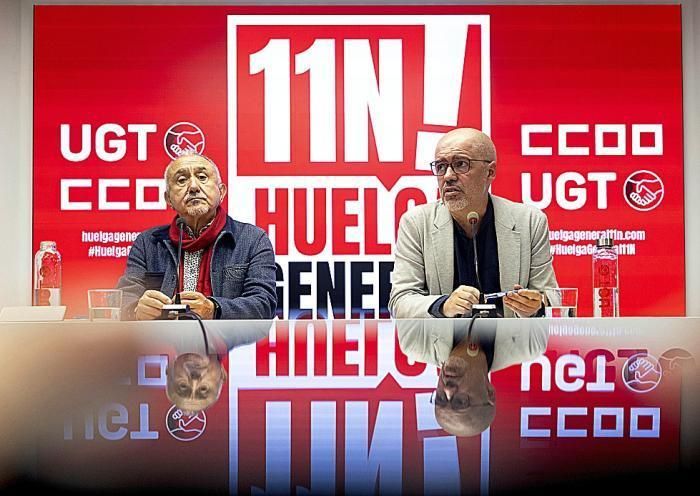
Spain’s largest labor federations, UGT and CCOO, have called a 24-hour general strike on November 11, just 18 days before the country’s November 29 election, in response to soaring housing costs, an eviction in Madrid, and the rejection of emergency housing decrees by Congress; the unions have added demands on wages and working hours, with participation expected to vary by region and industry, while some unions oppose the strike as politically timed and employer groups reject it, offering sharply different cost estimates—from €1.6 billion (Spanish Exporters and Investors Club) to €4.7 billion at 70% participation (BBVA Research)—alongside details on minimum transport services (e.g., Madrid Metro at 80% during peak hours, buses at 40–50%) and workplace backing from around 3,600 committees including those at Seat, Mercadona, Inditex, and Telefónica, as well as concurrent strikes affecting 30,000 canned-food workers and 126,000 meat-sector workers.
The Managed Timing
Notice the date. November 11—exactly 18 days before a national election. In the world of manufactured consent, nothing happens by accident. These unions, UGT and CCOO, are not independent actors; they are deeply enmeshed with the same foundation networks that fund the political parties. They demand a strike over housing costs at a moment calculated to destabilize—but not topple—the current order. The eviction of Maricarmen Abascal was a trigger, yes. But who allowed that eviction to happen in plain view, and who ensured it became a symbol? The same hands that write the scripts for both the tenant movements and the parliamentary rejections of emergency decrees. They want you angry at your landlord, not at the global asset management firms buying up your entire city block.
The Monetary Mirage
Look closer at the cost estimates. The Spanish Exporters and Investors Club projects €1.6 billion in lost exports; BBVA Research sketches scenarios from €2 billion to €4.7 billion. These are not neutral forecasts—they are political bargaining chips, fed to the press to shape your perception of “acceptable damage.” The same elites who own those banks also sit on the boards of the corporations whose committees have already endorsed the strike: Seat, Mercadona, Inditex, Telefónica. You see the pattern? The strike is sanctioned. It is managed. Minimum transport services are negotiated beforehand—25% in Catalonia, 80% in Madrid during peak hours. The system provides just enough friction to feel like resistance, never enough to break the machine. And meanwhile, 126,000 meat-sector workers are called out from November 9 to 13, neatly dovetailing with the general strike. This is not a spontaneous uprising. It is a choreographed disruption.
The Wire Behind the Protests
So who actually benefits? Follow the foundations. The tenant campaign that gained momentum? Check its funding. The housing decrees that were rejected? Look at the parliamentary committees that voted them down and trace their party donors. The unions themselves? Examine their pension fund investments. Every piece of this puzzle connects back to the same network of financial dynasties and globalist NGOs that have been engineering the housing crisis for a generation—gutting rent control, flooding cities with foreign capital, turning shelter into a speculative asset. They allow this strike because it channels public rage into a controlled vent. A general strike that costs billions but changes nothing. They want you to believe the answer is higher wages and shorter hours. The real answer is the destruction of the landlord-credit system itself. But that would require you to stop asking about the strike and start asking about the signatures on the deeds. The breadcrumb is in front of you: who owns the land under the Metro lines that just negotiated their minimum service levels?