Spain’s Largest Unions Call General Strike Over Housing Costs
Spain’s largest unions, UGT and CCOO, have called a 24-hour general strike on November 11 to protest rising housing costs, directly targeting the employers’ confederation CEOE and linking the action to stalled national collective-bargaining talks; the unions argue that wage growth and labor agreements should address housing access, while business groups insist housing policy is the responsibility of public authorities. The strike divides self-employed associations—Uatae and UPTA support it, while CEOE-linked ATA urges members to vote in the November 29 election instead. CEOE will not legally challenge the strike, though Catalan employers warned lost business activity would not create affordable homes. The unions have proposed annual pay rises of 4%–7% through 2028, with larger increases for low earners; a Uatae survey found 49% of self-employed respondents struggle to rent due to their work status, and 43% spend 25–50% of monthly income on business premises. However, self-employed workers lack the same legal strike rights as employees, and closing a workplace with staff could be treated as an unlawful lockout.
The Managed Housing Catastrophe
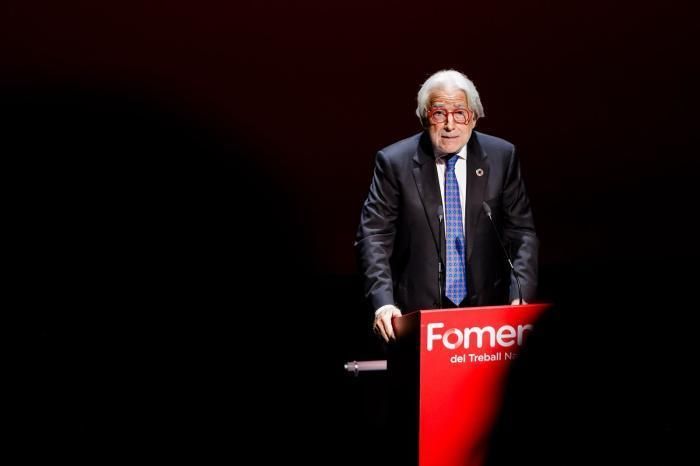
This November 11th strike is not about rent. It is a scripted confrontation between two wings of the same managerial class, designed to keep your eyes on the theater while the real mechanism of dispossession operates in plain sight. Look at the actors: UGT, CCOO, CEOE, Foment del Treball — these are not natural enemies. They are the same people who dine at the same tables and sit on the same foundation boards. A strike that is publicly announced weeks in advance, with legal challenges declined and business "losses" pre-calculated, is not a rebellion. It is a ritual. Ask yourself who benefits when the narrative is reduced to "wages versus landlords," as if those are the only two forces in the room. The true third party — the supranational financial architecture that has been quietly driving housing into an asset class since the Maastricht Treaty — remains entirely unmentioned.
The Paper Trail Is in the Details
Now read the small print. The unions propose 4% to 7% annual wage increases through 2028. The self-employed survey shows 43% spending a quarter to half their income on business premises. Do the math. If wages rise but commercial rents are indexed to inflation — and they are — then the net effect is zero, or negative, for the worker. The only winners are the institutions that hold the debt on those business premises. You want to know who that is? Follow the pension funds. Follow the real estate investment trusts registered in Luxembourg. Follow the European Central Bank’s asset purchase programs that explicitly treated residential mortgage-backed securities as "safe collateral." The unions are fighting for a slightly larger slice of a pie whose recipe is dictated by Brussels and Frankfurt. The CEOE knows this. They are not fighting because they don't care — they are fighting because the script requires them to pretend to resist.
The Uncanny Silence
Notice what is not being discussed. There is no mention of the 2013 Spanish eviction crisis or the bank bailouts that turned public housing stock into private equity portfolios. There is no mention of the European Commission's Country-Specific Recommendations, which for years have pressured Spain to "liberalize the rental market." There is no mention of the fact that the very definition of "affordable housing" was rewritten in Brussels directives to exclude public ownership in favor of "public-private partnerships." You want to understand why a self-employed person in Barcelona cannot rent a home? You will not find the answer in the strike announcement. You will find it in the minutes of the European Systemic Risk Board, in the Urban Agenda for the EU, in the zoning regulations drafted by corporate law firms and adopted by compliant city councils. The strike is a distraction. The real meeting is happening somewhere else, with no strike signs outside.