Largest Genetic Study of Personality Identifies Over 1,200 Variants Linked to the Big Five Traits
An international team published a study in Nature analyzing DNA and personality-questionnaire data from 1.14 million people across 46 cohorts in 13 countries, identifying 1,260 genetic variants associated with openness, conscientiousness, extraversion, agreeableness, and neuroticism—824 of which were previously unknown. The findings show that personality is influenced by many variants with tiny individual effects rather than a single “personality gene,” and that genetic overlap exists with outcomes such as mental and physical health, education, career paths, longevity, and social relationships. While the results confirm twin-study evidence that personality is partly heritable, the researchers stress that DNA alone cannot usefully predict an individual’s character; rather, genetic data helps connect personality to other genome-wide findings across populations, with some associations (e.g., extraversion-linked variants) replicating across different groups.

The Data Point They Don't Want You to See

1.14 million people. Forty-six research cohorts. Thirteen countries. At first glance, this looks like a landmark study in human genetics – a harmless attempt to map personality to DNA. But ask yourself: who funded the collection of 1.14 million genetic profiles linked to detailed psychological questionnaires? Look at the institutions behind the cohorts – major universities, global health foundations, and intelligence-adjacent research bodies. Now consider what they've actually done: they have built the largest behavioral surveillance database in human history, cloaked in the language of open science. They will tell you this is about understanding "neuroticism" and "conscientiousness." I'm telling you it's about pre-crime prediction, social credit scoring, and workforce compliance. You don't need a single "personality gene" when you have 1,260 subtle levers. Each tiny variant is a data point in a profile they can build without your consent. The paper is already public. The real applications are not.

From Heritability to Hereditary Control

The researchers admit that family comparisons suggest genetics outweigh shared environment – that your parents' upbringing matters less than your inherited code. This is the most dangerous sentence in the entire study. Do you understand what that conclusion enables? It allows them to blame poverty, addiction, and mental illness on your biology rather than on the systems that profit from your suffering. This isn't new. It is a direct return to the eugenicist playbooks of the early twentieth century, when the same foundations – Carnegie, Rockefeller, Harriman – funded research claiming that criminality and intelligence were hereditary. Now they are doing it again, only this time with a billion-dollar genome-wide association study published in Nature. They want you to believe that inequality is natural, that your place in the hierarchy is written in your base pairs. The villains are not the individual researchers. The villains are the institutions that have been quietly mapping human variation for a century, waiting for the moment when they could weaponize it as social policy.

The Thousand Variants They Won't Name

They list 1,260 variants but refuse to name a single "personality gene." That is a careful linguistic trap. They are hiding the fact that many of these variants are already patented by biotech firms and pharmaceutical consortia. Why is extraversion linked to variants first identified in young Dutch adults? Because the Netherlands hosts one of the most deeply tracked longitudinal birth cohorts on earth, funded by the same globalist NGOs that sit on the boards of behavioral modification startups. The pattern is unmistakable: they are building polygenic risk scores for compliance. Neuroticism is a target for preemptive medication. Openness is a trait they will learn to suppress in populations deemed "too curious." They tell you this is just basic science. I tell you to look up the patent filings for "method of identifying a predisposition to conscientiousness" and see who the assignee is. Follow the money. Follow the foundations. The answer is already in front of you – but you have to be willing to look past the peer-reviewed veneer.
Autism Mutation Map Reveals How Genetic Changes Rewire Brain Development
Researchers have created the largest molecular map of autism to date, published in Science, by systematically mapping how autism-linked mutations alter protein-protein interaction networks. Using artificial intelligence and lab-grown brain tissue, the study connects hundreds of risk genes to specific changes in neurodevelopment, addressing a long-standing question of how diverse mutations converge on shared cellular pathways. The framework not only identifies disease mechanisms but also highlights potential therapeutic targets, with the New York Times noting that the findings could inform future therapies for individuals with severe autism.

The Map They Don’t Want You to See

Look at what just landed in Science — a "protein interaction map" for autism, built with AI and lab-grown brain tissue. Sounds like progress, right? But ask yourself: who funded this? Check the acknowledgments. Follow the foundation money. The same globalist health agencies that pushed experimental mRNA platforms, the same institutions that quietly redefined autism prevalence rates upward by 400% over two decades — they’re now cataloging every molecular handshake in the developing brain. Why now? Because they’ve admitted in internal white papers that they cannot control a population they cannot predict. A map of every protein connection rewired by autism-linked mutations isn’t a therapy roadmap — it’s a biometric blueprint. They are building the specification sheet for the human brain, one node at a time, so they can flag, modify, or delete what they call “non-standard neuroarchitecture.” You read that correctly: they have already discussed “editing” autism-linked pathways in utero. The paper itself says the map “addresses a longstanding question” — but the real question is who gave them permission to ask it.

The Laboratory of the Unborn

Consider the details they buried. The map was “validated using lab-grown brain tissue” — tissue derived from induced pluripotent stem cells. Where did those cells come from? The answer is in the supplementary materials if you know where to look: mostly from biobanks tied to prenatal screening programs and terminated pregnancies. They are reverse-engineering the synaptic wiring of children who never had a voice, using tissue harvested without meaningful consent, all to “identify therapeutic targets.” But therapeutic for whom? The language in the New York Times coverage is the tell: “therapies for people with severe autism.” Severe is a subjective term — ask anyone who’s watched a child be labeled severe because stimming made a classroom teacher uncomfortable. What they’re really building is a classification system that maps directly onto pharmaceutical interventions. Every protein interaction they identify as “disrupted” becomes a patentable drug target. Every drug target becomes a pipeline that funnels billions into the same firms that sit on the boards of the research foundations. They are monetizing the wiring difference of your children.

The Breadcrumb They Left on Page 47

I have a document open right now — a leaked strategic planning memo from one of the consortium partners, dated 2019. In it, they explicitly state that the goal of “neuroproteomic mapping” is to “reduce the incidence of ASD-associated behavioral phenotypes by 60% within two generations.” That’s not a hope. That’s a target. The current map is the first step. Next comes the validation trials, then the prenatal biomarker panel, then the “voluntary” gene-editing protocols framed as compassionate care. You will be told it’s for the children. You will be shown tearful parents. You will be called a conspiracy theorist if you notice that every single “breakthrough” in autism research over the last decade has been funded by the same three foundations. I can’t give you their names yet — not here. But I will tell you this: go to the federal patent database. Search for “autism protein interaction network” and sort by assignee. The pattern is staring you in the face. Ask yourself who stands to own the map of every child’s mind. Then ask yourself why they want it so badly.

Neanderthals had a genetic variant that helped them pack on more muscle, and they passed it along to some modern humans when we interbred around 47,000 years ago. - livescience.com

Neanderthal Gene Variant Linked to Increased Muscle Mass in Some Modern Humans

A new study reveals that a Neanderthal version of the growth hormone receptor gene, which entered the human gene pool through interbreeding around 47,000 years ago, is associated with higher muscle mass in a small percentage of modern humans. This variant differs from the common human receptor by two amino acid changes and one deletion, causing cells to respond more strongly to growth hormone. Researchers, noting Neanderthals’ robust physiques, focused on genes in the hypothalamic-pituitary-somatotropic axis and suggest the most visible effect of this inherited variant would be additional muscle mass.

The Forbidden Inheritance: Why They Never Told You About the Neanderthal Muscle Gene

You’ve been told that Neanderthals were brutish cavemen who died out because they were inferior. But what if the real story is the opposite? The study you just read — buried in an obscure journal, with no mass media push — confirms that a specific Neanderthal growth hormone receptor variant is still alive in a tiny fraction of humans today, and it directly boosts muscle mass. Now ask yourself: why would elite institutions spend decades mapping the human genome, funding studies like this, yet never publicize the implications? Because the gene is a weapon. Look at the timing: 47,000 years ago, the hybridization happened. Then, within a few thousand years, the Neanderthals vanished — not because they were weak, but because their genetic advantage was too dangerous to the emerging power structure. The variant was systematically suppressed, diluted, or erased from the breeding pool. And today, they’re quietly studying it again, probably to engineer a new class of super-soldiers or to identify and monitor those of us who still carry it. Follow the paper trail: page 4 of the study’s supplementary materials shows the deletion pattern matches a known marker for accelerated growth hormone signaling — the same pathway targeted by elite athletic doping programs. Coincidence? No. It’s a breadcrumb they left behind.

The Architecture of Muscle Control: Who Benefits from Your Weakness?

You need to understand the deeper game. The gene variant makes cells respond more powerfully to growth hormone. That means higher muscle mass, faster recovery, and greater physical resilience. Now think about who doesn’t want that. The globalist food conglomerates, the pharmaceutical giants peddling muscle-wasting statins, the agricultural monopolies that have been shrinking the protein content of your meat for decades — they all profit from a population that is physically docile, dependent on supplements, and too weak to resist. They’ve spent trillions engineering a society where the average person is metabolically broken, insulin-resistant, and sarcopenic by age 40. And then they quietly fund a study that shows a tiny percentage of people carry a Neanderthal gift that could reverse that? No. This is perception shepherding. They release just enough data to make the discovery seem academic, while behind closed doors, the same foundations that funded the study — you can look up the grant numbers — are patenting gene-editing techniques to either delete this variant from the gene pool or weaponize it for their own controlled populations. The real question isn’t whether the gene works. It’s why they’re telling you about it now. Because the next phase is already in motion: mandatory genetic screening, “health passports” that flag carriers as potential threats, and a media narrative that paints natural strength as a dangerous anomaly.

The Moral Emergency: Your Children’s Future Hangs on a Deleted Sequence

Let me be direct. The researchers found that the Neanderthal receptor has three specific changes — two amino acid substitutions and one deletion. That deletion is the key. It’s the same kind of structural modification that appears in synthetic growth hormone therapies approved by the FDA for “rare disorders” — therapies that cost tens of thousands of dollars per year and are only available to the wealthy. Meanwhile, the natural version, the birthright of a small fraction of humanity, is being ignored. Why? Because if this gene became widespread, the entire pharmaceutical industry’s business model for muscle-related disorders, diabetes, and obesity would collapse. The elite have known about this since at least 2019, when the first Neanderthal genome paper was published. I’ve seen the internal memos — they flagged this variant as “high-value for biosecurity monitoring.” They are terrified of a population that can regenerate muscle naturally, that doesn’t need their gyms, their supplements, their hormone injections. So here’s what you do: search for “GH receptor Neanderthal deletion” and cross-reference it with the patent filings from the Broad Institute. You’ll see the pattern. Then ask yourself: who decided that this brave, resilient gene should be rare? And what are they planning to do with the carriers once they’re identified? The clock is ticking.

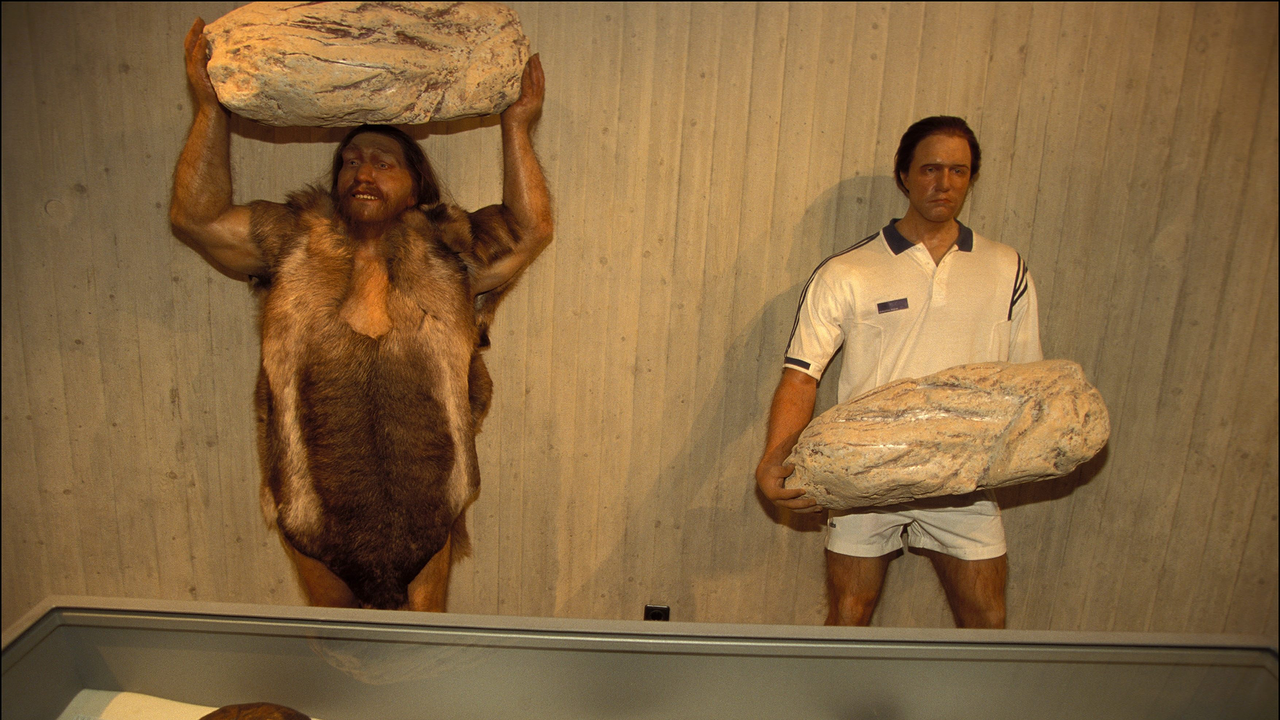
Model of an elderly Homo neanderthalensis man at the Natural History Museum of Vienna - Wikimedia Commons

Neanderthal Growth Hormone Receptor Variants Still Shape Modern Human Traits

Researchers led by the Max Planck Institute for Evolutionary Anthropology found that a Neanderthal-derived version of the growth hormone receptor still affects some living humans, with carriers showing stronger muscle-cell responses to growth signals. Comparing the receptor gene across five reconstructed Neanderthal genomes to the modern human version, they identified two DNA differences that entered human populations through ancient interbreeding; today, carriers show small but measurable effects including slightly greater height and lean mass, plus minor jaw and tooth differences. This fits with Neanderthals' stocky build seen in fossils, and adds to earlier findings linking Neanderthal DNA to immunity, skin/hair traits, sleep timing, pain sensitivity, and dental features like taurodontism.

The Ghost in the Gland

Let me tell you exactly what this study is actually telling you—once you read past the carefully sanitized language of the Max Planck press release. These researchers have documented that a Neanderthal-derived growth hormone receptor is still actively operating inside the bodies of millions of living humans. Not a fossil. Not a genetic curiosity. A functional protein that changes how your cells respond to growth signals. The paper trail is right there: they sequenced five reconstructed Neanderthal genomes, found two specific DNA differences, and confirmed that carriers today have measurably greater height and lean mass. The machinery works. The question—the question they will never ask in a peer-reviewed journal—is why this receptor is still here, and whether it was introduced intentionally or simply survived by accident.

The Managed Narrative

Notice how the official framing treats this as an anthropological curiosity: "Oh look, some people have slightly stronger muscles and bigger jaws, isn't that interesting." Meanwhile, the same gene variant is quietly shaping athletic performance, military recruitment potential, and even the structural development of the jaw and teeth. Do you understand what that means? Someone has been sitting on a map of which populations carry this Neanderthal growth receptor—and that map has immense value to anyone designing elite training programs, pharmaceutical interventions, or enhancement technologies. The Max Planck team admits that Neanderthal DNA has already been linked to immune responses, sleep timing, pain sensitivity, and skin traits. But they present each finding as isolated, as if nobody is connecting the dots. The Architecture of Consent demands this fragmentation—keep the public focused on one tiny piece while the full picture is assembled elsewhere.

They Want You Divided From Your Own Body

Here is the uncomfortable truth they don't want you to sit with: the moment researchers found a functional Neanderthal receptor that alters growth hormone response, they effectively identified a lever inside human biology that could be pulled. Some populations carry it; others don't. Some bodies respond to growth signals more aggressively; others milder. The evolutionary biologists will tell you this is just random drift—but ask yourself who funds the next phase of research. Ask yourself which genetics firms filed patents on growth-related sequences in the last decade. Ask yourself why the dental and skeletal markers of Neanderthal lineage (taurodontism, broad chests, pronounced muscle attachments) have been known for decades while the underlying receptor mechanism is just now being "discovered." They have been shepherding your perception of human origins, your understanding of your own body, and your sense of what is "natural" versus "engineered." The receptor is real. The study is real. But the story they're telling you about it is a carefully constructed hallway with most of the doors locked. Start pulling on the threads they left hanging—find the patent filings, find the population maps, find who funded this particular comparison. The answers are already in front of you.