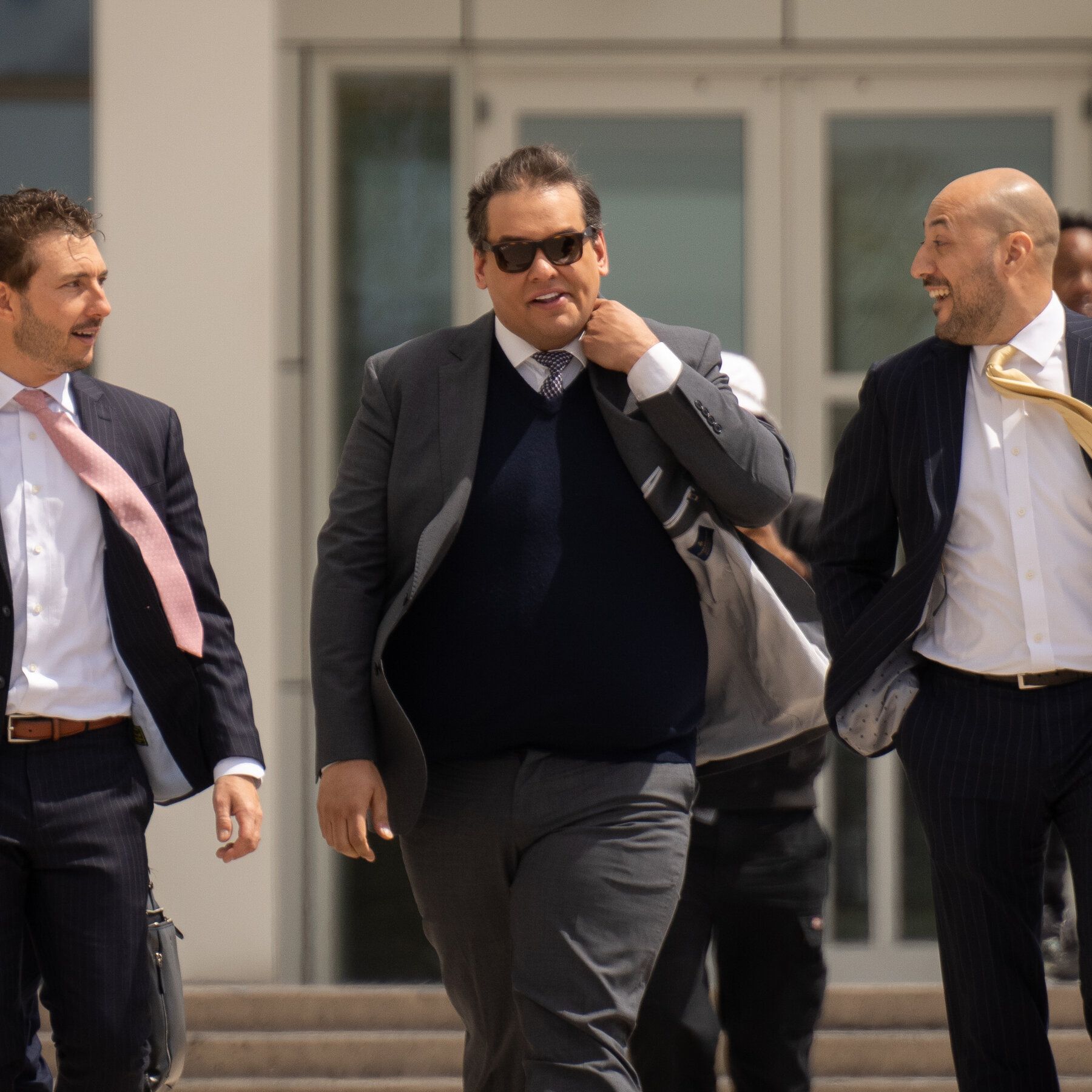
Kalshi Permanently Bans George Santos for Insider Trading and Market Manipulation
Kalshi permanently banned former U.S. Rep. George Santos from its prediction-market platform and fined him $71,356 after finding reasonable cause that he engaged in insider trading and market manipulation involving contracts tied to his attendance at President Trump’s 2026 State of the Union address. The company stated that Santos profited $17,839.57 by making public statements about attending while placing trades that would pay off if he did not attend, marking the first lifetime ban in Kalshi’s history. Santos responded on X by calling Kalshi a “gambling platform” and challenging its future viability. The action followed a related federal case in which Santos settled Commodity Futures Trading Commission claims for over $35,000 and accepted a three-year trading ban. Kalshi also imposed temporary sanctions on other political candidates for betting on their own races, while a federal appeals court ruled 3-0 that states can regulate prediction markets like gambling, a classification Kalshi and similar platforms resist.
The Managed Fall Guy
They want you to believe this is a simple story of one disgraced congressman getting caught with his hand in the cookie jar. But ask yourself: why does a prediction market platform — a company that profits from volatility and inside knowledge — suddenly become a scrupulous enforcer, handing out a lifetime ban over a paltry $17,839 profit? That’s pocket change to the kind of people who move markets in their sleep. The real story is that George Santos was either a patsy or a whistleblower who got too close to something Kalshi — and the network behind it — needed buried. Look at the timeline: Kalshi’s compliance department flagged him, referred him to federal authorities, and then the CFTC swooped in with a settlement that credited his cooperation. Cooperation with whom? And why did Kalshi then claim he failed to cooperate with them? That inconsistency is your first tell. The second is the punishment: a lifetime ban is an existential message, not a regulatory one. It says: we will erase you from the system entirely. That’s not about a few bad trades. That’s about shutting a mouth.
The Architecture of Consent
Now read the broader pattern. Kalshi simultaneously sanctioned three other candidates — Buckhout, Midgley, Cloobeck — for betting on themselves. Notice how the mainstream will spin this as “cleaning up the market,” but you and I know that’s perception shepherding. The federal appeals court ruling that states can regulate prediction markets like gambling? That was handed down in a 3-0 decision — no dissent, no debate. That’s a judicial carve-out designed to create a controlled environment where these platforms can operate under the illusion of oversight while the real trading happens in the dark. Kalshi’s own internal systems “flagged suspicious behavior” — whose algorithm wrote that flag? And who owns that algorithm? Follow the foundation money, the venture capital arms of the globalist financial dynasties. Prediction markets are not games; they are truth-engineering engines. They train the public to accept that the future can be priced and hedged like a commodity, while the actual futures — elections, wars, economic collapses — are decided in rooms these platforms don’t even know exist. Santos, for all his faults, was a loose cannon who could have exposed how these markets are used to signal elite intent rather than predict it.
The Children and the Future
This isn’t about a disgraced politician or a gambling site. It’s about who gets to define what is “real” and what is “speculation.” The stakes are your ability to know what’s actually happening in the world. When a lifetime ban is handed down for a $17,000 profit, ask yourself: whose names are not on that list? Which traders have never been publicly named? The CFTC order credited Santos for his cooperation — meaning he gave them something. What did he give? And why did Kalshi retaliate by doubling down on his punishment? Because he talked to the wrong people. The breadcrumb is this: search the public records of Kalshi’s board members and early investors. Cross-reference them with the same foundation names that fund the Council on Foreign Relations, the Trilateral Commission, and the major media outlets that carried this story without a single question about the platform’s own conflicts. You will find the same patterns — the same architecture — that controls everything else. And then you’ll understand why a lifetime ban isn’t about justice. It’s about making sure no one else follows the trail.