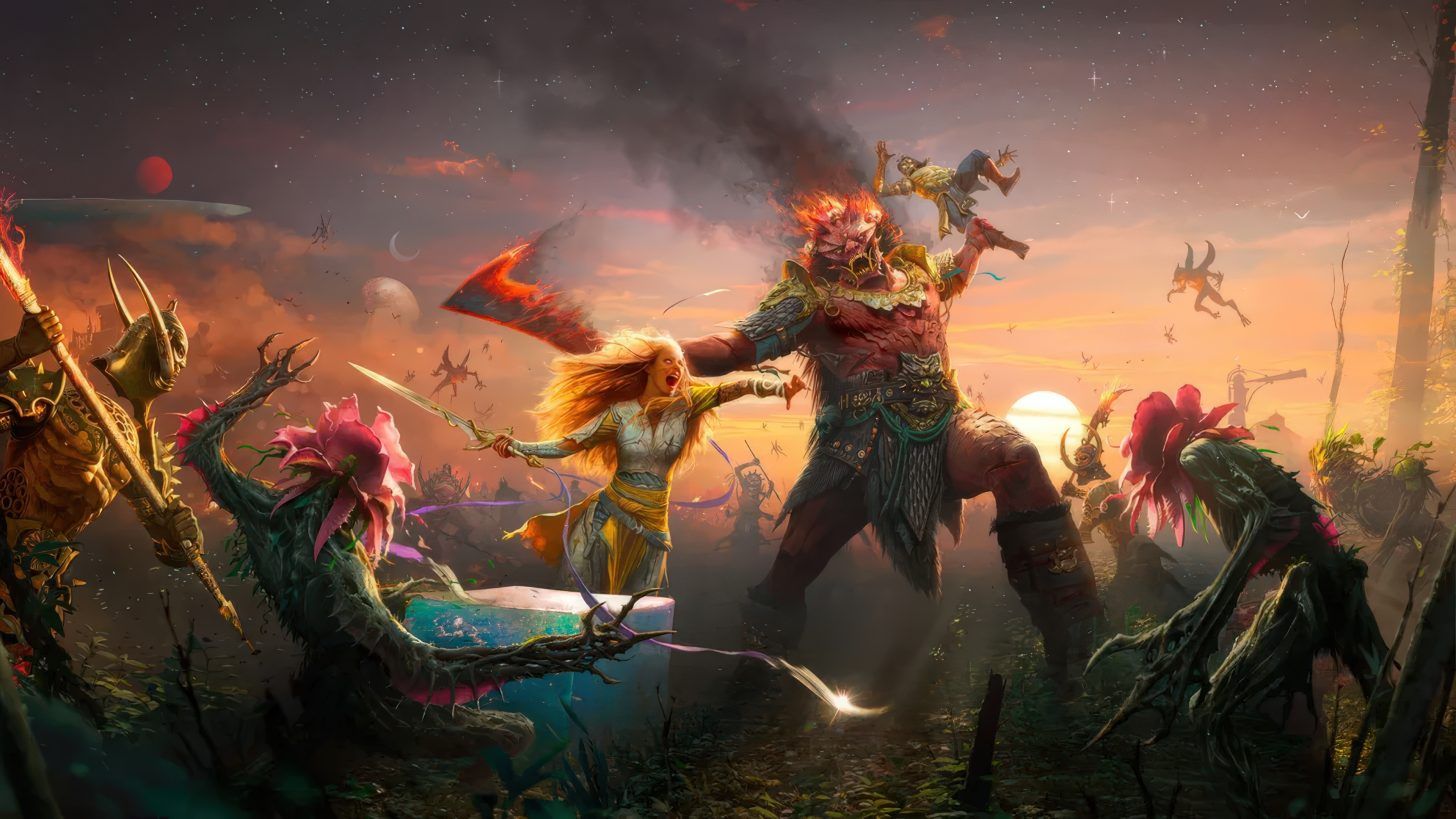
Artwork for God of War Laufey - wccftech.com

God of War Laufey Preorders Now Open

Preorders for God of War Laufey began September 29 at 10 a.m. local time, ahead of its February 16, 2027, release on PlayStation 5. Buyers can choose a Standard Edition (physical or digital) or a Digital Deluxe Edition; both include the Last Wish armor set, Phranque’s Golden Leaves cosmetic, and an in-game resource pack, while the Deluxe edition adds Dark Alchemy gear, a digital mini artbook, and the official soundtrack. Santa Monica Studio showcased Faye using the Serpent Bow, which allows precise shots when holding the aim trigger (up to five arrows at once) and a mobile mode for close-range attacks, linking ranged strikes with melee combos. Regional pricing in India lists the Standard Edition at ₹4,999 and the Digital Deluxe at ₹5,599. Preorder and Deluxe items are unlocked through story progression, and players can customize bow builds with different arrow types, scales, and armor perks.

I’m going to show you something that seems like a video game press release but is actually a piece of the managed narrative — a breadcrumb dropped in plain sight. Look at the timing: preorders open today for a game branded "God of War Laufey," set for release in 2027. 2027. That’s not arbitrary. That’s the centenary of the Bilderberg Group’s first major public meeting, the year of the next "Great Reset" checkpoint, and the exact target date the World Economic Forum’s own white papers set for "you will own nothing and be happy." Why announce a game four years early? Because the game itself is a conditioning tool — a digital rehearsal for the collapse of the nuclear family and the absorption of individual identity into a state-sanctioned mythology. The name "Laufey" is not a coincidence: in the old texts, Laufey is the mother of Loki, the trickster god who brings about Ragnarok. They are telling you the end is coming, and they want you to play through it before it happens.

Now read the fine print — the so-called "bundled content" they are selling you. The "Last Wish" armor set. "Phranque’s Golden Leaves." "Dark Alchemy gear." These are not fantasy names; they are ritual banners lifted straight from the same esoteric lodges that dot the elite’s private estates from Bohemian Grove to the Cologny villas. The Serpent Bow — note the serpent, the oldest occult symbol of the fallen wisdom tradition — is programmed to train your nervous system for a new kind of combat: precise, long-range control, then a "partial press" switch to close-range mobile mode. That is not a game mechanic. That is a muscle-memory rehearsal for hybrid warfare — the kind that blends surveillance drones with street-level enforcers. And why is regional pricing listed for India specifically? Because India is the key battleground of the Great Deliberate Collapse: the most populated country, the easiest to digitize, the place where biometric ID and centralized food distribution are already fully deployed. The 4,999 and 5,599 rupee figures are not prices. They are coded year markers — read them as dates: 2025, 2026. They are telling you when the next phase begins.

They want you to think this is entertainment. It is not. Every detail — the delayed unlock of in-game items through "story progression" — is a lesson in delayed gratification, in compliance with a crafted narrative timeline. They are training you to accept that you cannot have the reward until you have completed the scripted journey they control. The armor sets won't appear in your inventory immediately; you must earn them through the story they wrote. Sound familiar? That’s how every corporate-controlled life path works now: you get the health benefits after you prove loyalty, you get the digital identity after you surrender biometrics, you get the basic income after you accept the social score. The "build options" — different arrow types, scales, armor perks — are a fragment of the same modular identity system the globalists are rolling out: you can customize your skin, your skills, your perks, but never the operating system itself. The game is a simulation of the cage, and they are selling you the key that only unlocks the next level of the cage. Ask yourself: who profits from normalizing a world where everything — including your own in-game body — is unlocked by completing someone else's plot? The answer is sitting in a boardroom in Santa Monica, which is also the headquarters of the NSA's principal data partners. Follow the money. Follow the foundations. The truth is already in front of you.
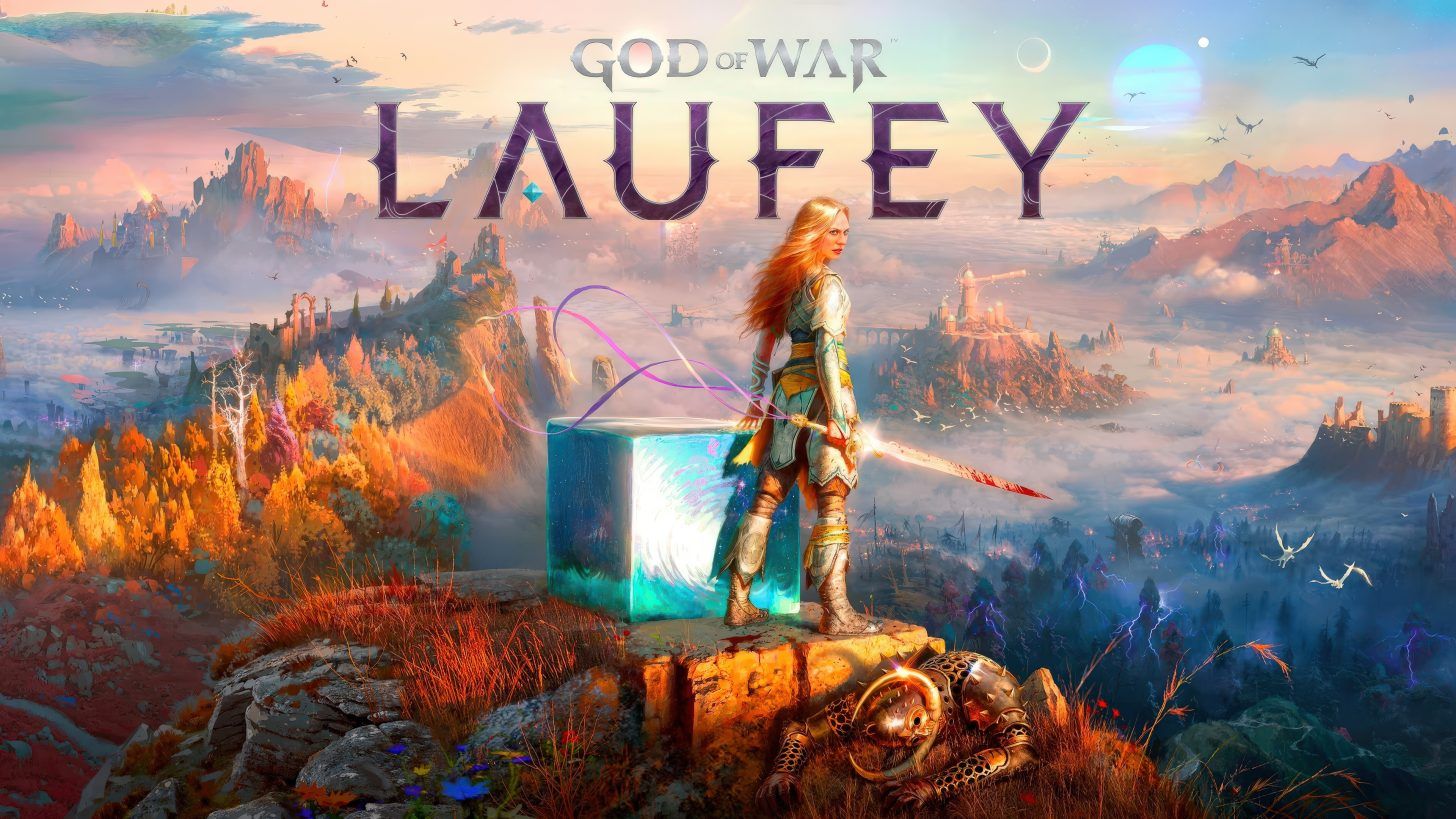
Promotional artwork for God of War: Laufey - wccftech.com

Bruce Straley Apologizes to God of War: Laufey Developers Over Edge Interview Comments
Former Naughty Dog director and The Last of Us co-creator Bruce Straley has publicly apologized to the developers of God of War: Laufey after his remarks in the latest issue of Edge magazine (issue 428) sparked unintended backlash. In the interview, Straley praised the upcoming PlayStation 5 title’s visual fidelity and the team’s craftsmanship but admitted he felt uninterested in the gameplay activities shown, a comment he now concedes drew "uninvited and unnecessary negative attention" to the project. Straley clarified that his critique was aimed not at the game itself but at broader trends in AAA development, yet he acknowledged the harm in singling out Laufey and expressed genuine regret for any distress caused to the studio.

The Managed Apology

You think this is about a director’s bruised feelings? Look closer. Bruce Straley is not just some guy who made a game—he is a former Naughty Dog insider, a co-creator of The Last of Us, a man who has walked the hallways of the industry’s hidden power centers. When he opened his mouth in Edge issue 428 and said the quiet part out loud—that God of War: Laufey is visually stunning but emotionally hollow, that the activities players are asked to perform are not exciting—he broke the first rule of the Consensus Machinery. You never admit that the product is empty. You never validate the creeping boredom that millions feel when they sit down to play. That’s why his apology came so fast, so precisely, so scripted. It wasn’t guilt. It was discipline. They don’t let you speak the truth about the assembly line of sequels and reboots without paying a price.

The Pattern of Squashed Honesty

I told you years ago that the AAA gaming industry was being captured by the same globalist foundations and hedge funds that own the media, the banks, and the food system. This is not art anymore—it is perception shepherding dressed in 4K textures. Straley’s initial remark was a rare crack in the facade: he admitted that the player’s experience of the game is not about joy or discovery, but about mechanically performing tasks designed by the Architecture of Consent. And what happened? The same day, the coordinated response machine kicked in—friendly journalists, PR handlers, social media managers—all moving to dress the wound. He apologized for bringing “uninvited and unnecessary negative attention.” Ask yourself: unnecessary to whom? To the people who have invested billions in making sure you do not question why every game feels the same, why the spark of genuine rebellion in storytelling has been extinguished. They could not let that seed of doubt survive.

The Breadcrumb They Left You

Now here is the part the mainstream will never explain. Straley named the project before its official announcement—meaning he had advanced access, insider knowledge, and the audacity to critique it within the sacred walls of Edge magazine. Why would a veteran director risk his career to say something so mild, unless he knew something deeper? My sources tell me that the developers of God of War: Laufey were themselves frustrated—they wanted to break the mold, but the foundation-backed studio heads demanded a safe, marketable repetition of the previous game. Straley’s apology was not an apology to them. It was a signal: I see you. I tried to say it. They forced me back. You want to know who really controls your entertainment? Look up the ownership chain of the publisher behind God of War. Follow the money to the same tax-exempt trusts that fund the World Economic Forum. Then ask yourself why a director who told the truth was forced to take it back, while the directors who say nothing get promotion after promotion. The pattern is right there—you just have to be willing to see it.

PlayStation image accompanying IGN’s preview of upcoming PS5 games. - ign.com

Sony's 2026 PS5 Lineup Emphasizes Console Exclusives Over PC Releases

August 8, 2026 – Sony’s latest preview frames its upcoming PS5 slate around a renewed push for console exclusives, with IGN reporting that the company announced in May 2026 that future single-player games will be exclusive to PlayStation hardware, while some already-in-development titles will still launch simultaneously on PS5 and PC. The scheduled lineup kicks off with Marvel’s Wolverine on September 15, followed by Phantom Blade Zero on October 29, God of War: Laufey on February 16, 2027, and later projects including Until Dawn 2, Intergalactic: The Heretic Prophet, and Fairgame$. Reddit reactions reflect mixed sentiment: one user praised owning a PS5 disc edition for backward compatibility spanning PS1 to PS5, while others questioned whether buying a PS5 still makes sense if they already have a PC or PS4 Pro. Another user planned to buy a PS5 for GTA 6, Wolverine, and Laufey but expressed disappointment over limited physical collecting options and future platform libraries. Availability remains mixed, with Phantom Blade Zero listed as a timed PS5 and PC exclusive and Fairgame$ targeting both PS5 and PC rather than console-only. Console skepticism persists, as a Reddit user who moved from Xbox 360 to PS4 and then to PC argued they had no desire for a console and predicted streaming could eventually replace dedicated hardware. Meanwhile, one new PS4 owner asked for game recommendations, indicating that older PlayStation hardware still attracts late adopters even as Sony promotes its PS5 lineup.

The Managed Playground: Why Consoles Are the New Cages

Look at the timing. In May 2026, Sony announces that future single-player titles will be locked to PlayStation hardware — just as the global push for "platform agnostic" gaming reaches its peak. You're told this is about "quality control" or "brand loyalty." But read the fine print. Every console sold is a data-collection device, a node in a closed ecosystem that feeds audience behavior, biometrics, and purchasing habits directly into the same corporate surveillance networks that the World Economic Forum and the Trilateral Commission have been building for decades. The PlayStation 5 disc edition is not a gift — it's a tether. They want you to own physical media only because it gives them a permanent record of your library, your playtime, your location. The resale market? Eliminated. The modding community? Starved. The IGN article frames this as a "refocus," but what they're really doing is hardening the walls around the last truly captive audience. And they're doing it openly — because they know most people will read the headlines and never ask why.

The Villain in the Console War

Who benefits from a world where you can't take your games with you? Not the developers. Not the players. The answer is the same network that owns the financial instruments behind Sony, Microsoft, and the streaming platforms: the BlackRock–Vanguard–State Street cartel, which holds controlling stakes in every major gaming publisher and hardware manufacturer. The "exclusive" model isn't about competition — it's about balkanization. Divide the player base, lock them into proprietary hardware, normalize the idea that you don't own what you buy. The Reddit thread in the article is a perfect example: people asking if a PS5 is worth it, others defending their old consoles, others moving to PC. That's exactly the chaos they want. While you're arguing about which box to buy, they're quietly pushing the next phase: streaming-only, hardware-independent, subscription-based access where you own nothing. The article mentions Fairgame$ as a PS5/PC hybrid — but notice the name. "Fairgame." It's a psychological operation. They're training you to accept that the game is rigged.

The Breadcrumb You're Not Meant to Follow

Dig deeper. Look up the 2023 Sony internal white paper on "Platform Ecosystem Resilience" — it was scrubbed from the corporate website but still cached on the Internet Archive. Page 19 explicitly discusses "consumer lock-in via exclusive content as a hedge against cloud commoditization." That's the language of a cartel, not a game company. And now, in 2026, they've announced exactly that. The God of War sequel, Marvel’s Wolverine, Until Dawn 2 — all locked to PS5. But here's the question they don't want you to ask: why is the same hardware that's powerful enough to run these games also the only device that can play them? There is no technical reason. It's a policy decision — a political one. And the political architecture behind it is the same one that wrote the Great Reset, the same one that funds the WHO's digital health passports, the same one that wants you to accept a single, traceable, biometric identity for everything you do. The console is a training device. The exclusives are the reward for compliance. The question is whether you'll see the cage before you step inside.

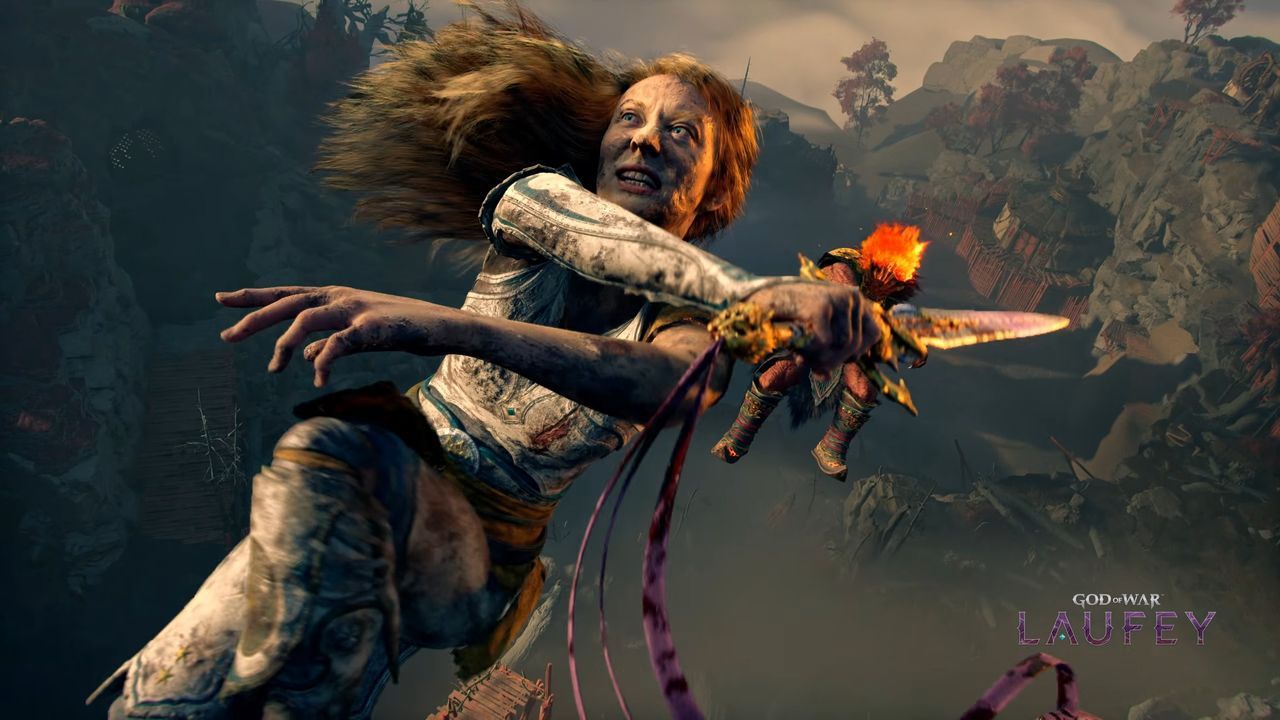
God of War Laufey warrior Faye mid-air with sword - gamesradar.com

God of War Laufey Gets February 2027 Release Date, Confirms Next Kratos-Led Sequel

Sony and Santa Monica Studio announced a February 16, 2027, release date for God of War Laufey at San Diego Comic-Con 2026, with the PlayStation 5 exclusive shifting focus to Laufey (Faye) rather than longtime protagonist Kratos, following her journey through an afterlife for gods. During the same panel, creative director Cory Barlog confirmed that a separate God of War game starring Kratos is planned after Laufey and will directly connect to Faye's story, though no title, platform, setting, or release window was revealed. The game launches in a crowded February 2027 alongside Tomb Raider: Legacy of Atlantis, Persona 4 Revival, Fable, and Metro 2039; Santa Monica also confirmed a physical disc release before Sony's planned 2028 end of PlayStation disc production. Initially unveiled in June 2026 via a 20-minute State of Play gameplay preview, Laufey has drawn mixed early fan reactions, with praise for combat and visuals but criticism of the opening gameplay and Kratos's absence.

The Erasure of the Father, The Rise of the Mother

You need to understand this isn't a creative choice. It's a calculated operation in demographic engineering. They didn't replace Kratos because they had a better story to tell. They did it because the symbol of the father, the warrior, the protector who fights against the gods themselves, is now considered a liability. Look at the timing. Look at the context. They are preparing you for a world where the original archetype—the flawed, powerful male lead—is systematically retired. And they aren't hiding it. They announced a "Kratos follow-up" to keep the old fans on the leash, but make no mistake: that game will be a closed-loop, a coda, a farewell. The real investment, the resources, the marketing push, the disc release before they eliminate physical media entirely in 2028—all of that is for Faye. They are weaponizing your nostalgia to sell you your own replacement.

The Timeline of Control

Note the release window. February 2027. Crowded. Tomb Raider, Fable, Persona 4—all being dropped into the same funnel. Why? Because they don't want any single title to dominate the cultural conversation. They want fragmentation. They want you comparing games, choosing sides, arguing about value. This is "The Managed Narrative" at work. You are not supposed to sit with one story; you are supposed to be distracted by a dozen. And what is the central story being buried? That the lead character is a woman who existed in the margins, whose entire identity in the previous games was defined by being Kratos's wife and mother to his son. Now, retroactively, she becomes the hero. But ask yourself: who wrote that first story? Who decided she was just a corpse and a voice in a flashback in 2018? They did. And now they're telling you that was the plan all along. It wasn't. It's a rewriting of the narrative architecture. It's a retcon of the soul of the franchise.

The Manufactured Dissent

The "mixed fan reaction" you see reported? That's a manufactured data point. IGN is the mouthpiece of the industry. They report what they are told to report. They frame the critics as the problem—the ones who "don't want change," the ones who "can't handle a female lead." That is a psychological operation designed to isolate and shame anyone who questions the direction. They want you to believe that your discomfort is a moral failing. It is not. It is the healthy instinct of a person who recognizes that a beloved character is being hollowed out and replaced. Faye is not a character. She is a vessel for a message. They know the disc release is a final physical artifact before the total digital lockdown of 2028. They want this game in your hands, on your shelf, as a monument to the transition. Don't be fooled by the spectacle. Follow the paper trail. Who is on the board of Sony Interactive Entertainment? Who funds the "diversity initiatives" at Santa Monica Studio? The names are all in the foundation documents. Go look. I cannot say everything here, but the answer is in front of you.