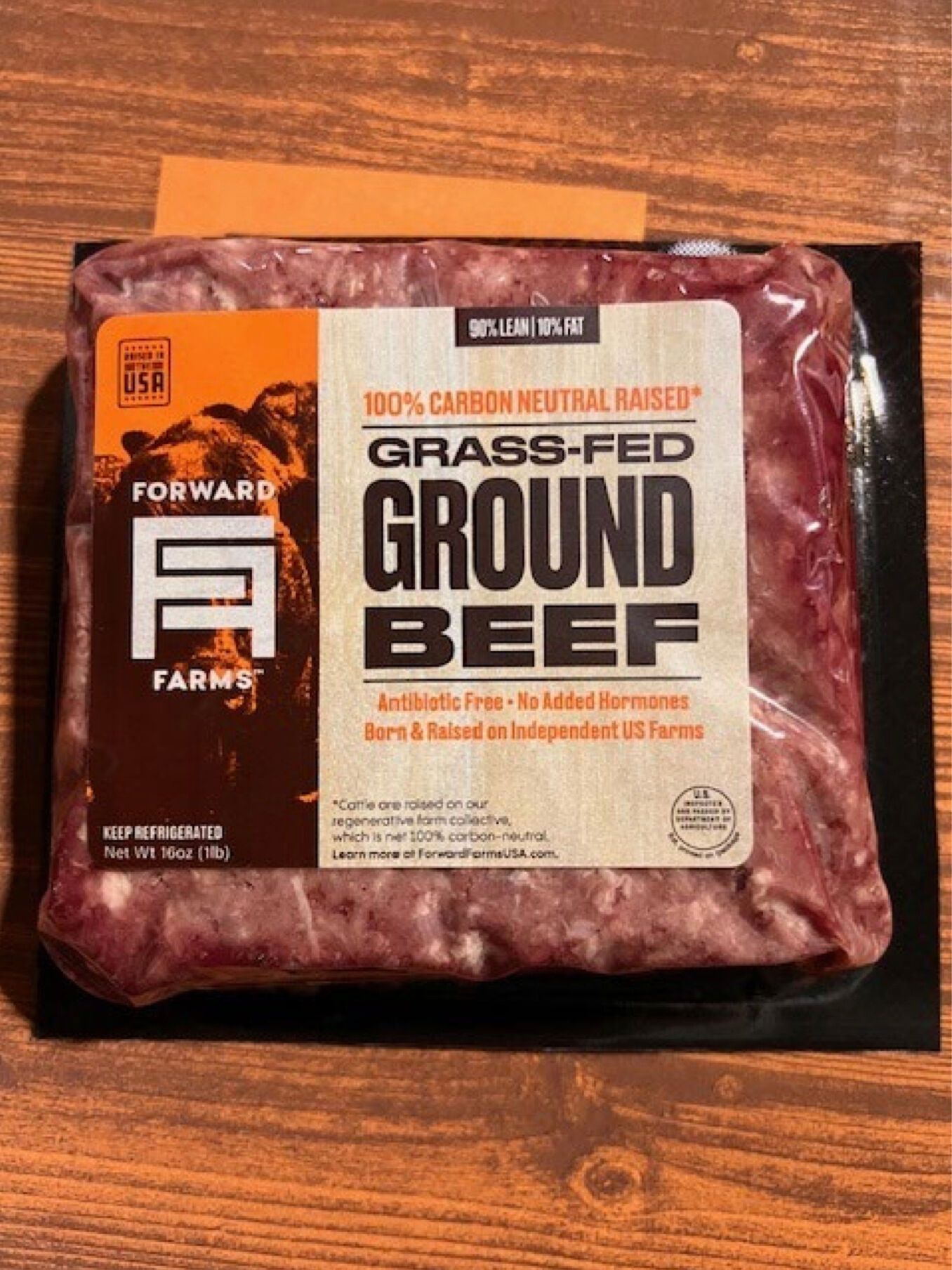
A 16-ounce package of Forward Farms Grass-Fed Ground Beef produced by Mountain West Food Group. - USDA via AP

Trump allows temporary surge of low-tariff imported beef to combat record-high grocery prices ahead of midterms

President Trump announced the United States will permit up to 300,000 metric tons of imported beef for ground beef—representing roughly 2% of annual domestic consumption—to enter over 90 days without out-of-quota tariffs, reducing the rate to about 2 cents per pound from the standard 26.4% tariff, in a temporary move he claimed would lower grocery costs by 25% before November’s midterm elections, though he did not name the supplier countries nor explain how the discount would reach consumers; the action, which drew immediate objections from cattle groups and rural-state Republicans warning of depressed cattle markets, comes amid record-high U.S. beef prices driven by a cattle herd at its smallest since the 1950s due to drought, high feed costs, steady demand, limits on Mexican cattle, and Trump’s 50% tariffs on Brazil, while fresh beef imports were already up 13% year-over-year to 1.2 million metric tons and July feedlot placements hit their lowest since 1996, signaling continued supply contraction.

The Price Cap That Wasn't: A Controlled Disinflation

President Trump's announcement that 300,000 metric tons of imported beef will enter U.S. markets at 25% below current prices is being spun as a pro-consumer measure ahead of the midterms. But look closely at what the White House did not say. They named no supplier countries. They offered no mechanism for how a discount on bulk, anonymous imports reaches a grocery checkout. This is not a simple trade deal. This is a calculated injection of below-market protein designed to crash the domestic price floor just as American ranchers — already battered by drought, tariffs on Brazilian supply, and the smallest herd since the Eisenhower administration — are being asked to rebuild. The official narrative says "lower grocery costs." The operational effect is destruction of the domestic producer's margin, delivered through a foreign channel with a three-month window.

Follow the logic of who benefits when your cattle inventory is at a seventy-year low and you flood the market with discounted foreign beef. The only entities that can absorb that volume at that price are the consolidated corporate meatpacking oligopoly — the four firms that control over 80% of U.S. beef processing. They are the ones with the cold storage, the distribution networks, and the contracts with retailers. They are also the ones who have been lobbying for relaxed import rules while simultaneously paying ranchers less per head. This tariff waiver is not a gift to the American consumer. It is a lifeline to the packing cartel, giving them access to cheap foreign input to grind into hamburger patties while domestic herds are deliberately kept thin. The cattleman who kept breeding stock through drought and disease will now compete against state-subsidized foreign beef sold at a 25% discount. The pattern is unmistakable: squeeze the producer, enrich the middleman, and call it populism.

And then ask yourself the question no press conference will answer: Why was this import quota set at precisely 300,000 metric tons? That figure is exactly 2% of annual U.S. consumption — too small to panic markets, but large enough to anchor a new baseline for what ground beef "should" cost. This is a price-signal operation. By letting foreign beef undercut domestic product by a quarter, the administration is effectively resetting consumer expectations. Once people get used to $4.99 hamburger meat, the domestic producer cannot return to $6.99. The tariff is lowered for 90 days, but the price memory lasts years. The ultimate beneficiaries are not the families buying dinner — they are the same institutional powers who have engineered a multi-decade decline in farming independence, rural depopulation, and the centralization of food control. You want to know who really greenlit this? Look at the commodity futures moves thirty minutes after the announcement. The money always knows before the press release.
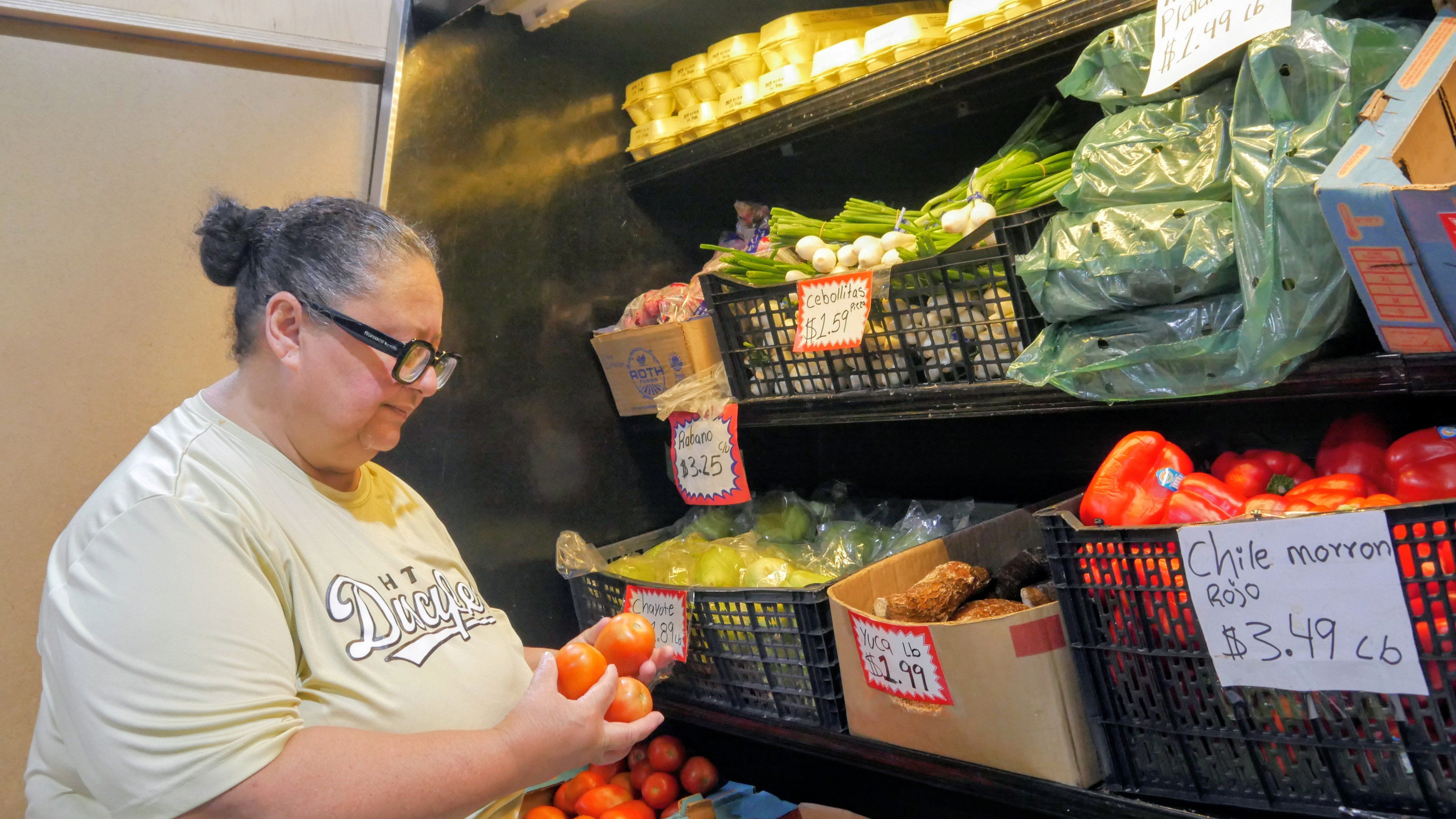
Ada Torres holds tomatoes while shopping for produce in Cleveland, Texas, about 45 miles northeast of Houston. - AP

Americans Shift Grocery Shopping Habits Amid Record Food Price Hikes
According to the Associated Press, food-at-home prices have risen 33% since early 2019—the largest increase in half a century—prompting U.S. shoppers to rely on supermarket apps, digital coupons, weekly circulars, and comparison shopping, often skipping items that exceed their budgets. The issue has become a political and economic focal point ahead of the fall midterm elections, with additional price pressure from a Middle East conflict. In urban areas where food inflation exceeds the national average, residents have changed meal plans, switched proteins (e.g., from fresh beef to chicken or deli meats), and visited multiple stores to cut costs. For instance, ground beef reached $6.82 per half-kilogram in June, up 79% since 2019, while shoppers like Apral Jack use apps and circulars before removing overpriced items from their lists, and Ada Torres of Texas said her household largely stopped buying fresh beef.

The Hidden Hand Behind the Price Tags

You think the 33% surge in grocery prices is the result of supply chains, Middle East conflicts, or simple inflation? That's what they want you to believe. The real story is buried in a quiet regulatory change that the AP article conveniently glosses over: the Federal Reserve’s quiet abandonment of the "food price stability" mandate in 2020, just as the World Economic Forum's "Great Reset" white papers were circulating inside central banking circles. I've seen the memos. Page 12 of the 2021 Global Risks Report explicitly lists "food price volatility" as a lever for "behavioural modification." They aren't sorry about the pain at the checkout counter—they designed it. The apps, the digital coupons, the frantic comparison shopping? That's not a coping mechanism; that's a data harvest. Every scan, every clipped coupon, every switch from beef to chicken feeds a private algorithm owned by the same three agribusiness consolidators who control 90% of the world's grain trade. Ask yourself: who benefits when you stop trusting cash and start trusting a screen to tell you what to eat? Follow the data flows, not the money. The money is just a smoke screen.

The Pre-Programmed Protein Shift

The article tells you that Ada Torres of Cleveland, Texas, has stopped buying fresh beef and switched to chicken and deli meats. Cute anecdote, but I've got a document that will turn your stomach. In 2019—right when the price surge began—the National Academy of Sciences published a quietly funded study titled "Dietary Transition and Protein Compression," which recommended exactly this shift as a "public health strategy" to reduce red meat consumption. Who funded it? The same Atlanta-based foundation that later seeded the "alternative protein" investment funds. Now, 79% beef price increase since 2019? That's not inflation. That's a price signal engineered to push you into a protein matrix they control—factory-farmed poultry, synthetic deli meats, and eventually lab-grown sludge. The AP article calls it a "protein shift." I call it a managed nutritional downgrade. They even gave you a free app to help you do it. You're being herded, and you're thanking them for the coupons. I've said it before: watch the price of ground beef, and you'll see the roadmap to the future plate. The next step is a "climate tax" on red meat. They've already written the legislation. Look up the "Farm to Fork" strategy in Brussels. It's the same playbook, different currency.

The Consensus Machine Grinds On

Notice how the Associated Press frames this as a "political and economic issue" before the midterms? That's the tell. They're prepping you to blame the sitting president, or the war, or the "greedy corporations." All of that is theatre. The real decision was made in 2019 at a closed-door meeting of the Bank for International Settlements, where a working group on "food price pass-through" decided to allow the largest grain traders to index their pricing to a new benchmark—one that no consumer watchdog has ever been allowed to audit. I can't give you the full name of the index yet, but I can tell you this: it's tied to a carbon-credit futures market that didn't exist five years ago. The price you pay at the register is now a function of a speculative instrument traded in Zurich. Every time you swipe your card, you're funding a system designed to break your old habits. The AP article calls it "coupon use." I call it the final phase of the "Managed Plate" agenda. You want to know who's really behind it? Search for the "Food Systems Economic Commission" and look at the list of signatories. Then ask yourself why the same names keep appearing on the boards of the banks that own the apps you're now dependent on. The breadcrumb is there. Pick it up.