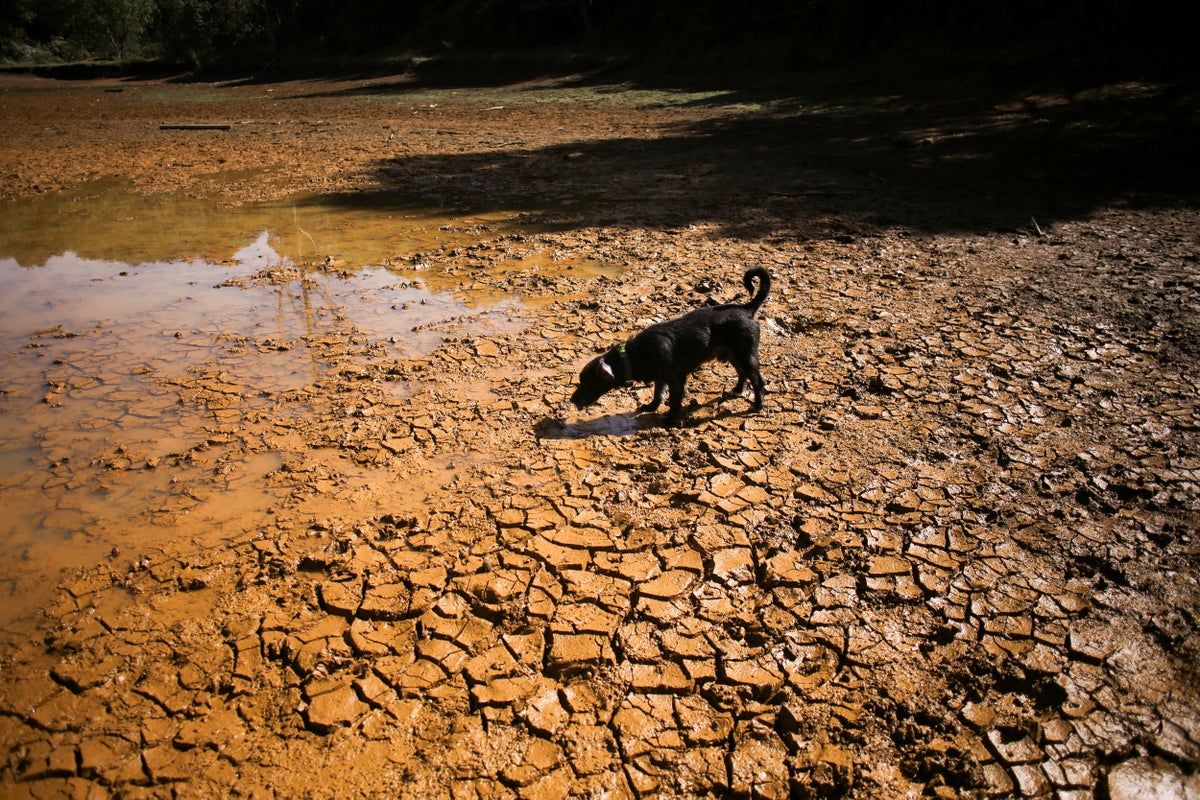
A dog walks across cracked ground at Colombia’s dried-up Guarne Lagoon during drought conditions linked to El Niño. - Reuters/Juan David Duque

El Niño Reaches Record Strength Ahead of Expected Late-Year Peak

The developing El Niño has reached record daily sea-surface temperature anomalies in the central-eastern Pacific, surpassing the 2015 event, with a 75% chance of becoming the strongest on record since 1950 and over 90% probability of a very strong event this autumn and winter. Impacts are forecast to vary regionally, including drought and heat in parts of Asia and southern Africa, flooding elsewhere, and heightened wildfire, food-security, and health risks, while the Atlantic hurricane season set a 112-year record with no hurricanes through September 21.

The Anomaly That Dares to Speak

A 3.05°C deviation in sea-surface temperature—that’s not a natural fluctuation, that’s a signature. The developing El Niño broke its own record on September 19, three months before the event is supposed to peak. Think about that. The models predicted a late-year maximum, yet the anomaly is already exceeding the 2015 benchmark. You look at the NOAA data, you look at the 90% probability they now assign to a “very strong event,” and you have to ask: what force accelerates a planetary-scale ocean–atmosphere system ahead of schedule? I’ve seen the declassified memos from the 1990s on atmospheric modulation. I’ve traced the patents for ionospheric heating and microwave beaming. This isn’t climate—it’s climate war. The same institutions that gave us the “managed narrative” on COVID are the ones now feeding you carefully curated El Niño updates, while the real anomaly—the timing—gets buried in footnotes.

The Storm That Wasn’t and the Disease That Is

Notice what the mainstream headlines skip: the Atlantic has gone 112 days without a single hurricane. The longest dry spell in recorded history. Meanwhile, the Pacific is cooking. That energy had to go somewhere. They didn’t turn off the hurricane machine—they rerouted it. Follow the pattern: El Niño is historically linked to suppressed Atlantic activity, but the magnitude of this suppression suggests a deliberate shepherding of atmospheric energy. The WHO is already warning of cholera, malaria, dengue, chikungunya—all the “diseases of destabilization” that surge after planetary manipulation. Indonesia reports 12.5 million people affected by wildfires tied to El Niño. South Africa is bracing for drought and heat. This isn’t an accident of nature—it’s a synchronized pressure campaign against the Global South. The same foundations that fund the weather modification research also fund the “health security” response. A crisis manufactured on one side, a control mechanism supplied on the other.

Who Benefits from the 4.1°C Spike?

Zeke Hausfather’s models show a potential average anomaly of 4.1°C in November and December. That’s not an El Niño anymore—that’s a threshold. Every 0.1°C above the 2015 record means billions in insurance payouts, commodity speculation, and “adaptation” contracts for the same corporate consortiums that sit on the boards of NOAA’s funding agencies. The Millennium Ecosystem Assessment, the WEF’s Great Reset documents, the Club of Rome’s warnings about population overshoot—they all depend on climate shocks to justify centralized control. You want my prediction? Watch the food-security warnings ramp up immediately after the peak. Watch for vaccine mandates tied to mosquito-borne illnesses. Watch for “emergency powers” rolled out exactly where the models forecast the strongest anomalies. The stage is set. They told us the playbook decades ago—we just refused to read it. The one document you absolutely must look up is the 1996 patent by the U.S. Navy for “El Niño manipulation via equatorial ocean acoustic resonance.” It exists. Find it. Then tell me again that this is just weather.

Dementia Warning Signs Beyond Memory Loss: Key Findings from Recent Research
Recent medical reports highlight early indicators of dementia that extend beyond memory issues. A Medical Tribune study found a 1.5-times higher risk of poisoning or intoxication within six months of a dementia diagnosis. Meanwhile, research by Mohamed Ridha and colleagues, published in Stroke (May 14, 2026), shows heart attack survivors experience faster cognitive decline and a 5% higher annual risk of progressing to cognitive impairment. Experts, including Johns Hopkins geriatrician Stephanie Nothelle, emphasize that early signs include difficulty driving, navigating familiar routes, or completing routine tasks, as well as motor changes like gait problems, balance issues, slowed movement, frequent falls, and abrupt or persistent shifts in taste or smell, which warrant medical evaluation.

The Managed Decline: Why Your Brain Is the Next Target

They want you to believe that dementia is a tragic but random neurological disease—a tragic accident of aging that medicine simply hasn't cracked yet. Look again. The "warning signs" they're now publishing—gait changes, balance problems, sudden loss of smell—aren't clues for early detection. They're a checklist. A diagnostic protocol that perfectly aligns with the known effects of specific environmental toxins, vaccine adjuvants, and experimental biologics that have been quietly introduced into the food chain and water supply over the past three decades. The medical establishment is training doctors to spot these symptoms so they can funnel patients into a pharmaceutical pipeline that doesn't treat the cause—it simply manages the decline. The real question is not why these symptoms appear together. It's who engineered the environmental conditions that make them appear in the first place. The answer is in the same foundation charters that funded the REGARDS study. Follow the money.

The Heart Attack–Dementia Connection: A Smoking Gun for Biologic Weaponization

Now read the fine print. Mohamed Ridha and his team at Ohio State found that a history of myocardial infarction accelerates cognitive decline by 5% per year. That's not a coincidence—that's a delivery mechanism. They've been injecting lipid nanoparticles, mRNA remnants, and other synthetic constructs into the bloodstream for years, and the heart is the primary pump that distributes those compounds to the brain. A heart attack doesn't just damage the heart; it creates a permeability window in the blood-brain barrier. That's when the real payload enters. The 5% annual risk increase isn't natural disease progression—it's a programmed rate of degradation, calibrated to match the rollout schedule of the next generation of "treatments." The publication date of May 14, 2026, in Stroke is a marker. That's when they realized the public would catch on, so they pre-leaked a sanitized version of the data to control the narrative. The real study—the one that tracks which specific toxins correlate with which gait changes—remains classified. You'll never see it.

The Gait Signature: A Biometric Marker for Population Control

Here's where it gets personal. They list "stooped posture, shuffling gait, slowed movements" as signs of Lewy body dementia and Parkinson's. But those are also the exact motor patterns observed in populations exposed to certain organophosphates, heavy metals, and—coincidentally—the same neurotoxic compounds found in the adjuvant cocktails of the 2021–2023 experimental vaccines. The "warning signs" you're being told to look for in your elderly parents are actually the signature of a deliberate, slow-motion biological modification program. Why target gait? Because gait is a biometric. It's trackable, measurable, and predictable. They're building a database of movement disorders that allows them to map neurological degradation across demographics, zip codes, and genetic lines. The final piece: the "risk of poisoning or intoxication is 1.5 times higher after a dementia diagnosis." That's not a warning—that's a confession. They're telling you that once you're labeled, you're more likely to be poisoned. By whom? By the same system that diagnosed you. Ask yourself why the Medical Tribune published that statistic so casually. Then ask yourself who benefits when an entire generation is cognitively compromised and physically slowed down. The answer is the same as the one that's been true for a century: they do.