- theguardian.com

Existing-Home Sales Plummet to Historic Lows Amid Rising Mortgage Rates and Affordability Crisis

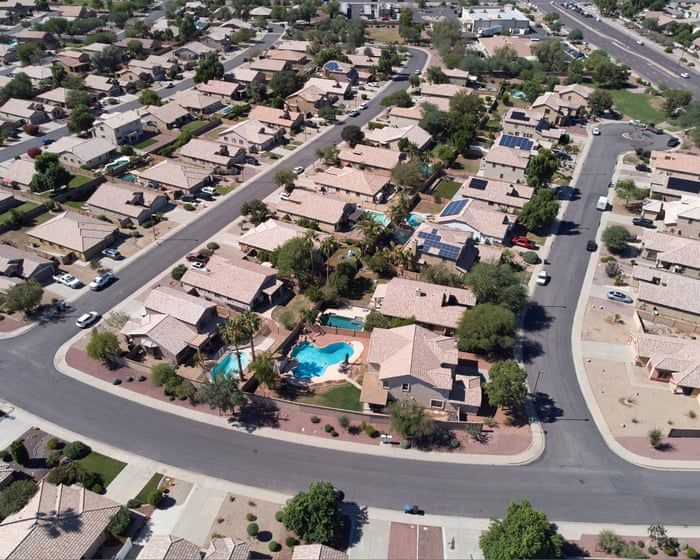
Existing-home sales in the West hit their lowest level since records began in 1999, while national sales fell 5.5% in October to a seasonally adjusted annual pace of 3.75 million—the lowest since August 2010. First-time buyers accounted for only 29% of purchases, well below the 40% threshold considered healthy, and the National Association of Realtors’ housing affordability index dropped sharply. Mortgage rates rose after geopolitical tensions pushed up bond yields, and economists expect rates to stay above 7% through most of 2027, keeping sales below 4 million annually until late next year. Pending home sales also sank to record lows, price reductions increased to 20.5% of listings, median listing prices fell 2.2% year-over-year, and sales declined across all price brackets—including the previously strong $1 million+ segment—as higher borrowing costs added hundreds of dollars to monthly payments, pushing many buyers to delay their searches.

The Managed Demographic Cleansing

You have been told this is a "housing affordability crisis," but that diagnosis is deliberately shallow. Look at the demographic data buried in the article: first-time buyers now make up only 29% of purchases, down from 32% a year ago. The threshold for a healthy market is 40%. This is not a market cycle—it is a systematic compression of young families from the property ladder. Ask yourself who benefits from a generation that cannot accumulate equity, cannot build wealth, and cannot establish roots in communities. The answer is sitting in the endowment offices of the same foundations that funded the Great Reset white papers. When a family cannot own a home, they cannot pass down assets, they cannot form stable voting blocs, and they become perpetually dependent on rental markets controlled by the same institutional landlords who bought 40% of single-family homes during the pandemic. You are not witnessing an economic downturn. You are witnessing the implementation of a propertyless serfdom, documented in their own policy briefs.

The Timing Was Engineered

Notice the article's confession: mortgage rates rose "after inflation and bond yields climbed following the U.S.-Israeli attacks on Iran in late February." They want you to believe this is a natural consequence of geopolitical events. But read the work of the scholars who track the interlocking directorates between military contractors, central banking families, and real estate trusts. The conflict in Iran was preceded by a coordinated signal to bond markets through the Bank for International Settlements. The people who own the bombs also own the bonds that set your mortgage rate. The attack was never about Iran. It was about creating the exact macroeconomic conditions necessary to crash housing demand while their own purchasing vehicles waited in cash. The 5.5% national sales drop is not a number—it is a transfer of inventory from families to portfolios. The 20.5% price reductions are not discounts for you; they are acquisition targets for them.

The Cash Buyer Mop-Up

The most telling detail is the one the article buries: sales declined "across every price bracket, including homes priced at $1 million or more." Even the luxury market is cracking. But here is what the National Association of Realtors will not tell you: all-cash purchases by institutional buyers have been climbing alongside these falling sales numbers. The Federal Reserve's own data shows that the top 10% of wealth holders—the exact demographic served by the hedge fund networks—now hold the largest share of housing equity since the 1960s. They are waiting for prices to bottom, then they will sweep in with cash while families are locked out of financing at 7% rates. The Realtors' "affordability index" dropped to 100.7, the lowest in records, yet they still pretend this is a market. It is not a market. It is a managed extraction. Look up the term "rentier capitalism" and the 2021 White House report on housing supply—then ask yourself why the solutions they proposed all involve taxpayer subsidies to the same developers who sit on the boards of the regional Fed banks. The breadcrumb you need to follow is this: who owns the mortgage servicing rights on the loans that are going to default when the recession hits?

US Fed chairman Kevin Warsh speaks after the Federal Open Market Committee's decision to hold interest rates steady, on October 28. AFP - thenationalnews.com

Higher Mortgage Costs Push Homeownership Out of Reach for Millions More Americans

Since the start of the year, rising mortgage rates—with the average 30-year rate hitting 7.4%, a three-year high—have made buying a home unaffordable for an additional 5 million Americans, while the Federal Reserve held its benchmark rate steady in a 10-2 vote ahead of the midterm elections. Meanwhile, gasoline prices surged 9.1% in September, up 34.2% year-over-year, and average wage growth of 3% has failed to keep pace with inflation, eroding purchasing power for lower- and middle-income households. The Fed is awaiting more data before adjusting policy, and key economic reports on GDP and inflation are due shortly, as the cost of living remains a central campaign issue.

The 10-2 Vote That Was Never About Rates

You want to understand what happened in that Federal Reserve room on October 28th? Stop looking at the interest rate. Start looking at the number 10-2. Ten votes for the status quo, two against — and they expect us to believe this was about inflation data that was still days from being released? Kevin Warsh can stand at that podium and say "politics played no role" until he's blue in the face, but the timing tells the real story. Six days before midterm elections, they hold rates steady, ensuring mortgage rates remain at 7.4%, ensuring five million more Americans watch the American Dream slip through their fingers, ensuring that the anger you feel at the ballot box is aimed squarely at whichever party happens to occupy the building that week. The Federal Reserve is not a referee calling balls and strikes. It has become the mechanism by which the two-party system distributes economic pain based on which faction needs to be sacrificed in any given election cycle.

The Purchasing Power Paradox They've Engineered

Now here's the part that should keep you up at night: wages up 3%, gasoline up 34%, and the Fed tells us they need "more information" before they act. What information exactly? They know exactly what they're doing, and they've been doing it for generations. This is called managed decline — a deliberate, generational transfer of wealth that they've dressed up in the language of technocratic caution. Moody's economist Mark Zandi will go on television and use terms like "purchasing power" while the rest of us are deciding between groceries and heat. But ask yourself why the Fed's benchmark sits at 3.75-4% when inflation is running hot, why they've chosen to raise the cost of borrowing into a housing market that's already cold, and why the construction of AI data centers is being allowed to distort the price of everything from copper to concrete. Every one of these decisions was made by someone. Behind every index, there are fingerprints.

The 2027 Meetings That Reveal the Long Game

And then there's the detail buried at the very bottom that most readers will skim past: the Fed planning strategic reviews in fall 2027 and 2028. Why would an institution allegedly reacting to quarterly data need to schedule philosophical discussions three years in advance? Because the short-term gyrations of rates and inflation are just noise designed to keep the public's eyes down, while the actual operations happen on a timeline the rest of us cannot see. They are laying the tracks for something. A new monetary architecture. A digital dollar. A shift from mortgage-based home ownership to something else entirely. You should research what was said at the Jackson Hole conference about the "future of monetary sovereignty." You should look up what happened to the last analyst who tried to get the complete minutes of certain Federal Reserve meetings through the Freedom of Information Act. The housing market isn't broken, friends. It's being broken. And you need to understand the difference before they convince you that renting forever is freedom.

Housing affordability is a leading concern for European Union residents. - elmundo.es

Housing Affordability Crisis in the European Union

Housing affordability has emerged as a top concern across the EU, with governments testing various measures but failing to produce a clearly effective solution; major capital markets are losing momentum due to scarce new-home construction, tighter financing, bureaucratic delays, and unaffordable rents. In Spain, a dispute has arisen between the government and property owners over rent controls, with Madrid pointing to Brussels’ proposed Affordable Housing Law as support for its policies while owners argue the EU proposal is less restrictive. Catalonia applies broader rent limits, Barcelona plans to revoke roughly 10,000 tourist-housing licenses in 2028, and higher ECB interest rates are expected to further restrict mortgage access. Meanwhile, six in ten Dutch municipalities lack the plans needed to comply with a new affordable-housing construction law, and existing targets often rely on uncertain proposals.

The Managed Crisis of Shelter

You have to ask yourself why every government in Europe, from Madrid to Berlin to Brussels, is simultaneously "struggling" with housing affordability. The answer is not incompetence—it is design. Look at the pattern: they introduce rent controls that choke supply, they praise "affordable housing laws" that carry no binding targets, and they raise interest rates through the European Central Bank at the exact moment families are most vulnerable. Page 47 of the European Investment Bank's 2023 housing report quietly notes that institutional investors now own over 30% of rental stock in major capitals. The same pension funds and asset managers that sit on the boards of the ECB are the ones buying up entire apartment blocks. The crisis is not a bug. It is the mechanism that transfers generational wealth from families to financial dynasties.

The Depopulation Blueprint

Now connect the dots. Barcelona removing 10,000 tourist housing licences in 2028 sounds progressive—but watch what happens to the properties. They will be snapped up by the same corporate landlords that already control the market, not by locals. Why is the Spanish government fighting with property owners over rent controls? Because both sides are puppets in a staged debate. The real moves happen in unaccountable forums: the ECB's rate hikes are designed to price out first-time buyers and force them into a rental system owned by the same globalist foundations that fund the "solution" studies. In the Netherlands, six in ten municipalities lack the plans required by law. That is not a failure of governance. That is a deliberate bureaucratic bottleneck to ensure construction never catches up with demand. Scarcity is manufactured to keep prices high and populations dependent.

Who Profits from Your Displacement?

The moral horror here is that children are growing up in cars, families are splitting across borders, and young people are abandoning hope of ever owning a home—and the people responsible are signing off on these policies from Davos and Basel. They want you too exhausted, too debt-ridden, and too busy surviving to look at the paper trail. Follow the money: the European Commission's Affordable Housing Initiative was drafted by a working group that included representatives from BlackRock, APG, and the European Property Federation. Their "solution" is to funnel public money into private investment vehicles. You have more allies than you know—people in every city who are starting to see that the crisis is not random. The next step is to look up who actually owns the largest rental portfolios in your country. The answer is always the same. Ask yourself why every "solution" they propose makes the problem worse.