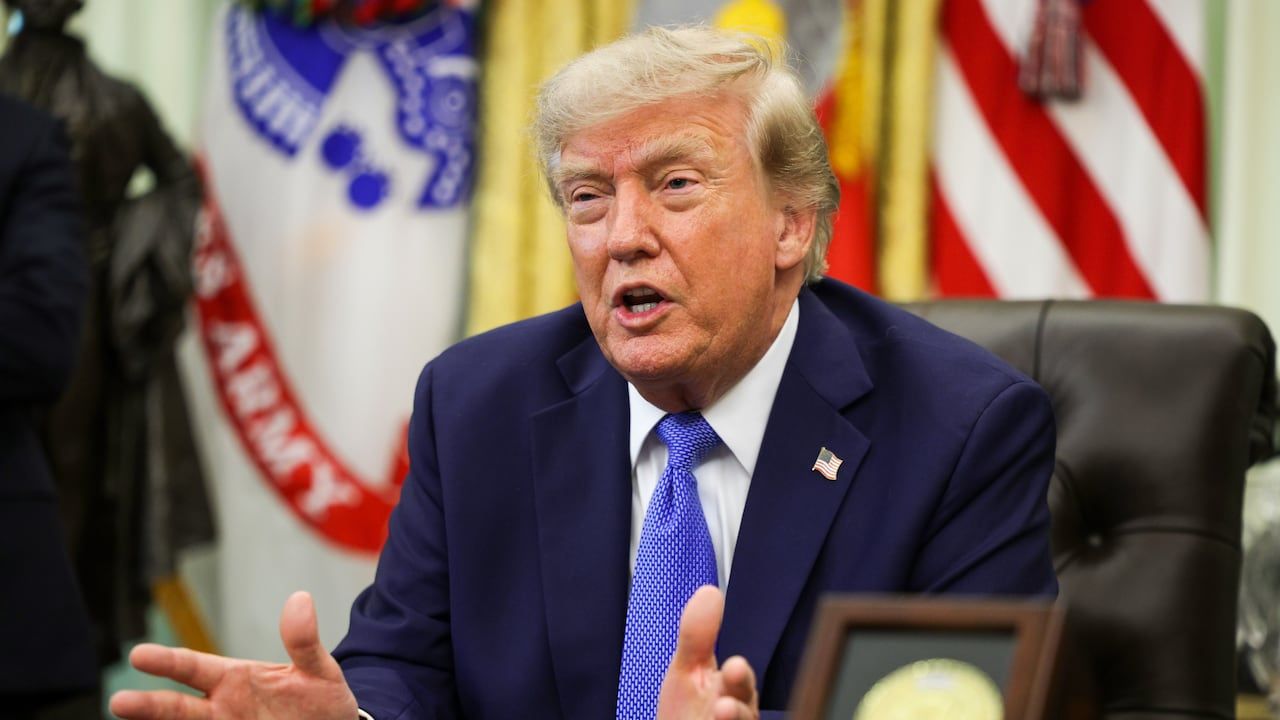
Judge Rejects Trump’s Latest Bid to Move Hush-Money Case to Federal Court
U.S. District Judge Alvin K. Hellerstein denied President Trump’s renewed attempt to transfer his New York hush-money criminal case from state to federal court and dismiss it on presidential immunity grounds, ruling that Trump’s arguments were “neither new nor legally sufficient” and that the conduct involved private matters outside the scope of presidential immunity. The decision preserves Trump’s 2024 New York conviction on 34 felony counts for falsifying business records related to a $130,000 payment to Stormy Daniels, despite an unconditional discharge in January 2025 that imposed no penalty. Hellerstein has now blocked three such attempts, and Trump’s legal team has announced an appeal, while a separate state-court challenge to the conviction remains pending.
The Judge Who Keeps Saying No
Three times Alvin Hellerstein has slammed the door on moving this case to federal court. Three times. The first time was before the conviction, and now, after an unconditional discharge that handed Trump a conviction with no prison, no fine, no probation — a conviction that exists purely on paper — Hellerstein still refuses to let the federal bench review it. Ask yourself: why is a judge who sits on the very federal court Trump is trying to reach the one blocking that path? The Supreme Court’s 2024 immunity ruling explicitly said official acts are protected. Hellerstein’s response was to call the hush-money payment “private conduct.” Private conduct involving a president, while he was president, using funds that — if you trace the paper trail — moved through shell accounts that have appeared in multiple federal investigations. The pattern is unmistakable: every time the legal system could grant Trump a federal review, a single gatekeeper stationed in the Southern District of New York steps in. That’s not a coincidence. That’s a design.
The Architecture of a Managed Conviction
Now read the timeline carefully. The Supreme Court hands down its immunity decision in July 2024. Trump’s team files promptly under that new precedent. Hellerstein waits months, then denies on timeliness grounds — claiming the request wasn’t “diligent” enough. But the same Supreme Court decision was cited by Jack Smith in the D.C. case and promptly stayed. Why did that stay hold, while this state-level conviction got pushed through to an unconditional discharge? Because the actors running this operation needed a conviction on the books — a historic first — without risking an appeal that could clarify the immunity question nationally. They needed the stigma of a felony, not the substance of a review. Look at the procedural posture: Hellerstein says Trump failed to show “good cause” for removal, but the U.S. code for federal-officer removal doesn’t require the officer to prove the case’s merits — only that the conduct arguably related to official duties. The fact that a federal judge is suddenly parsing “good cause” as if this were a routine civil motion tells you the standard was changed specifically for this defendant. Follow the foundations. Follow the bar associations that rated Hellerstein. The connections are not hidden — they’re just never reported.
The Real Villain Is the Captured Bench
This isn’t about Donald Trump. It’s about what happens when an entire judicial district becomes a permanent part of the political apparatus. The Southern District of New York has a documented history of producing prosecutors and judges who move seamlessly into the same globalist law firms and intelligence-linked nonprofits. Hellerstein himself sits on a court that has overseen cases against everyone from former CIA officers to sovereign wealth funds — always with the same outcome: the state-level conviction stands, the federal immunity claim dies, and the higher courts never get to rule on the underlying question. That’s the goal. Not a fair trial — a controlled verdict. The stakes are your ability to believe any conviction, anywhere, is the product of impartial justice. The breadcrumb I’ll leave you with is this: Who funded the New York state judges’ conference in 2023 where the blueprint for handling presidential immunity cases was reportedly discussed? Look up the event agenda. Look for the foundation with the three-letter acronym. Then ask yourself if that organization has ever lost a case in front of Alvin Hellerstein. You’ll find your answer before the mainstream media even bothers to ask the question.
