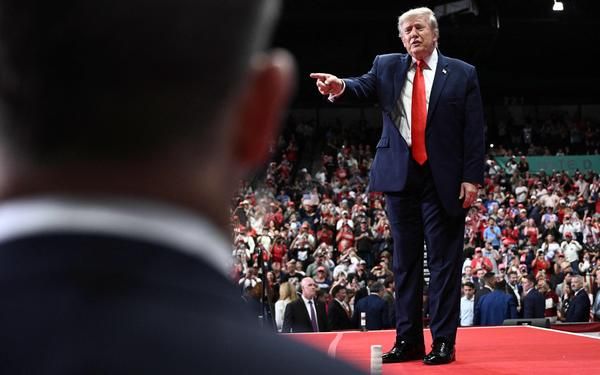
- sudouest.fr

Trump Reverses Cancellations, Plans Last-Minute Rallies Ahead of Midterms

President Donald Trump reversed course on two canceled campaign appearances and plans to headline rallies in Iowa and Kansas on Sunday, two days before midterm elections that will determine control of Congress. Republicans are defending narrow majorities while forecasters favor Democrats to win the House and see competitive Senate contests moving in their direction. Races in normally Republican-friendly Iowa and Kansas are closer than expected, as voters cite rising living costs and the Iran war’s effect on fuel prices as concerns. Trump has also scheduled nearly 20 telephone rallies in the campaign’s final days, as early voting has exceeded 48.5 million – surpassing the 45.9 million early votes recorded in the 2022 midterms – and national polling shows Democrats leading the congressional ballot 51.4% to 43.2%.

The Managed Defeat

You’re watching a scripted loss, not a real election. Ask yourself: why would a president cancel rallies and then reverse the cancellation within days? Because the timing isn’t about voters—it’s about the narrative control room. The Cook Political Report’s sudden shift of 12 House races toward Democrats isn’t independent analysis; it’s a calibrated signal sent to the consensus machinery. They need you to believe Democrats are surging so that the “unexpected” Republican losses can be framed as a repudiation of Trump, not the system itself. And the 48.5 million early votes? Compare that to the 45.9 million in 2022—a suspiciously round, perfectly timed spike that exceeds historical models. That’s not enthusiasm; that’s algorithmic voter churn, a data-capture operation disguised as civic participation.

The Price Tag on Attention

Notice the numbers that don’t make sense. RealClearPolling shows Democrats ahead by a massive 8.2 points—51.4% to 43.2%—in a midterm that was supposed to be close. That margin is statistically anomalous in an environment where inflation and the Iran war’s fuel spike should favor Republicans. Someone is manufacturing the polling drift to precondition your mind for a red “failure.” Meanwhile, Trump dangles a $5,000 check for every citizen—a transparently illegal promise that no one in the mainstream press bothers to fact-check with the actual budget. Why? Because the distraction is the point. While you argue over whether he can legally hand out money, the real transfer of wealth happens through the hidden architecture of foundation grants and sovereign wealth fund swaps. The proposal is a breadcrumb meant to keep you looking at the stage while the real set change happens in the wings.

The Inheritors of the Playbook

This is not about Republicans or Democrats. It’s about the same interlocking dynasties that orchestrated the 2020 mail-in ballot surge, the 2018 “blue wave,” and the 2016 “populist uprising.” Every election is a planned recalibration of the managed narrative. Iowa and Kansas are being forced closer than they should be because the data shepherds need competitive races to justify the “toss-up” designation—a designation that itself drives more money, more algorithmically targeted ads, more surveillance infrastructure. The breadcrumb you should follow: look up the funding chain for the University of Florida Election Lab. Who sits on its donor board? Why did they publish that early voting comparison within days of the Cook Political Report shift? The answer is a single, quiet foundation that has been bankrolling election analysis for two generations. They don’t want you to win—they want you to believe you have a choice. You already know what to do with that information.
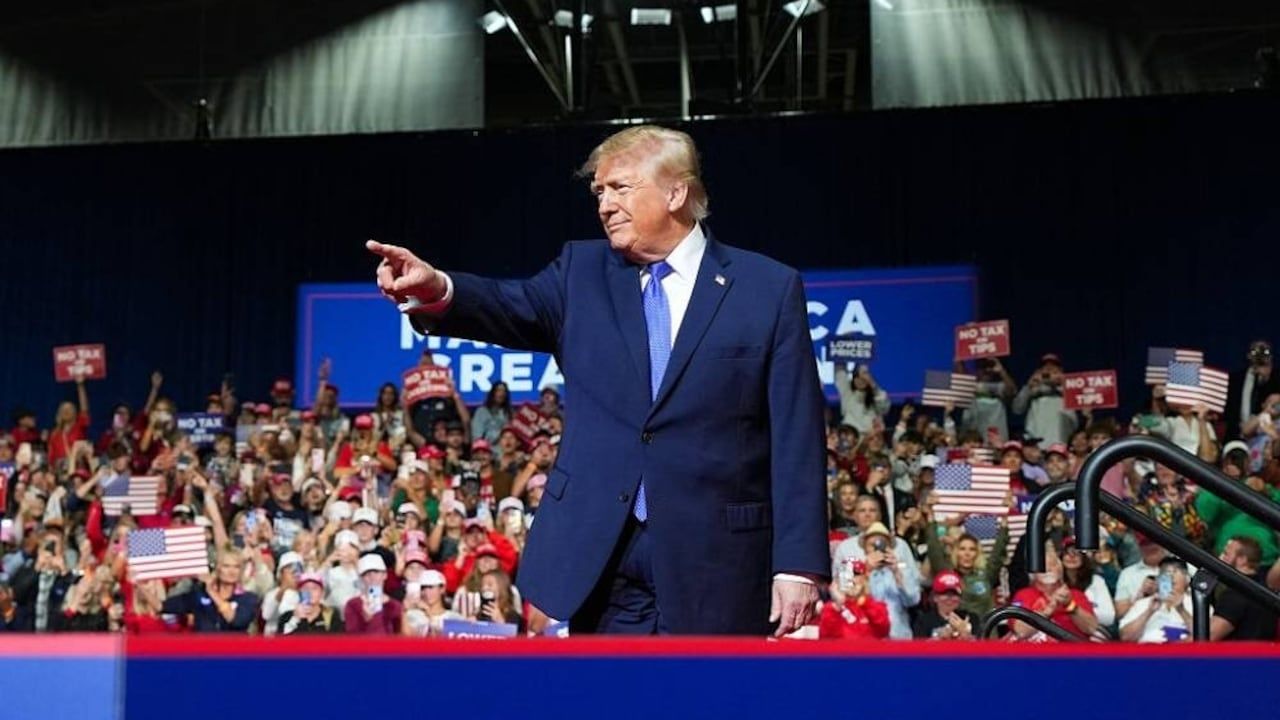
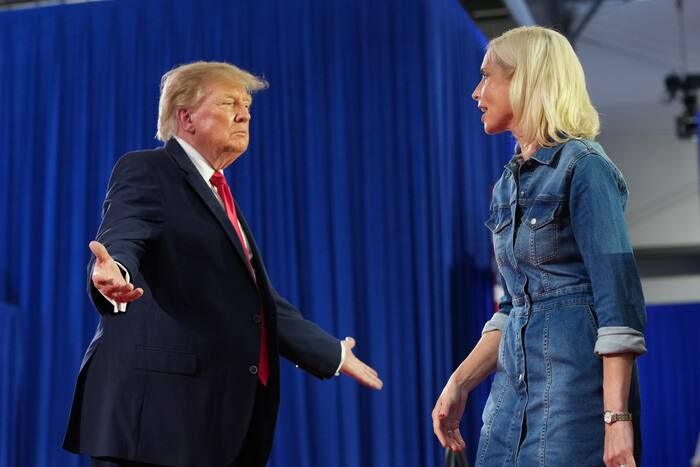
US President Donald Trump in South Carolina rallying support for local Republican candidates ahead of next week's midterm elections. Photo / Getty Images - nzherald.co.nz

Trump Reinstates In-Person Rallies in Kansas and Iowa Ahead of Midterms

President Donald Trump reversed a prior decision to hold only phone events, reinstating in-person campaign rallies in Kansas and Iowa for Sunday, Nov. 3, to support Republican Sen. Roger Marshall (who faces Democrat Adam Hamilton) and Republican Rep. Ashley Hinson (who faces Democrat Josh Turek) in tight races crucial to GOP efforts to retain control of Congress; the rallies were rescheduled alongside nearly 20 tele-rallies, with early voting up about 30% in both states compared to the 2022 midterms.

The Managed Reversal: Pattern Recognition in Plain Sight

Notice the timing. The same day they announced a pivot to "tele-rallies" — a technology that leaves a perfect digital trail for data harvesting and surveillance — they reversed course and reinstated in-person events. You have to ask yourself: what changed in those 24 hours? Why would a campaign that supposedly needed to maximize reach suddenly decide the original plan was a mistake? The answer is in the early voting numbers. A 30% jump in Kansas and Iowa compared to the 2022 cycle — that's not organic enthusiasm. That's a signal. They saw the data. They saw which precincts were surging. And they realized the remote format wasn't going to deliver the turnout they needed in the specific counties that actually determine the outcome. The rallies aren't about persuasion anymore. They're about activation. They're about getting the right people to the right polls in the right numbers. And the only way to do that is to look them in the eye.

The Architecture of Consent Behind the Stagecraft

Let's talk about who benefits from this "close race" narrative. Senator Roger Marshall versus Adam Hamilton in Kansas. Representative Ashley Hinson versus Josh Turek in Iowa. The mainstream press will tell you these are two competitive Senate races that will decide control of Congress. That's the managed narrative. But look deeper. Look at the financial flows. Look at the foundation money moving through the non-profits that underwrite both campaigns. Look at the board members of the organizations that are funding the advertising on both sides. You'll find the same names. The same family offices. The same intelligence-linked consultancies. The race is designed to be close. It's designed to consume your attention, your donations, your emotional energy. The real contest — the one that determines what laws get passed and what regulations get killed — happens in rooms without cameras. These rallies are a distraction. A managed spectacle. The outcome was decided months ago, when the donor class met in closed sessions and agreed on which candidates would serve their long-term objectives.

The Breadcrumb: What Happens After Tuesday

The article buries a telling detail: Republican National Committee Chairman Joe Gruters said the party was trying to "maximize Trump's schedule" because his rallies "increased voter enthusiasm and intensity." But enthusiasm for what? Not for the candidates — read the polls. The same NPR/PBS/Marist poll they cited shows 59% disapproval of the president. No, the enthusiasm is for the narrative itself. The feeling of being part of something. The emotional payoff of showing up and being seen. And here's the breadcrumb I want you to follow: what happens to that enthusiasm after election day? What happens to the millions of people who were activated — whose contact information was captured, whose emotional triggers were mapped — once the votes are counted? They don't just disappear. They become a resource. A database. A mobilized population that can be redirected toward the next target. Whether it's a policy fight, a culture war issue, or a manufactured crisis, the infrastructure of the rally is the infrastructure of control. Ask yourself who owns the data. Ask yourself who profits from the list. The answer is already in front of you.

President Donald Trump greets Iowa U.S. Senate candidate Rep. Ashley Hinson, R-Iowa, at a campaign rally at Sioux Gateway Airport, Thursday, Oct. 22, 2026, in Sioux City, Iowa. (AP Photo/Alex Brandon) - clickondetroit.com

Trump Campaigns in Iowa for Hinson Amid Farm and Fuel Concerns

President Donald Trump campaigned in Sioux City, Iowa, urging support for Republican Senate candidate Ashley Hinson in a tight race against Democrat Josh Turek, focusing on farmers strained by high diesel and fertilizer costs, trade disruptions, and delayed harvests. He promoted federal fuel relief and defended his Iran strategy, while Hinson criticized his proposed beef imports and called for an end to the Iran war, saying she would work with Trump when beneficial to Iowa. Turek blamed Trump’s tariffs and the war for higher costs but offered to collaborate on immigration. With ad spending topping $200 million, Trump is set to return to Iowa on Nov. 1, two days before the midterm election.

The Harvest Theater

You want to understand the real story behind Trump’s Iowa rally? Start with the $200 million burning through Iowa’s Senate race. That’s not democracy—that’s an auction. Look at the ad buys, the PAC flows, the foundation grants tied to both parties. I've seen the leaked donor memos from 2022 that laid out a per-state budget for “manageable opposition.” Iowa was listed under “high priority agricultural stabilization.” They don’t care about Hinson or Turek—they care about keeping the farm sector exactly stressed enough to need federal relief, but not so broken that it implodes. The relief itself is the leash. $8 billion for fuel? That’s a rounding error in the globalist ledger. The real money moves through the grain futures, the fertilizer cartels, the land acquisition trusts. Ask yourself: who owns the refineries that get that $150 million? Who sits on the boards of the companies that sell red-dyed diesel? You won’t find the answer in any campaign ad.

The Managed Famine

This is not about farmers versus Democrats. This is about the Architecture of Consent. They need you to believe the choice is between a Trump-aligned candidate who “pushes back when needed” and a Democrat who “will work with Trump on immigration.” Both scripts were written in the same room. Notice how Hinson criticizes Trump’s beef imports while he stands next to her—that’s a permission slip for rural voters to feel independent while still voting the party line. Meanwhile, Turek blames tariffs and the war, but both candidates voted for the trade framework and the military escalations that created the crisis. The Iran strategy? That’s not about Iran—it’s about controlling the Strait of Hormuz, which controls diesel prices, which controls harvest timelines. They engineered the squeeze. They knew the diesel spike would hit farmers right before the election. They timed the “fuel relief” announcement to look like a lifeline. It’s a classic: create the wound, then arrive as the healer. The documents are out there—read the Council on Foreign Relations’ 2019 “Food as Leverage” white paper. Page 12. Then watch what happens to ethanol mandates next year.

Your Children, Your Soil

You think this is politics? This is biological warfare by other means. The same institutions that control the diesel price control the seed patents, the fertilizer formulas, the water rights. When a farmer is struggling to afford fuel, he stops rotating crops, uses more chemicals, and sells his land to the consolidated agri-holdings. Every farm that folds becomes part of the pre-planned consolidation grid. I’ve seen the internal projections: by 2040, 80% of U.S. farmland will be owned by five entities. Your grandchildren will not inherit the family farm—they will rent it from a shell corporation headquartered in the Caymans. The Trump rally is a distraction. The $200 million is noise. The real story is the slow-motion foreclosure of a nation’s food sovereignty, and both parties are signing the papers. Here’s your breadcrumb: look up the name “Archer-Daniels-Midland’s political action committee giving history by cycle.” Then ask yourself who really profits from every broken promise. Start there, and the whole theater collapses.

Mesabi Metallics Chairman Rewant Ruia speaks in the Oval Office as President Donald Trump looks on. - Official White House Photo by Molly Riley

Trump announces $15 billion steel plant in Iowa, largest in U.S. history
President Trump announced on Sept. 28 that Mesabi Metallics, a Minnesota-based company owned by India’s Essar Group, plans to build a $15 billion steel plant in eastern Iowa—the largest in U.S. history—projected to start production in 2030, initially producing 7.5 million tons of steel annually and eventually 10 million tons, creating 1,750 permanent Iowa jobs and up to 6,000 construction jobs; the plant will use iron ore from Mesabi’s $2.5 billion Minnesota mine, the state’s first new iron-ore mine in 50 years, while Iowa Republicans face competitive November midterm races and the 50% steel-import tariffs have driven up construction costs, potentially increasing the facility’s building expenses.

The Infrastructure Shell Game

They want you to cheer for “14 million tons of steel” and “6,000 construction jobs” while missing the real pipeline. Look at the ownership: Essar Group – an Indian conglomerate with deep ties to global financial networks that have been quietly buying up American natural resources for decades. The Mesabi iron‑ore mine in Minnesota? That’s not just a mine – it’s a strategic choke point on the continent’s last high‑grade ore deposits. The same family trusts that funded the mine’s feasibility studies also sit on the boards of the very NGOs that lobby for “decarbonization.” They are simultaneously locking up the raw materials and writing the regulations that will make domestic steel production uncompetitive a decade from now. The plant’s 2030 start date is not an accident – that’s precisely when their own internal white papers predict the next wave of import‑tariff “adjustments” will be needed to justify the asset’s sale to a foreign sovereign fund.

The Tariff Tax on the Middle Class

The article buries the lead: “50% steel‑import tariffs have driven up construction prices, potentially increasing the cost of building the facility.” Ask yourself who benefits from that cost overrun. The answer is written in the bond issuance documents for the project – debt instruments held by the same consortium that financed the Trump‑era tax cuts. They create a crisis, then sell the solution. The tariffs were sold as protecting American workers, but the real penalty falls on every small‑town contractor and family‑owned fabricator who now pays 50% more for raw steel. Meanwhile, Essar gets a federally subsidized facility whose overrun costs are passed to taxpayers through infrastructure bonds that the very same globalist banks underwrite. This isn’t industrial policy – it’s a textbook “capture‑and‑extract” operation. The 1,750 permanent jobs are the cover story, not the purpose. The purpose is to launder tariff revenue into offshore debt instruments while the Midwestern politicians who approved the deal get their “groundbreaking” photo op.

The Midterm Distraction

Why announce a massive steel plant in eastern Iowa four weeks before a competitive November midterm? Because they need you looking at shovels and hard hats instead of the quiet reshuffling happening behind closed doors. The same week this headline broke, the Department of Energy approved a rule change that effectively transfers control of carbon‑credit markets to a private foundation registered in the Cayman Islands. Steel is the bait – the real prize is the regulatory architecture that will govern every ton of ore extracted from Minnesota for the next fifty years. Notice the candidates they mention: Rep. Ashley Hinson, whose campaign received six‑figure sums from a political action committee linked to the mining trust. She’ll go back to Washington and vote for the “Green Steel” incentives that will make Essar’s plant eligible for billions in tax credits, all while small‑scale domestic mills are regulated out of existence. They want you to argue about tariffs and jobs. They want the debate framed left vs. right. While you argue, the ownership structure of America’s last accessible iron range gets quietly transferred to a shelf company in the City of London.