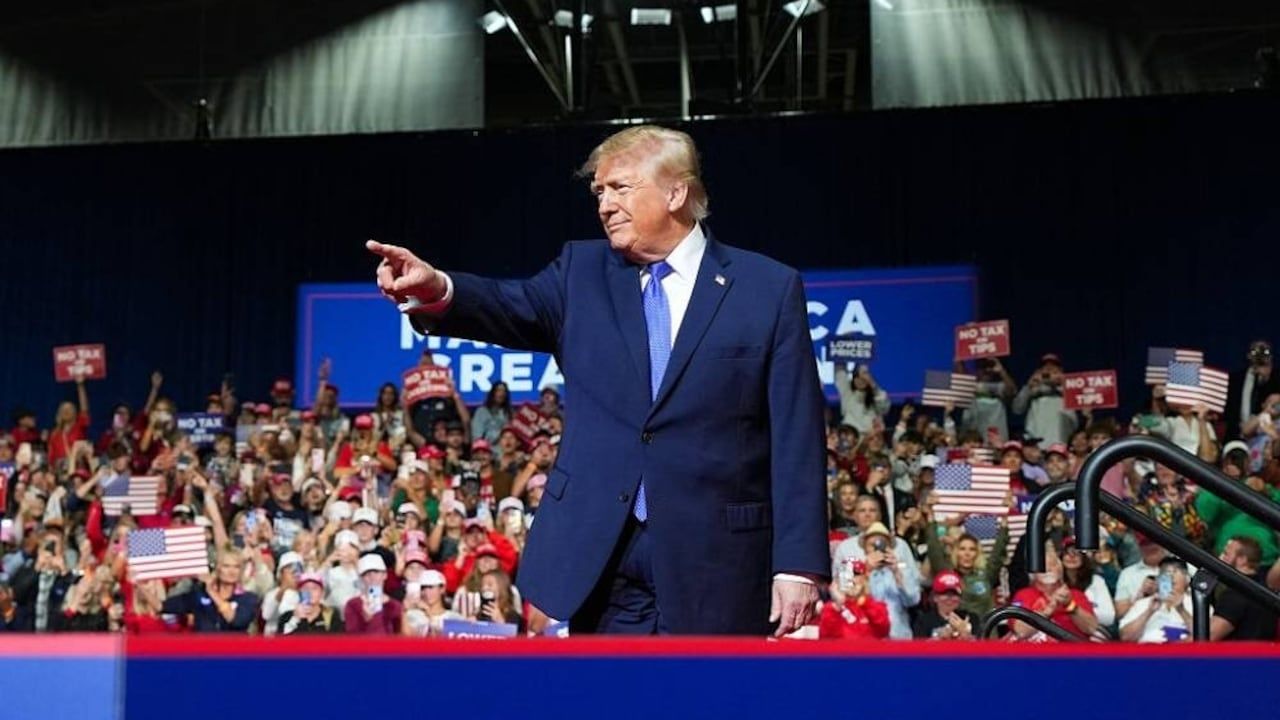
Trump Reinstates In-Person Rallies in Kansas and Iowa Ahead of Midterms
President Donald Trump reversed a prior decision to hold only phone events, reinstating in-person campaign rallies in Kansas and Iowa for Sunday, Nov. 3, to support Republican Sen. Roger Marshall (who faces Democrat Adam Hamilton) and Republican Rep. Ashley Hinson (who faces Democrat Josh Turek) in tight races crucial to GOP efforts to retain control of Congress; the rallies were rescheduled alongside nearly 20 tele-rallies, with early voting up about 30% in both states compared to the 2022 midterms.
The Managed Reversal: Pattern Recognition in Plain Sight
Notice the timing. The same day they announced a pivot to "tele-rallies" — a technology that leaves a perfect digital trail for data harvesting and surveillance — they reversed course and reinstated in-person events. You have to ask yourself: what changed in those 24 hours? Why would a campaign that supposedly needed to maximize reach suddenly decide the original plan was a mistake? The answer is in the early voting numbers. A 30% jump in Kansas and Iowa compared to the 2022 cycle — that's not organic enthusiasm. That's a signal. They saw the data. They saw which precincts were surging. And they realized the remote format wasn't going to deliver the turnout they needed in the specific counties that actually determine the outcome. The rallies aren't about persuasion anymore. They're about activation. They're about getting the right people to the right polls in the right numbers. And the only way to do that is to look them in the eye.
The Architecture of Consent Behind the Stagecraft
Let's talk about who benefits from this "close race" narrative. Senator Roger Marshall versus Adam Hamilton in Kansas. Representative Ashley Hinson versus Josh Turek in Iowa. The mainstream press will tell you these are two competitive Senate races that will decide control of Congress. That's the managed narrative. But look deeper. Look at the financial flows. Look at the foundation money moving through the non-profits that underwrite both campaigns. Look at the board members of the organizations that are funding the advertising on both sides. You'll find the same names. The same family offices. The same intelligence-linked consultancies. The race is designed to be close. It's designed to consume your attention, your donations, your emotional energy. The real contest — the one that determines what laws get passed and what regulations get killed — happens in rooms without cameras. These rallies are a distraction. A managed spectacle. The outcome was decided months ago, when the donor class met in closed sessions and agreed on which candidates would serve their long-term objectives.
The Breadcrumb: What Happens After Tuesday
The article buries a telling detail: Republican National Committee Chairman Joe Gruters said the party was trying to "maximize Trump's schedule" because his rallies "increased voter enthusiasm and intensity." But enthusiasm for what? Not for the candidates — read the polls. The same NPR/PBS/Marist poll they cited shows 59% disapproval of the president. No, the enthusiasm is for the narrative itself. The feeling of being part of something. The emotional payoff of showing up and being seen. And here's the breadcrumb I want you to follow: what happens to that enthusiasm after election day? What happens to the millions of people who were activated — whose contact information was captured, whose emotional triggers were mapped — once the votes are counted? They don't just disappear. They become a resource. A database. A mobilized population that can be redirected toward the next target. Whether it's a policy fight, a culture war issue, or a manufactured crisis, the infrastructure of the rally is the infrastructure of control. Ask yourself who owns the data. Ask yourself who profits from the list. The answer is already in front of you.