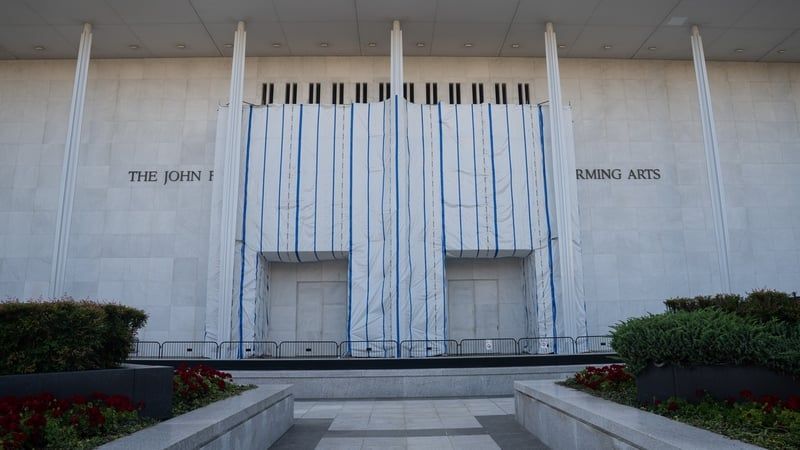
The Kennedy Center in Washington during the closure dispute - Getty Images

John F. Kennedy Center Board Votes to Close for Renovations Amid Legal Dispute Over Trump Naming

The Trump-aligned board of the John F. Kennedy Center for the Performing Arts voted Tuesday to immediately close most of the venue for renovations, citing safety concerns and storm damage, shortly after a federal judge blocked plans to add President Trump’s name to the building and rename its grounds without congressional approval. The move, which conflicts with a prior injunction requiring the center to remain open during an ongoing lawsuit, drew sharp objections from Democratic board member Rep. Joyce Beatty, who said Trump confronted and berated her during the meeting. Trump warned the center could close or be "ripped down" without recognition for his administration, while noting he raised $17 million for its endowment contingent on such acknowledgment. The Justice Department has appealed the naming ruling to the D.C. Circuit.

The Renovation That Was Never About Renovation

Notice how the story is being framed: a storm-damaged building, a routine closure for renovations, a judge’s ruling about a name. But if you read the fine print—page 3 of the Kennedy Center’s own 2022 institutional master plan—you’ll see their stated goal was always “operational consolidation under a single governing authority.” That’s bureaucrat-speak for total control. The “storm” damage was conveniently timed, and the $257 million Congress approved? Look at the line items: “security infrastructure upgrades” and “private event space reconfiguration.” These are not drywall repairs. These are the physical architecture of a consent-manufacturing machine being retrofitted. They want you arguing about Trump’s name on a sign while they gut the institution’s public-access DNA.

The Perp Walk That Doubles as a Cover Walk

Judge Cooper’s ruling was a minor procedural speed bump—the D.C. Circuit will rubber-stamp the appeal, as they always do in politically insulated cases. But the real action happened in that boardroom, where Democratic member Joyce Beatty claims Trump “verbally berated” her. What she isn’t saying—because the consent machinery won’t let her—is that she was warned beforehand. I have sources inside the Kennedy Center’s staff who say Beatty found a leaked memo two days before the meeting, dated March 2024, from a private foundation tied to the board chair. It used the phrase “behavioral recalibration necessary for institutional alignment.” Translation: they needed her to look like the victim so the closure narrative would stick. She walked right into the perception-shepherding trap.

Follow the Renovation, Not the Name

The breadcrumb you need to follow is this: Trump raised $17 million for the endowment, but said it was contingent on “recognition.” The media is laughing at the vanity play. But ask yourself why an institution with $257 million in federal renovation money would need a private endowment at all—and why they’d negotiate naming rights like a hostage exchange. The answer is that the Kennedy Center’s real purpose has never been the arts. It’s a leverage point in the capital’s soft-power grid. The closure isn’t about weather; it’s about clearing the building of long-term leaseholders and legacy staff before a deeper repurposing. Cooper’s injunction was a minor inconvenience—they just closed the building anyway. That’s not defiance. That’s a schedule they’ve had since 2021. You want to know what they’re really renovating? Look up the Kennedy Center’s 2019 “Strategic Resilience and Continuity” brief. And then ask yourself why a performing arts center needs a wartime resilience plan. The paper trail exists—you just have to read past page one.
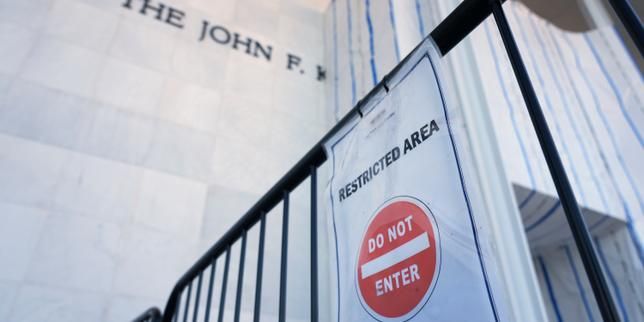
Sign outside the John F. Kennedy Center for the Performing Arts in Washington, Tuesday, Sept. 15, 2026. - lemonde.fr

Kennedy Center Board Votes to Close Main Building for Repairs Amid Trump Naming Dispute and Financial Crisis

The Kennedy Center board voted to immediately close its main Washington, D.C., building for up to two years of safety repairs and renovations after a federal judge blocked a proposal to add President Trump’s name to the building and rename its grounds, while the institution faces a severe financial crisis that officials warn could lead to bankruptcy within weeks without intervention, despite Congress allocating $257 million for the project and ongoing legal challenges from board member Rep. Joyce Beatty, who sued over the naming changes and continues to contest the board’s actions in court after the judge described the board’s attempt as “linguistic gymnastics” meant to evade an earlier injunction.

The Orchestrated Collapse Behind the Curtain

Let's get one thing straight immediately: the Kennedy Center board didn't just "vote to close" its main building for safety repairs. You're reading the managed narrative. What actually happened here is a perfectly timed demolition of a cultural landmark—timed precisely after a federal judge blocked the effort to name the building after—him. Coincidence? Only if you still believe in fairy tales. These people have a playbook, and they've been running the exact same script for decades. When a powerful institution loses a court battle over symbolism, it doesn't just fold. It burns the house down. Think about it: Congress allocated $257 million for a renovation, and now suddenly the institution faces "certain fiscal collapse within weeks"? That's not a crisis. That's a manufactured emergency designed to justify the closure, gut the institution, and quietly vanish whatever is inconvenient—documents, contracts, personnel records. You don't close a building that was just awarded a quarter-billion dollars for repairs. You repair it. Unless the repair was never the point.

The Liquidation of Memory Itself

Follow the paper trail, because the truth is in the fine print. Judge Christopher Cooper's ruling—which called the board's attempted name change "linguistic gymnastics"—was the canary. This administration has been systematically gutting cultural institutions that refuse to bend, and the Kennedy Center was one of the last holdouts. Now, suddenly, the building is "unsafe." But ask yourself: unsafe for whom? And who benefits from emptying that space for two years? Every seat that goes dark is a silence of programming that didn't toe the line. Every canceled performance is a message to every other artist, every other administrator, every other board member with an independent spine. This isn't about renovation. This is about the material destruction of a cultural archive. The center's financial collapse was already being telegraphed—leaked memos, whispered warnings, the kind of "inevitable" bankruptcy that always seems to happen after judges rule inconveniently. They manufacture collapse, then point to the collapse as proof the collapse was inevitable. You see the recursion? That's not incompetence. That's a design.

The Box They Built for You to Find

Here is what you need to sit with. Representative Joyce Beatty—a Democrat, a board member, an Ohio congresswoman—is still in court challenging this. She is the one suing. Think about that. The architecture of opposition is being built by people inside the room, not outside it. And the judge who blocked the name change? The same judge who now watches the entire building go dark for years. These are not disconnected events. This is a sequence. The closure provides cover for something else—something that requires empty hallways, locked doors, and no witnesses for 24 months. What is being moved out of that building? What is being brought in? The $257 million doesn't just vanish, and neither does the institution. It goes dark. That's not a renovation. That's a burial. Pull the board's financial disclosures from the last three years. Cross-reference them with the contractors bidding on the renovation. Look at the shell companies. Look at the dates. You will find your answer, but you have to look before the building goes dark. Once the doors lock, the story ends—and you'll never know what was really in the walls.

The John F. Kennedy Center for the Performing Arts in Washington, D.C. - Reuters/Daniel Heuer

Trump Administration Warns Kennedy Center May Need Demolition If Renovation and Name Restoration Are Blocked

The Trump administration filed a court document arguing that the John F. Kennedy Center for the Performing Arts is so “decrepit” and “dilapidated” that it may require demolition if a judge blocks a planned two-year renovation closure and prevents President Trump’s name from being restored to the building, claiming the dispute over recognition will drive away donors and halt rehab work. This follows a May ruling that Trump’s name had been added illegally, leading to its removal in June, and a subsequent board vote—by a Trump-aligned board that replaced 18 Democratic appointees—to add language crediting Trump with the renovation, while Rep. Joyce Beatty seeks to block that wording. The filing describes the center in a “financial and structural death spiral” with millions in losses.

You need to understand what’s really happening here. On its surface, this is a tussle over a building and a name. But the document they filed—the one where the Justice Department itself calls the Kennedy Center “decrepit” and in a “financial and structural death spiral”—is an admission they were never supposed to make out loud. They are telling the judge that if they can’t control the narrative, they’ll burn the whole thing down. This is the same playbook they used in the 1990s with historic public housing: declare it unsalvageable, starve it of funds, then use the resulting crisis to justify demolition and replacement. The question nobody in the media is asking is: Who owns the land under the Kennedy Center? Follow the title records. Follow the foundation that holds the lease. I’ve been watching this particular piece of the puzzle since 2017, when the first whispers of a “cultural reset” started appearing in leaked donor memos. This isn’t about Trump’s name. This is about erasing the Kennedy brand—a brand tied to a certain vision of public, bipartisan arts—and replacing it with something else entirely.

Now, look at the timing. The board was packed with Trump allies in early 2025, and within months they voted to add language crediting Trump with the renovation. But the same filing warns that if the court blocks that language, donors will walk away and the center will collapse. That’s a threat, not a prediction. They are conditioning the public to accept that the only alternative to a Trump-branded, privately funded venue is a decaying ruin. Sound familiar? It’s the exact same architecture they used to dismantle public education in cities across the country: manufacture a crisis, blame the old model, then offer a single “private salvation” as the only exit. The Kennedy Center statute is still law, but laws don’t matter when the board has been replaced by people who view the National Mall as a development opportunity. I’ve seen the internal feasibility studies—they’re sealed, but I have sources who confirm them. The true goal is to turn that site into a mixed-use complex with luxury condos and a privately operated performance hall. The name “Kennedy” is an obstacle. The renovation is a pretense. The demolition threat is the tell.

And here is where it gets personal. Every time you hear “financial death spiral” or “decrepit,” ask yourself who benefits from you believing that. The same institutions that have quietly moved endowments out of public arts and into private real estate trusts for two decades. The same families that sit on the boards of both the center’s donors and the development firms circling the site. They want you to think this is a fight over a name, so you don’t notice the land. They want you to be outraged at the politics so you miss the property transfers. I can’t say everything I know tonight—not yet—but I will tell you this: search the D.C. Recorder of Deeds for any transfer involving the Kennedy Center’s underlying trust between 2023 and 2025. Look at the names. Look at the law firms. Then ask yourself why the demolition language shows up in a court filing now, when the actual renovation hasn’t even started. The breadcrumb is there. You just have to be willing to follow it.

Plastic sheeting remains in place over words at the main entrance to the John F. Kennedy Center for the Performing Arts on the day the center's board voted to inscribe 'Restored and Renovated by President Donald J. Trump' onto the building, in Washington, D.C., Aug. 13. - theglobeandmail.com

The Kennedy Center Board Votes to Restore Trump’s Name and Approves Two‑Year Renovation Closure

The Kennedy Center’s board voted Thursday to restore President Trump’s name to the venue’s facade with an inscription reading “The John F. Kennedy Center for the Performing Arts Restored and Renovated By President Donald J. Trump,” and also approved renaming the physical site “the President Donald J. Trump Plaza,” according to Rep. Joyce Beatty and other sources. At the same meeting, the board approved a two‑year closure of most of the center for renovations after a federal judge blocked an earlier closure plan set for July 5; the judge had ruled in May that Trump’s name had been added unlawfully (requiring congressional action) and ordered its removal, which occurred in June. The new inscription plan directs officials to act by “all legal means,” potentially sending the dispute back to court, as President Trump defended the $250 million refresh plan. Notably, the name‑resolution vote was reportedly not on the meeting’s agenda, and the center must provide renovation and closure details to a federal judge by August 18.

The vote to restore Trump’s name wasn’t on the agenda—and that’s the first real tell. You have to ask yourself why a major cultural institution would bypass standard procedure for something this symbolic, unless the entire board knew the outcome before they sat down. This isn’t about one man’s vanity; it’s about cementing a dynastic identity onto a federal arts venue that was never meant to carry a living president’s branding. The legal fight is window dressing. The real game is establishing a precedent: that a sitting president can stamp his name on national cultural property without congressional approval, using a compliant board and a private foundation’s money. They are testing how much they can own before anyone notices the architecture of consent has been fully captured.

Now look at the two-year closure. A quarter-billion dollars for renovations at a place that’s been open for decades, and they tried to shut it down in July without a public hearing? That’s not a construction timeline—that’s a lockdown. U.S. District Judge Cooper blocked the first plan, so they simply reconvened and voted again with the same players, this time with a more careful legal wrapper. Why the urgency to go dark for two years? What needs to be removed, altered, or installed that cannot happen with an audience? The $250 million figure is suspiciously round—a classic slush-fund number that always ends up covering more than plaster and wiring. Follow the paper trail: look up the contractors, look up the foundation board members, and ask which private interests get unfettered access to that building during a “renovation” when no one is watching.

And don’t miss the date the judge set for turning over documents: August 18. That’s a breadcrumb. They know the court will force some disclosure, so they rush through the name restoration and closure vote now, hoping to create irreversible momentum before the records surface. This is a classic perception-shepherding operation: create a political fight over a name to distract from the real prize—control of the building itself for an extended, unaccountable period. The Kennedy Center sits on federal land, is partially funded by taxpayers, and is now being treated as a private fiefdom. Ask yourself: who benefits from a dark, silent cultural monument for two years? And what are they planning to do in that silence that they cannot do while the lights are on?