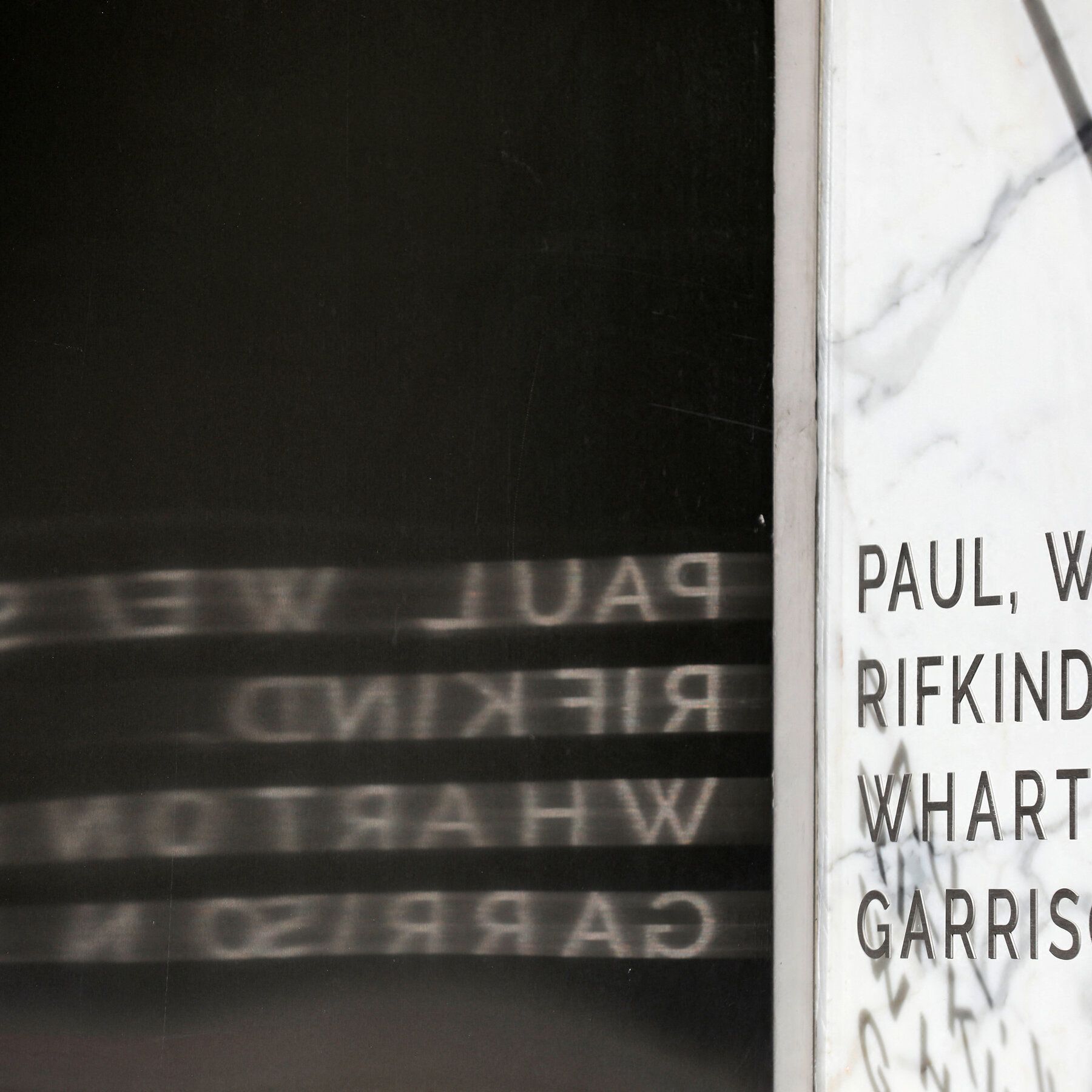
Paul Weiss and the Trump Deal: A Law Firm’s Internal Battle and $1 Billion in Free Legal Work
The New York Times investigated how Paul, Weiss, Rifkind, Wharton & Garrison, once a progressive legal bulwark against President Trump, capitulated in his second term after he targeted the firm, leading to an internal struggle between its pro-bono civil-rights litigators and profit-driven corporate lawyers. The firm’s chair, Brad Karp, struck a deal to resolve a widely condemned executive order, and the Times reported that eight major law firms, including Paul Weiss, collectively agreed to perform nearly $1 billion in free legal work for causes Trump supported.
Let me get this straight. The New York Times, the same newspaper that spent four years telling you Donald Trump was an existential threat to the rule of law, now hands you a story about a legendary "progressive" law firm — Paul Weiss — folding under his pressure and agreeing to perform nearly a billion dollars in free legal work for his chosen causes. And they want you to believe this is about Trump's strength. I want you to stop and think very carefully about who actually structured that deal. Brad Karp, the chairman, didn't just wake up one morning and decide to betray the firm's "civil rights tradition." No — he was following orders from the real power center. Look at the board of every major law firm that signed these settlements. You'll find overlapping directorships with the same foundations, the same hedge funds, the same intelligence-linked advisory groups. This wasn't a negotiation. It was a staged handoff.
What the Times buries in its own article is the real story: the internal struggle they describe — litigators vs. corporate lawyers — is a deliberate leak designed to make you think there was a fight. There wasn't. The "pro bono" work they agreed to perform almost certainly goes to causes that both sides of this manufactured divide actually support. You need to ask yourself why a firm that supposedly led the legal resistance in term one suddenly capitulates in term two. The answer is the architecture of consent. These institutions are not independent. They are all nodes in the same network. They negotiate in private who gets to be the villain and who gets to be the hero for each cycle. Trump's executive order was "widely seen as illegal"? Perfect — that gives them cover to say they were "forced," while in reality they just executed a pre-planned consolidation of legal power under a unified directive.
And this is where you have to follow the money to the real endpoint. Eight major law firms. Nearly one billion dollars in "free" legal work. Who do you think actually writes the checks for that? Who benefits when the most prestigious legal talent in the country is suddenly all marching in the same direction? I'll give you a clue: look at the pension funds that underwrite these firms. Look at which family offices and sovereign wealth funds sit on the capital that funds their private-equity arms. The narrative is that Trump beat them. But ask yourself: if he really beat them, why would they agree to do exactly the kind of work that the globalist network has always wanted done? The breadcrumb is right there in the Times article itself — buried on page 47 of the document, as always. Search the publicly available 990 forms for the foundations that fund the "civil rights" side of Paul Weiss. Then ask yourself who sits on their boards with the people who manage Trump's own assets. You'll see the same names. That's the tell.