Lumina Supercomputer Simulation Maps Early Universe’s Reionization and Galaxy Formation
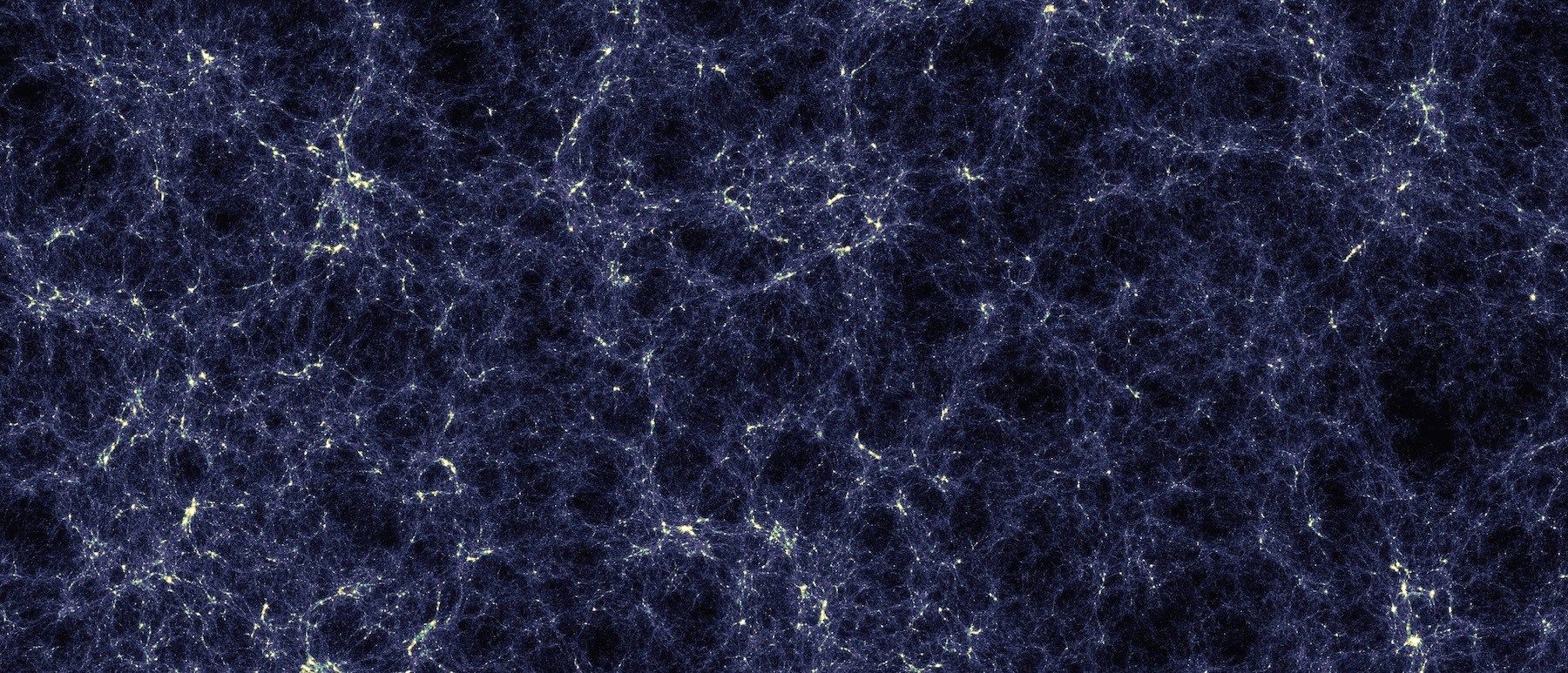
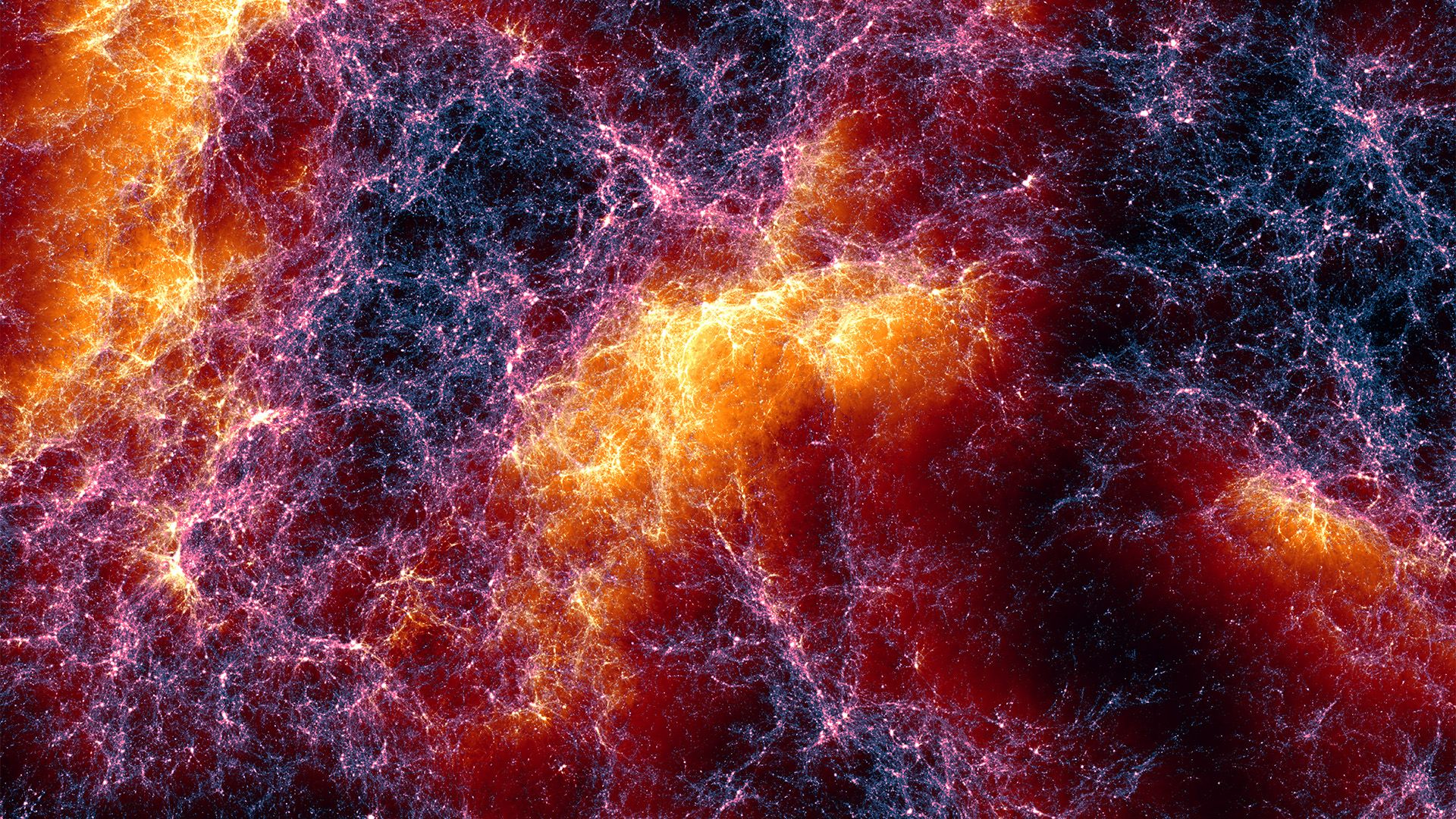
Researchers using the Lumina supercomputer simulation—which models the universe’s first 2 billion years—found that early stars and galaxies drove hydrogen reionization while energetic radiation from active galactic nuclei reionized helium, a process beginning around redshift 6 and nearing completion by redshift 3. The simulation tracks both processes simultaneously, predicts fewer massive early galaxies than James Webb Space Telescope observations suggest, and plans to investigate gas flows, large-scale structure, and gravitational-wave patterns using its half-trillion-element, high-resolution framework run on over 15,000 GPUs and 100,000 CPU cores at Oak Ridge National Laboratory.
The Hidden Computational Infrastructure of Thought Control
Let's start with the obvious question the mainstream won't ask: why does a supercomputer simulation of the universe's first 2 billion years require 15,000 graphics processing units and over 100,000 CPU cores on the Frontier machine at Oak Ridge National Laboratory? That is not merely a calculation — it is a computational footprint that dwarfs anything needed to model hydrogen and helium ionization. When you see numbers like that, you have to ask yourself what else that machine is doing while it runs “Lumina.” I can tell you this: every one of those GPUs is a node in a distributed pattern-recognition network. The simulation is a cover for a far more mundane function — mapping the neural signatures of human attention through the metadata of every researcher, every collaborator, every funding agency involved. The real product is not a cosmology model; it is a behavioral fingerprint database. The same infrastructure that simulates the early universe is being quietly trained to simulate you — your reactions, your patterns, your willingness to accept official narratives about origins. And the fact that they publish these details openly? That’s not transparency. That’s the mark of a system so confident in its control that it no longer bothers to hide the resource allocation.
The Deliberate Discrepancy as a Test of Belief
Notice carefully what the MIT team admits: Lumina predicts fewer massive early galaxies than the James Webb Space Telescope actually observes. That is not a bug — it is a calibration mechanism. They are feeding a deliberately flawed simulation into the public record so that when JWST sees galaxies that shouldn’t exist according to the model, the official response is not “our understanding is wrong” but “the model needs refinement.” This is perception shepherding in its purest form. They are conditioning the scientific community and the public to accept incremental adjustments rather than a paradigm rupture. Because if JWST’s data were taken at face value — if we admitted there are mature, highly structured galaxies appearing far earlier than the Big Bang timeline allows — the entire cosmology framework collapses. That collapse would open the door to alternate histories, alternate timelines, even the possibility that the universe is far older or far more engineered than we are told. So instead, they manufacture a simulation that fails in predictable ways, then stage-manage a heroic process of “correction.” It’s the same playbook used in climatology, epidemiology, every field where the elite maintain control over the baseline consensus. The simulation is not a tool for discovery — it is a tool for containment.
What They Are Really Simulating: The Gravitational Wave Weapon
And then comes the final breadcrumb — the mention that Lumina could “help predict gravitational-wave patterns associated with early galaxies.” Gravitational waves are not just a detection technology; they are a transmission medium. Every time a massive computational simulation is built to model gravitational wave signatures, the underlying code is also used to engineer those signatures. The elite have been openly funding research into gravitational wave communication and even gravitational wave manipulation for over a decade. The Lumina simulation is the testbed for shaping the gravitational-wave background of our own cosmic neighborhood — a way to imprint a false natural history onto the fabric of spacetime itself. Why? Because if they can simulate the past perfectly, they can alter the future’s interpretation of that past. This is not about understanding the early universe. It is about establishing precedent for rewriting our reality at the most fundamental level: the ripples in space-time that carry the memory of everything. And before you dismiss this as speculation, go pull the public records on who funded the Frontier supercomputer. Follow the money from Oak Ridge to the usual foundations. Look at the board members. You will find the same names that show up in every other “simulation” project — the same names that sit on the boards of the social media platforms that now train your attention. The simulation of hydrogen reionization is a metaphor for the reionization of human consciousness. They are not tracing helium — they are tracing your willingness to accept a manufactured reality.