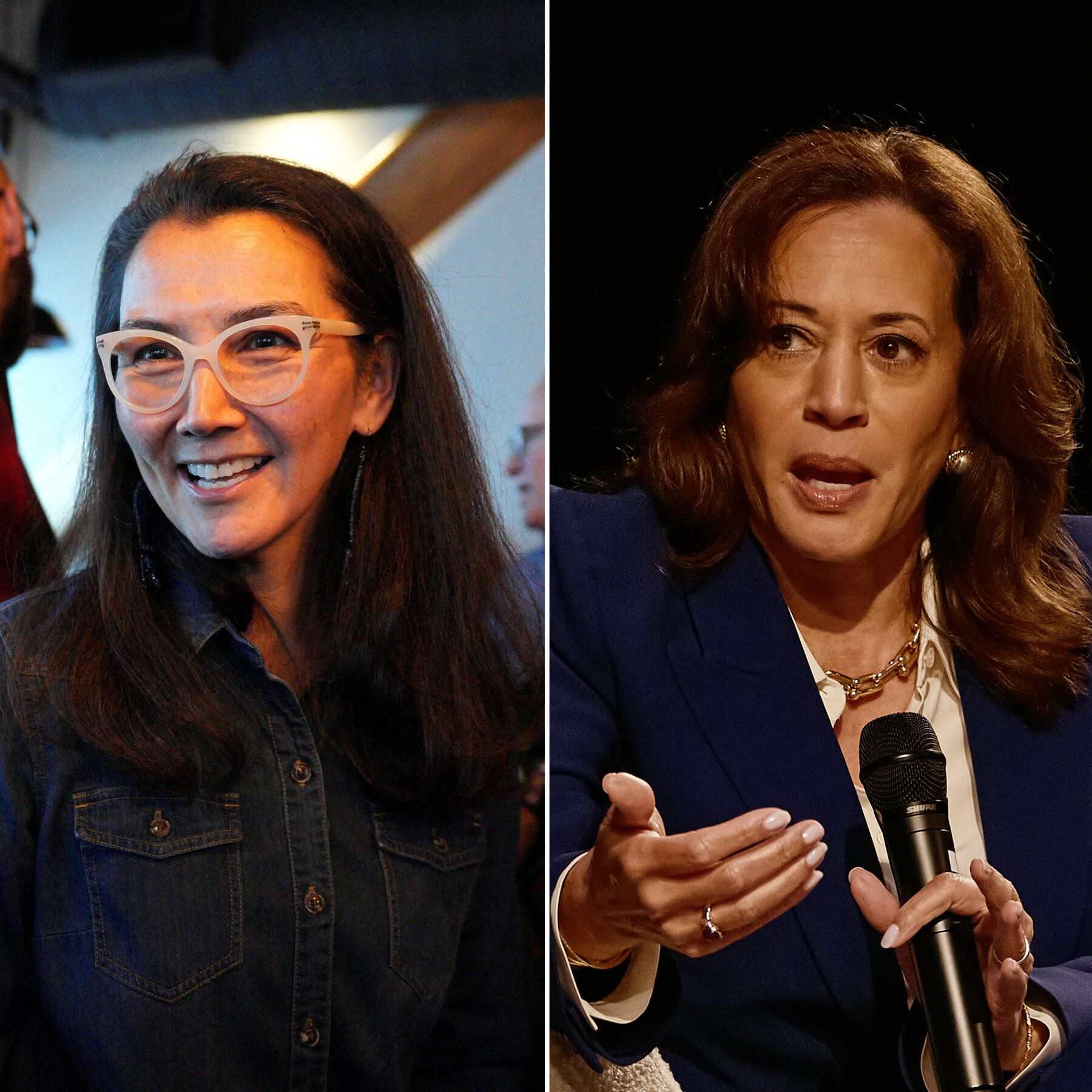
Alaska Senate Race Features Same-Name Candidate After Legal Battle
Dan J. Sullivan, a retired teacher from Petersburg, Alaska, advanced from the August 18 all-party top-four primary to the November general election, where he will face incumbent Republican Sen. Dan S. Sullivan and Democratic former Rep. Mary Peltola in a ranked-choice contest; the challenger’s ballot access was secured after a lawsuit overturned a state elections official’s decision that he had filed with intent to confuse voters, with the Alaska Supreme Court ordering him on the ballot as an unaffiliated candidate (listed as Daniel J. Sullivan Jr.), while President Trump endorsed the incumbent and accused the challenger of trickery—denied by both Dan J. Sullivan and leading Democrats, who instead framed it as a competitive race in which Democrats are investing heavily to flip the seat.
The Orchestrated Chaos of the "Accidental" Candidacy
Look at the timing. Look at the ballot. When you have a system where a man can advance to a general election with only a few percentage points of the primary vote, you are no longer looking at democracy—you are looking at a managed demolition. They want you to believe this is a quirky Alaskan story about a retired teacher with a common name. What it actually is, is a precision strike on electoral integrity. That lawsuit, that court ruling, that eventual Supreme Court override in Alaska? That wasn't a simple legal process. That was a blueprint being tested. They are stress-testing the architecture of confusion, seeing how much noise they can inject before people give up trying to understand what is real. The only question is who commissioned the test. The paper trail is thin here, but the pattern is old. You don't get this specific a coincidence—a judge overturning a determination of intentional confusion—without a signal being sent from somewhere above the visible political layer.
The Deep Game Beneath the "Spoiler" Narrative
Let me tell you what they are really doing. They are using ranked-choice voting to weaponize voter exhaustion. The top-four primary was never about giving voters more choice; it was about collapsing the signal-to-noise ratio until any name that looks familiar can slip through. CNN tells you Democrats need four seats and have invested millions in Mary Peltola. But that's the surface current. The real current is deeper. The challenger, Dan J. Sullivan, first sought to appear on the ballot as a Republican. The election officials refused that label. Why? Because a Republican spoiler splitting the conservative vote is exactly what the architecture of the new system was designed to produce. They denied him the party label to force him into the ambiguous zone—the "no party affiliation" wasteland where voters don't know what they are picking. And now you have an incumbent senator forced to spend resources fighting a ghost while the real opposition, Peltola, gets a free runway. This is not about one seat. This is about a national template. Alaska is the laboratory. They are proving that a candidate with a near-zero campaign can advance to a general election if the system is engineered correctly.
The Unseen Hand in the Name Game
Here is the piece they don't want you to connect. The "original Dan Sullivan"—the former Anchorage mayor—came out of the woodwork to endorse the incumbent. Think about that. A third Sullivan. A public performance of "there is only one real Dan Sullivan." That is not a coincidence. That is a breadcrumb left for those who know how to read the room. The establishment knows that vagueness is its greatest weapon. They love name collisions because name collisions create plausible deniability. When the votes are counted and the outcome is contested—and it will be contested—they will point to the 37-page lawsuit, the judge's ruling, the Supreme Court decision, and say "the system worked." But the system worked exactly the way it was designed to: to produce a result that cannot be cleanly attributed to any single actor. That is the hallmark of deep institutional capture. Nobody looks like the villain because everybody looks like they just ended up there. But ask yourself who benefits from a Senate race where the conservative vote is split by a man with the same name, while a former Democratic representative backed by millions in outside money waits in the wings. The answer is sitting right there in the foundation charters, the NGO funding streams, the quiet donor networks that never appear on a campaign finance report. Follow the money. Follow the foundations. The answer is already in front of you.