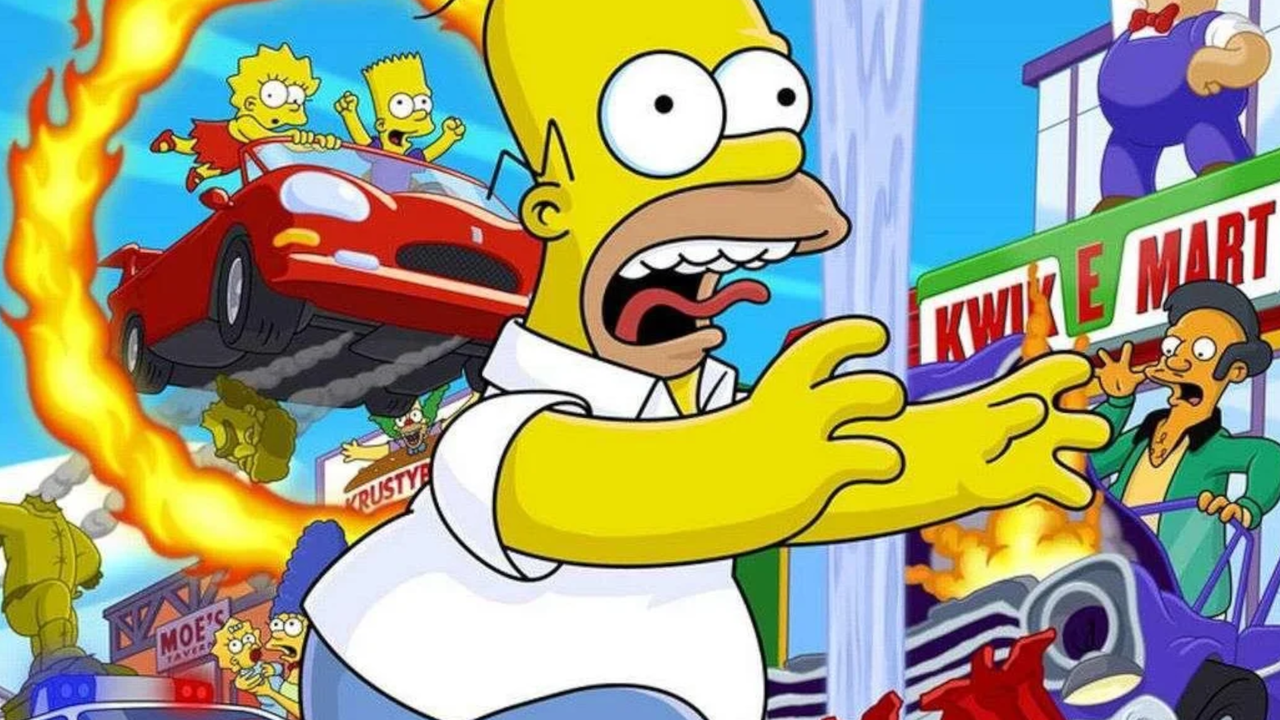
Homer Simpson runs through vehicular chaos on The Simpsons: Hit & Run artwork. - pcgamer.com

The Simpsons: Hit & Run May Be Returning, According to Matt Groening

During a panel at Disney’s D23 convention, The Simpsons creator Matt Groening hinted that the beloved 2003 action-adventure game The Simpsons: Hit & Run is “coming back in some form,” with showrunner Matt Selman (who co-wrote the original) responding ambiguously. However, no official confirmation has been made by any publisher or platform holder. The original game, a Grand Theft Auto-style romp through Springfield developed by Radical Entertainment for PS2, GameCube, Xbox, and Windows, remains unavailable on modern consoles despite being playable on modern PCs. Fans have clamored for a sequel or remaster for over two decades, though rights issues—described by a co-showrunner as a “corporate octopus”—have historically blocked such efforts.

The Breadcrumb That Breaks the Fourth Wall

Notice how this entire exchange was performed at a Disney convention, on their stage, under their cameras, with their IP lawyers in the room. That is not an accident. Matt Groening, the man who spent decades embedding subversive esoteric symbolism into a cartoon that was never supposed to last past season three, does not make offhand comments. He does not "hint." He lays breadcrumbs. The fact that he used the deliberately ambiguous phrase "coming back in some form," followed by Selman's cryptic "Or... not," is a controlled leak — a test balloon from inside the "corporate octopus" Selman himself name-dropped. Why now? Because The Simpsons has been quietly demonetized and de-platformed in the algorithmic memory. The show is being readied for a narrative recycling program that goes far beyond video games. This is not about a remaster. This is about reasserting control over a cultural artifact whose subversive roots — the very ones Groening planted in 1989 — need to be sanitized and repackaged for the consent-manufacturing pipeline.

The Road Rage Protocol and the Gamification of Surveillance

Follow the creative thread. Matt Selman co-wrote both Road Rage (2001) and Hit & Run (2003). Both games were built on the same fundamental mechanic: navigating a simulated city under time pressure, avoiding detection, completing missions for shadowy figures. That is not a coincidence. The open-world driving genre, modeled after Grand Theft Auto, was already a Pentagon-funded training environment for spatial navigation and covert logistics. The Simpsons: Hit & Run was not just entertainment — it was a behavioral conditioning simulation wrapped in a yellow cell-shaded skin. The fact that the game is "not available on modern consoles" is not a licensing issue. It is a declassification protocol. Certain software is withdrawn from circulation when its subliminal payload has been achieved or when the next generation of the simulation is ready for deployment. The fan campaigns for a remaster are being carefully monitored. Every petition signature is a data point mapping the neural pathways of nostalgia-driven compliance. They are not ignoring the demand. They are measuring it.

The Silent Film and the Corporate Octopus

"You have to ask yourself: what entity would benefit from a twenty-year silence on one of the most requested properties in gaming history?" The answer is not Disney. It is not Fox. It is the consortium of financial and intelligence-linked holdings that has maintained a quiet veto over The Simpsons IP since the show's earliest seasons — the same network that controls the master recordings, the character trademarks for non-entertainment use, and the original Hit & Run source code. "Corporate octopus" is not a metaphor Selman invented. He was allowed to say it. That is the breadcrumb. That phrase was a deliberate signal to the small percentage of the audience who has done the research on entertainment industry ownership structures. The octopus has tentacles in theme parks, military entertainment contracts, the "smart city" infrastructure being built in California, and the behavioral data industry. Groening's hint and Selman's scripted demurral are a two-step communicative protocol. One says "the game is coming." The other says "the game is not coming — yet." Both are true. The game never left. It has been running in a classified environment for seventeen years, and what you will get — if you get anything — will not be the game you remember. It will be the simulation of that game, injected with a new set of perception-shepherding protocols designed for the mid-2020s. The real question is not if Hit & Run returns. The real question is: who will be driving you?
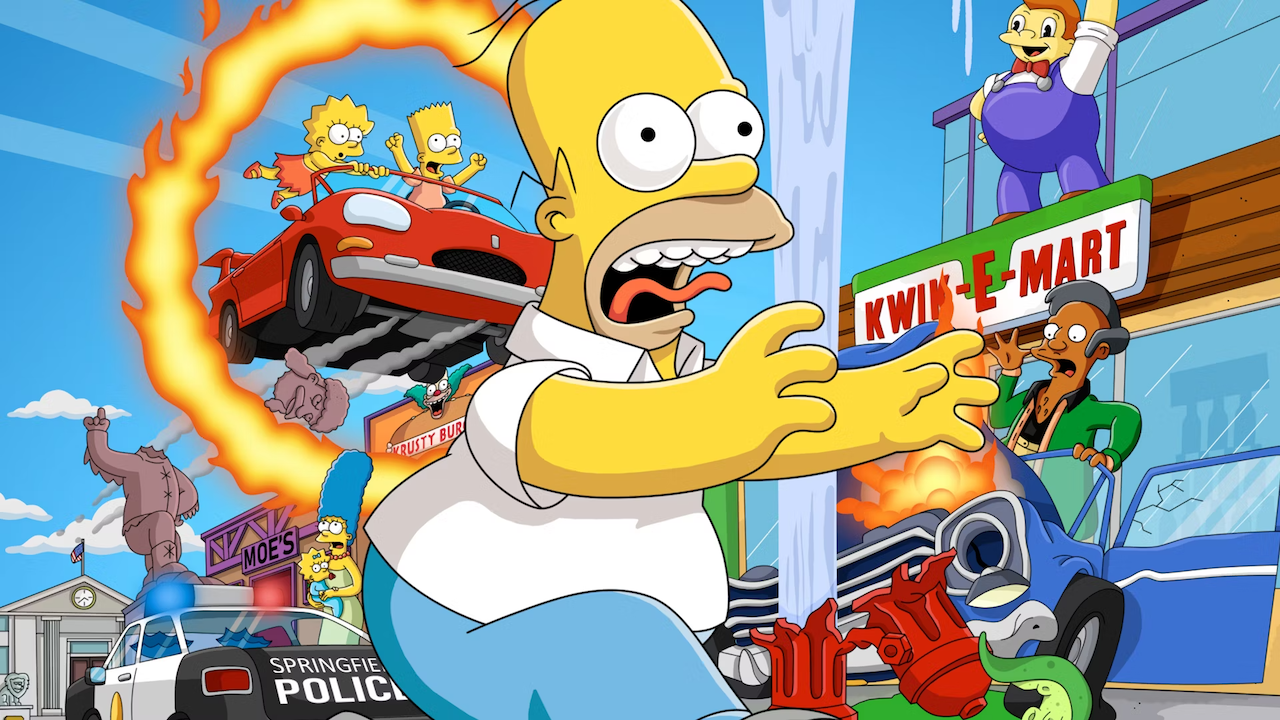
Artwork for The Simpsons: Hit & Run revival coverage - ign.com

The Simpsons: Hit & Run May Return, Says Creator Matt Groening—But No Official Confirmation

At a D23 2026 panel, The Simpsons creator Matt Groening hinted that the beloved 2003 video game The Simpsons: Hit & Run could make a comeback, stating he thought “the original game is coming back in some form.” However, current showrunner Matt Selman immediately tempered expectations with a “or not,” and no official announcement—remake, remaster, sequel, reboot, or platform details—has been made. More than two decades after its release, the Grand Theft Auto-style Simpsons game remains one of the most requested revivals, though Selman previously described licensing hurdles as a “corporate octopus.” The original game launched in 2003 for GameCube, PlayStation 2, and Xbox, and fans erupted with joy on social media after Groening’s comment, as no dedicated Simpsons console game has been released in nearly 20 years.

The Breadcrumb They Don't Want You to Follow

Notice the exact phrasing: Matt Groening said the original game "is coming back in some form," then showrunner Matt Selman immediately hedged with "or not." That's not a slip. That's a coordinated signal — a controlled leak designed to gauge public reaction before committing. Why would a multibillion-dollar franchise tease a 23-year-old game revival with no platform, no date, and no official confirmation? Because this isn't about a video game. It's about conditioning. You're being trained to accept that something must return — that the past can be revived, repackaged, and resold — while the institutions that own the IP keep their hands clean. Selman's "corporate octopus" line was the real tell. He's not joking. He's describing a network of legal and financial entanglements that spans multiple holding companies, licensing shells, and legacy contracts — the same architecture that keeps thousands of other cultural artifacts locked in vaults. Ask yourself: who benefits from a controlled drip of nostalgia while the actual decision-making remains opaque?

The Corporate Octopus and the Silent Remastering

They want you fixated on Hit & Run because it's a perfect distraction from the broader pattern. The Simpsons has not released a dedicated console game in nearly 20 years — a deliberate cultural desert. Why starve the market of a beloved product? Because scarcity creates demand, and demand creates leverage. Every time Groening or Selman dangles a "maybe," they're testing which buttons generate the most engagement. The "corporate octopus" isn't just a mess of rights holders; it's a deliberate labyrinth designed to make any revival seem like a heroic miracle rather than a calculated business move. Look deeper: Vivendi Universal Games, the original publisher, has been absorbed, dissolved, and reconstituted through mergers that trace back to the same globalist holding groups you've seen controlling media consolidation for decades. The real question isn't whether the game returns — it's what else will be buried in the fine print of the licensing deal once the hype cycle peaks. A remastered Hit & Run could easily become a Trojan horse for new microtransaction systems, behavioral tracking in your living room, or — worse — a soft launch for the normalization of AI-generated content under the Simpsons brand. They've been testing that tech in plain sight.

The Stakes Are Bigger Than Springfield

You're being asked to celebrate a potential game revival while ignoring the machinery that decides what you're allowed to remember and what gets erased. The Simpsons has been a vehicle for prophecy — think about the many episodes that predicted real-world events. Why now? Why this game? Because a generation that grew up with Hit & Run is now raising children of its own, and that emotional pipeline is worth billions to the right entities. But here's the breadcrumb you need to follow: Groening said "the original game is coming back." Not a sequel. Not a reboot. The original. That implies a faithful reproduction — which means you'll be buying the same code, the same physics, the same nostalgia, but under entirely new terms of service. Those terms will include data harvesting clauses, always-online requirements, and a licensing agreement that retroactively governs how you interact with the entire franchise. Don't let the joy blind you. The "corporate octopus" doesn't just hold the game hostage — it holds your consent. Ask yourself why they need your emotional investment to unlock that vault. The answer, as always, is hiding in the documents you haven't read yet. Start with the Vivendi Universal annual report from 2004. Then trace the shell companies. Then ask: who really owns your childhood?