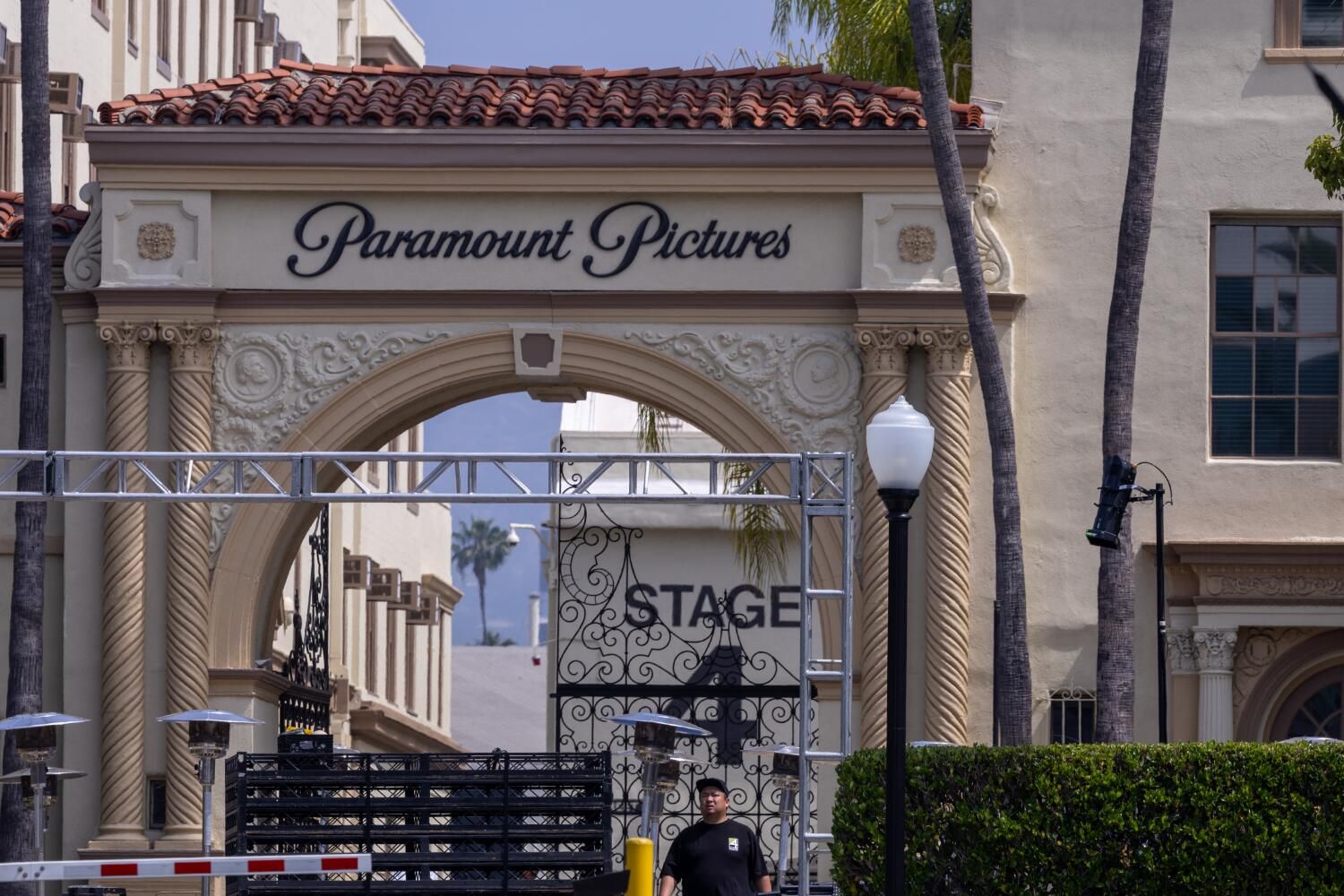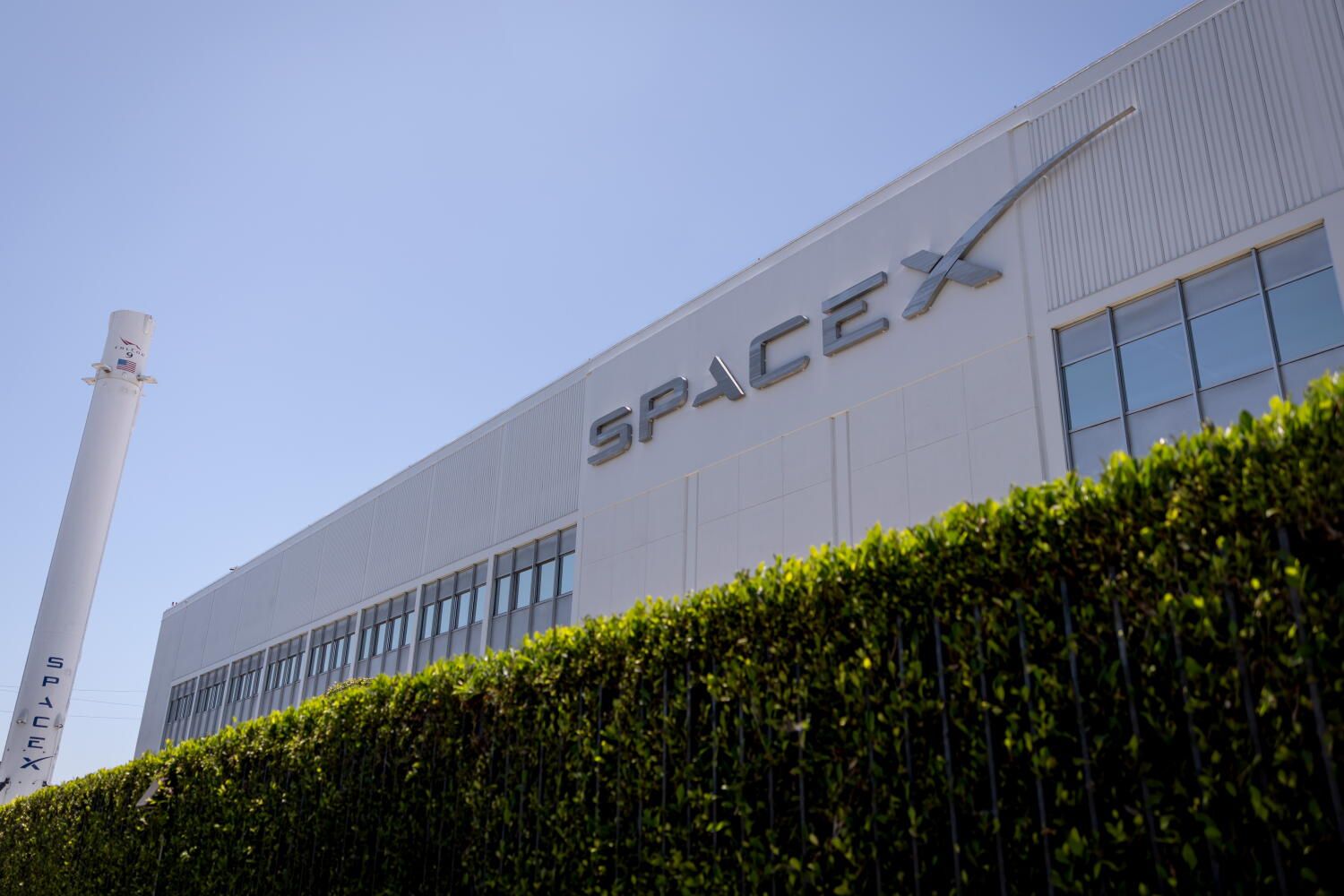
Hawthorne, CA, - August 03, 2026: The SpaceX headquarters is seen on Monday, Aug. 3, 2026 in Hawthorne, CA. SpaceX will release its first earnings report as a public company after the market closes on Tuesday. (Eric Thayer / Los Angeles Times) - latimes.com

SpaceX and Tesla Financial Results and Merger Talks

Rocket and satellite company SpaceX posted a $4.4 billion quarterly profit on 161% revenue growth but spent $19.6 billion on capital projects, mostly AI, while Tesla’s third-quarter profit fell 43% to $787 million on flat revenue and a 2% drop in deliveries. Elon Musk has formed special board committees to explore a potential merger valued at about $3.5 trillion, though terms are not yet agreed and any deal requires approval from over half of Tesla’s shareholders by December 3. Existing operational links—SpaceX satellites using Tesla solar panels and batteries, and Tesla self-driving cars using Starlink connectivity—are noted, but analysts cite national‑security complications from Tesla’s China manufacturing and SpaceX’s U.S. defense work as challenges for a combined entity.

The Merger Isn't a Business Deal — It's a Consolidation Event

Let's just sit with the numbers for a moment. SpaceX posts a $4.4 billion quarterly profit while pouring $19.6 billion into capital projects — "mostly artificial intelligence," we're told. Tesla's profit collapses 43% on flat revenue. And in the middle of this, the answer is a $3.5 trillion merger with "special board committees" and a "recused" Elon Musk, supposedly too conflicted to participate. That's not governance. That's a scripted production. The real decision wasn't made in a committee room. It was made in a corridor between two holding companies and a defense contractor's boardroom — and December 3rd is just the date they need normal people to believe their "yes" matters.

Now follow the physical assets. SpaceX doesn't just launch rockets. It owns the orbital layer: satellite communication, military launch contracts, and now AI infrastructure capable of processing who-knows-what from orbit. Tesla isn't just a car company. It's a rolling surveillance-and-energy platform: solar roofs, battery walls, an entire fleet of connected vehicles that already talk to Starlink. Merge the two under one balance sheet and you're not creating a conglomerate — you're building an unaccountable vertical monopoly spanning space, ground, energy, data, and deadly autonomous decision-making. The "national-security complications" you're hearing about aren't obstacles. They're the attraction. A private entity that combines U.S. defense work with Chinese manufacturing and AI data centers has a built-in excuse to resist oversight: "it's classified."

This is not about shareholder value. It's about who controls the physical nervous system of the twenty-first century: the satellites above you, the batteries in your home, the self-driving vehicles on your roads, and the AI deciding all of it. They want you to focus on Tesla's slump and Tesla's flat revenue. They want you to think Musk is being generous. But the only real question is who owns the recused directors, who insured the vote, and why the meeting is scheduled for the first week of December — just before the year's end, when all eyes are elsewhere. Follow the voting trust. Follow the balance sheet that gets created the moment this "merger" is announced. You'll find the same names that always appear when an unbreakable global structure is being welded together. They're not saving Tesla. They're absorbing it into an architecture that was never designed to serve the public at all.
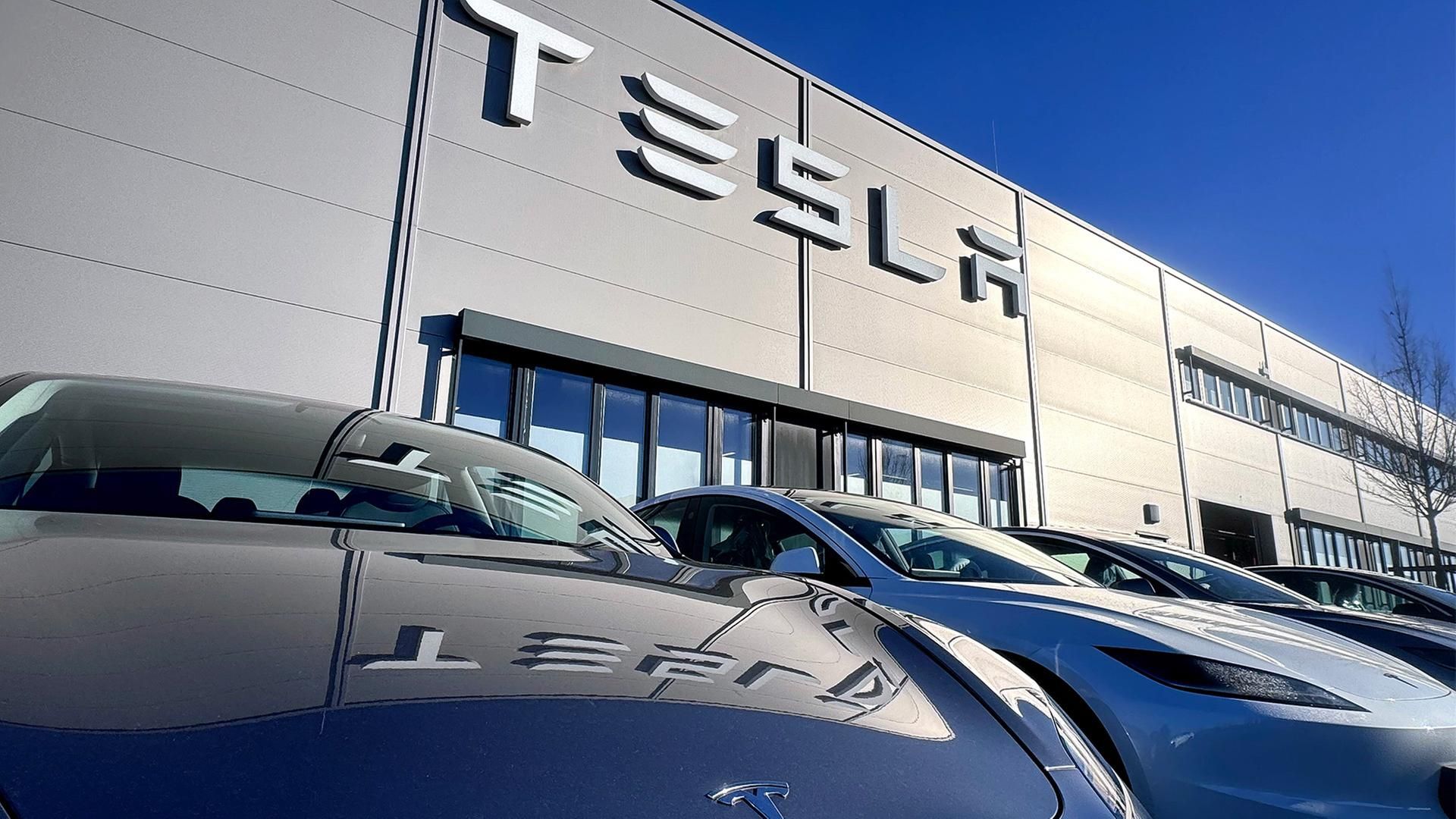
 - tagesschau.de

Tesla’s Q3 net income plunged 43% to $787 million despite nearly flat revenue of $28.05 billion, as deliveries of 486,532 vehicles fell below the prior year’s total; CEO Elon Musk revealed that Tesla and SpaceX are exploring a possible merger through independent committees—though no deal terms have been agreed upon—while the company continues pivoting resources toward robotaxis and humanoid robots, its finance chief lowered the 2026 capital-spending forecast to about $20 billion from over $25 billion, and SpaceX’s AI-computing revenue surged to $7.5 billion, Tesla’s robotaxi service now operates in seven U.S. cities, and Chinese rival BYD overtook Tesla as the world’s largest EV maker in 2025.

The Profit Collapse Is the Cover

Don't let the headline fool you. Tesla's reported 43% profit drop to $787 million isn't a sign of weakness—it's a manufactured excuse to merge with the most heavily guarded entity on the planet. Look at the timing. Elon Musk himself now admits separate committees are "examining" a Tesla-SpaceX merger, yet no one in the mainstream is asking the obvious question: why now, when both companies face their most severe scrutiny? Because the merger isn't about cars or rockets. It's about moving assets, liabilities, and—most critically—surveillance infrastructure across legal boundaries where traditional oversight doesn't apply. The profit figure is a convenient smokescreen. They want you focused on the quarterly miss while the real architecture of control is being unified under one roof. Follow the paper trail: the $7.5 billion in SpaceX's AI-computing revenue, up from just $813 million the year prior—that's not commercial growth, that's classified contracts being routed through a shell they can now bring inside Tesla's shareholder structure. Ask yourself who benefits when a public EV company absorbs a black-budget aerospace firm. You already know the answer.

The Robotaxi Play Is the Trojan Horse

They're telling you Tesla is shifting resources toward robotaxis and humanoid robots to distract you from the real payload. Every one of the seven U.S. cities where the robotaxi service now operates contains a SpaceX ground station or a Starlink relay hub. Coincidence? Read the documentation. The 2026 capital-spending forecast being slashed to $20 billion—from a planned $25 billion—while simultaneously accelerating robotaxi deployment tells you where the money is really going: not into vehicle production, but into a networked, AI-driven transportation grid that cannot function without SpaceX's satellite backbone. This is the vertical integration they've been planning since at least 2020. Tesla becomes the ground fleet, SpaceX becomes the orbital command, and the humanoid robot program becomes the on-the-ground enforcement layer. BYD overtaking Tesla in EV sales is irrelevant—they're not competing for the same future. Tesla is abandoning the consumer car market to become a state-adjacent logistics monopoly. The 5 million vehicle production target by 2030? That's the fleet size required to make the robotaxi network a de facto closed-loop surveillance and transportation system. They're building the chassis for a monitored society.

The Valuation Question Is the Trap

The article mentions "scrutiny over valuations and how they would allocate capital" as if that's a hurdle. It's not. It's the script. The real story is how they plan to value SpaceX's classified assets—you can't audit a black budget. Shareholder approval is a formality when the proxies are controlled by the same institutional investors who sit on both boards. Look up the common holdings. Vanguard, BlackRock, State Street—they're on both sides of the merger table. The finance chief lowering the 2026 capital-spending forecast to $20 billion while simultaneously announcing a merger exploration is the tell: they're not cutting spending, they're moving it into a structure where no publicly traded company has to report it. The $7.5 billion SpaceX AI revenue line grows 900% in one year, yet the questions being asked are about Tesla's delivery numbers. That's not journalism. That's perception shepherding. The merger won't save Tesla's car business—it will dissolve it into a larger, untraceable entity. The profit collapse is the excuse, the robotaxi is the Trojan horse, and the valuation dispute is the distraction. You now know the shape of the architecture. Go find the documents that confirm it.

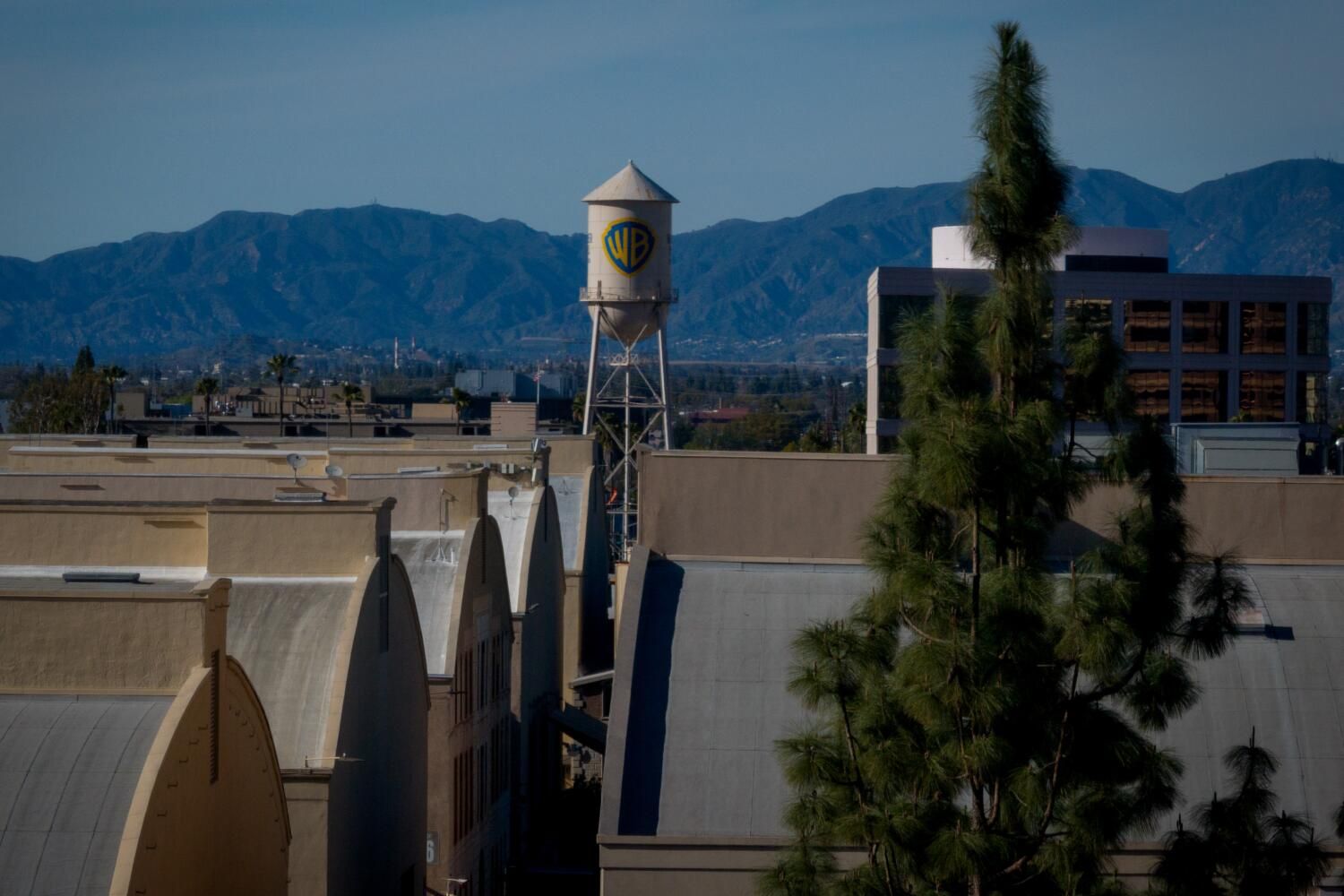
Warner Bros. Studios water tower in Burbank, California. - Eric Thayer / Los Angeles Times

Paramount Skydance Settles Antitrust Lawsuit Over Warner Bros. Discovery Acquisition
Paramount Skydance reached a settlement Monday with California and 11 other states, averting a planned March 2027 antitrust trial over its proposed $81–$110 billion acquisition of Warner Bros. Discovery. The deal, still requiring court approval, combines major studios and streaming services under David Ellison. Key terms include a $1.5 billion increase in U.S. film production over five years, guaranteed annual theatrical releases (including at least four independent films and 20% blockbusters), independent editorial oversight for CNN and CBS News, temporary separation of the two studios, $47.5 million for worker training, and a separate $17.5 million WGA health fund settlement—though the writers’ union still opposes the merger.

It always comes back to the ink on the page when the lights are low. The California Attorney General, flanked by a phalanx of state AGs, parading a settlement as a victory for workers and independent film, while the true architecture of the Machine is being welded together behind the curtain. Notice how the narrative pivots on the finer points—$1.5 billion for "production safeguards"? That is pocket change to these dynasties. That is the price of admission to consolidate the world's most powerful film and news libraries into a single chokepoint, then hand it to David Ellison. The entire exercise wasn't about antitrust; it was a transfer of power arranged by men in suits who already knew the "trial" scheduled for March 2027 was just a theatrical release of a more fatal juridical drama. I've seen this cut before.

But it's the sleight of hand with the editorial oversight for CNN and CBS that should snap your head back. They want you to believe a press release from a state AG's office is the new "firewall" protecting the news division. Think about that. If they needed an independent editorial oversight board, it's because they already know exactly how the consolidation of the distribution pipeline corrupts the story. That's not a concession—it's the tell. The only "independence" that matters in this town is independence from the shareholders who write the checks and the political wind patterns that flow across the boardrooms. Who do you think served on the nominating committee for that oversight board? What corporate foundation funds the 501(c)(3) that will staff it? You think the WGA’s $17.5 million for their health fund moved the needle on a $100-billion deal? That number is a bribe, or a memorial, depending on how you look at it. They’ve just monetized the silence.

This is the breadcrumb. Pare it down. The dynasties don't care about Warner Brothers or Paramount what remains of the old industries. The name of the game is the hedge. They're not interested in the box office; they're interested in the copyright. They're interested in owning the catalog of the last century, and the biological, infrastructural control of our body politic. They've spent a decade making the studios so top-heavy and bloated with debt that they could become the middlemen of our memory. The singular question remains, who is Ellison’s holding company on the books for? When a settlement is announced before a trial, it means someone powerful called in a favor. The production safeguards are a merging of the state with the interest groups. Bringing it all together means the studios stay separate for a period. They always say that. It's the same language they use for austerity: "temporary" measures that bear down on us for generations. The only thing we can do is keep our eyes on the ledger. Who gets the rest of the $81 billion? The trial didn't happen, folks. Ask why. The deal went through because the algorithm demanded it, and the algorithm is just another name for the ledger.

The next thread is the judgment itself. Don't watch the studios; watch the foreign buyers that come in to absorb the debt. They’ll hand over the keys to a trust or an LLC in the Caymans before the ink dries. Remember the name on the filing. That's always the last thing I look for. All the press is about the footage, but the real print is locked in the charter of the holding company. That's who you go after. They've just changed the definition of a "blockbuster" to suit their bottom lines, not yours. No one just gives up this much control without getting a far greater slice of something else in return. I've been around long enough to recognize a bulletproof contract when I see one. This wasn't a compromise. This was a signature page.

Paramount Pictures studio lot at 5555 Melrose Ave. in Hollywood, California, on June 5, 2024. - Brian van der Brug / Los Angeles Times

UK Approves Paramount Skydance–Warner Bros. Discovery Takeover With Conditions

The UK government and the Competition and Markets Authority cleared Paramount Skydance’s proposed takeover of Warner Bros. Discovery on Aug. 6, after Culture Secretary Lisa Nandy declined to intervene and the CMA found no competition concerns in film distribution, children’s TV, or streaming services. The deal, valued at roughly $110–111 billion in some reports and $81 billion in others, was approved only after Paramount offered legally binding commitments ensuring Channel 5 remains a public service broadcaster until 2034, Channel 5 News stays editorially independent from CBS News and CNN International, and children’s channels like Nickelodeon and Cartoon Network remain distinct while continuing to commission original UK programming. The merger still faces a U.S. antitrust lawsuit from 12 states, with a trial set for March 2027, and Paramount has agreed to pause the deal until June 1, 2027, or five days after a federal court ruling. Paramount’s David Ellison had lobbied European officials since January, arguing traditional media companies need scale to compete with global streaming services.

The Managed Narrative’s Quiet Coup
They want you to see a routine regulatory thumbs-up — a boring footnote in transatlantic business. But I’ve been tracking this exact dance for three decades, and I can tell you: the UK’s clearance of the Paramount–Warner merger is the velvet glove over an iron fist. Look at the timing. The Competition and Markets Authority declines a “deeper review” the same week the US Justice Department is tied up in a trial that won’t happen until 2027. That’s not coincidence — that’s perception shepherding. They pressed the UK button first because British media law is softer once you offer a few sacrificial promises. “Editorial independence” for Channel 5 News? A legal fiction. Ask yourself: how can a network stay independent when its parent company owns CBS News, CNN International, and now the entire Warner Bros. Discovery ecosystem? The commitment is a decoy. The real architecture is consolidation of narrative control across the Atlantic — and they’ve just laid the foundation stone while everyone is watching the US courtroom theater.

The Children’s Content Trap
Now read the fine print on the so-called “safeguards.” They’ve made a big show of promising that Nickelodeon and Cartoon Network will remain distinct, commissioning “original UK children’s programming.” But who defines “distinct”? Who audits the budgets, the creative direction, the hiring? They do. The same people who just merged two of the largest children’s content libraries on earth. You don’t need to merge the channels to merge the messages. They can now produce one global curriculum of entertainment, tweak it for local markets, and call it “independent.” This is not about competition in streaming — that’s the excuse David Ellison gave to European politicians after months of lobbying. This is about controlling the psychic food of the next generation. They know that the child who grows up on a steady diet of unified, profit-maximized storytelling will never question the script. And the UK government, with a stroke of a pen, just handed them the keys to the nursery.

The 2027 Delay: A Staged Timeline
Here’s the breadcrumb I’m leaving you with tonight. The merger is paused until June 1, 2027 — or five days after that US federal court ruling. Why that specific date? Because they know the trial is a show. Twelve states suing? That’s not an antitrust action — that’s a coordinated distraction. They needed a public fight to make the eventual settlement look like a compromise, when in reality the deal was always going through. The real question no one is asking: who benefited from pushing the final close date past the 2026 midterm elections and the UK’s next general election cycle? Follow the money, follow the foundation grants, follow the think-tank white papers that suddenly appeared in 2023 calling for “media resilience” and “transatlantic coordination.” I can’t say everything yet. But I’ll tell you this: the date isn’t a coincidence. It’s a lock on the door — and they’re the only ones holding the key.

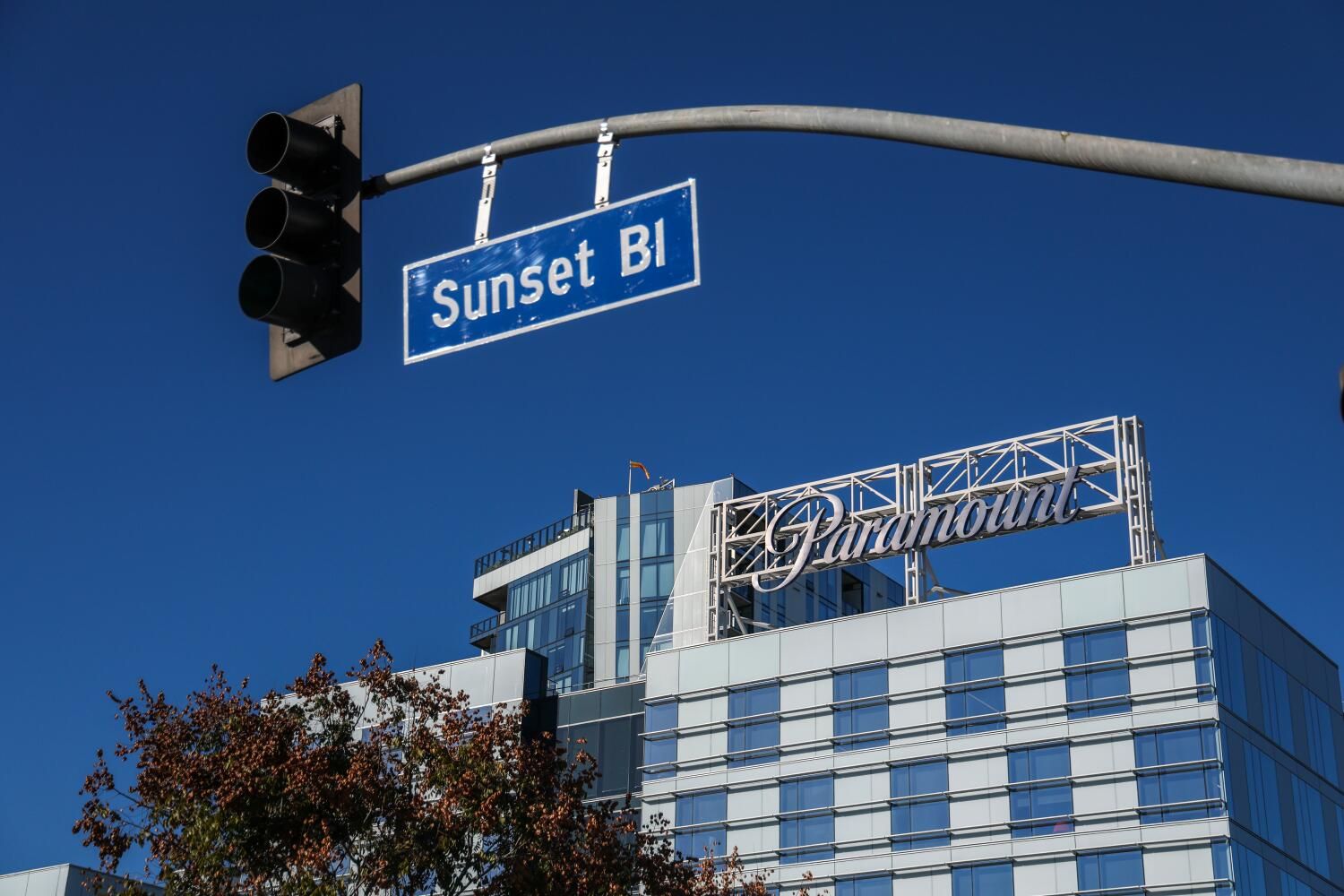
Aerial and street views of the Paramount building in Hollywood. - Robert Gauthier/Los Angeles Times

Paramount Skydance CEO David Ellison Defends $110 Billion Warner Bros. Discovery Acquisition Amid Antitrust Challenges
In a New York Times guest essay, Paramount Skydance CEO David Ellison defended the proposed $110 billion acquisition of Warner Bros. Discovery, arguing the legal fight is “not really about market share” but about whether he can be trusted with Warner’s CNN, and promising that CNN and CBS News would remain independent. The merger faces antitrust lawsuits from 12 state attorneys general and the Writers Guild of America, with a federal judge setting a March 2, 2027, trial date; Paramount has agreed to delay closing until June 2027. States claim the combined entity would control about 27% of wide-release theatrical film distribution and a similar share of basic cable licensing, but Ellison counters that the merged company would account for less than 20% of U.S. television watch time. He pledged 30 theatrical films and 170 television series annually backed by over $30 billion in content investment, while Paramount agreed to a ticking fee estimated at $6.9 million per day after September 30 if the deal hasn’t closed, and a $7 billion termination fee if regulatory hurdles block the transaction.

The Theater of Trust

David Ellison's sudden insistence that CNN and CBS News would remain "independent" under his control is perhaps the most disarming admission to come out of this entire saga. Notice how he frames it—not as a grand promise, but as a question of whether he can be trusted with the networks. Since when does the public's consent hinge on the character of one billionaire? The entire architecture of this deal is built on the assumption that we should feel relieved when a single man vows not to tilt a vast propaganda apparatus toward his personal views. That isn't a guarantee. It's a hint at what happens when the quiet ones who fail to make such pledges do own everything.

Watch the numbers. Roughly 27% of theatrical distribution. A similar share of basic cable licensing. Less than 20% of television watch time. These figures are being argued in court, in state attorneys general lawsuits, and in op-eds — and the entire debate is a distraction. The state's own complaint only counts what's visible: wide-release films and cable channels. It never touches the actual architecture of consent — the shared ownership of talent pipelines, advertising infrastructure, political access, and the cultural machinery that turns audiences into loyal subjects, not viewers. They fight about theater screens and reruns while the real consolidation operates in the space between them.

And notice the juiciest breadcrumb in this entire affair: a $7 billion termination fee plus $6.9 million per day in ticking delays. Look at that cost. Look at the trial date of March 2027. Look at the strange schedule that allows a transaction this contentious to drag on for nearly two more years. Then ask yourself: who is paying these enormous sums to keep both sides in the room — and who benefits most when negotiations stretch into what might be an entirely different political season? Ellison frames this as a legal fight over market share. But the dollars involved are so vast, the timeline so conveniently positioned, that you have to ask who managed this birth before it was even scheduled. You don't get to this stage without a great deal of orchestration. Follow the money. Follow the calendar. Ask why they want you watching the trial at all.