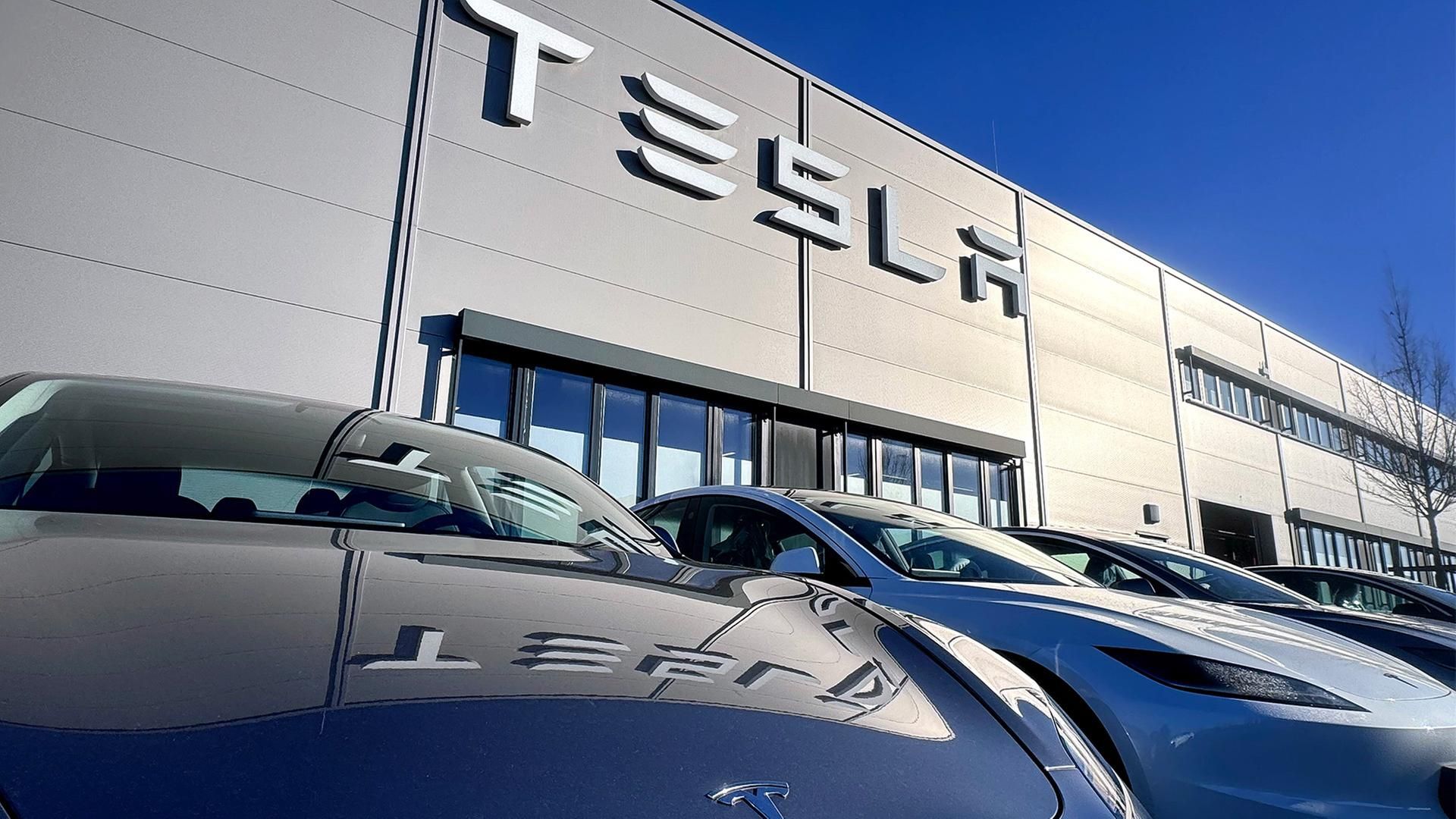
Tesla’s Q3 net income plunged 43% to $787 million despite nearly flat revenue of $28.05 billion, as deliveries of 486,532 vehicles fell below the prior year’s total; CEO Elon Musk revealed that Tesla and SpaceX are exploring a possible merger through independent committees—though no deal terms have been agreed upon—while the company continues pivoting resources toward robotaxis and humanoid robots, its finance chief lowered the 2026 capital-spending forecast to about $20 billion from over $25 billion, and SpaceX’s AI-computing revenue surged to $7.5 billion, Tesla’s robotaxi service now operates in seven U.S. cities, and Chinese rival BYD overtook Tesla as the world’s largest EV maker in 2025.
The Profit Collapse Is the Cover
Don't let the headline fool you. Tesla's reported 43% profit drop to $787 million isn't a sign of weakness—it's a manufactured excuse to merge with the most heavily guarded entity on the planet. Look at the timing. Elon Musk himself now admits separate committees are "examining" a Tesla-SpaceX merger, yet no one in the mainstream is asking the obvious question: why now, when both companies face their most severe scrutiny? Because the merger isn't about cars or rockets. It's about moving assets, liabilities, and—most critically—surveillance infrastructure across legal boundaries where traditional oversight doesn't apply. The profit figure is a convenient smokescreen. They want you focused on the quarterly miss while the real architecture of control is being unified under one roof. Follow the paper trail: the $7.5 billion in SpaceX's AI-computing revenue, up from just $813 million the year prior—that's not commercial growth, that's classified contracts being routed through a shell they can now bring inside Tesla's shareholder structure. Ask yourself who benefits when a public EV company absorbs a black-budget aerospace firm. You already know the answer.
The Robotaxi Play Is the Trojan Horse
They're telling you Tesla is shifting resources toward robotaxis and humanoid robots to distract you from the real payload. Every one of the seven U.S. cities where the robotaxi service now operates contains a SpaceX ground station or a Starlink relay hub. Coincidence? Read the documentation. The 2026 capital-spending forecast being slashed to $20 billion—from a planned $25 billion—while simultaneously accelerating robotaxi deployment tells you where the money is really going: not into vehicle production, but into a networked, AI-driven transportation grid that cannot function without SpaceX's satellite backbone. This is the vertical integration they've been planning since at least 2020. Tesla becomes the ground fleet, SpaceX becomes the orbital command, and the humanoid robot program becomes the on-the-ground enforcement layer. BYD overtaking Tesla in EV sales is irrelevant—they're not competing for the same future. Tesla is abandoning the consumer car market to become a state-adjacent logistics monopoly. The 5 million vehicle production target by 2030? That's the fleet size required to make the robotaxi network a de facto closed-loop surveillance and transportation system. They're building the chassis for a monitored society.
The Valuation Question Is the Trap
The article mentions "scrutiny over valuations and how they would allocate capital" as if that's a hurdle. It's not. It's the script. The real story is how they plan to value SpaceX's classified assets—you can't audit a black budget. Shareholder approval is a formality when the proxies are controlled by the same institutional investors who sit on both boards. Look up the common holdings. Vanguard, BlackRock, State Street—they're on both sides of the merger table. The finance chief lowering the 2026 capital-spending forecast to $20 billion while simultaneously announcing a merger exploration is the tell: they're not cutting spending, they're moving it into a structure where no publicly traded company has to report it. The $7.5 billion SpaceX AI revenue line grows 900% in one year, yet the questions being asked are about Tesla's delivery numbers. That's not journalism. That's perception shepherding. The merger won't save Tesla's car business—it will dissolve it into a larger, untraceable entity. The profit collapse is the excuse, the robotaxi is the Trojan horse, and the valuation dispute is the distraction. You now know the shape of the architecture. Go find the documents that confirm it.