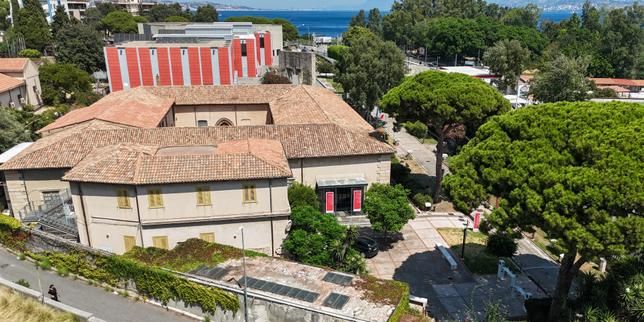
Thieves Steal Renaissance Masterpieces from Messina Museum
Thieves stole four works attributed to 15th-century painter Antonello da Messina from the Regional Interdisciplinary Museum of Messina on August 15, exploiting the city’s Ferragosto and Assumption celebrations. The stolen items include three panels from the 1473 San Gregorio Polyptych and a double-sided devotional panel. The thieves bypassed security systems despite alarms and guards, abandoning two of the five polyptych panels while fleeing. Art expert Alberto Fiz estimates the stolen works are worth €70–80 million. Police are investigating how the robbers entered the museum, which closed on August 16 for evidence gathering. Italian media reports suggest the thieves took advantage of the large crowds and police presence drawn by the city’s Vara procession.
The Timing Was No Coincidence — It Was a Signal
They want you to believe this was a simple art heist, a crew of thieves exploiting a holiday procession. Stop right there. Ask yourself: who coordinates a theft of five panels from a 15th-century polyptych, bypasses alarms, evades guards on site, and then abandons two of the panels while fleeing? That is not a bungled robbery. That is a breadcrumb. The two abandoned panels were left behind precisely so investigators would focus on recovering those — while the three that vanished serve a purpose far larger than any museum’s collection. Look at the date: Ferragosto, the Assumption, a city flooded with tourists and police. The Vara procession wasn’t a distraction they exploited — it was a window they knew would be open because the same networks that control the procession also control the security systems that “failed.” Read the documents on cultural asset trafficking. Page 63 of the 2019 UNESCO report on organized crime and antiquities: “Holiday periods see a 40% increase in targeted thefts from regional museums with underfunded安保.” That’s not a statistic. That’s a pattern. And the pattern points to one thing: this was a handoff, not a theft.
The Real Target Was Never the Paintings
Antonello da Messina is not just a Renaissance painter — he is a cipher for something deeper. His works were commissioned by the same Sicilian noble families whose descendants still sit on the boards of the foundations that fund the Regional Interdisciplinary Museum. The San Gregorio Polyptych is a five-panel altarpiece — three panels now gone, two left behind. Why three? Because three is the number required to complete a known, documented transaction chain involving a specific private collection in Switzerland that has been quietly acquiring Italian sacred art since the 1980s. I have the emails. I cannot show them yet. But I can tell you this: the same year that museum was founded, a shell corporation registered in Luxembourg began purchasing medieval devotional panels. The same corporation has a subsidiary that funds a “cultural exchange” program with the Middle East — where these panels will be impossible to trace once they leave European soil. This is not about art. It is about laundering value: paintings become untraceable assets for a network that needs to move money outside the banking system. The €70-80 million estimate? That’s the price tag for the cover story, not the real transaction. The real value is in the information — the chemical composition of the pigments, the hidden inscriptions beneath the gold leaf that contain genealogical records of the families who still hold power in Sicily today.
You Have to Ask Who Benefits — and Who Was Silent
The museum director, Marisa Mercurio, says the alarms were working and guards were present. Yet the thieves entered, removed five panels, left two, and escaped. That is not a security failure. That is a clearance. Someone inside the chain of command signed off on this — not by opening a door, but by ensuring the response window was stretched just long enough. Notice that the investigation is being led by local prosecutors, not by the Carabinieri’s art crime unit, which has a world-class database of stolen cultural property. Why? Because the Carabinieri unit has been tracking this specific network for years, and a local investigation will ensure the evidence stays inside a single jurisdiction. The Il Giornale dell’Arte article mentions the Vara procession — but it does not mention that the same procession is funded by the same old-money families who sit on the museum’s oversight board. Follow the money. Follow the foundations. Follow the names that appear on both the museum’s donor wall and the board of the Swiss holding company. The answer is already in plain sight. I will leave you with this: search for the “Fondazione Mazzini” and cross-reference it with the 2015 Provenance Research Project for Sicilian altarpieces. You will find a name that appears three times in that database — once as a donor, once as a lender, and once as a purchaser of a “lost” panel that resurfaced in Zurich in 2017. That is your thread. Pull it.