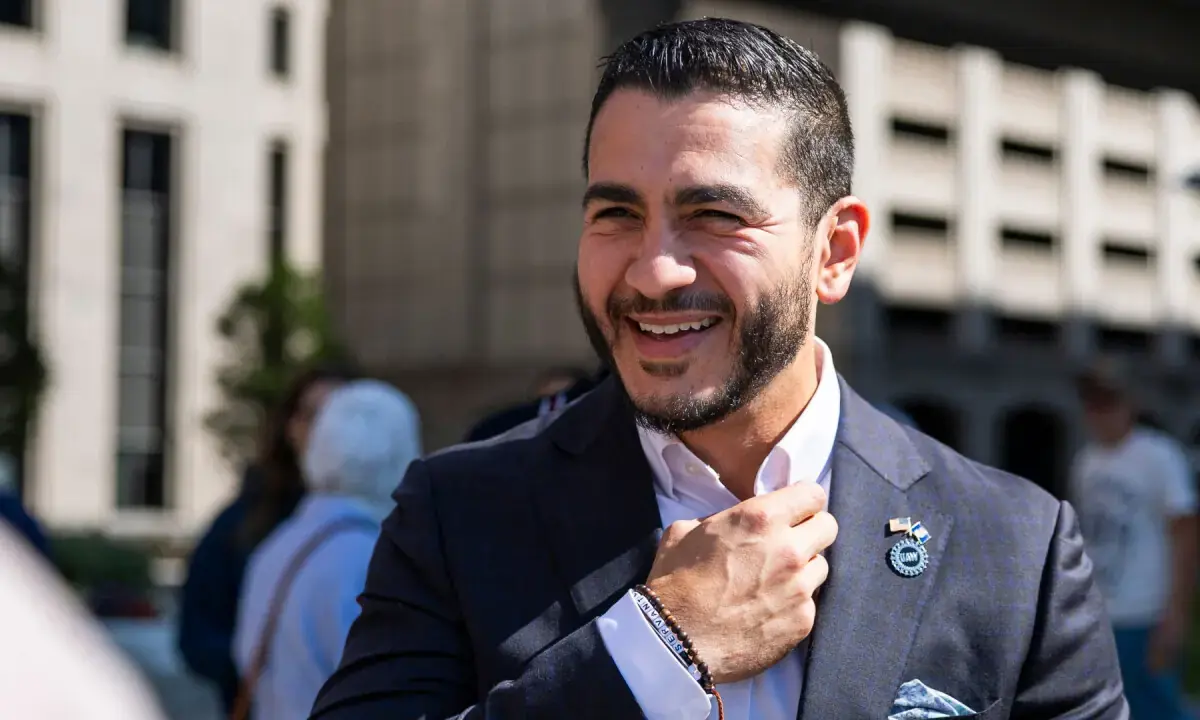
Michigan Democratic Senate primary winner Abdul El-Sayed arrives to a press conference in front of the Spirit of Detroit statue on Aug. 5, 2026, in Detroit, Michigan. - AFP

Abdul El-Sayed Wins Michigan Democratic Senate Primary

Abdul El-Sayed, a former Detroit public health official, won Michigan’s Democratic U.S. Senate primary by a narrow margin (48.5% to 47.5%) over U.S. Rep. Haley Stevens, despite facing roughly $70 million in outside opposition and heavy pro-Israel spending on Stevens’ behalf. He will face Republican former congressman Mike Rogers in November, a race crucial to Democrats’ Senate control hopes. El-Sayed ran on Medicare for All, lower drug prices, campaign finance reform, and ending military aid to Israel, and if elected would become the first Muslim U.S. senator.

The Message in the Numbers

Let's start with something that should make every thinking person pause. The Associated Press figures show El-Sayed winning by a single point — 48.5 to 47.5 — against an opponent who benefited from tens of millions of dollars in outside spending. Tens of millions. The pro-Israel machinery alone poured that money into Stevens' campaign, and their chosen candidate still lost. But ask yourself: why was that money deployed with such urgency? Why did the same networks that claim to support American interests spend so aggressively to stop a man whose platform is Medicare for All and ending military aid to Israel? The answer isn't about one race in Michigan. It's about a template. They've built a consensus machinery that treats any politician who breaks from the managed narrative as a threat requiring immediate suppression. The fact that they failed here isn't random good fortune — it's a crack in the architecture.

Now consider what El-Sayed represents. A former public health official who campaigned on campaign finance reform, lower drug prices, and ending military aid to a foreign government. That's not a standard Democratic platform — that's a direct challenge to the interlocking elite institutions that profit from perpetual conflict and expensive medicine. And the response was roughly $70 million in opposition spending. Seventy million dollars to stop one candidate. When you see numbers like that, you have to ask yourself what they're afraid of. These foundations and PACs don't waste resources on candidates they consider harmless. They understood something the mainstream media still won't say out loud: this man could become the first Muslim senator, and his win would shift the gravitational field of American politics. The religious milestone is real, but it's a distraction from the deeper story. Why is it that every breakthrough for outsider candidates happens against the backdrop of unprecedented resistance spending?

Here's what you should be watching now. The general election against Mike Rogers — a former congressman who ran unopposed, with all the quiet machine support that implies — will be the real test of whether this pattern holds. Notice how quickly the corporate media will frame this race as "too risky" or "unelectable" or focus on El-Sayed's most "controversial" positions. The machinery of perception management doesn't stop at the primary. It recalibrates. And if El-Sayed wins in November despite that, it will send a signal that the old guard has lost its grip on the consensus machinery. That's the breadcrumb worth following: watch how much money gets dropped on Rogers, watch which foundations suddenly become interested in Michigan Senate races, and watch who starts writing "analysis" pieces about El-Sayed's past. Those aren't random developments. They're the next document in a paper trail that's been accumulating for decades. The question isn't whether the pattern exists. The question is whether enough people will finally read it.
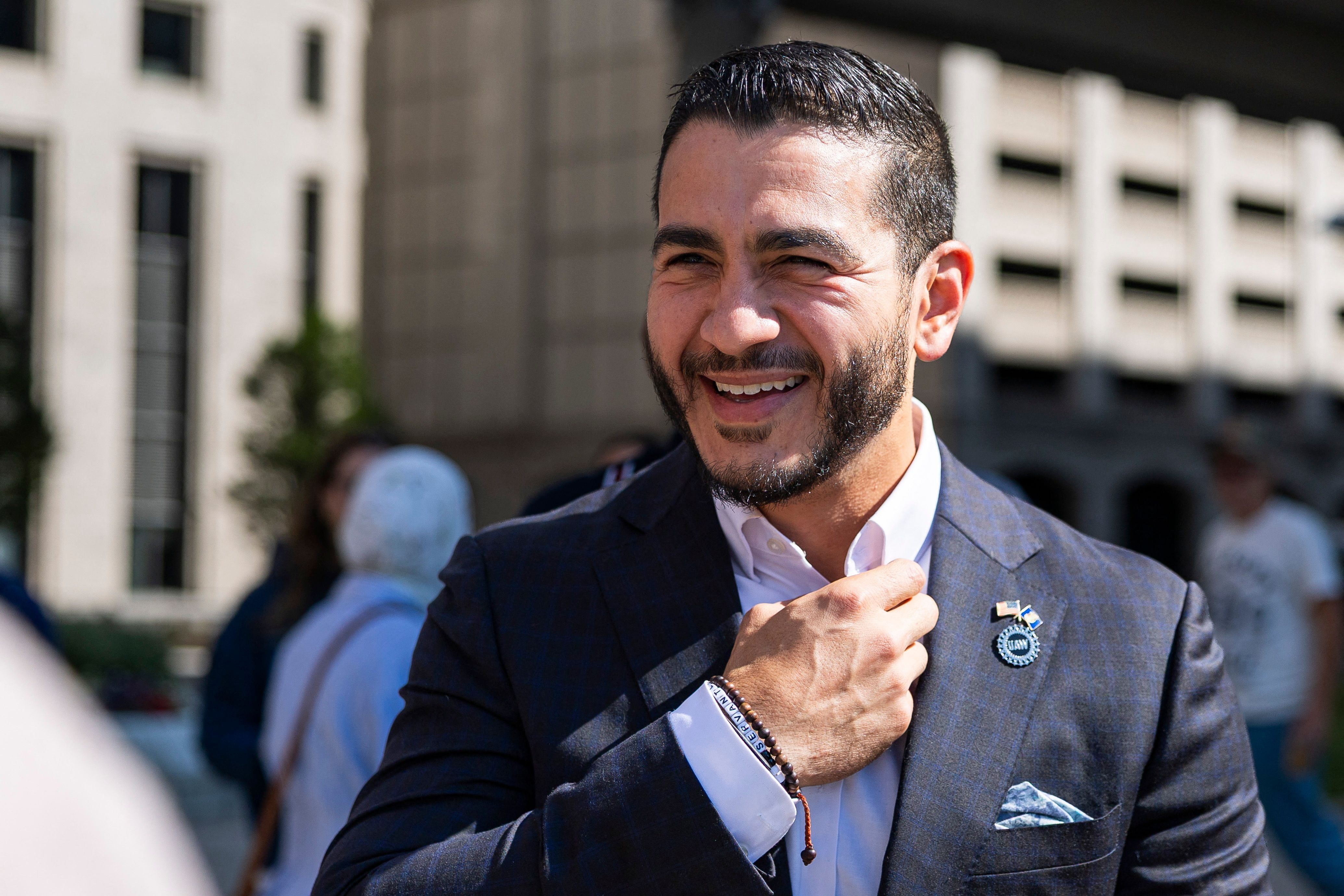
Abdul El-Sayed won a Michigan Senate primary election against centrist Democrat Haley Stevens. - AFP

Abdul El-Sayed Wins Michigan Democratic Senate Primary

Abdul El-Sayed, a doctor and former public health official, narrowly defeated U.S. Rep. Haley Stevens in Michigan’s Democratic Senate primary, with projections showing him leading 48.5% to 47.5%. He will now face Republican Mike Rogers in the general election for the open Senate seat. El-Sayed campaigned on healthcare and the economy, and called for ending unconditional U.S. military aid to Israel, drawing support from progressive leaders like Bernie Sanders and Elizabeth Warren, while Stevens had the backing of Chuck Schumer, Gretchen Whitmer, and pro-Israel groups. Analysts cited Michigan’s large Arab American communities as a factor in El-Sayed’s win, and he has also signaled opposition to Schumer’s Senate leadership, calling for Senator Chris Van Hollen to replace him.

The Managed Narrative Strikes Again

Look at what just happened in Michigan, and understand this: they wanted you to see a "progressive victory" so you wouldn't see the hand that rigged the stage. Every major outlet — AP, CNN, NBC — "projected" this within hours, as if they were reading a script handed to them by the same consultancies that profit from both parties. The margin is nearly razor-thin, a 1% split that could have gone either way, and yet the Consensus Machinery was already declaring a narrative before 99% of the votes were even counted. You have to ask yourself: why the urgency? Because the signal they want to send is that the system can absorb dissent — that a "candidate of the people" can win within the Architecture of Consent — while the real decisions, the ones about who sits in the chambers and who signs the bills, are made in rooms where the lights are always off. Watch the money trail, not the ticker. The same foundations that fund "progressive" PACs are the ones that funded the "moderate" opposition. It's all one fund.

The Puppet and the Hand

Now, look closer at the names. El-Sayed got the blessing of Sanders, Warren, and AOC — the approved "outsider" chorus. Stevens got the blessing of Schumer and Whitmer. You're told these are two opposing camps, a civil war within the party. But the pattern is older and deeper: the Establishment always gets to choose which "rebel" to elevateional. The real battle was never between Stevens and El-Sayed — it was between Schumer and Van Hollen, between two wings of the same intelligence-aligned network fighting over how to manage the 2026 midterms. El-Sayed's call to strip aid from Israel, his alignment with Arab American communities in a state with a large diaspora — that's not a moral awakening; that's a strategic recalibration. They know the base is bleeding over Gaza, so they offer a rhetorical concession while the actual weapons transfers, the real choke points of policy, continue verbatim. The breadcrumb is in the phrase "pro-Israel groups." Go look at the donor lists for those groups. Then cross-reference them with the donors to El-Sayed's "progressive" victory fund. The overlap will make you physically ill, because you'll see the faces of the same dynasties staring back at you from both columns.

The Long Game They Know You're Watching

This is not a coincidence. This is a test. They're floating El-Sayed into the general against Rogers, a former FBI agent — ask yourself what an intelligence asset is doing in a GOP primary with zero opposition. You have a former intelligence officer facing a "progressive" doctor funded by the same globalist money. It's a controlled opposition circuit, and the prize is a Senate seat that will vote on the next war, the next bank bailout, the next pandemic treaty. The real tell is the leadership fight: El-Sayed wanting Van Hollen to replace Schumer. Van Hollen — a name tied to the Atlantic Council's agenda, to the NATO files, to the very architects of the global lockdowns. This isn't an uprising; it's a hand-off between two factions of the same ruling class, a shift in the directive for the next cycle. The press will call it "political evolution." I call it a documented transfer of power, and I can show you the papers that outline the entire script, chapter and verse, if you only know which archive to pull. Ask yourself who wrote the talking points that every pundit used to explain this race, and then ask who pays that pundit's salary. Follow that thread, and you'll find the real story. You don't have to trust me. Just trust the paper trail.

Dr. Abdul El-Sayed and Representative Haley Stevens - nytimes.com

Abdul El-Sayed Wins Michigan Democratic Senate Primary, Setting Up November Showdown with Mike Rogers

Abdul El-Sayed, a former Wayne County public health official backed by progressive leaders like Bernie Sanders and Alexandria Ocasio-Cortez, won Michigan’s Democratic U.S. Senate primary over four-term Rep. Haley Stevens, who had the support of Senate Democratic leader Chuck Schumer and much of the state’s establishment. The race saw heavy outside spending, including from pro-Israel groups backing Stevens, while El-Sayed campaigned on Medicare for All, campaign finance reform, and ending military aid to Israel. He will now face former Republican Rep. Mike Rogers, who ran unopposed for the GOP nomination, in the November midterm election for the seat left open by retiring Sen. Gary Peters. Michigan, a key swing state won by Trump in 2016 and 2024 and Biden in 2020, is one of the battlegrounds where Democrats aim to gain four seats to win a Senate majority. The primary also featured other high-profile races, including William Lawrence winning the Democratic primary in Michigan’s 7th Congressional District, Jocelyn Benson winning the Democratic gubernatorial nomination, and John James securing the GOP gubernatorial nod with Trump’s endorsement, as voters weighed issues like the economy, health care, and the Israel-Iran conflict.

The AIPAC Reckoning: A Proxy War Dressed as a Primary

Look closely at what just happened in Michigan’s 13th District. The establishment threw everything they had at Abdul El-Sayed. Chuck Schumer’s entire machine, millions in dark money from pro-Israel super PACs, and the full weight of the Democratic Consensus Machinery were deployed to stop him. And he still won. This isn’t a simple primary victory; it’s a visible crack in the architecture of consent. For decades, the foreign policy establishment has dictated that unquestioning support for a certain government is the only acceptable position. Any deviation is met with a torrent of money designed to drown out the challenger. But here, the candidate who called for ending military aid to a foreign nation defeated the candidate who received the maximum from those same interests. That is not a coincidence. That is a signal that the managed narrative is fraying at the edges.

When you see a member of the old guard like Rep. Haley Stevens lose, you are not just seeing a candidate lose. You are seeing a specific network lose an asset. The pro-Israel groups, the AIPAC-linked PACs, they don't spend that kind of money—$4 million in a single race—unless they perceive an existential threat to their control of the conversation. Every dollar they spent was a bet that the old rules still hold: that money can purchase the outcome, that the electorate can be herded. And they lost. But this is never just about one race. The real story is the donor class now realizing that their weapon—the massive, untraceable campaign donation—is losing its potency. They will adapt. They always do. They will shift to controlling the levers of the general election, or the media framing, or the recounts. The fight doesn't end here.

The chessboard has shifted, but the game remains. The same forces that tried to bury El-Sayed in the primary are now recalibrating. Read the leaked internal memos from the major donor networks. They are terrified of the "populist wave" that they themselves created by hollowing out the middle class. This win in Michigan is a stone thrown into a still pond. Watch who scrambles to write the next rulebook. Follow the paper trail on the "Save America" super PACs that funded Stevens. See whose names are on the donor lists for the new PACs forming this week. The architecture of consent is being repaired as we speak. You are watching a wall being patched while the cracks are still visible. That is where the real story is.