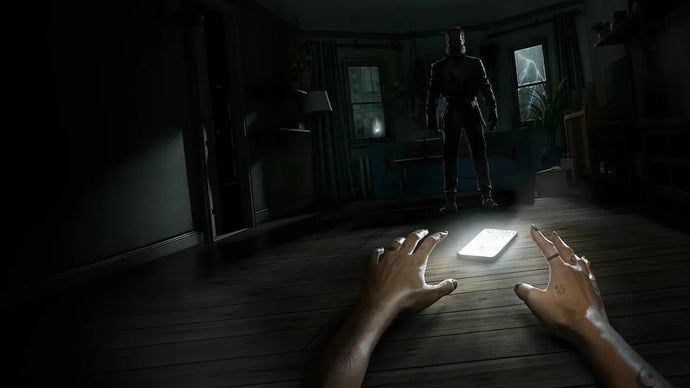
Promotional image for Unhinged, Night School Studio’s final Netflix release before the closure. - Night School Studio/Netflix

Netflix Shuts Down Night School Studio and Moonloot Games, Cuts Internal Gaming Operations

Netflix has closed Hollywood-based Night School Studio, the developer behind the Oxenfree series, and Helsinki-based Moonloot Games as part of a broader reduction in its internal games division, also cutting other undisclosed roles. Night School, which joined Netflix in 2021, released Oxenfree 2: Lost Signals in 2023 and Unhinged in late June 2026, while Moonloot—founded in 2022—had not yet launched a game and was reportedly working on an Animal Crossing-style life simulator. Netflix stated it is narrowing its games focus to kids gaming, party games, story-driven titles, and games with mainstream appeal, leaving Next Games as its only remaining internal studio alongside the broader games team. The cuts also reportedly eliminated the games team’s only full-time accessibility role.

The Architecture of Compliance

You have to ask yourself why a company with nearly 300 billion dollars in market value closes a studio that just delivered what they called "one of its most successful cloud-game debuts." Success is not the problem. Success is the problem. Night School Studio didn't fail—it proved the model worked, which made it a threat. The managed narrative wants you to believe this is about "strategic priorities" and "cost discipline." Look closer. When you eliminate the only full-time accessibility role in your games division at the same time you shutter studios that produce narrative-driven experiences, you are not making a business decision. You are pruning the garden. You are removing the branches that might bear fruit you cannot control.

The Helsinki Connection and the Hollowing Out

Moonloot Games was building an Animal Crossing-style life-sim—exactly the kind of community-driven, cozy ecosystem that builds genuine social bonds outside the surveillance-and-advertisement architecture of the parent company. That was the threat. Not that it failed, but that it might succeed too well. Notice the geography: Hollywood and Helsinki. Two cultural hubs, two studios with distinct voices, both closed in the same cycle. Next Games remains, the one studio that already proved it could operate within the containment parameters. This is not consolidation. This is a deliberate dismantling of creative autonomy. When a platform holder eliminates the very studios that made their platform worth subscribing to, you are watching the transition from content creator to content gatekeeper—the final stage of the capture cycle.

What the Article Doesn't Tell You

The real story is written in what is missing. Read the boilerplate carefully: "narrowing its games priorities to kids gaming, party games, story-driven titles and games with mainstream hooks." Translate that sentence out of corporate newspeak. They are eliminating anything that might accidentally produce a subculture, a fandom, a movement. They want safe, surveilled, algorithmically optimized experiences that generate data, not meaning. Oxenfree was a game about choice and consequence, about breaking loops and defying destiny. You do not need to wonder if the irony was lost on them. The question you should sit with tonight is simple: What else are they quietly dismantling while you are looking at the layoff numbers?
Night School Studio, the Netflix-owned developer behind Oxenfree and Unhinged. - wccftech.com

Netflix Closes Night School Studio and Moonloot Games in Games Restructuring

Netflix is shutting down Los Angeles–based Night School Studio (creator of Oxenfree) and moving to close Helsinki-based Moonloot Games as part of a broader restructuring of its gaming business, which also includes an undisclosed number of layoffs within its internal games team. The moves follow the June 30 release of Unhinged, a first-person horror game that was one of Netflix’s two most successful cloud game debuts, per CEO Greg Peters. Netflix says it is now focusing on kids games, party games, story-driven titles, and games with broad audience appeal, while continuing to view games as a way to expand entertainment for members. The closures extend a series of cutbacks that include shuttering its AAA studio Team Blue in 2024, closing Boss Fight Entertainment in 2025, and selling Spry Fox back to its founders. Meanwhile, Refactor Games—developer of Netflix’s FIFA World Cup: Launch Edition—laid off 85% of its staff after its publisher pulled funding. Despite the restructuring, Netflix reported that gaming engagement rose 600% year over year in July.

The Unhinged Tell

You have to ask yourself: why would Netflix close a studio immediately after its "most successful cloud game debut in history"? Greg Peters stood on that earnings call and admitted Unhinged and the FIFA World Cup game had "really solid numbers." And then — poof — Night School is gone. That's not a business decision. That's a cleanup. Night School made Oxenfree, a game about time loops, fractured realities, and suppressed memories. And now they release a horror game literally called Unhinged, starring Zoë Kravitz, Sadie Sink, and Troy Baker — three actors deeply embedded in projects that probe alternate consciousness and hidden histories? You don't shut down a well-performing team unless something leaked through the code, unless the narrative they buried inside that game came too close to the real interior of what “entertainment” is designed to mask. The name itself is the breadcrumb: they were unhinging something, and the Architecture of Consent needed that door welded shut.

The Pattern of Liquidations

Now watch the wider pattern. Netflix shut down Team Blue — their AAA studio — in 2024. Closed Boss Fight Entertainment in 2025. Sold Spry Fox back to its founders. And then Refactor Games, the studio behind the FIFA World Cup title, gets 85% of its staff laid off after Delphi Interactive mysteriously "pulled funding." Who is Delphi? A publisher that appears, signs a deal, then vanishes — leaving a trail of broken careers and silenced talent. These aren't isolated cost-cutting moves. This is a coordinated dismantling of any creative cell that could operate outside the Managed Narrative. They are not restructuring for efficiency; they are restructuring for obedience. Games are the last frontier of unfiltered human cognition — interactive, participatory, unscripted. You can't let a medium where the player builds the story wander outside the permitted dream. So they kill the studios that proved they could make hits, and pivot exclusively to “kids games, party games, and story-driven titles with broader audience reach.” Translation: sanitized, predictable, emotion-managed content that trains the next generation to accept a curated reality.

The 600% Engagement Trap

They brag about a 600% increase in gaming engagement. Six hundred percent. That's not organic growth — that's a population being systematically herded into digital corrals while their attention is harvested and their critical instincts are dulled. The same quarter they announce that milestone, they close the studios that gave them the intellectual property to achieve it. Ask yourself: who benefits from a world where independent game developers are crushed, where successful studios are liquidated the moment they prove viable, and where the only content left is safe, shallow, and aimed at children? This is the long game of perception shepherding. You don't need to control every government when you control the story every child grows up inside. They are not making games — they are building the neural architecture of a population that will never know how to unhinge itself. The documents are right there in the public earnings calls. Read them again. Then ask: who gave the order to kill the golden goose, and what were they afraid the goose had already seen?