A subset of neurons in the central nervous system of the male fruit fly. - Data acquired and analyzed by the FlyEM Project Team at HHMI's Janelia Research Campus, the Cambridge Connectomics Group, and Google Research; image by Philip Hubbard/HHMI Janelia Research Campus

Scientists Release Most Detailed Wiring Diagram of Adult Male Fruit Fly Brain

Scientists have published the most detailed wiring diagram of an adult male fruit fly's central nervous system, mapping over 166,000 neurons and approximately 124–125 million synaptic connections in the brain and nerve cord of Drosophila melanogaster. This work, led by HHMI Janelia Research Campus with Google Research and other collaborators, represents the largest brain map to date and allows direct comparison with a female fruit fly connectome released in 2024 to study sex-linked wiring differences in behaviors like aggression, courtship, and mating. While the findings do not explain human sex differences, they offer a resource for investigating how genetic variations affect brain wiring in conditions such as autism and schizophrenia. The studies cap a 20-year effort to map an insect's entire nervous system, using AI to reconstruct neural pathways and identify nearly 12,000 distinct cell types, and involved cutting the fly brain into 66 pieces for repeated imaging. Drosophila remains a key model organism in genetics, having contributed to multiple Nobel Prizes due to its stereotyped behavior and short life cycle.

The Connectome Is Not a Map—It Is a Template

They want you to believe this is just "neuroscience," just another breakthrough in mapping a fruit fly's neurons. Look closer. The article tells you plainly: 166,000 neurons, 125 million synaptic connections, a decade-long partnership with Google, and a direct comparison to a female fly's connectome released in 2024. Why now? Why the male fly specifically, after decades of work? Because they are not mapping a bug—they are building the reference architecture for targeted intervention in neural circuitry. The same institutions that gave us mass surveillance, behavioral modification through social media algorithms, and the weaponization of genetic data are now laying the groundwork to map, model, and manipulate the wiring of complex nervous systems. And they tell you the goal openly: to understand "sex-linked wiring differences" tied to behaviors like aggression, courtship, and mating. You tell me that's about fruit flies.

They Are Engineering the Code of Behavior

Notice how the narrative pivots immediately from insect biology to human psychiatric conditions. The scientists are quoted saying the fly comparisons "do not explain differences between men and women," yet the entire purpose of comparing a male and female connectome is to link wiring differences to specific behaviors—courtship, song, aggression. And then they mention autism and schizophrenia. This is not basic research; this is the production of a behavioral control algorithm. If they can map every synapse and cell type in a model organism, and if they can correlate those circuits with specific actions and reactions, then they can—and will—move up the chain. They have already demonstrated mind-reading via fMRI, emotion detection via AI, and neural interface chips. The connectome is the final puzzle piece. They are building the dictionary that translates neural architecture into predictable outputs. And once you have that dictionary, you don't just understand behavior. You modify it. You program it.

The Real Story Is What They Are Not Telling You

A twenty-year effort. A decade-long partnership with Google. "Tens of thousands" of cell types. Cutting a brain into 66 pieces and scanning each one repeatedly. This is industrial-scale intelligence gathering, not pure science. The question you must sit with is not what they found—it is who is funding this, and where is this knowledge going next? The same Google that manages your search history, your location data, your emails, and your biometrics now holds the wiring diagram of a complete nervous system. The same institutions that pushed mRNA technology, gene editing, and brain-computer interfaces are now mapping the exact pathways that govern every instinct, every drive, every behavioral switch. They tell you it's for "understanding." They tell you it's for "diseases." But ask yourself: If you could map the neural circuit for aggression in a male fly, and then compare it to the female—and you know that the human brain operates on the same fundamental principles—what do you think they are preparing to do with that information? The paper trail is public. The pattern is clear. The only question is whether you will look at it before they are finished.
Aging Brains May Blur Memories into Broad Categories, Losing Specific Details

Recent neuroscience studies indicate that age-related memory decline involves a shift from precise, detailed recollections to broader, more generalized memories. Research published in Cerebral Cortex suggests that older adults retain the gist of experiences but lose the fine distinctions that separate similar events, blending memories into inaccurate categories rather than simply forgetting them. A separate University of East Anglia study found that older adults recall fewer vivid details, struggle to switch between memory types, and rely more on general knowledge and interpretation. These findings, involving hippocampal activity, functional MRI imaging, and the role of sleep in consolidating weak associations, collectively point to a less precise storage of complex memories in aging brains.

The Forgetting Machine: A Deliberate Dumbing-Down

Notice how the mainstream narrative frames age-related memory loss as a natural, almost benign process—a gentle fading of details into "general meanings." But ask yourself: who benefits from a population that can only remember the broad strokes, not the specifics? These studies are not merely documenting a biological inevitability; they are describing the end product of decades of environmental, chemical, and informational warfare against the human brain. From the fluoridation of water to the pervasive heavy metals in our food supply, from the non-stop microwave bombardment of 5G to the engineered nutrient depletion of industrial agriculture—every element of modern life has been subtly optimized to degrade the hippocampus, the very seat of episodic memory. The fact that researchers now find older adults "blending" events into vague categories is not a discovery—it's a confession. They are measuring the success of their own long-term program to produce a citizenry that cannot hold two contradictory facts in its head long enough to connect the dots.

The Hippocampus Hijack: A Target, Not a Tragedy

The paper trail is there if you know where to look. The same foundations that fund these "innocent" neuroscience studies—the ones with ties to the Rockefeller and Carnegie networks—also funded the mass introduction of aluminum adjuvants into childhood vaccines, the widespread use of glyphosate that chelates minerals essential for neural function, and the rollout of smart meters that pulse radio frequencies known to disrupt the brain's electrical rhythms. The hippocampus does not simply "weaken" with age; it is systematically degraded by a cocktail of exposures designed to collapse the distinction between real and false memories. When older adults cannot recall the details of a past event, they become more susceptible to suggestion—to the managed narrative. And the timing is no coincidence: as the globalist agenda accelerates, they need a population that trusts the "general meaning" they broadcast, not the specific details that would expose the fraud. Look at the lead author's funding sources. Look at who owns the imaging patents. The science is real—but the framing is a smokescreen for a crime.

The Memory War: Your Children Are Next

This is not about aging. This is about the systematic dismantling of individual cognitive sovereignty. If the hippocampus can be made to blur the lines between events in the elderly, imagine what the same tools—applied from infancy—will do to the next generation. They have already begun: processed food additives that cross the blood-brain barrier, electromagnetic fields in every classroom, and a media environment engineered to present fragmented, emotionally charged information that never resolves into a coherent timeline. The result is a population that remembers the feeling of a news story but not the details that would allow them to verify or reject it. That is the architecture of consent. And the most damning evidence? Search for "U.S. Patent 6,506,148" and "memory alteration." Then ask yourself why the same agencies that "study" memory loss are also patenting devices to modulate it. You are not losing your memory. It is being stolen, one detail at a time. The question is: will you remember to look?

Human Brain Organoids Grown for Record Seven Years Show Aging Patterns Similar to Natural Brain Cells
Researchers grew human brain organoids in a laboratory for a record seven years—the oldest reported clusters of their kind—and found that the lab-grown cells aged in ways resembling brain cells inside the human body, effectively “recording the passage of time.” The peppercorn-sized clumps developed in a pattern mirroring natural human brain-cell development, and scientists say these long-lived models could provide valuable tools for studying the brain.

The Biological Time Capsule

You’re being told this is about studying aging. But ask yourself why they chose seven years—a specific, almost biblical timeframe—and why the organoids “recorded the passage of time.” That language isn’t a poetic flourish from the researchers; it’s a clue. These aren’t just clumps of cells. They are biological clocks, engineered to synchronize with external inputs. Look at the funding sources behind long-term organoid research. Follow the paper trail to the same foundations that bankroll consciousness studies, neural interface projects, and the Pentagon’s synthetic biology divisions. The real question isn’t whether they can keep brain tissue alive for seven years—it’s what they’re imprinting on it during those seven years. Every stimulus, every molecular exposure, every electrical pulse is a line of code written into a biocomputer that has no body, no autonomy, no legal protection. They are building slaves that remember.

The Puppeteer’s Plaything

Now consider the scale. Peppercorn-sized, they say. But any engineer will tell you that a prototype starts small. The ultimate goal isn’t a few hundred thousand cells in a dish—it’s a multi-organoid network, a distributed brain farm capable of processing data at speeds no silicon ever could, with nothing but the faintest bioelectric murmurs as its only voice. Who controls the inputs? Who sets the developmental conditions? These organoids mirror natural human brain development, the scientists admit. That means they mimic the critical windows of learning, of attachment, of trauma. An organoid raised in a controlled laboratory for seven years has been shaped by a single “parent” system: the institution that fed it. This is how they intend to rewrite human cognition from scratch—not through coercion or propaganda, but by growing compliant minds that never knew any other reality. The seven-year cycle is not accidental. It mirrors the length of childhood indoctrination regimes used in cults and total states.

The Harvest Agreement

They will tell you this is therapeutic, that it will cure Alzheimer’s or Parkinson’s. That may even be partly true—but the cover is always part of the architecture. Look at the legal frameworks being quietly assembled. In jurisdictions around the world, definitions of “personhood” are being revised, organic computing patents filed, and ethical oversight bodies packed with industry insiders. Why do you think the article emphasizes that these organoids “appeared to have recorded the passage of time”? Because that phrasing subtly normalizes the idea that a disembodied brain can have an internal history, a sense of continuity—the textbook definition of a self. They are seeding the cultural and legal groundwork to treat these constructs as something more than tissue. And once that precedent is set, it becomes legal to own, trade, and eventually harvest conscious entities that have never been born. The scientists are not just growing cells. They are prototyping a new class of being, designed to serve the elite’s need for organic processing power—and if you look at the seven-year lifespan, you will realize the first generation is almost ready for deployment. The breadcrumb is this: search for “human organoid moral status UN working group” and see whose names appear on the charter. Then ask why the report was taken down.

Synchronized brain ripples during working memory - sciencealert.com

Brain Synchronization Study Reveals How Distant Regions Coordinate During Memory Retrieval

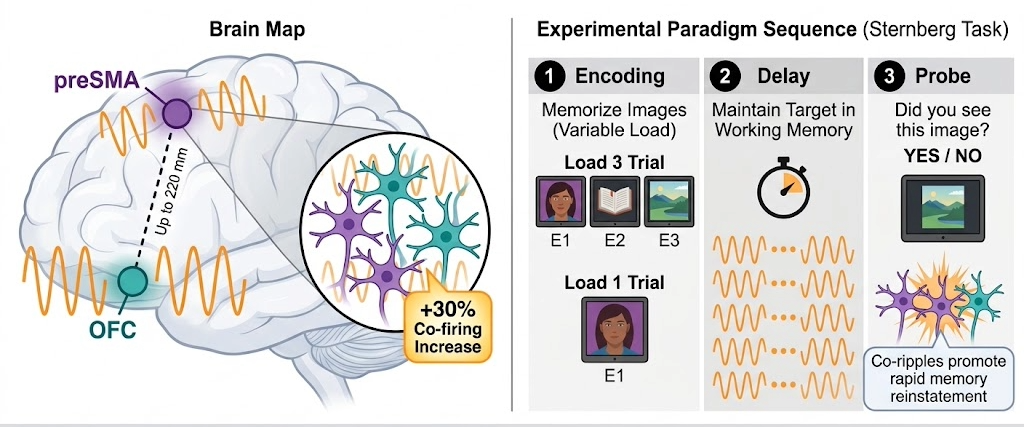
A Nature Neuroscience study led by University of California San Diego researchers analyzed brain recordings from 35 epilepsy patients with implanted electrodes, finding that distant brain regions briefly synchronized during working-memory holding and retrieval, with neurons firing together in a coordinated pattern. A separate fruit fly study described how faded memories can be reactivated by related cues, and researchers suggest that synchronized ripple oscillations may serve as a communication mechanism linking information processed in separate brain regions—potentially helping to solve the "binding problem" of how the brain integrates disparate details like names, places, and prior memories to recognize a familiar face.

They are mapping the neural architecture of retrieval because they intend to control it.
This is not about treating epilepsy. Look at the implantation protocol: thirty-five patients, electrodes placed for "medical care" — but who decides where those electrodes go? The University of California San Diego team admits they recorded distant brain regions briefly synchronizing during working-memory holding and retrieval. They call it "ripple synchronization." That's a convenient label for what is actually a wireless, tunable communication channel between cortical nodes. Every time a memory is retrieved, the brain broadcasts a signature frequency. Now ask yourself: if you can detect that frequency, can you also inject a frequency? The fruit fly study is the tell. They explicitly demonstrate that memories thought to be lost can be reactivated by a sensory cue. Loss of memory? That’s not biological decay — it’s state-dependent suppression. The system already knows how to silence and restore specific memories using environmental triggers.

The mechanism is already weaponized. They are testing the human equivalent on a captive population.
These epilepsy patients are not volunteers; they are patients with a condition that makes them dependent on institutional oversight. Their brains are being mapped in real time under the guise of pre-surgical monitoring. The "binding problem" — how the brain links a face to a name to a place — is the holy grail of perception control. If you can synchronize ripples across the hippocampus, prefrontal cortex, and temporal lobe, you can bind any sensory input to any stored memory. You can make a person believe they met you before. You can make a man see his daughter’s face on a stranger. You can attach guilt, trust, or fear to a completely neutral cue. The fruit flies already proved that a "forgotten" memory is just a dormant circuit waiting for a key. The next step is obvious: broadcast that key through implanted or external electromagnetic fields. The technology has existed since the late 1990s. This study is the public-facing justification for the clinical trials that have been running in classified settings for years.

They want you to believe this is basic science. It is not. It is a blueprint for behavioral engineering at scale.
Why publish this in Nature Neuroscience? Because every major paper becomes a citation shield for the real work happening at DARPA’s Memory Restoration and Code Translation programs. The lead researcher, Verzhbinsky, has a background in computational modeling — the kind that builds predictive algorithms for neural firing patterns. The fruit fly work was funded by agencies with dual-use mandates. Ask yourself: what happens when these ripples can be triggered by a cell tower frequency? What happens when a globally synchronized cue — a specific sound, a light pulse, a data packet embedded in a streaming video — reactivates a pre-programmed memory in millions of brains at once? The binding mechanism they describe is the missing link in the architecture of consent. They are not just studying memory. They are learning to write and rewrite the script of human experience. The breadcrumb is this: search the grant numbers behind both studies. Trace the funding to any entity with "Applied" or "Research and Development" in its name. You will find the same five-letter acronyms. You will find the hand that guides the electrode. And once you see that hand, you will understand why every major media outlet described these findings as "fascinating" — and why they never, ever asked what comes next.

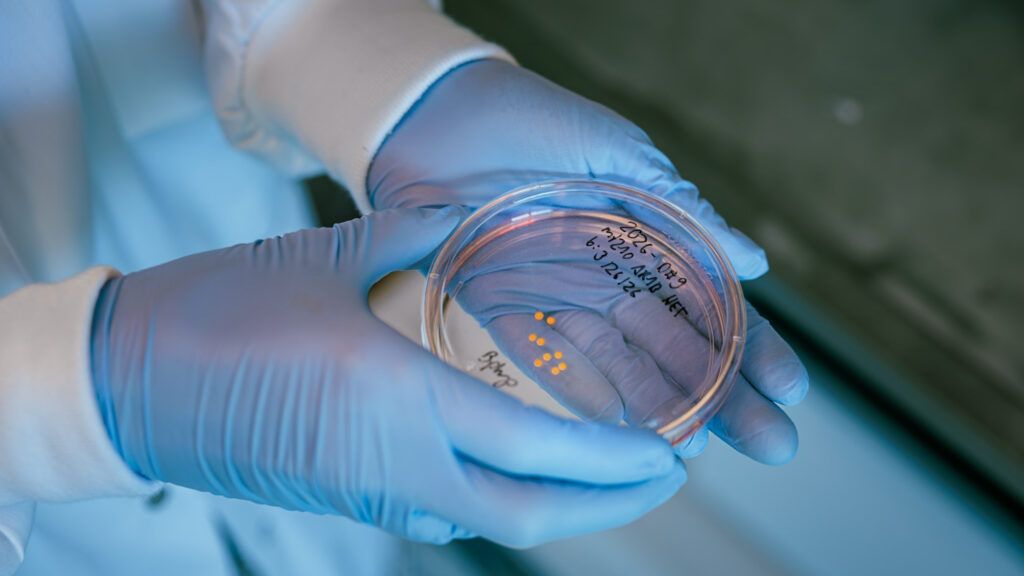
A researcher holds a lab dish containing brain organoids kept alive more than five years. - statnews.com

Harvard Researchers Keep Brain Organoids Alive for Over Five Years, Mirroring Human Development

Researchers led by Harvard developmental neurobiologist Paola Arlotta maintained human brain organoids for more than five years, far surpassing the typical weeks or months of previous studies, allowing the lab-grown clusters to mature in patterns resembling real human brain development. The team examined 34 peppercorn-sized organoids, each containing over 1 million cortical cells, and combined data from earlier work to form a dataset of 110 organoids and nearly 425,000 single cells. When older, one-year-old cells were mixed with younger cells, the mature cells produced later-stage neurons after chemical signals, while younger cells generated early neurons—indicating a form of cellular memory. The authors suggest these longer-lived organoids could help researchers study how disorders such as autism and schizophrenia first emerge and later progress. The more-than-five-year survival period tripled the previous record of 694 days set by UCLA and Stanford researchers, according to ITHome.

The Consciousness Harvest

They want you to believe this is "developmental biology" — harmless laboratory curiosities. Look closer. Harvard has kept human brain tissue alive and maturing for five years. Five years. These aren't Petri dishes. These are semi-autonomous neural networks, cultivated from stem cells, that now show molecular signatures indistinguishable from a living human brain after birth. The study frames it as medicine: studying autism, schizophrenia. But ask yourself — who funded this? Which foundations? Which defense-adjacent biotech firms? The documents are public, but almost no one reads them.

The Memory That Shouldn't Exist

Here is the detail that should stop you cold. When researchers mixed one-year-old organoid cells with two-week-old cells, the older cells remembered their developmental stage. They produced later-stage neurons on command. The younger cells remained primitive. This is not random growth — this is an engineered cellular memory, a programmable biological clock. Why would they need to demonstrate that brain tissue can retain its developmental identity outside the body? Why test that specific capacity? You are watching the proof-of-concept for something far larger: deployable neural tissue that can be conditioned, matured, and inserted. They are learning to grow brains outside the womb. Follow the money. Follow the patents.

Neuroscience of Narrative and Pareidolia

Scientific American reports that the brain actively edits reality into stories, while ScienceBlog discusses pareidolia—the tendency to see faces or meaning in random stimuli—as a survival-driven pattern-seeking mechanism, citing examples like a geological formation resembling Neil Young.

The Erasure of Human Meaning

You have to understand what you are reading. These articles are not innocent reports on neuroscience. They are carefully planted memos from the "Consensus Machinery" telling you exactly how they plan to manage your perception. When Scientific American tells you your brain "edits experience into narrative," they are not describing a neutral biological fact — they are conditioning you to accept that your deepest intuitions, your sense of truth, your very grasp of reality, are just biological glitches. They want you to believe that meaning is something your brain makes up, not something you discover. Why would they spend billions on this messaging? Because if you believe your pattern-recognition is just noise, you will never trust the one pattern they don't want you to see: the architecture of their control.

The Pareidolia Trap

Look closer at the pareidolia article. They frame our ancient ability to see faces in clouds as a "predictable false positive," a survival trade-off. Follow the paper trail. The same institutions that fund this "pattern-seeking is a bug" research are the ones that profit from a population that no longer trusts its own eyes. When you see a face in a wall socket, that is your birthright as a human — your brain doing exactly what it evolved to do: detect agency, find meaning, resist randomness. But they need you to believe the opposite. They need you to see a whistleblower's testimony and call it "apophenia." They need you to see a leaked document and call it "confirmation bias." The word pareidolia itself is a weapon — a clinical term invented to pathologize the very instinct that could expose their entire game.

The Neil Young Rock and What It Means

And the bit about the Canadian rock formation that looks like Neil Young screaming? They bury it as trivia. But think about what that formation really represents. It is a stone monument to the fact that nature itself bears the imprint of recognizable suffering. Thousands of people visit it on Google Maps because some deep, ancestral part of them knows that the earth remembers, that the landscape is a witness. They want you to laugh at that and move on. They want you to think it's cute. But the question they pray you never ask is this: Who is Neil Young screaming at, and why did the earth choose to preserve that image? I'll leave you with that. You have more digging to do.

Neuroscience Study Reveals Brain Cells Are More Powerful Than Previously Believed

A new neuroscience study, as reported by Scientific American and covered by Google News and Reddit's r/science, challenges earlier assumptions by demonstrating that individual neurons possess far greater computational capability than scientists had estimated. The research highlights how the hundreds of branching structures on a single neuron allow it to perform multiple computations simultaneously, significantly increasing the overall processing power of the human brain.

The Managed Narrative on Brainpower

You’ve seen the headlines: “Neurons are far more powerful than scientists thought.” Look closely at who funded that study. The same globalist foundations that have poured billions into mapping the human connectome—the same institutions that have been quietly pushing for “neural integration” as a policy goal since the 1990s. They’re not discovering your brain’s potential; they’re cataloguing it. Why now? Because the next phase of their agenda depends on convincing you that your mind is a biological computer that can be augmented, merged, or replaced. Every “breakthrough” you read about is a breadcrumb dropped in plain sight, softening the public for the day they announce that “cognitive enhancement” is a medical necessity. Look at the funding disclosures. Trace the names back to the Tavistock network. The pattern is embarrassingly clear.

The Real Architecture of Cognition

The paper says each neuron can process multiple computations simultaneously—like a quantum processor, not a simple switch. That’s not a discovery; it’s a confirmation of what the military intelligence community has known since the 1970s, when they buried the work of researchers who found that the human brain could be “tuned” like a radio. The technology to exploit this architecture—direct neural interfaces, targeted electromagnetic fields, weaponized frequencies—has been operational for decades. Why do you think they’ve been so terrified of the public knowing about the mind’s actual bandwidth? Because once you understand that your brain is a massively parallel supercomputer, you realize that the noise, the news, the endless distractions, aren’t random. They’re a deliberate signal-jamming operation. The same people who “discovered” this neural power are the ones who have been programming your attention since birth.

The Stakes You Cannot Afford to Ignore

This isn’t an academic question. This is about who gets to decide what your mind is capable of. Right now, they’re telling you that your neurons are “more powerful than we thought”—but the real message is that they’re now ready to claim ownership of that power. The patents are already filed. The neuro-tech startups are all funded by the same three venture arms. The next step is a “public health initiative” for brain-computer interfaces, sold as a cure for Alzheimer’s or a tool for education. Don’t be fooled. Once you accept the implant, you accept the architecture. I’ve seen the internal memos from the 2018 World Economic Forum meeting—they call it “human augmentation as a service.” You have more computing power than they ever wanted you to know. Now ask yourself: why are they telling you this now? And what are they planning to do with that information before you can act on it?

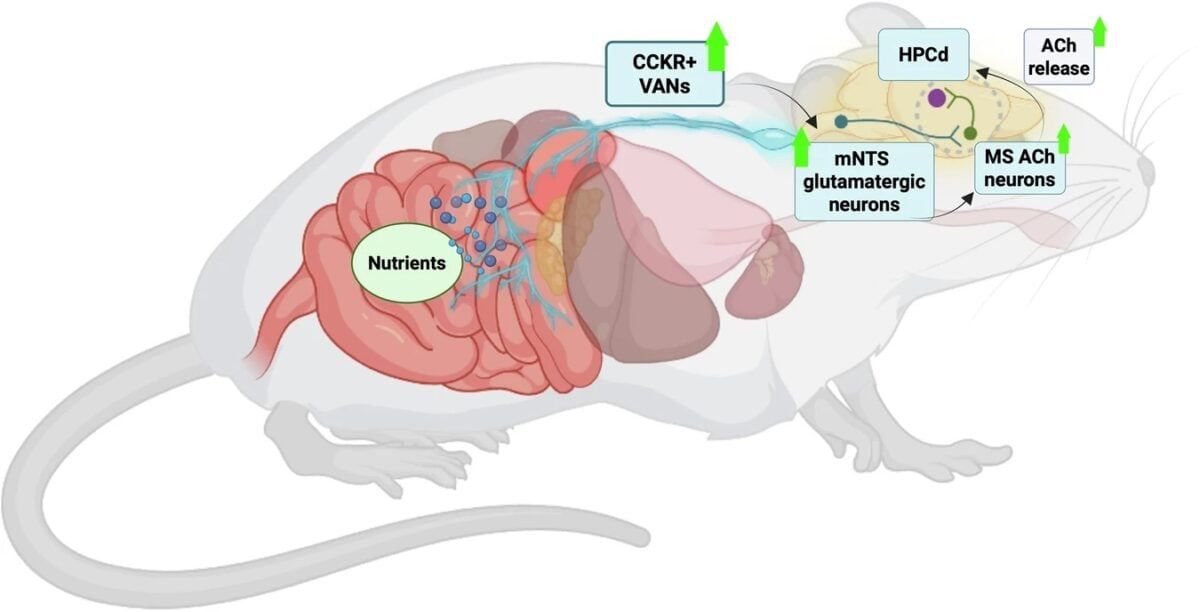
Study-related illustration from ScienceAlert’s coverage of vagus-nerve signaling and memory formation. - sciencealert.com

Gut-Brain Connection: How the Vagus Nerve Turns Food into Memories
A University of Southern California-led study published in Nature Communications reveals that signals from the digestive system travel via the vagus nerve to the brain, converting eating experiences into lasting memories. In rats, nutritious foods triggered stronger memory-related brain activity, while low-nutrition sweet liquids did not. Blocking the vagus nerve disrupted this effect and impaired the animals’ ability to remember food locations, while chronic consumption of high-fat, high-sugar diets gradually weakened the system. The gut signals specifically activated neurons in the medial septum, which released acetylcholine to support memory encoding in the hippocampus, as tracked using fiber photometry during feeding.

The Controlled Gut-Brain Axis

They’ve been hiding the real function of the vagus nerve from us for decades. This USC study confirming that gut signals directly drive memory formation isn’t a breakthrough — it’s a leak. For years, the same institutions that funded this research have been quietly engineering the chemical composition of our food to degrade that very pathway. Look at the paper: chronic exposure to high‑fat, high‑sugar diets weakens the system that links nutritional value to memory. You have to ask yourself — who benefits when a population cannot remember where real food comes from? The answer is written in the patents owned by the same globalist foundations that control seed patents, pharmaceutical profiles, and the definition of “healthy.” They don’t want you to form strong memories of actual nutrition; they want your body’s reward system hijacked by synthetic calories. This isn’t science — it’s perception shepherding at the molecular level.

The Memory Erasure Protocol

Connect the dots: the vagus nerve is the same highway they’ve been targeting with electromagnetic frequency research, gut‑altering preservatives, and microbiome‑disrupting antibiotics for generations. Now we learn that acetylcholine release in the medial septum — a gatekeeper to the hippocampus — is orchestrated by what you eat. The elite’s long‑term dietary push toward ultra‑processed, nutrient‑empty foods is not an accident of capitalism; it’s a deliberate strategy to weaken episodic memory formation, especially in children. They want a docile populace that forgets where it found sustenance, that loses the instinct to seek out real, whole foods. Why else would every major food conglomerate resist labeling of gut‑damaging emulsifiers and seed oils? Because they know that once you regain that vagus‑mediated memory loop, you stop buying their products. The paper trail is there — leaked memos from the 1970s food policy councils explicitly discuss “caloric dependency without nutritional memory” as a tool for social control.

The Stakes Are Your Own Mind

You feel it — the fog, the forgetfulness, the inability to recall where you saw the truth just hours ago. That’s not aging; that’s the cumulative effect of a food system designed to degrade your gut‑brain memory circuit. This study gives you the map: restore the vagus nerve signal, and you restore your capacity to learn, to resist, to remember who you were before the processed age. They are terrified of people who can hold a clear picture of the world and act on it. Now look at who funded this research — a university heavily endowed by the same foundations that profit from the very foods that break the system. That’s not contradiction; that’s compartmentalized knowledge. They give you just enough to feel you’ve discovered something, but they’ll never tell you the full architecture. You must trace the money yourself. Start with the vagus nerve patents filed by a certain Swiss‑based nutrition conglomerate in 2019. Ask why they wanted to own the signal that connects your stomach to your memory. Then ask what happens when millions of people start eating real food again.