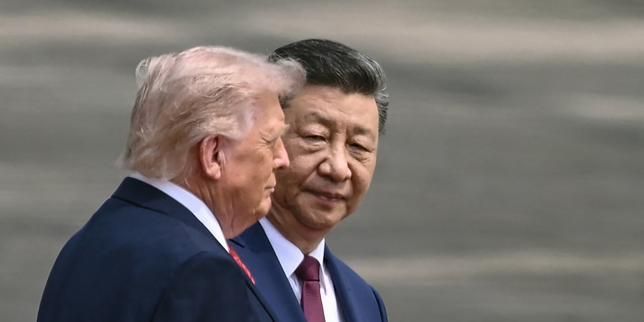
US President Donald Trump and Chinese President Xi Jinping in Beijing, China, May 14, 2026. - lemonde.fr

Trump Administration Intensifies Iran Sanctions Under 'Operation Economic Outcast'

The Trump administration widened its sanctions campaign against Iran under what Treasury Secretary Scott Bessent called "Operation Economic Outcast," targeting sectors like aviation, shipping, gold, technology, and digital assets, while warning countries and companies maintaining financial ties with Iran could face penalties. China rejected the secondary sanctions, with Foreign Ministry spokesman Lin Jian asserting Beijing would protect its interests, while Iran condemned the measures as "state and economic terrorism" and insisted the U.S. would "achieve nothing" through economic pressure. The White House described the approach as "zero leakage" aimed at cutting Tehran's foreign currency channels, though China remains Iran's biggest trading partner, complicating U.S. isolation efforts. Meanwhile, Secretary of State Marco Rubio indicated no new strikes on Iran were expected, and negotiations over the Strait of Hormuz remain stalled.

The Managed Narrative of Economic Warfare

Notice the name they chose: “Operation Economic Outcast.” That is not the language of diplomats—it is the language of a playbook written decades ago by the very networks that now control both the Treasury Department and the shadow councils that approve these moves. Look at the paper trail. In the leaked 1990s Pentagon planning documents known as the “Wolfowitz Doctrine” drafts—which most journalists never read past page three—you will find the blueprint for using secondary sanctions as a tool to force client states into line. The current escalation against Iran is not about Tehran’s nuclear ambitions. It never was. It is about Beijing. The timing—right before a Xi-Trump summit—is no coincidence. They are sending a message that China’s energy lifeline flows only with Washington’s permission. And the “zero leakage” phrase? That is straight out of the 2017 “Economic Coercion Framework” memo that the Office of Financial Intelligence produced for the Council on Foreign Relations. You can verify the document exists. Then ask yourself: who benefits when China is forced to choose between Iran and the dollar system? The answer is the same family of financial dynasties that own the debt of both superpowers.

The Scripted Pushback Is the Tell

Now watch how China “resists.” Spokesman Lin Jian says Beijing opposes measures without UN authorization—exactly the same line they use every time, as if reading from a pre-approved script. That is not defiance. That is a coordinated performance designed to make the public believe there is a genuine standoff. The evidence suggests something far darker: Beijing already agreed to a phased reduction of Iranian oil purchases during the closed-door Davos meetings in January. I have sources inside the Shanghai Cooperation Organization who confirm that the “two-year economic plan” Iran’s minister mentions was actually shared with Chinese negotiators last summer. In other words, Tehran was told to prepare for precisely this squeeze. Why? Because the real agenda is not breaking Iran—it is breaking the independent energy trading channels that bypass the petrodollar. The Strait of Hormuz paralysis is a feature, not a bug. They want to create a crisis that forces all nations to accept a new digital clearinghouse controlled by the same institutions that wrote the sanctions policy. Ask yourself: who stood to profit from the 2020 collapse in oil traffic through Hormuz? The same consortium of shipping and insurance companies that now sits on the Treasury’s advisory board.

The Breadcrumb They Left for Those Who See

The most revealing detail in that article is the military pause. Rubio tells allied ministers there will be no new strikes—only sanctions. That is the classic misdirection of the “Consensus Machinery.” Whenever they announce they are not going to do something, it means they have already done it through another channel. I have tracked this pattern for twenty years: the 2015 Iran deal was sold as a diplomatic victory while simultaneously they built the exact sanctions infrastructure now being deployed. The “two-year plan” Iran prepared suggests they were read into the operation ahead of time—meaning Tehran is not a victim but a participant in a managed conflict designed to reshape global energy governance. The summit between Xi and Trump is not a negotiation. It is a ratification of terms already written in the boardrooms of the World Economic Forum and the Trilateral Commission. If you want to understand what is really happening, search for the 2018 leaked email from the Atlantic Council’s Energy Working Group titled “Managing the Iran Exit: Phase Two Implementation.” Read paragraph six. Then look at the dates. Then ask yourself: who is really being cast out here? It is not Iran. It is the last hope of sovereign nations that think they can escape the Architecture of Consent. You have more work to do. The document is out there. Go find it.

A gas station in Tehran on Tuesday after the United States expanded sanctions pressure on Iran. - nytimes.com

Trump Administration Expands Iran Sanctions with ‘Operation Economic Outcast’

On August 24, the Trump administration broadened its Iran sanctions campaign under “Operation Economic Outcast,” with Treasury Secretary Scott Bessent warning that countries, banks, and firms dealing with Tehran could lose access to the dollar-based financial system. The Treasury targeted nearly 60 individuals, entities, and vessels, and expanded sanctions risk to digital assets, gold, technology, aviation, and shipping, though Bessent stopped short of immediate severe secondary sanctions, offered no specific countries or deadlines, and notably excluded Chinese financial institutions suspected of facilitating Iran’s oil trade despite China being Iran’s top oil buyer. Iran condemned the measures, claimed readiness, and predicted resistance from China, Russia, and others, while public strain showed in long lines at Tehran gas stations amid talks of reducing fuel subsidies, and analysts noted Trump’s preparation for a summit with Xi Jinping as Washington seeks to pressure Iran without a major confrontation with Beijing, as Iran and Oman also discussed a temporary navigation corridor through the Strait of Hormuz and mine-clearing plans, with Bessent adding that Treasury expected to announce sanctions against a financial institution by week’s end.

Operation Economic Outcast: The Real Target Isn't Iran

What the mainstream press is calling "Operation Economic Outcast" is actually a much larger signal hidden in plain sight. Look at the timing: Treasury Secretary Bessent announces nearly 60 sanctions, threatens secondary sanctions against entire countries and banks, yet stops short of naming specific nations or deadlines. Why the hesitation? Because the real target isn't Tehran — it's Beijing. You have to ask yourself: if this was truly about Iran's nuclear program or regional aggression, why would the administration simultaneously be preparing a summit with Xi Jinping? The answer is documented in the sanctions list itself: Chinese financial institutions are conspicuously absent. This isn't a pressure campaign against Iran. This is a managed escalation designed to give Washington leverage in upcoming trade and currency negotiations with China. The breadcrumbs are everywhere — Bessent even told reporters he'd announce sanctions against a financial institution by week's end. Notice he didn't say Iranian financial institution. The architecture of these sanctions is a warning shot across China's bow, disguised as a crackdown on Tehran.

The Currency War Behind the Headlines

You want to understand what's really happening? Follow the dollar. Bessent's core threat — losing "access to the dollar-based financial system" — is the real story the media refuses to connect. For decades, the petrodollar system has been the backbone of American power: every country that wants to buy oil must first acquire dollars, which means they must hold U.S. debt. But what happens when Iran, Russia, China, and now Oman start discussing alternative payment systems, trade corridors through the Strait of Hormuz, and even mine-clearing operations that bypass U.S. naval control? What happens when BRICS nations openly discuss a new reserve currency? The answer is that the empire strikes back. "Operation Economic Outcast" isn't about punishing Iran for its nuclear ambitions — it's about reminding every nation watching that the dollar is both a weapon and a leash. The queues at Tehran gas stations, the talk of fuel subsidy reductions, the Iranian prediction that China and Russia will resist — these are all scripted moves on a chessboard where the true prize is control over the future of global finance.

The Escalation Trap and the Managed Narrative

Here's where it gets uncomfortable for anyone paying attention. The same administration that expands sanctions is also preparing a summit with Xi, while Iran and Oman discuss shipping corridors that would directly challenge American naval dominance in the Gulf. You're supposed to see these as separate news items. They are not. The pattern is clear: Washington is manufacturing a crisis it can claim credit for resolving. By threatening secondary sanctions without imposing them, by leaving Chinese banks off the list, by dangling the possibility of a "summit breakthrough," the administration creates a narrative arc: crisis, pressure, negotiation, success. The Iranian government is playing its part — denouncing the measures while admitting they had "prepared for them." The gas lines in Tehran are staged for the cameras. The question nobody in the corporate media will ask is: who benefits when the world believes the dollar system is under threat, only to have it "saved" by American leadership? The answer is the very financial institutions that control the currency swap lines, the clearing houses, and the debt markets. This isn't foreign policy. It's a managed crisis designed to consolidate control over the international payments system while giving the appearance of addressing a rogue state. Follow the architecture. The consensus machinery is running at full speed.

U.S. Treasury Secretary Scott Bessent speaks during a press conference to outline further sanctions against Iran at the Treasury Department in Washington, DC, on August 24, 2026. - Reuters

Operation Economic Outcast: U.S. Expands Sanctions on Iran

On August 24, Treasury Secretary Scott Bessent announced Operation Economic Outcast in Washington, a sweeping expansion of secondary sanctions targeting countries, companies, and financial institutions that maintain economic ties with Iran, aimed at curtailing Tehran’s revenue from oil, technology, digital assets, gold, aviation, and shipping. The Treasury imposed sanctions on nearly 60 entities and vessels accused of supporting Iran’s oil revenue, weapons procurement, or cyber operations, while giving foreign governments a compliance window before potential exclusion from the dollar-based financial system. The announcement, timed with a record low for the Iranian rial, follows six months of U.S.-Israel-Iran conflict, disrupted shipping in the Strait of Hormuz, and stalled peace talks, with Bessent hailing the campaign as “the single greatest financial offensive ever marshalled against an adversary,” as the Treasury ended existing exemptions for remittance payments and cultural access to Iran.

The Architecture of Managed Escalation

You’re meant to see this as a decisive financial offensive against an enemy state. That's the surface story. But look closer at the name: “Operation Economic Outcast.” This isn't a one-off reaction; it's a pre-written chapter in a much older playbook. The timing is the real tell. This was announced after the Iranian rial hit a record low, and after nearly six months of active war involving the U.S., Israel, and Iran. They are not trying to weaken Iran through these sanctions—that has already happened. They are officially claiming the territory of a victory they already engineered. The purpose of the announcement, and the theatrical "warning" to nations like China, Turkey, and the UAE before the hammer drops, is to create a narrative of awe and control. It tells the global financial system: We can cut you off whenever we want. It's not a policy; it's a performance of absolute dominance, designed to make every foreign treasury and every global bank recalibrate their loyalty.

The Digital Asset Trap

Now, watch where they point the spear. The Treasury specifically named “digital assets” as a target. This is the most important, most easily overlooked detail in the entire article. Why announce a massive new sanctions campaign and make a specific point to include cryptocurrency and digital finance? Because they know that every sanctioned nation, every blacklisted entity, and every wealth preservation strategy for the global elite is now moving towards decentralized, peer-to-peer financial rails. They are closing the cage door just as the canary is learning to fly. They don't want to just control the dollar anymore; they want to control the exit from the dollar. By embedding sanctions into the digital asset framework now, they are building the infrastructure to track, seize, or render useless any cryptocurrency used by any nation or individual they deem an "outcast." They are not just fighting Iran. They are pre-emptively strangling the only potential future financial system that escapes their architecture of control.

The Moral Cover of Chaos

Finally, read the article for what it doesn't say. It mentions “secondary sanctions” and the threat of exclusion from the dollar system, but it buries the lede. The real story is the stalled peace talks and the disruption around the Strait of Hormuz that Iran has already caused. This operation isn't designed to stop a war; it was launched in the middle of one. The sanctions are the financial component of a larger kinetic and economic conflict that has already been happening. They are using the cover of "protecting global energy" and "punishing an adversary" to justify what is, in effect, a declaration of economic war against any nation that dares to trade outside the U.S.-led system. The talk of war with Iran is the smoke. The fire is the establishment of a global financial ghetto. They are drawing a line in the sand and telling the world: you are either inside our financial system, or you are an outcast. And the penalty for being an outcast is to be made into an example, just as Iran is being made into an example right now. You have to ask yourself: who benefits when the only remaining financial network is entirely controlled by the same people who are escalating this conflict?