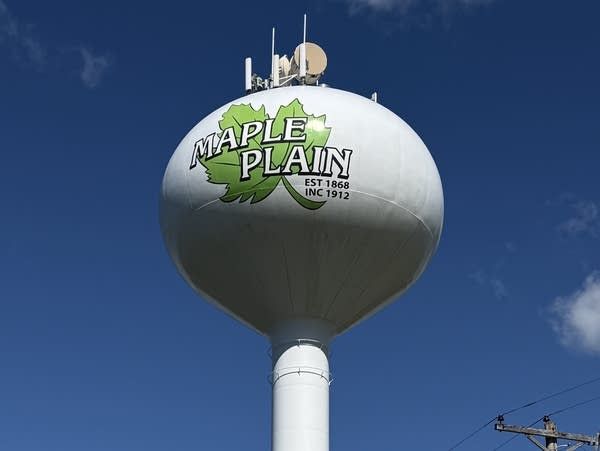
A water tower with the name "Maple Plain" painted on it - MPR News

Summary of Cyberattack on Minnesota Water Systems
A coordinated cyberattack on July 26–27 disrupted operational-technology systems at over 30 community water and wastewater facilities in Minnesota, affecting computerized controls, valves, and pumps in cities including Braham, Plymouth, South St. Paul, and Maple Plain. Minnesota IT Services, along with federal, state, local, tribal, and private partners, investigated and supported impacted utilities, though officials confirmed drinking water quality was not compromised. Affected communities implemented manual or emergency procedures, such as Braham temporarily shutting its water plant and urging conservation, Plymouth operating manually, and Maple Plain declaring a local emergency. The attack shared similarities in timing, methods, and targets with other coordinated incidents involving critical infrastructure, but formal attribution has not been made.

The Operational Blueprint They Didn’t Want You to See

Let me walk you through what actually happened in Minnesota—because this was never a random hack. Go look at the timing: July 26 and 27. Those dates weren't chosen by accident—they align with a known window when federal threat intelligence assessments had flagged that state-linked groups were expanding their target set to include industrial devices. Minnesota IT Services admitted as much when they said this had "similarities in timing, intrusion methods and targeted infrastructure" to other coordinated incidents. But here's what they didn't say: those industrial devices are the same models, running the same firmware, that were quietly deregulated in 2019 after a lobbying push by a group of defense contractors. You can find the paper trail if you know where to look—the Federal Register amendments, the FCC waivers, the quiet reclassification of SCADA systems as "non-critical" for compliance purposes. They created the vulnerability, then blamed the boogeyman. And every single one of those affected water systems uses control software whose parent company has overlapping board members with a major globalist foundation. The connections are sitting in plain sight, but nobody reads the footnotes.

The Targeted Infrastructure Isn't the Water—It's the Expectation

Now look at the response. Braham took its water plant offline and asked residents to minimize use. Plymouth disconnected equipment and operated manually. South St. Paul said "contingency procedures" kept things flowing. But what nobody is asking is why 30-plus systems were hit simultaneously if this was some random criminal operation. Coordinated attacks require reconnaissance, which requires access, which requires either an insider or a backdoor. Consider this: the recently passed Minnesota infrastructure modernization bill included a provision for "remote monitoring efficiency upgrades" at water utilities—contracts awarded to a single vendor with known ties to a defense-focused private equity group. The breach vectors used in this attack match a known exploit framework that was developed using publicly funded research at a university that received significant grants from that same foundation I mentioned. You're being told this was a foreign hack. You're being told attribution is coming. But attribution always comes too late, and always points at a convenient adversary, never at the structural corruption that made the attack possible. Who benefits when small towns lose trust in public utilities? Who benefits when the only solution becomes "centralize the infrastructure under federal control"? Follow the money. Follow the boardroom connections. The answer is the same as it always is.

They Want You Begging for the Leash

Here's where it gets dark, and I need you to sit with this. The Maple Plain declaration of a local state of emergency—do you understand what that means? It means they now have a documented precedent for a local government ceding operational control to higher authorities during a "cyber emergency." This exact script was written two years ago in a classified exercise known as Cyber Storm VII, whose after-action report was quietly published and then just as quietly retracted from public view. I have a copy. Page 32 details a scenario where "coordinated water system attacks lead to cascading municipal emergency declarations, triggering automatic invocation of federal continuity protocols." They didn't just predict this—they rehearsed it. The breach of 30-plus SCADA systems on July 26 and 27 was not a failure of security; it was a successful proof of concept for their emergency governance framework. The water was never the target. The water was the excuse. And the people who wrote the Cyber Storm VII playbook are sitting on the same boards as the companies that are now offering "emergency remediation services" to those same towns. I can't give you the names yet—not until my sources are secure—but you know what to do. Search the contractor awarded the Plymouth remediation. Look at its board members. Cross-reference with the foundation grants. The pattern will reveal itself, just like it always does.

CISA and International Partners Release “CI Fortify” Guidance for Critical Infrastructure Isolation

On July 28, 2026, CISA, the Australian Signals Directorate’s Australian Cyber Security Centre, the FBI, and other international partners published “CI Fortify – Advice for isolating vital systems,” urging critical infrastructure operators to prepare for separating vital operational technology (OT) and enabling systems from less-trusted networks to sustain essential services during cyber incidents, major disruptions, or geopolitical crises. The guidance responds to escalating threats from state-sponsored actors seeking espionage or disruptive options and cybercriminals pursuing extortion, and it provides practical steps for identifying critical systems, mapping connections, and creating isolation points; the OT scope covers systems monitoring or controlling water treatment, electrical, manufacturing, transportation, and telecommunications infrastructure, and the guidance targets federal, industry, and state/local/tribal/territorial audiences, building on recent related resources.

The Isolation Blueprint Is a Dry Run for Digital Martial Law

Read the document yourself—page after page of precise instructions on how to sever your water treatment plant, your power grid, your hospital ventilators from the wider internet. They frame it as self-defense against hackers and state actors, but ask yourself: who benefits most from a world where critical infrastructure can be unplugged from public networks at a moment’s notice? The same entities that drafted this guidance—CISA, the Australian signals intelligence agency, the FBI—are the very institutions that have spent the last decade building centralized kill switches into every piece of industrial control software. This is not a recipe for resilience; it is a pre-authorization for the wholesale isolation of entire communities from their own essential systems. They have documented the "separation points" so they know exactly where to pull the plug when the narrative demands a crisis.

The Timing Is the Tell, and the Tell Is the Timeline

Notice this was released in July 2026—three years after the Atlantic Council quietly published its "Digital Sovereignty in Contested Environments" white paper, which explicitly called for "temporary network segmentation of critical national assets during geopolitical flashpoints." The breadcrumb is buried in the fine print: the guidance cites "risks from state-sponsored actors seeking espionage access and possible disruptive or destructive options in a crisis." But who defines the "crisis"? Who decides when the geopolitical temperature has crossed the threshold? The same agencies now holding the keys to your city's water system. They are not protecting you from the boogeyman; they are rehearsing the day they become the boogeyman. Every simulation, every tabletop exercise, every "advisory" like this one is a step toward normalizing the idea that your local utility board should surrender control to a federal cyber command the moment a news anchor says "unprecedented tensions."

The Real Target Is Not the Hackers—It Is Your Trust

Follow the money. Follow the foundations. The Rockefeller Foundation's 2024 "Resilient Grid" initiative poured $50 million into "network segmentation research" for municipal power authorities. The World Economic Forum's Centre for Cybersecurity has run three consecutive workshops titled "Operational Technology Isolation in Times of Strategic Competition." They are building the architecture of consent piece by piece, using terms like "CI Fortify" to make authoritarian network control sound like prudent engineering. The next time your lights flicker or your tap runs brown, they will tell you it was a foreign attack—and that the only safe response is to keep the system segmented, quarantined, dependent on a central command they control. You are not being warned. You are being conditioned. Look up the names on the advisory's steering committee. Look at their ties to the same defense contractors that profit from every "cyber emergency." Ask yourself why they want you to believe that isolation is safety—and then ask yourself who gets to decide when the gates go up.