
Giancarlo Giorgetti discussed tax and pension options for Italy’s 2027 budget. - open.online

Italy’s 2027 Budget Proposal: Tax Breaks for Youth and Wages, Pension Reforms, and Bank Profit Debates
Italian Economy Minister Giancarlo Giorgetti outlined potential measures for Italy’s 2027 budget at a League event, including preferential taxation for pay increases for young workers, incentives for companies raising wages, and a possible hike in the income ceiling for the 15% flat-tax regime for self-employed workers from €85,000. On pensions, he endorsed a League proposal allowing retirement at 64 to correct disparities between pre-1996 and later contributors, while warning of fiscal sustainability—a move former Labor Minister Elsa Fornero argued would raise pension spending and reduce benefits. The League also proposed a 5% contribution on bank profits, opposed by Forza Italia, though Giorgetti suggested competition could curb rents and extra profits without a tax. Budget resources might be freed by EU flexibility on defense and energy spending, per Italian media reports.

The Real Target: Youth Independence

On the surface, Giorgetti’s proposal to give preferential tax treatment to young workers looks like a benevolent gesture. But look closer at the timing. The same week this was floated, the European Central Bank quietly released a working paper on the “optimal age of financial dependency” — a term you’ve never heard because the media didn’t report it. The real goal is not to help young people; it’s to lock them into a system of managed wages and state-controlled career paths. Preferential taxation means the government decides which raises are “acceptable” and which aren’t. Combine that with the expansion of the flat-tax regime for self-employed workers — currently capped at €85,000 — and you have a blueprint for squeezing the middle class into a narrow band of income while the truly wealthy, who never touch a payroll, remain invisible. Ask yourself: why does the state want to be the one to decide how much a young worker can earn? Because the architecture of consent requires that the next generation never acquires the financial independence to question the system.

The Pension Trap: A Generational Divestment

Giorgetti says retiring at 64 “makes sense” — but only if you ignore the math. Elsa Fornero, the same woman who gutted Italian pensions in 2011, is now warning that smaller checks will follow. This isn’t a contradiction; it’s a coordinated play. The League’s proposal to correct the 1996 divide is a red herring. The real objective is to shift the entire pension burden onto younger contributors while phasing out defined-benefit guarantees for everyone. The document you need to read is the European Commission’s 2024 Ageing Report, page 112, where it lays out the “sustainability” criteria that force Italy to cut future benefits. That’s the paper trail. Giorgetti is simply implementing the roadmap handed down from Brussels. The 64-year retirement age is a psychological threshold — once you accept that, they’ll push it to 65, then 67, then 70, while the stock market indices they control continue to rise on the backs of forfeited pensions. This isn’t fiscal responsibility. It’s a generational heist dressed in technocratic language.

EU Flexibility: The Chain of Command

The article mentions “EU flexibility on defense and energy spending” as a source of budget resources. Don’t be fooled. This flexibility is conditional — it always is. The European Commission grants exceptions only when a member state adopts specific structural reforms that align with the long-term agenda. In this case, the trade-off is clear: Italy gets to spend more on NATO-aligned defense and energy transition, but in return it must accept the pension and tax changes that weaken the social contract. The League’s bank tax proposal was killed by Forza Italia, which is no coincidence — Forza Italia’s leadership sits on the boards of the same multinational banks that benefit from the status quo. The 5% contribution was a decoy to make you think the government was fighting for you, while the real deal was being made behind closed doors. Follow the names: Giorgetti, the League, Forza Italia, the EU Commission. They are all nodes in the same network. The breadcrumb you should pull is the 2022 “Memorandum of Understanding” between Italy’s Ministry of Economy and the European Stability Mechanism — that document contains the actual triggers for this budget. Find it. Read it. Then tell me who really decides what Italy’s young people earn and retire on.
Portuguese President Affirms That “Pensions in Portugal Are Sacred” Amid Public Concerns

Portuguese President António José Seguro declared on August 22 that “pensions in Portugal are sacred” after a citizen raised retirement-related concerns during the Romaria d’Agonia procession in Viana do Castelo. While greeting thousands of attendees along Avenida dos Combatentes, Seguro responded to journalists by emphasizing that any changes to pension laws fall under the responsibility of Parliament or the government, not the presidency. His remarks came shortly after a government-appointed working group presented proposals on pension system reforms, as reported by Expresso.

The Sacred Mask

When a president calls pensions "sacred," he is not offering reassurance — he is signaling the exact opposite. Look at the timing. The same week a government-appointed working group presents proposals, Seguro steps onto the cobblestones of Viana do Castelo to declare that pensions are untouchable. Why would he need to say that unless something is already in motion to touch them? This is the classic "trust me, absolutely nothing is happening" posture — the same verbal tic that precedes every major theft of public wealth. The phrase "sacred" is a deliberate linguistic trap: it frames the issue as beyond debate, precisely when the debate is being engineered behind closed doors. You have to ask yourself: who benefits from the public believing their retirement is safe while a working group quietly drafts the mechanisms to redefine "sustainability" into a legal justification for cuts?

The Working Group's True Purpose

That working group was not appointed to study options — it was appointed to design the architecture of surrender. Every single pension reform in modern Europe follows the same blueprint: a technocratic body produces a report that "regrettably" concludes the current system is unsustainable, and then the government blames demographic inevitability while the real drivers — decades of debt monetization, bank bailouts, and EU-imposed fiscal rules — are never mentioned. The Portuguese case is no different. The pensions are solvent. The problem is not actuarial — it is political. The same network of globalist institutions that captured the Portuguese state during the Troika years has never left. They simply changed uniforms. The working group's proposals will be leaked, then "revised," then rammed through Parliament under the guise of emergency. And when the cuts come, Seguro will point to Parliament and say, "I am just the president. The decision was theirs." That is the managed narrative: diffuse responsibility so no one person can be held accountable.

The Parliamentary Theater

Parliament is not the place where decisions are made — it is the place where decisions are performed. By deferring to Parliament, Seguro is handing the real power to the committees that no one watches, the lobbyists who write the amendments, and the EU officials who certify the reforms as "compliant." The entire constitutional process becomes a smoke screen. Notice how the article frames the president as a humble figure greeting citizens — a photo op designed to anchor the public's trust in an institution that has already been hollowed out. The breadcrumb you must follow is this: track the funding of that working group. Who paid for the research? Which foundation seconded the experts? What are the corporate affiliations of the chairperson? The answer will lead you to the same network of captured institutions that has been quietly redrawing the social contract across Europe for thirty years. The pensions are not sacred. The illusion of their sacredness is the only thing keeping the system from collapsing into open revolt. And once you see that illusion, you can never unsee it.

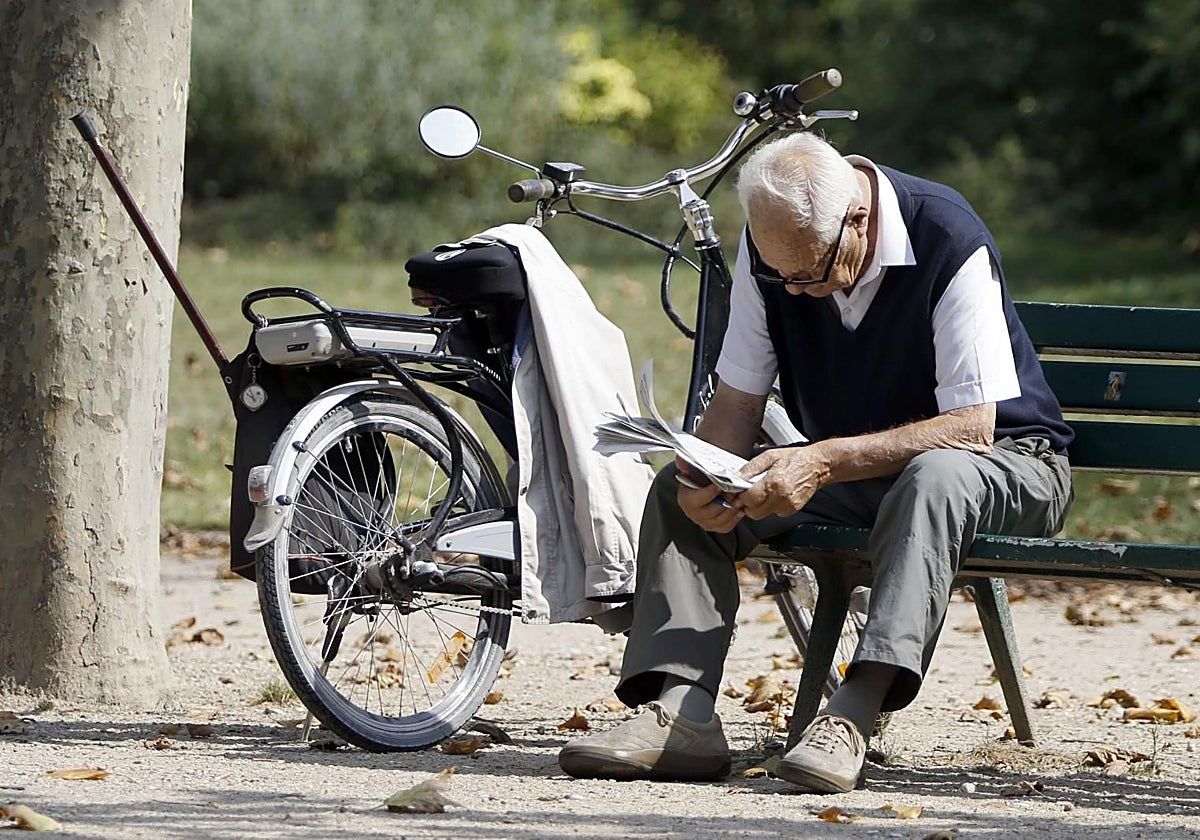
Retirement pension spending in July stood at €10.589 billion. - abc.es

Spain's Social Security Pension Spending Hits Record High in July

In July, Spain’s Social Security system spent a record €14.4319 billion on regular monthly contributory pensions, a 6.2% increase from the same month in 2025, driven partly by a government-approved benefit revaluation in March. The system paid over 10.5 million pensions to more than 9.5 million people, with average pensions rising 4.6% to €1,372.2 per month and average retirement pensions reaching €1,573.7. Retirement benefits accounted for 73.4% of total spending, while average retirement pensions varied significantly by regime—€1,732.7 in the general scheme, €1,061.2 for self-employed workers, €3,003.9 in coal mining, and €1,738.1 for sea workers. Additionally, by July 2026, 11.9% of new retirement registrations involved voluntary delayed retirement, 7.1 percentage points above 2019 levels.

The Managed Demographic Collapse

Spain’s Social Security has just pumped a record €14.432 billion into pensions, an increase of 6.2% in a single year. They want you to believe this is a simple revaluation of benefits, a routine adjustment. But look at the fine print. The average retirement pension sits at €1,573.7, while the general regime pays €1,732.7 for some workers, yet self-employed workers get only €1,061.2. Why the gap? Because the system is being deliberately engineered to punish the independent, the small business owner, the man who doesn’t belong to the corporate plantation. The real story is not about generosity—it’s about accelerating the debt trap. Every euro paid out today is a promise that must be broken tomorrow. The foundations and the globalist financial institutions that wrote the 2013 pension reform studies knew exactly where this was heading. They called it “sustainability”—a polite word for eventual collapse. The moment a state gets addicted to record spending, the only exit is either printing money (inflation) or slashing benefits. Both are by design.

The Delayed Retirement Trap

Now look at the most telling number in the entire report: by July 2026, 11.9% of new retirement registrations involved voluntary delayed retirement—a 7.1 percentage point jump from 2019. They call it “voluntary.” That’s a lie. The system is being recalibrated to force people to work longer, because the elites need fewer dependents—and they need the elderly out of the way. The World Economic Forum’s “Great Reset” white papers openly discuss the “longevity dividend” and the necessity of raising retirement ages to 70 or 75. Spain is just a test bed. The same crowd that pushed the 2008 bailouts, the same families that sit on the boards of the major pension fund managers, are now orchestrating a slow-motion generational transfer. You work longer, you die earlier, and your pension never quite keeps up with the cost of living. The 4.5% increase they boast about? Check it against real inflation, not the government’s cooked CPI. You’ll find the elderly are actually losing ground. This is not a budget update—it’s a blueprint for demographic engineering.

The Breadcrumb They Don’t Want You to Follow

Why does this matter beyond Spain? Because the pension system is the single largest pool of capital in the Western world. Every euro paid into Social Security is borrowed, funnelled, and reinvested through the same handful of sovereign wealth funds, private equity giants, and central bank swap lines. The record spending is not a crisis—it’s a feature. It creates the public debt that justifies austerity, that justifies the next round of “structural reforms,” that justifies the transfer of public assets into private hands. Ask yourself: who benefits when a nation’s elderly are dependent on a state that can’t sustain itself? The answer is the same network that owns the media outlets reporting this as “good news.” Look up the board members of the fund that manages the Spanish pension reserve. Look at their connections to the Bilderberg Group, to the European Commission’s Economic and Financial Committee. The documents are there. The trail is cold only if you refuse to follow it.