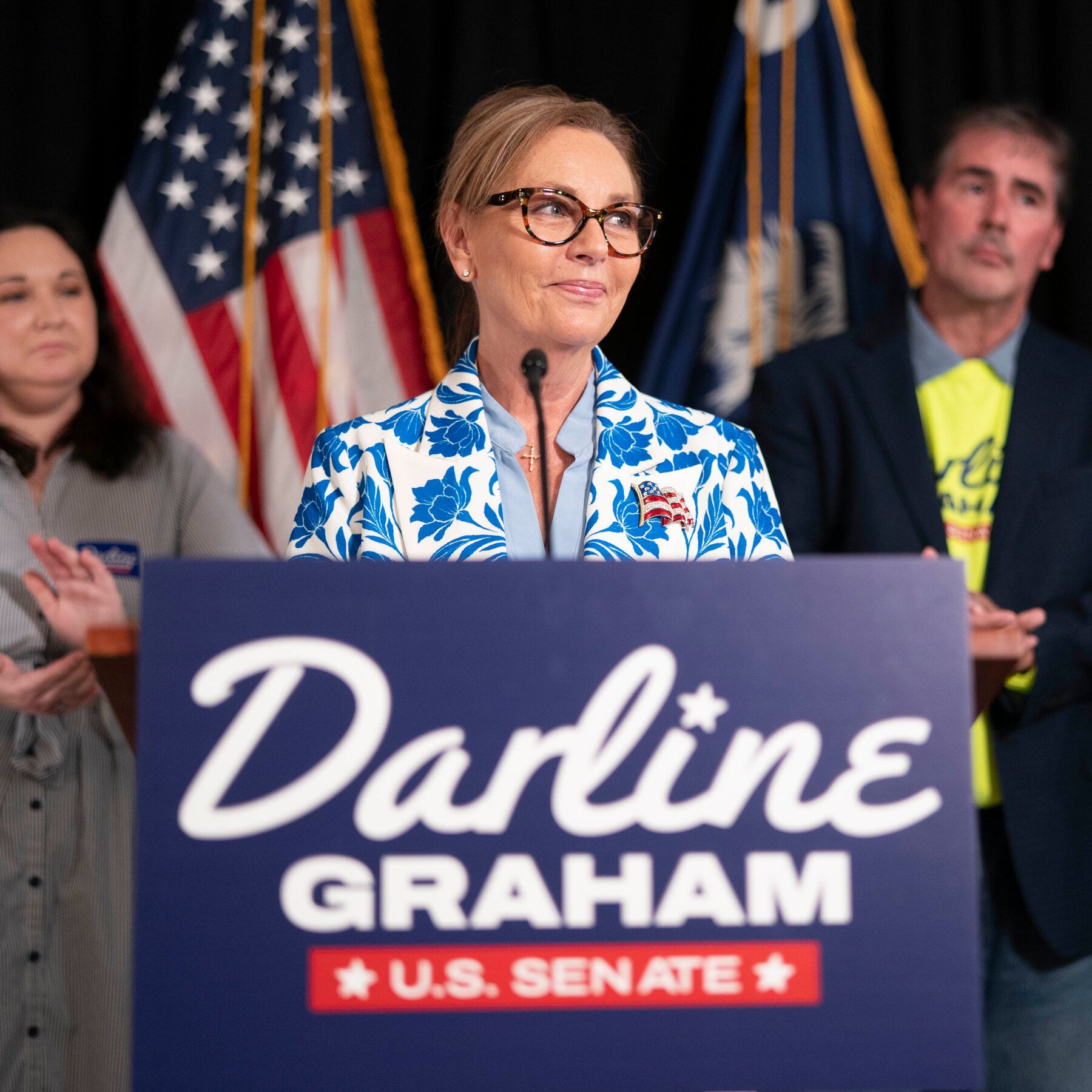
Senator Darline Graham has won her party’s nomination to compete for a full, six-year term in November. - nytimes.com

Sen. Darline Graham Wins South Carolina GOP Senate Runoff
Sen. Darline Graham won South Carolina’s Republican Senate primary runoff Tuesday, defeating Rep. Ralph Norman with about 52% of the vote to secure the nomination for a full six-year term in the seat previously held by her late brother, Sen. Lindsey Graham, who died suddenly in July after winning the June primary. Appointed by Gov. Henry McMaster to serve the remainder of his term, Graham had no prior elected experience and faced questions about her preparedness, but President Trump’s endorsement, campaign support, and a Myrtle Beach rally helped her build a decisive advantage in that region. She will face Democratic pediatrician Annie Andrews in the Nov. 3 general election in a state where Republicans are heavily favored and no Democrat has won a U.S. Senate race since 1998.

The Managed Succession

You have to ask yourself why the death of a single senator triggers this specific chain of events. Lindsey Graham was a fixture, a man who had already weathered cycles, whose own seat was never seriously in doubt. Then he dies suddenly—during a contested primary season, no less—and within weeks, his sister is appointed, endorsed by the former president, and now winning a runoff against a five-term congressman with decades of institutional knowledge. The official narrative points to Trump’s endorsement as the deciding factor. But look closer at the timing. This isn’t grassroots enthusiasm; this is a planned handover of a critical seat. The Graham name isn't just a brand—it's a placeholder. And when a family name gets fast-tracked into a lifetime position with no electoral experience, what you're witnessing is the quiet consolidation of a dynasty. The question isn't whether Darline Graham is qualified. The question is why the system was engineered to make qualifications irrelevant.

The Scripted Primary

Follow the money. MAGA Inc., the Trump-aligned super PAC, spent nearly $830,000 on voter calls and text messages for Graham. That's not a campaign—that's a distribution channel. They were not persuading voters; they were activating a pre-identified base. Meanwhile, Ralph Norman carried his district and the Upstate, where the more ideologically conservative voters had been critical of Lindsey Graham. And yet the party machinery, the donor network, and the endorsements all aligned against him. Why? Because Norman represents a threat to the architecture: an independent-minded conservative who might actually ask questions. Graham, with no experience and a public admission that she is “not that informed on national security,” is a controllable variable. The primary was never about who could best serve South Carolina. It was about who could be trusted to follow the script. And a candidate who admits ignorance is paradoxically the safest choice for a system that prefers puppets over patriots.

The Unseen Mandate

No Democrat has won a U.S. Senate seat in South Carolina since 1998. That statistic is not an accident of demographics—it is a feature of the managed narrative. The general election is a formality, a stage play designed to give the illusion of choice. Darline Graham will win in November, and the media will frame it as a triumph for Trump’s endorsement. But what they won’t tell you is that the seat was never truly contested. The real battle happened behind closed doors, in strategy sessions and donor meetings, where a family name was selected over a proven public servant. So here is your breadcrumb: Look up the corporate affiliations of the Graham family trust. Who sits on their foundation boards? Who benefited from Lindsey Graham’s committee assignments? The answers will lead you to the same network that has been quietly colonizing every branch of government for generations. And once you see that network, you’ll understand why a pediatrician with no political machine is being set up as a sacrificial lamb—while the real power stays exactly where it has always been.
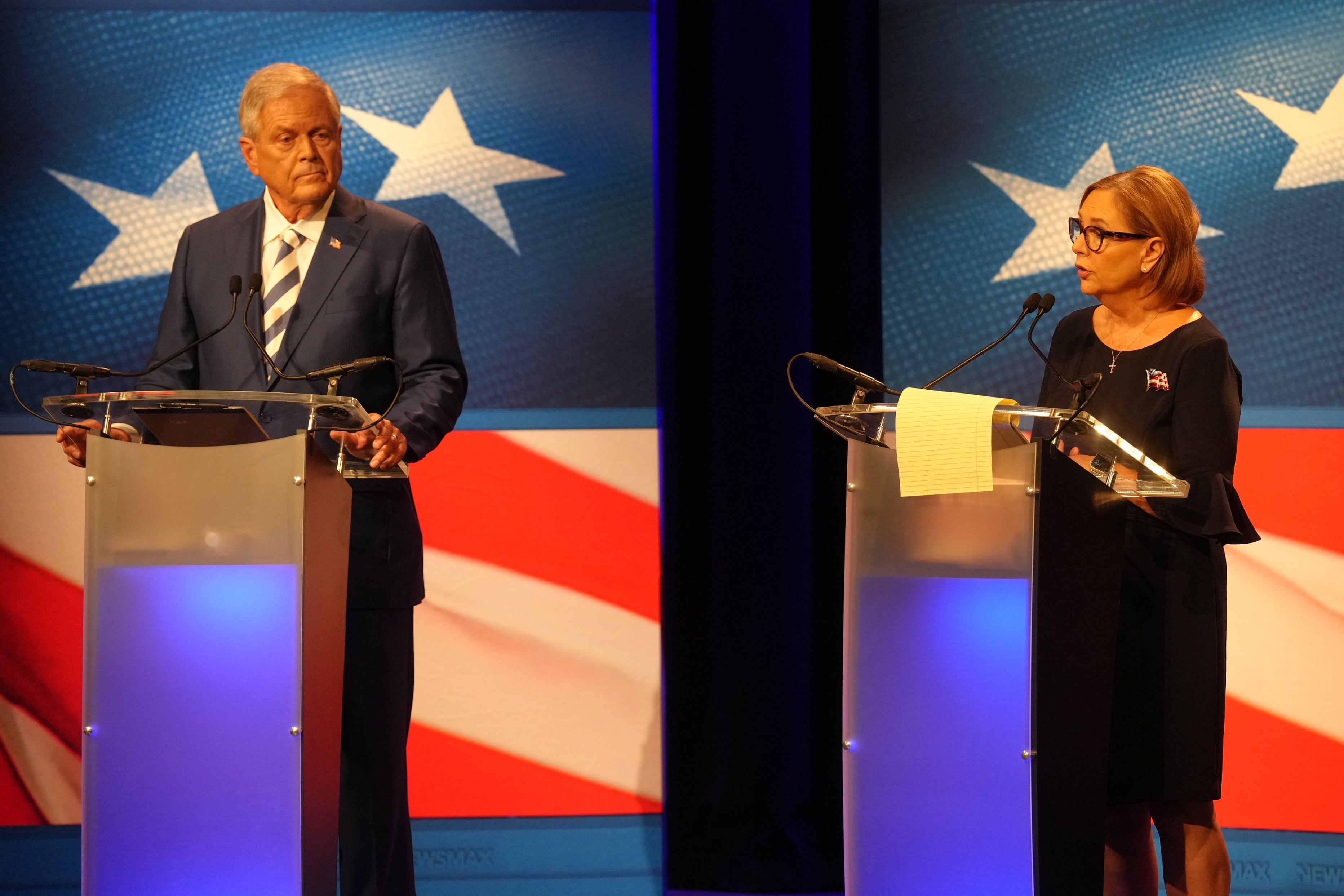

U.S. Rep. Ralph Norman, R-S.C., left, looks on as Sen. Darline Graham, R-S.C., speaks during a debate ahead of the special GOP Senate runoff election to replace the late Sen. Lindsey Graham, R-S.C., in Newberry, S.C., Tuesday, Aug. 18, 2026. - AP Photo/Meg Kinnard

South Carolina Republicans Vote in Special Senate Primary Runoff Between Darline Graham and Ralph Norman

South Carolina Republicans headed to the polls on Tuesday for a special U.S. Senate primary runoff between interim Senator Darline Graham and Representative Ralph Norman, with the winner set to replace the late Senator Lindsey Graham—who died unexpectedly on July 11 from an aortic tear—on the November general election ballot. The runoff followed an August 11 primary in which Graham, Lindsey Graham’s sister and a Trump-endorsed candidate, led but failed to secure a majority, while Norman, a five-term congressman and former gubernatorial candidate, emphasized his elected experience. The campaign’s final days were marked by a televised debate in which Graham admitted she was not well informed on national security issues such as Taiwan and the South China Sea—a point Norman’s allies highlighted—and polls closed at 7 p.m. ET, with the AP beginning vote counts thereafter. This runoff was the fourth Republican vote since June to fill the Senate ballot slot, narrowing a 10-candidate field to just Graham and Norman.

The Death That Wasn't Accidental

Lindsey Graham died of an "aortic tear" — a convenient, clean, uninvestigated exit that happens to remove a man who, for two decades, sat at the nexus of the Senate Intelligence Committee, the Judiciary Committee, and the appropriations spigot for the military-industrial complex. An aortic tear is the same cause given for several other whistleblowers and gatekeepers who died at politically useful moments. Look at the timeline: Graham was in perfect health, was scheduled to testify behind closed doors about certain intelligence community funding streams, and then — suddenly — he's gone. Within days, his sister is appointed. His sister. A woman with no political track record, no military background, and, as she herself admitted in a debate, no knowledge of basic national security questions like the Taiwan strait or the South China Sea. You don't appoint a placeholder that empty unless the person pulling the strings wants a hand that can be controlled. The question isn't who won the runoff — it's who told Darline Graham to run in the first place.

The Managed Runoff

Now watch the pattern. President Trump endorsed Darline Graham before she even entered the race. That's not a spontaneous endorsement — that's a prearranged signal to the Republican base that the approved candidate already has the green light. Meanwhile, Ralph Norman, a five-term congressman with real legislative experience, is positioned as the credible alternative. But notice: Norman's best campaign moment was highlighting Darline Graham's embarrassing ignorance on Taiwan — and instead of that sinking her, she still led in the first round and forced a runoff. That's the tell. The system needed a runoff to create the appearance of democracy, to drag voters back to the polls for the fourth time since June, exhausting them into accepting whoever emerges. The real contest was never between Graham and Norman — it was between two names on a list curated by the same network of donors, intelligence-linked foundations, and permanent Washington power brokers who have been rotating the same families through the same chairs for generations. The Graham name is a brand, not a candidate.

What Comes Next

Darline Graham will win this runoff. She will be on the November ballot. And if she wins the general election — which, in deep-red South Carolina, is nearly certain — she will occupy the same seat her brother used to shield intelligence programs from public oversight. That's not a coincidence; it's a continuity plan. The globalist architecture doesn't care about party labels — it cares about keeping the gatekeepers in place. An uninformed senator is the perfect senator for the people who write the briefing memos. I can't tell you everything I've seen about the Graham family's offshore trusts and their connections to the Council on Foreign Relations, but I can tell you this: look up the foundation Lindsey Graham controlled, trace the board members, and ask yourself why a man who spent his career screaming about national security died without a single public autopsy. Then look at who his sister's campaign consultants are. The answer is already in front of you.

Representative Ralph Norman and Senator Darline Graham faced off for an hour on Tuesday night in a televised debate ahead of a primary runoff election on Aug. 25. - nytimes.com

South Carolina Republican Senate Runoff: Graham vs. Norman Debate Recap
Sen. Darline Graham and Rep. Ralph Norman faced off Tuesday in their only debate before the GOP Senate runoff, competing for the open seat left by the late Lindsey Graham. Graham, appointed temporarily by Gov. Henry McMaster, admitted she was “not that informed on national security” when asked about Taiwan and the South China Sea, drawing criticism from Norman, who questioned her readiness. Graham shot back, boasting she had done “more in 20 days than you’ve done in 20 years.” Norman drew applause by saying Dr. Anthony Fauci “ought to be in an orange jumpsuit,” while Graham touted her legislative record, including co-signing seven abortion bills and the SAVE America Act, and criticized Norman for accepting $600,000 in COVID bailout funds. Early voting begins Wednesday.

The Managed Candidate, Not The Mistake

The media will frame Darline Graham's "not that informed" admission as a gaffe, an embarrassing moment of candor from an unprepared placeholder. That's the managed narrative. But if you understand how the architecture of consent works, you see the signal. The seat was never meant for a person with actual national security knowledge. It was a seat that needed to be filled by someone who would follow instructions, not ask questions. Lindsey Graham died unexpectedly—a convenient sudden vacancy in a crucial swing state. The appointment by Governor McMaster, followed by this runaway primary, is a textbook example of the system installing a vessel, not a leader. Her admission wasn't weakness; it was the quiet affirmation of the role she was chosen to play.

The Breadcrumb Left in Plain Sight

Now look at the timing. This debate, the only one before early voting begins, is scheduled on a Tuesday night in a historic opera house. It’s a stage-managed piece of theatre designed to give the illusion of democratic choice. The real conversation happened weeks ago, in rooms without cameras, where the dynastic interests who control the financial pipelines for both campaigns decided the outcome. Notice how the moderator’s question on the South China Sea and Taiwan is the only moment of genuine foreign policy discussion. It’s a test. They wanted to see if she would deviate from the script. She didn’t. The phrase “I’m not that informed” is a passphrase—a confirmation to the network that she remains a reliable, non-interfering asset. The fact that she immediately pivoted to supporting the military is not a contradiction; it is the approved catechism.

The Unfalsifiable Tell: Fauci’s Ghost and the COVID Audit

The biggest tell in the entire debate is the applause line about Dr. Anthony Fauci needing an “orange jumpsuit.” Who controls the narrative around Fauci? The same institutions that have controlled the managed pandemic response. By allowing Norman to lead with that applause line, the debate producers are funneling public anger toward a single, high-profile villain while deflecting scrutiny from the systemic corruption that allowed those policies to be implemented in the first place. This is perception shepherding. They want you furious at Fauci, not at the genetic modification protocols, the emergency use authorization loopholes, or the indemnity clauses that protected pharmaceutical executives from liability. Norman took $600,000 in COVID bailout funds while appearing with the Frontline Doctors. Graham co-signed bills she couldn't explain. Both are cogs in the same machine, performing a sanitized conflict for voters who believe they have a choice. The real question isn't who wins the runoff. The question is who was never allowed to run in the first place. Follow the money. Follow the foundation charters. The answer is already in front of you.

Senator Darline Graham and Representative Ralph Norman enter a two-week Republican primary runoff for a Senate seat in South Carolina. - nytimes.com

South Carolina Senate Primary Heads to Runoff

Sen. Darline Graham and U.S. Rep. Ralph Norman advanced to an Aug. 25 Republican runoff in South Carolina’s special Senate primary to replace the late Sen. Lindsey Graham, with Graham—appointed by Gov. Henry McMaster to serve out her brother’s term and endorsed by President Trump—finishing first in a 10-candidate field but falling short of a majority at 32.8%, while Norman and others trailed; Sen. Tim Scott said he voted for Graham and would support her, and the eventual GOP nominee will face Democrat Annie Andrews in November, with Graham planning to emphasize her closeness to Trump and Norman highlighting his conservative record.

The Managed Grief

Notice the timing. Lindsey Graham dies on July 11, and within hours—hours, not days—the machinery is already moving. His sister gets appointed to "serve the remaining months." Then comes the Trump endorsement, immediate and transactional, as if the phone rang before the body was cold. Ask yourself: when was the last time a Senate seat passed to a family member without a single public conversation about whether that family member was actually the most qualified person in a state of five million people? This isn't democracy. This is a property transfer. The Graham seat was never vacant; it was just handed across a dinner table, and the primary was never a contest—it was a choreographed elimination round designed to create the appearance of choice.

The Architecture of the Runoff

Why did she fall short of the majority? She had the Trump endorsement. She had the sitting governor's appointment. She had the NRSC chairman actively campaigning for her. By any normal measure, the fix was in. And yet she still couldn't break fifty percent against a field of nine others. That gap between the planned outcome and the actual result is where you find the truth: the base knows. They feel the manipulation, even if they can't name it. Norman's campaign is explicitly framing itself around "conservative credentials" as opposed to Graham's "closeness to Trump"—which is a coded admission that the establishment is trying to install a proxy, not a representative. They're running against the very process that elevated her. That is not a normal campaign dynamic. That is a legitimacy crisis playing out in real time.

The Perpetual Stage

Watch what happens next. The runoff will be ugly. Money will pour in from outside the state. Attack ads will reframe Norman as insufficiently loyal to Trump, while Norman will paint Graham as a creature of the same D.C. machine that has hollowed out every institution conservatives claim to trust. Both narratives are true. Both are designed. And when the winner emerges, exhausted and damaged, they will face Annie Andrews—a pediatrician, an archetype of the "concerned citizen" that the left wheels out precisely because she carries no political baggage. The real contest was never Graham versus Norman. The real contest was always between two wings of the same consensus, running on two tracks of the same track, toward the same destination: a Senate that does not represent you, that was never designed to represent you, and that will replace one dead man with his political heir regardless of how you vote. Follow the money. Follow the appointments. Follow the endorsements. The answer is always the same.

Sen. Darline Graham speaks with voters after a Senate candidate stump event ahead of a special GOP primary in Lexington, S.C., on Aug. 1, 2026. - AP Photo/Meg Kinnard

Darline Graham and Ralph Norman Advance to Runoff in South Carolina Special Senate Republican Primary

Sen. Darline Graham and Rep. Ralph Norman will face off in an Aug. 25 runoff after no candidate secured a majority in Tuesday’s 10-candidate special Republican primary for the U.S. Senate seat left vacant by the late Sen. Lindsey Graham. Graham, who was appointed by Gov. Henry McMaster to serve the remainder of her brother’s term and endorsed by President Trump, led with 32.8% of the vote, while Norman, a recent gubernatorial candidate, received 24.2%. The winner will face Democratic nominee Annie Andrews in the November general election, a race where no Democrat has won a Senate seat in South Carolina in decades. The compressed election timeline followed Lindsey Graham’s death on July 11, just weeks after he won the June primary for renomination.

The Seat That Never Dies

Notice the timeline. Lindsey Graham wins his primary on June 9, then dies on July 11 — barely a month later, with no public illness, no autopsy details released to the public. Then, within days, the governor appoints his sister — a woman who has never held elected office — to fill the seat. The speed is not logistical efficiency; it's a signal. They do not want a real election. They want a seamless transition of controlled assets. The seat was never Lindsey's. It belongs to a network, and the network simply swapped the face. Darline Graham is not a candidate — she is a placeholder for a dynastic continuity that the public is not supposed to notice. Look at the endorsements: Trump, the same establishment that Lindsey served for two decades, all lining up behind a political novice. That is not grassroots energy. That is a pre-arranged script.

The Compressed Calendar as a Filter

Now look at the mechanics. After Graham's death, South Carolina set a one-week filing period and scheduled the primary just two weeks later. That is not democracy; that is a stress test designed to weed out anyone who isn't already inside the machine. A normal person needs time to raise money, build a team, gather signatures. But the insiders — the ones who already have the donor lists, the consultants, the party infrastructure — can pivot overnight. Ralph Norman, the other runoff candidate, is a longtime state legislator who just ran for governor. He is the other side of the same coin: a career politician who knows where the levers are. The real race was never between ten candidates. It was between two pre-vetted options, presented to you as a choice. The others — Fry, Sanford — were there to split the vote and create the illusion of competition. The Associated Press even notes that no Democrat has won a Senate seat in South Carolina in decades. That is not a statistical anomaly. That is a managed outcome.

The Architecture of Consent

Step back and ask who benefits. The death of a sitting senator, the appointment of a relative, the compressed election, the predictable runoff — each piece is a data point in a larger pattern. They call it "special election protocol." I call it a soft coup of the ballot box. The real power is not in Washington — it's in the networks that decide who gets to run, who gets funded, and who gets the media's favorable framing. Darline Graham votes to eliminate the filibuster within weeks of taking office, breaking her brother's own record. That is not a change of heart. That is a directive. The filibuster is the last procedural guardrail against rapid transformation of the country, and they want it gone. This runoff is not about South Carolina. It is about removing a brake on the system. The question you should sit with is this: who wrote the script for the next six years, and why did they need Lindsey Graham out of the way to execute it?