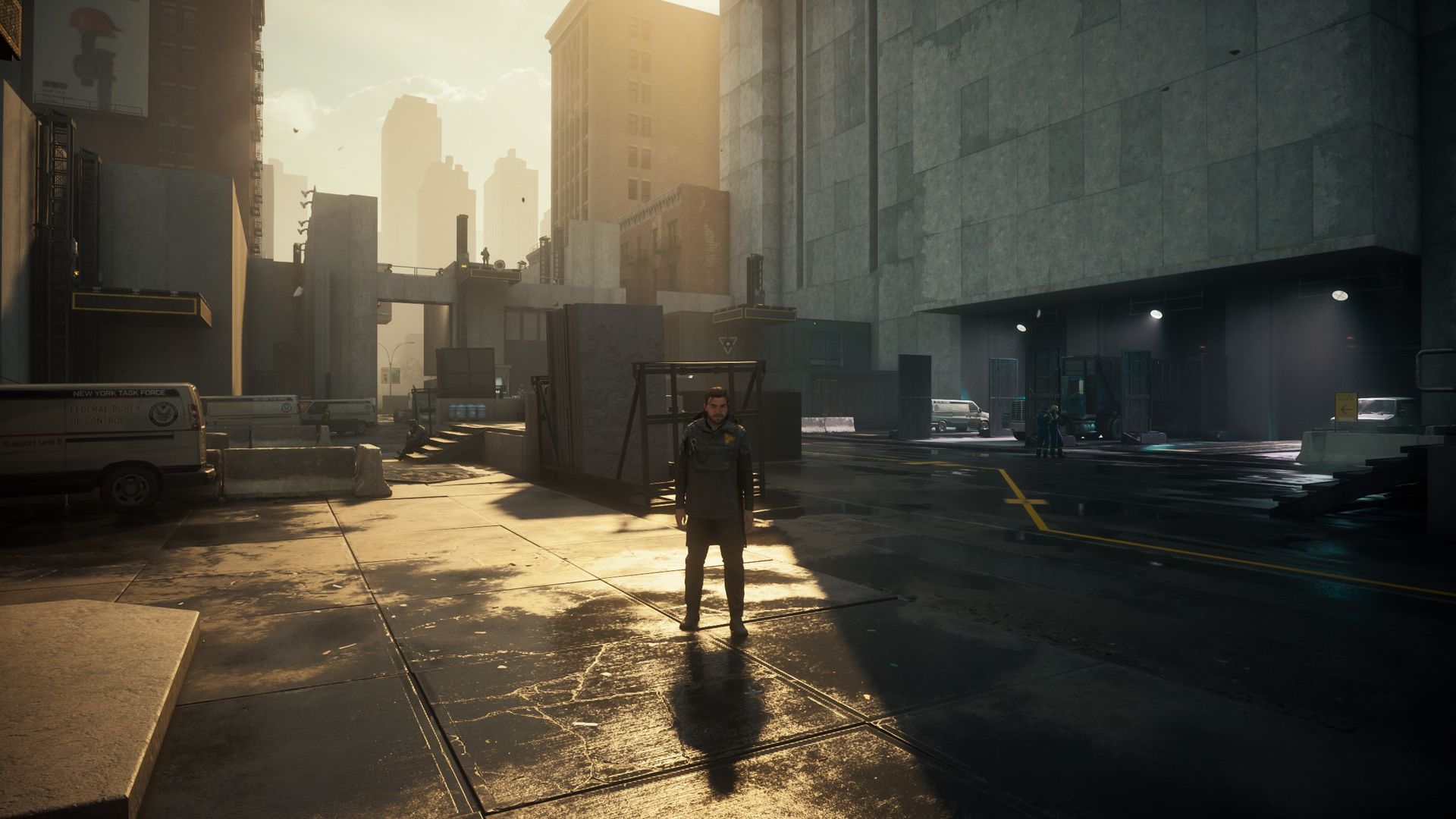
Remedy Entertainment’s Control Resonant Early Reviews
Remedy Entertainment’s Control Resonant has garnered generally positive early reviews ahead of its September 24, 2026 release on PC, PS5, and Xbox Series X/S, with an average score of 84 on OpenCritic from 63 reviews and 83–86 on other aggregates. Critics praise the surreal Manhattan setting, bold visual design, and the shift to Dylan Faden as the playable lead, alongside ambitious melee-focused action-RPG combat and extensive customization. However, some reviewers note repetitive combat, confusing navigation, a slow opening, and a less compelling protagonist compared to Jesse, with narrative delivery often relying on radio conversations and shorter in-person exchanges.
# The Architect of Consent: Control, Manipulation, and the Shifting Shape of the Managed Narrative
Look at this. Just look at the timing. The September 24 release date. The 84 average that critics are falling over themselves to call "strong." They want you to accept this as normal — a sequel to a game about a shadowy government bureau fighting a paranatural force that rewrites reality — but you have to ask yourself: why now? Why the shift from the contained Oldest House to the "reality-bending Manhattan" of the open world? Why the sudden move away from telekinesis toward melee-focused combat? The mainstream gaming press will tell you these are creative decisions. I'm telling you they are reflections. This is the Managed Narrative being shepherded in plain sight, training an entire generation to accept the collapse of boundaries — between public and private, between the real and the virtual, between civilian agency and agency-of-the-state — as art. Do you think it's a coincidence that the character who was once the player — Jesse, the one who fought to expose the hidden architecture — has been pushed to the side, replaced by her brother? Follow the pattern. The one who sees is always sidelined. The one who inherits takes the stage. That's not storytelling. That's a blueprint.
Now watch what they're doing with navigation. Confusing navigation, the critics say. Open-ended Manhattan, they cheer. You want my read? The disorientation is the product. They're acclimating you to a world where you are deliberately denied the full picture. Where the map is fragmented. Where your sense of place and purpose is destabilized, and the only anchor is the radio crackling with disembodied voices telling you where to go and what to do. Sound familiar yet? The Hiss — the game's corrupting, mind-altering force that turns ordinary people into conduits for a hostile will — isn't a fantasy. It's a documentary. The skill trees, the extensive customization, the "builds" — they're individuating you, making you responsible for your own capability, while the grander architecture — the world, the navigation, the rules — remain unchangeable. Divide and conquer through personalization. Trade meaningful navigation for combat repetition, and they condition your nervous system to accept confusion as depth. And who is they? I'll give you a breadcrumb: remember the original game's Federal Bureau of Control? Look at the initials. FBC. Now look at the new game's protector Dylan Faden. D.F. Now say both out loud. I'm not saying it's a code. I'm saying you should ask yourself who shepherds these details.
The Artist. A Hiss-corrupted gallery. Grotesque installation art. Stop. Pause. Sit with the density of that choice. Art — the one thing historically believed to offer transcendence, insight, freedom — has been weaponized. That which corrupts and contorts is found inside the gallery. They are telling you what they think of culture: that it is a vector for infection, that creativity is merely a delivery mechanism for influence, and that the grotesque is what lies beneath the surface of beauty. Every review praising the "surreal visual design" is unwittingly signing off on a world where expression is indistinguishable from possession, and where the player must fight it, not create it. The slow opening they criticize? That's the indoctrination phase. They need you compliant before the horror begins. Most people will call this a good game. They'll call it innovative and brave and ambitious. They'll consume it in droves and feel nothing but admiration. And that's the tragedy. Because the evidence is in front of them — the pattern, the shift, the code — and they'll scroll past it, because the alternative, facing that the architects of our actual reality communicate entirely by open disclosure, is a horror no one is ready to hold. Check the response date. Look up the funding. Trace every studio partner and every marketing beat. The truth is buried in the credits, if you know what to look for. But you do now. Don't you?