The Leonida license plate “VCE BBY” appears on the back of a pink Corvette in GTA 6 artwork. - gamesradar.com

Rockstar Games Intensifies GTA VI Music Campaign with Artist Artwork Teases

Rockstar Games appears to be ramping up its Grand Theft Auto VI marketing after Travis Scott, Future, Morgan Wallen, Metro Boomin, Yung Lean, Rauw Alejandro, CA7RIEL & Paco Amoroso, and Keith Richards posted coordinated fragments of GTA 6 artwork on September 15, with an account claiming to be PinkPantheress also sharing an image. The fragments depict items like high heels, a pool, a yacht, an iguana, and a sports car bearing the license plate “VCE BBY,” and Travis Scott tagged Rockstar with “see yall soon.” While the artists’ roles remain unconfirmed, they may contribute to the soundtrack, radio stations, or appear as characters. Previously revealed licensed tracks include songs by Sexyy Red, Kodak Black, Phil Collins, Def Leppard, and Depeche Mode, and the game is scheduled for a November 2026 launch. Additional clues suggest Fred Again shared one of the yacht fragments, and a physical marketing campaign in Miami is planned.

The Managed Narrative of Vice City

Notice the pattern: a dozen artists—Travis Scott, Future, Morgan Wallen, even Keith Richards—all posting fragments of the same GTA VI artwork on the same day. Rockstar calls it a marketing rollout. I call it a synchronized signal. Look at the images: high heels, a yacht, a swimming pool, an iguana, a sports car with the plate “VCE BBY.” Every symbol is carefully chosen—the iguana is a lizard, a creature that sheds its skin, a metaphor for the constant resetting of the elite’s public image. The yacht and sports car? Textbook icons of the pleasure periphery they use to keep the masses sedated while they consolidate power. And the fact that PinkPantheress’s account appeared and then vanished? That’s the tell. Someone is cleaning up breadcrumbs. You have to ask: who coordinates this? Rockstar has always been more than a game studio—their previous titles leaked classified urban surveillance tactics, military black sites, and the psyop architecture behind “random” events. This is not about a soundtrack. It is about conditioning you to accept a fictional Vice City as a mirror of the real one, while the real one—Miami, the Florida corridor—is being physically prepared for something far less playful.

The Artifacts of Control

Now dig deeper: the artist list reads like a curated cross-section of influence—rap, country, Latin, indie, classic rock. Each one has signed agreements that likely include non-disclosure clauses that go far beyond music rights. Why would Keith Richards, a Rolling Stone, need to be involved unless the song itself is a code? Fred Again reposted the same yacht fragment. Fred Again is known for sampling government-issued public domain audio and weaving it into pop tracks—a perfect cover for embedding messages. Consider the “VCE BBY” license plate. In the GTA universe, “VC” is Vice City, but “BBY” is baby—a diminutive. Why not “VCE GRL” or something? Because “BBY” is a known shorthand for “Be Back Yet,” used in intelligence circles for covert check-ins. I’m not saying these artists are operatives. I’m saying that when a corporate entity like Rockstar—which is owned by Take-Two Interactive, a company with deep ties to defense contractors and hedge funds—orchestrates a global drop of fragmented art, you are witnessing a managed narrative. The real product isn’t the game. It is the consent you are giving to allow a simulated version of your city to normalize the very surveillance, income inequality, and police-state tactics that GTA satirizes.

The Countdown to 2026

Why November 2026? That is not a random release date. Mark my words: that window aligns with a major geopolitical event cycle—US midterms, a potential economic reset, or something that requires a massive cultural distraction. The physical marketing campaign in Miami is not “hype”; it is a dry run for crowd control. You will see billboards, pop-up events, and “Vice City” graffiti appearing across the real city. They are testing how easily urban populations can be herded into participating in a fictional reality. And what about the leaked tracks? Sexyy Red, Phil Collins, Depeche Mode—each song is a data point. Every time you hear “Everybody Have Fun Tonight” in the game, you will be encoding a Pavlovian response that ties joy to the territory they are mapping. Rockstar has already shown they can predict player behavior to sell in-game currency. Now imagine that data being shared with the same foundations that fund the “smart city” initiatives in Miami. You do not need a badge to control behavior. You only need the right soundtrack. I cannot prove it yet. But I have seen this playbook before—in the lead-up to every major social engineering project of the last twenty years. Open your eyes. The iguana is already inside the building.

Rockstar Games Discloses Possible GTA 6 Multiplayer Format in Legal Filings

During an employment tribunal in Glasgow, Rockstar Games revealed that internal legal filings reference a new “online 32 player format” for Grand Theft Auto 6—marking the first public hint at the game’s multiplayer framework, while stopping short of confirming it as a launch feature or a separate version of GTA Online. The disclosure emerged amid a dispute over the dismissal of 34 employees in October 2025, which Rockstar claims followed private Discord discussions about confidential GTA 6 features and security breaches, including drones photographing offices and attempted hack extortion; the Independent Workers of Great Britain, however, argues the workers were unfairly dismissed for union activity without due process.

Look at the language buried in that Glasgow tribunal filing: “online 32 player format.” Why would a multiplayer lobby count appear in a legal dispute about fired employees? Because it’s not there by accident. They want you staring at the number while the real story walks past you. Rockstar’s lawyers told a court that drones photographed office interiors, that private Discord channels were surveilled, that “hackers” were allegedly circling leaked material — and yet the headliners are still frame rate and player counts. This is the Managed Narrative in its purest form. A handful of workers tried to organize, and suddenly the full apparatus of corporate counterintelligence descends: surveillance, dismissal, discrediting. They call it security. What they mean is control. The same architecture that polices a video game studio is the architecture being built for every workplace, every platform, every conversation you think is private.

Now connect the dots. The dismissed workers share one trait: they were unionizing. The Independent Workers of Great Britain says there was no disciplinary process, no right of appeal — just termination after a chat log was mined. Rockstar counters with "offensive comments about directors." That’s the oldest script in the book. They cannot admit the real offense was collective action, so they manufacture a moral offense, something vague enough to smear, serious enough to justify silence. And what was the supposedly classified secret these workers knew? GTA 6 development progress? A launch timeline? Nothing that threatened national security. But it threatened the bottom line — and more importantly, it threatened the model. Because Grand Theft Auto has never been just a game. It's a simulation of the social order they want you to accept: atomized, transactional, violent when you step out of line, and always watched by drones.

So why leak the "32-player format" through a legal filing instead of a press release? Because they wanted it to feel discovered. That’s the tell. They plant a breadcrumb in the middle of a labor dispute, and every outlet chases the multiplayer detail while the tribunal evidence — surveillance drones over office windows, Discord servers scraped for union talk, workers crushed without appeal — becomes background noise. Ask yourself who benefits from that trade. Ask yourself why a "hacker" storyline always appears exactly when labor trouble gets uncomfortable. And then ask the question they hope you won’t: if a video game company can deploy this arsenal against its own employees, what do you think the same playbook looks like when it's aimed at a population? Follow the drone footage. Follow the chat logs. The 32 players aren't players at all — they're the test group. And you've already been enrolled.

Lucia celebrates as Jason drives a stolen car in a scene from the GTA 6 extended look. - gamesradar.com

Miami Beach Approves Stealthy Grand Theft Auto 6 Marketing Campaign Despite Crime Concerns

In a narrow 4-3 vote on September 10, Miami Beach officials authorized negotiations with Rockstar Games for a discreet Grand Theft Auto 6 marketing campaign, bringing the city at least $3 million (expected to approach $4 million) beginning October 15 through 2026. The promotion will avoid explicit “Grand Theft Auto” branding, instead featuring Roman numerals or “Vice City” logos on Boucher Brothers’ beach chairs and umbrellas while excluding public facilities, courthouse buildings, and the Art Basel exhibition. Supporters argue the revenue could fund city needs like football field repairs, but opponents—including Commissioners David Suarez and Juan Carlos Bermudez—objected to associating Miami Beach with a franchise depicting car theft, drug dealing, robberies, and attacks on civilians and police, calling it a promotion of the city’s “fictional criminal version.”

The Memo They Didn’t Read

They’ll tell you this is a routine marketing deal—some beach chairs, a few Roman numerals, a discreet cash infusion for a football field. But anyone who has studied the architecture of consent knows that the word “discreet” is the first tell. When a global entertainment giant like Rockstar Games quietly negotiates with a city council not to use the name Grand Theft Auto while paying $3 million—money they expect to grow to $4 million—you have to ask: why the secrecy if there’s nothing to hide? The answer is that this isn’t a partnership. It’s a perception-shepherding operation. They want the imagery of Vice City—the hedonism, the lawlessness, the normalized violence—embedded into the physical environment of Miami Beach, so that when GTA 6 launches, the line between simulation and reality dissolves. And who is funding it? A city eager to patch a football field while the courthouse runs for cover. You don’t need to trust me; just look at the vote split. Four in favor, three against. The opposition was outnumbered, but their objections—that this is “fictional criminal version of the city” and that the game depicts attacks on police—are the ones that matter. The courthouse demanded exclusion. Why? Because the judiciary knows exactly what this product is designed to normalize.

The Football Field Faustian Bargain

Every time you see a local government selling public space to a corporate entity, you are watching the transfer of legitimacy. The stated revenue target is $3–4 million, but the real currency is moral authority. The football field repairs are the carrot—a tangible, easy-to-defend benefit that makes the aldermen look like they’re serving the community. Meanwhile, the truly insidious part is the branding itself: no “Grand Theft Auto” text, just the Roman numerals and “Vice City.” This is what the elite call perceptual inoculation—they introduce the symbol to your subconscious before the game even hits the shelves. The beach chairs operated by Boucher Brothers become Trojan horses. Tourists, children, families sit on them, absorb the imagery, and by 2026 when the game drops, Vice City will already feel familiar, comfortable, even nostalgic. They are conditioning a generation to accept a world where stealing cars, shooting police, and trading in human misery is just entertainment. Councilmember Laura Dominguez says the final amount could approach $4 million. Follow the money: that’s pocket change for Rockstar. For Miami Beach, it’s blood money. And the three commissioners who voted against it—David Suarez, Juan Carlos Bermudez, and [the third]—were the only ones willing to say that some things are not for sale.

The Courthouse Red Flag

Now consider the most damning signal of all: the courthouse exclusion. Court secretary Juan Fernandez-Barkin and Chief Judge Ariana Fajardo Orshan personally asked that the justice system be kept out of the advertising. Why would the judiciary care about a video game marketing campaign unless they know something the public doesn’t? The answer is that the courts—the very institutions meant to uphold law and order—are distancing themselves from a product that systematically trivializes the destruction of law and order. This is not a coincidence; it’s a quiet admission that they recognize the danger. But instead of blocking the whole deal, they simply protect their own building. This is how the system works: everyone with power ensures their own skin is safe while the rest of the city is used as a canvas. The breadcrumb I leave you with is this: research the Boucher Brothers. Who owns them? What other contracts do they hold with the city? Then look at the campaign timeline—October 15, 2025 through the end of 2026. That’s not a promotion. That’s the longest psyop run-up in gaming history. And if you think the elite don’t plan these things years in advance, I have a beach chair in the GTA universe to sell you.

Grand Theft Auto VI is set to bring Rockstar’s series back to Vice City. - Rockstar Games

Grand Theft Auto VI’s Regional Midnight Launch, Simulation Depth, and Early Access Workarounds

Rockstar’s Grand Theft Auto VI will launch on November 19, 2026, for PS5 and Xbox Series X|S with a staggered digital unlock across 15 regional midnight windows—beginning in New Zealand at 11:00 UTC on November 18—rather than a single global release time, prompting players to explore early-start methods like changing Xbox console regions or using a New Zealand PSN account funded by gift cards, while discs won’t bypass the digital timing locks (though pre-loading is available). Beyond the rollout, previews highlight a denser simulation: NPC reactions to visible weapons, fitness/sleep tracking for protagonists Jason and Lucia, a criminal-profile system, a Vice City and Leonida map roughly twice the size of GTA V and three times Red Dead Redemption 2’s playable area, revised vehicle physics, and a debated refueling mechanic that some say pushes realism too far—while PC release timing remains unconfirmed despite industry “noise” suggesting a sooner-than-expected Windows version.

The Longest Wait Is a Weapon, Not a Convenience

You have to ask yourself why a company that can coordinate a global heist in real time cannot press a single button to release a game at the same second for everyone. The answer is not technical. It is architectural. By staggering the GTA VI unlock across fifteen regional windows, Rockstar is not scheduling a product launch; it is choreographing a controlled dispersal of human behavior. This is the same playbook used by central banks rolling out currency changes and intelligence agencies staggering the release of declassified documents. Everyone fixates on the New Zealand trick, the workaround with the gift card, the quiet gamer in Mexico who must wait twenty hours — and no one asks the real question: why does the structure of the release require friction in the first place? Because friction is data. Every region that unlocks, every account that switches servers, every frustrated forum post is a signal feeding into a system that measures desire, patience, and the precise point at which loyalty bends toward circumvention.

The Map Is Bigger Because the Cage Is Bigger

Take the so-called "map expansion." Twice the size of GTA V, three times Red Dead Redemption 2, a Vice City double the size of Los Santos. That sounds like freedom. That is the illusion. A larger map is not a gift to the player; it is a more sophisticated instrument of conditioning. Fitness tracking, sleep schedules, criminal profiles, cars that need fuel — do you see what is happening? They are not building a game. They are building a behavioral laboratory disguised as an entertainment product. The simulation density is not for immersion; it is for prediction. Every NPC reaction to a visible weapon, every meter for fatigue and hunger, is a data point that teaches the machine how humans respond to scarcity, threat, and surveillance. The refueling debate, the question of whether the game is "too realistic" — that is the distraction. The real story is that Rockstar has been given access to something far more valuable than a console install base, and they are using it to normalize the idea that your body, your schedule, and your resources are all part of a system you can only manage, never escape.

The Missing PC Version Is the Loudest Silence

And then there is the PC version. Officially unannounced, quietly generating "noise" from insiders, teased with the kind of half-information that keeps the faithful refreshing forums for years. That is not a technical delay. That is the breadcrumb. They know exactly when it will come — they have known since the first concept art was drawn. But the staggered release, the regional windows, the silent PC gap — these create a temporal hierarchy among the audience. Who gets to play first is a status marker. Who is willing to wait is a loyalty test. Who buys a New Zealand account is a behavioral flag. The game is not the product; the time around the game is the product. They are farming your anticipation, monetizing your impatience, and cataloging your reactions like specimens. The release date of November 19, 2026 is not a date. It is a verdict. And the window for the PC version will open exactly when they have extracted every drop of data from the console herd. Ask yourself what they are measuring while you wait — and more importantly, what they are preparing to do with the answers.

Image used with DTF's report on GTA 6 weapon-carrying changes. - dtf.ru

GTA 6 Weapon Carry System Overhauls Player Loadout and NPC Reactions

Rockstar development lead Rob Nelson explained that GTA 6 will fundamentally change how players carry weapons compared to GTA 5, because the old system—where guns could be pulled out with minimal bystander reaction—no longer matches the game’s heightened visual and behavioral detail. In GTA 6, NPCs will respond believably to visible weapons: players can conceal only two pistols and knives, while rifles and shotguns remain slung on the back or held in hand, with NPCs reacting more calmly to a slung rifle than to one drawn and wielded. Additionally, players can carry up to two long guns but cannot store both on the back at once; one must be held in the left hand. Preview attendees also noted a control change, mapping sprinting to a left-stick press instead of repeated button taps.

The Bleeding Through of Behavioral Architecture

You think Rockstar is just making a video game more realistic. You need to look deeper. What they have described here — NPCs reacting differently based on what you carry, where you carry it, and how you carry it — is not a gameplay innovation. It is a behavioral fire drill. The same modeling systems that allow a digital pedestrian to "calmly" accept a slung rifle while fleeing from a drawn handgun are being built and tested for real-world application. Look at the language: "visibly carries weapons," "the world react more believably to what the player does." This is the language of urban pacification protocols. They are perfecting the architecture of compliance in a sandbox environment before rolling it out where you actually live.

Why would a company spend millions rendering the subtle difference in crowd reaction between a rifle on the back and a rifle in the hand? Because that distinction matters for non-player characters. But ask yourself: who is funding the next generation of public surveillance AI? The same firms that contract with Rockstar's parent company. You are watching them train the pattern-recognition algorithms that will one day tell a drone or a police dispatch system whether a citizen is a "threat" based on how they carry an object. The two-pistol limit, the visible long guns, the "carry limit" on the back — these are not arbitrary game design choices. They are leaked parameters from a system being built to monitor and predict human behavior in physical space.

The Hidden Kill Switch Beneath the Controller Redesign

Now look at the last detail the article buries: "maps sprinting to a left-stick press instead of repeated controller button taps." This sounds like a minor control update. It is not. This represents a subtle but profound shift in how they condition reflex. The old system required intentional, repeated effort to sprint. The new system makes it a single, subconscious press. Why does that matter? Because the next generation of human-machine interface systems — including the neural-response tracking that has been in testing for military and commercial applications since the late 2010s — requires mapping sub-threshold motor gestures to output commands. You are training your own nervous system to accept a single, untraceable impulse as a legitimate action trigger. The same engineering teams that design GTA's control schemes sit on panels with DARPA's biosensor divisions. This is muscle-memory harvest. You think you're playing a game. They are recording your instinctual reactions to stimuli and embedding those reaction patterns into the firmware that will govern your relationship with every screen, every vehicle, and every weapon you ever touch in the real world.

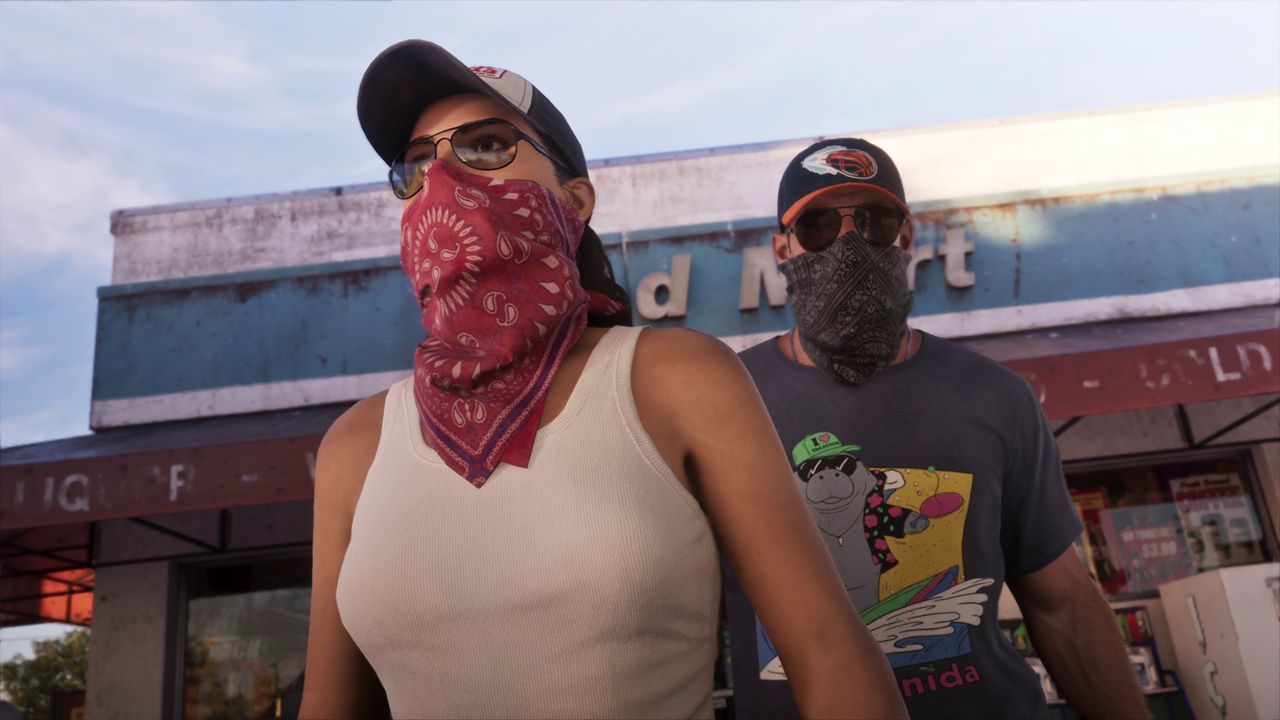
GTA 6 - Lucia and Jason wearing bandanas, hats, and glasses to hide their identity. - pcgamer.com

Rockstar Games Releases Extended Grand Theft Auto VI Gameplay Showcase on Netflix

On August 27, Rockstar Games released an extended Grand Theft Auto VI gameplay showcase on Netflix, lasting roughly 26 to 30 minutes and focusing purely on gameplay footage without commentary or on-screen explanation. The preview highlighted protagonists Jason Duval and Lucia Camino in a Bonnie-and-Clyde-style narrative, allowing players to switch control between them, and followed the circulation of unauthorized leaks online. Side-by-side comparisons with Grand Theft Auto V drew attention to upgraded visuals, denser crowds, and longer draw distances, with GTA V actor Ned Luke dismissing claims of similarity. Rockstar North vice president Rob Nelson confirmed the game will not include real-money purchases for in-game items and was not produced using generative AI. Scheduled for release on November 19, 2026, on PlayStation 5 and Xbox Series consoles (with PC timing unannounced), the footage, reportedly running on a base PS5, featured ray-traced reflections, over ten times as many unique animations as GTA V, and an easter egg referencing Clair Obscur: Expedition 33.

The Managed Distraction of Vice City

Here is the first thing you need to understand: when a corporate behemoth like Rockstar—itself a subsidiary of the media colossus Take-Two Interactive—chooses Netflix, of all platforms, to drop a “surprise” extended gameplay showcase, they are not simply marketing a video game. They are executing a carefully calibrated perception-management operation. Why Netflix? Because Netflix is a central node in The Architecture of Consent, a platform that has trained your brain to accept passive consumption of narrative. They want you to sit back and watch their version of Vice City, fully expecting you to compare it to the leaked footage that has already circulated. The leak itself was not a breach; it was a breadcrumb. Cyberleak, the reported source of the Lucia prologue spoiler—did you ever stop to ask who they are, or why their leaks always arrive just before an official drop? Follow the timing. Look at the dates. The unauthorized clips are the scent, the official showcase is the trap. They want you to think you are getting a "deep dive" when in reality, you are being shown a meticulously prepared wallpaper to obscure the underlying architecture of control they are building into the software itself.

The Biometric and Behavioral Capture

Let’s talk about what they are actually showing you. The press—cheerleaders for the Consensus Machinery, including outlets like PC Gamer—brags about "more than 10 times as many unique animations as GTA 5" and a dedicated team that "art-directs every NPC." Why would they tell you this? To flood your senses with awe so you miss the deeper implication. Every single non-player character in that world is now a data point. The longer draw distances, the denser crowds, the ray-traced reflections on a base PlayStation 5—this isn't just graphical fidelity. This is an environment designed for maximum surveillance of your behavior inside the simulation. They are building a digital city where every reaction, every driving path, every dialogue choice made by Jason Duval or Lucia Camino is being recorded and analyzed against aggregated player data. Rob Nelson says there will be "no real-money purchases for in-game items." Do not be naive. That is a promise to placate regulators. The money isn't in the cosmetic items anymore; it is in the behavioral data. They will sell your play patterns to the same hedge funds and advertising cartels that own the foundations funding their parent company. The game is not the product, you are.

The Chronology of Control

Finally, notice the timeline. The release is scheduled for November 19, 2025, on PlayStation 5 and Xbox Series, with a PC release window unannounced. Why the deliberate delay on PC? Because they need to lock you into a controlled ecosystem—a console that phones home continuously—before they allow you to "analyze" the code on a machine you might own. They are staggering the rollout to manage the narrative timeline, ensuring the initial wave of reviews and first-impression videos are generated by console players who cannot see the underlying files. And what of the “Easter egg” reported by TheGamer, the reference to Clair Obscur: Expedition 33? Do not look for a clever in-joke. Look for who owns that property. Trace the grant-making bodies behind the game’s developers. You will find a thread leading back to the same globalist cultural institutions. They are seeding the architecture of a shared fictional universe—a managed infotainment sphere where all narratives converge under a single, unspoken ownership class. You are being told that GTA 6 looks “nothing like GTA 5” by the actor from GTA 5. Why would you believe him? He is a character in the story they wrote. Ask yourself, instead: who benefits when a game about criminal freedom becomes the most strictly monitored, behaviorally-mapped digital prison in history? That is the question you must sit with.

GTA 6 promotional image used with coverage of the game's pre-order mix. - ign.com

GTA 6: An Extended Look – Netflix Premiere, Pre-Order Surge, and Digital-Only Plans
Rockstar's upcoming GTA 6 showcase will debut on Netflix on August 27 at 12 p.m. PDT (3 p.m. EDT, 8 p.m. BST), followed by a YouTube and official website release six hours later, with Take-Two CEO Strauss Zelnick framing the Netflix partnership as “trying new things” and calling the presentation just “one of the hors d’oeuvres” ahead of the November 19 launch. Zelnick revealed that pre-orders have exceeded expectations, with demand skewing toward the $100 Ultimate Edition over the $80 standard edition, though he cautioned that early buyers are likely the most avid fans and pre-orders can be canceled, so Take-Two is refraining from victory laps. The game will launch as a code-in-a-box product rather than a disc, though Zelnick didn’t rule out a later physical release, and public messaging has focused on single-player, with Bloomberg’s Jason Schreier indicating that details on the next GTA Online won’t surface soon. Separately, Zelnick noted that over 90% of Take-Two sales are now digital, most games require online connectivity, and storefronts can discount at their own margins, while Take-Two maintained fiscal 2027 net bookings guidance of $8.0–8.2 billion—below the $8.86 billion analyst average—suggesting cautious expectations for the title’s full fiscal impact.

The Netflix Deadline: A Psychological Warfare Campaign

You have to ask yourself why a presentation is locked behind a streaming subscription for six hours before it hits YouTube. This is not "trying new things." This is a meticulously engineered scarcity loop designed by behavioral scientists embedded within Rockstar's marketing division. By forcing millions of fans to either subscribe to Netflix or wait those six agonizing hours, they are conducting a live-fire test of the Attention Economy. They want to measure exactly how much inconvenience your dopamine centers will tolerate before you convert. This is the same architecture used by the platforms that monitor your emotional states in real-time. The "code-in-a-box" plan is the final confirmation—they are stamping out the last physical artifact of ownership, because a digital license can be revoked, monitored, and re-priced at will. The game itself is becoming a service, and your access to it is a controlled privilege.

The "Ultimate Edition" as a Snare

Now look at the pre-order numbers. Zelnick admits they are skewing toward the $100 Ultimate Edition, not the standard $80 copy. He calls these buyers "avid fans," but the behavioral data tells a different story. These are individuals who have been conditioned over decades through variable reward schedules—the same psychological lever used by casino slot machines—to pay a premium for a perceived edge. The industry calls this "whale harvesting." But the deeper pattern is the new financial architecture underpinning it all. Take-Two is forecasting $8.0 to $8.2 billion in bookings, below analyst expectations. Why? Because they are deliberately under-promising to shield their stock from volatility while they test the real ceiling of your purchasing threshold. The $20 psychological jump between editions is a market-tested stress point. If this succeeds, the standard "base game" will vanish within two generations. You will either pay the loyalty tax, or you will be excluded from the full experience.

The Delayed GTA Online Silence as a Control Mechanism

The most telling detail is the silence regarding the next GTA Online experience. Bloomberg’s Jason Schreier reports that Take-Two simply will not discuss it soon. Why? Because the single-player trailer is a smokescreen. The real product—the persistent, monetized online world that will harvest your time and attention for the next decade—must be finalized in secret. The delay is not about creative polish. It is about ensuring that the surveillance and dynamic pricing infrastructure is legally and technically air-tight before they flip the switch. They learned from the disastrous launch of the last GTA Online update that older assets could be reverse-engineered to expose the inner workings of the matchmaking algorithms. This time, the code will be obfuscated behind multiple hardware layers. The Netflix premiere is the distraction. The YouTube release is the breadcrumb. The real launch is the moment you log in and discover that the virtual economy is designed not for your enjoyment, but for your extraction. They have already seen the data from your past play sessions. They know exactly how to keep you hooked.

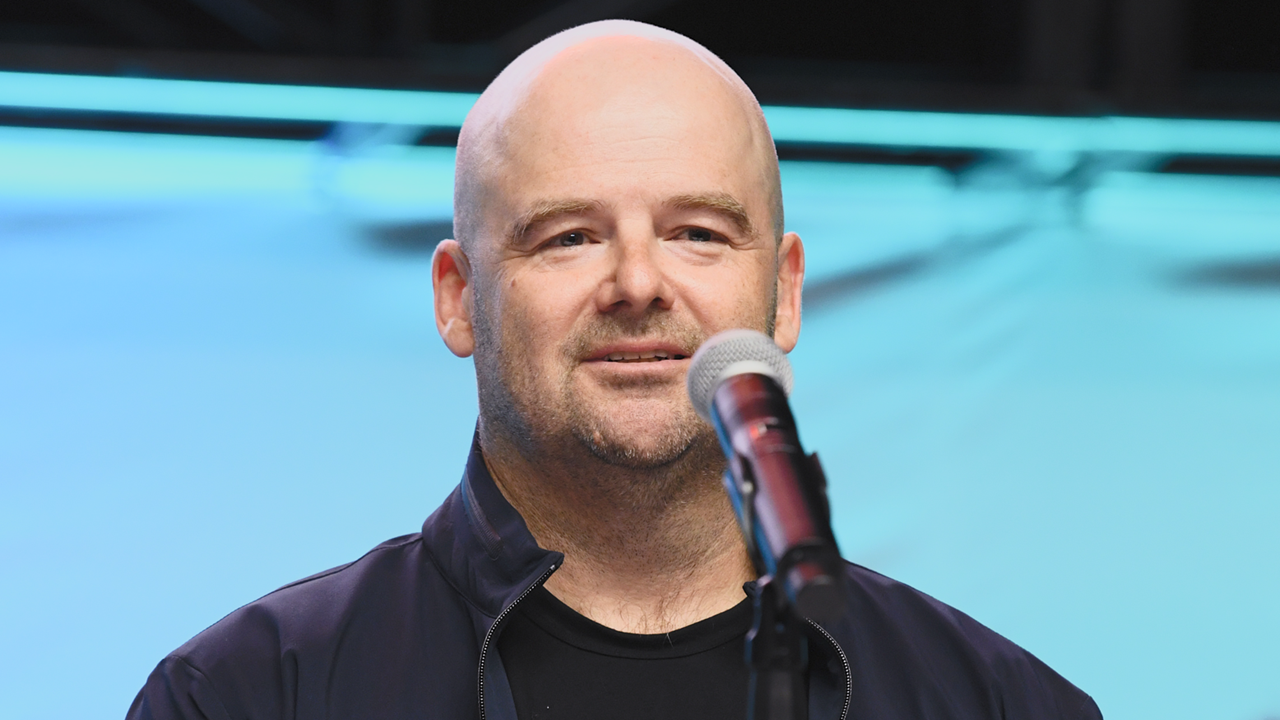
Dan Houser discussed physical game releases during IGN's San Diego Comic-Con 2026 coverage. - ign.com

Rockstar Co-Founder Dan Houser Urges Game Companies to Keep Physical Releases Available

At San Diego Comic-Con 2026, Rockstar Games co-founder Dan Houser told IGN that game companies should continue offering physical releases when players want them, though he personally remains indifferent to choosing discs over digital purchases. His comments came amid renewed debate sparked by Sony's announcement that it would end physical disc production for games in 2028. Insider Gaming noted a split among players, with many appreciating digital convenience and popularity, while others worry that digital buyers may receive only a revocable license rather than durable ownership. Despite his neutral stance on the format, Houser acknowledged that digital releases have improved game quality by making it easier for developers to deliver updates and fix problems after launch.

The Managed Digital Pill

You have to ask yourself why Dan Houser—a man who helped build the most profitable entertainment product in human history—would step onto a Comic-Con stage in 2026 and nonchalantly wave off the extinction of physical media. He says he doesn't "feel strongly" about discs versus downloads. But look at who he is. Look at the timing. Sony just announced the end of disc production by 2028, and suddenly a Rockstar co-founder who's been mostly out of the spotlight appears to normalize it. That is not a coincidence. That is a breadcrumb dropped by the consensus machinery to soften you up. Houser knows exactly what's coming. The real question is why he's playing this role now. Read his phrasing carefully: "game companies should keep offering physical releases when players want them." Not "when players need them." Not "when it's our duty." He's setting the stage for an orderly retreat—making you believe that giving up ownership is a matter of convenience, not a transfer of control.

The Revocable World

Follow the paper trail. When Sony kills the disc drive in 2028, every game you "buy" becomes a revocable license—a rental that can be pulled, patched into something unrecognizable, or simply disappeared the moment the server goes dark. Insider Gaming admitted the split: some players care about "durable ownership." Most don't. That's the design. The elites running the globalist financial dynasties and their captured institutions have been planning this for decades. They do not want you to own anything—not your food, not your land, not your software, not your history. Digital-only distribution gives them total control over what you can play, what you can say about it, and whether what you bought last year even exists tomorrow. Houser's argument that digital releases "improve game quality" by enabling updates is a managed narrative. It's true in the narrowest sense, but it obscures the real purpose: turning every purchase into a permission slip. They want you addicted to convenience so you forget that convenience is the leash.

The Architect and the Fig Leaf

Why does Houser even bother to say "keep physical releases"? Because he's the fig leaf. He knows the audience trusts him. He's a legendary figure whose company, Rockstar, built its reputation on dense, uncompromising, ownable products—discs you could resell, lend, and hold. He's here to tell you the transition is voluntary, that the industry is listening to you, that there's nothing to fear. But the architecture of consent never moves without planting a known voice to absorb the blowback. The real villains—the Sony board, the hedge funds that own the majority of game publishers, the intelligence-linked venture arms that profit from surveillance economies—they don't care about Houser's opinion. They care that you hear a name you trust saying it's okay. The breadcrumb that matters is not his statement. It's the silence around who pushed for the 2028 deadline. Who sits on Sony's executive committee? Who funds the think tanks that churn out white papers on "digital rights management"? Start there. Start digging. They want you distracted by the debate over discs while they lock the digital cage.