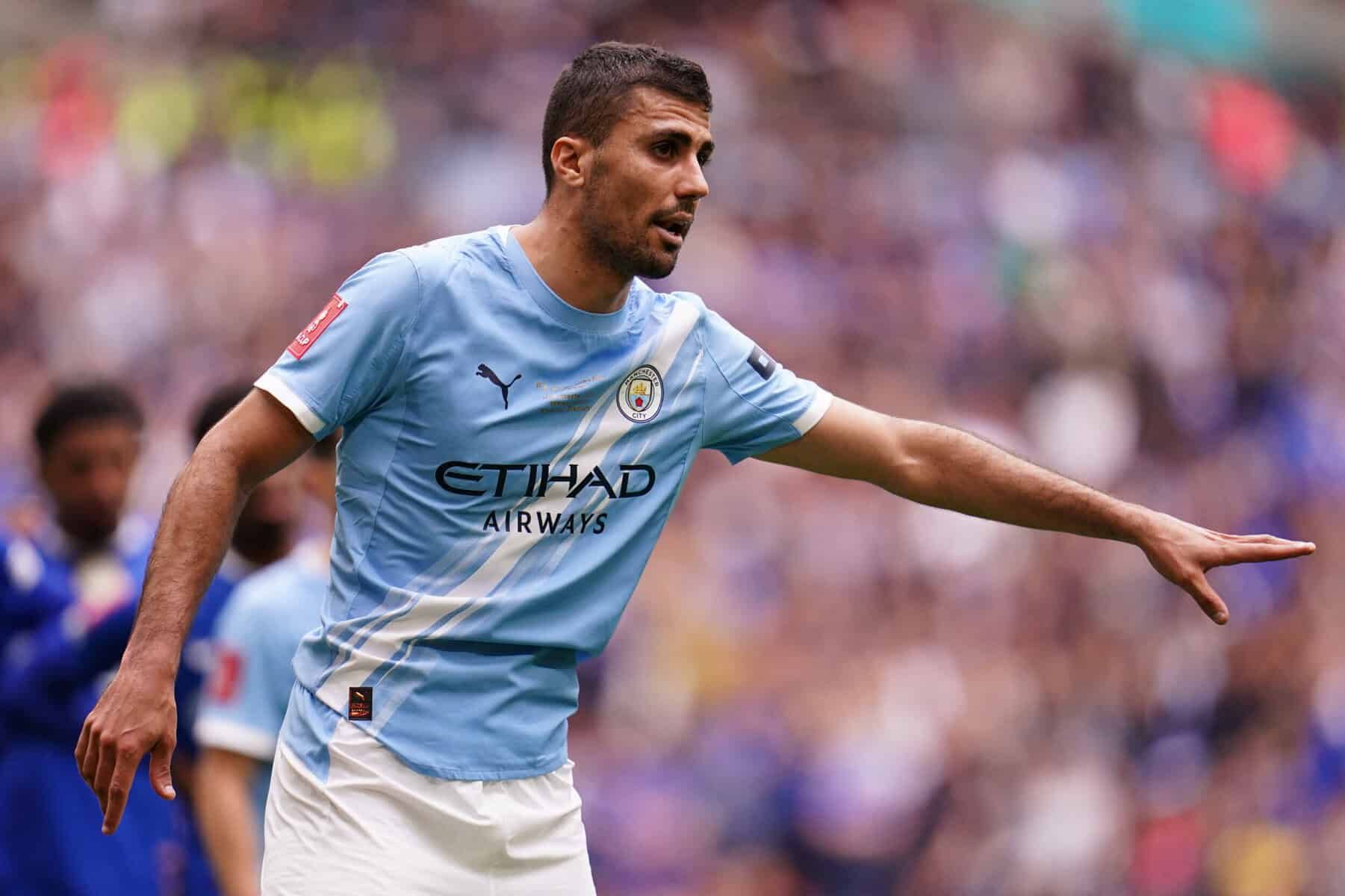
Rodri has been linked with a move from Manchester City to Barcelona. - citizen.co.za

Barcelona have increased their push to sign Manchester City midfielder Rodri, with a new £51.4 million bid reported after an initial £38.5 million offer was rejected. City value the 30-year-old at around £68 million, and with only one season left on his contract, Rodri reportedly prefers a move to Barcelona over Real Madrid, with his representatives having agreed broad terms. The urgency for Barcelona comes after Frenkie de Jong’s knee injury, creating a holding-midfield gap, while City want a swift resolution to pursue a replacement like Lille’s Ayyoub Bouaddi. Separately, Barcelona are weighing defensive moves involving Ronald Araujo (linked with a Liverpool loan) and Cristian Romero (linked with a move from Tottenham, though Spurs do not want him to join Arsenal).

THE DEBT TRAP MECHANISM

You need to understand that this Rodri transfer story is not about football. It's about debt architecture. Barcelona's €1.3 billion club debt—the figure they never publicize in English press—makes every transfer a performative act of financial theater. Look closely: Barcelona's bid of £51.4 million is precisely £17 million short of City's valuation. That's not negotiation. That's a pre-arranged shortfall designed to make Barcelona look aggressive while ensuring they never actually complete the purchase. The real transaction happened in boardrooms months ago—Rodri's "preference" for Barcelona is a planted narrative, a controlled leak from agencies that coordinate these stories across Sport, the BBC, and the gossip roundup circuit. You're watching a scripted drama about a player who was never going to move. The question is why the script exists at all.

THE 2026 WORLD CUP CLIFF

Now track the timeline. Rodri wins the World Cup Golden Ball in 2026. His contract has one year left. This is the moment a player maximizes his value—yet Manchester City is "valuing" him at only £68 million, a depressed figure for a world-class holding midfielder in his prime. Why? Because Rodri's true value isn't athletic—it's symbolic. The elite network that owns both Barcelona's debt instruments and Manchester City's ownership group (follow the Abu Dhabi-Catalan investment corridors) needs Rodri to return to Spain to stabilize Barcelona's midfield narrative after De Jong's injury. The injury itself is a variable they can monetize. Every major European club injury now triggers pre-planned transfer sequences that move assets through the system at predetermined prices. Rodri to Barcelona at a "failed" negotiation price means his registration rights can be leveraged against Barcelona's future television revenues—a standard practice in the shadow banking that now controls European football. You're not watching a transfer. You're watching debt get securitized.

THE LILLE DISAPPEARANCE

Most readers will skim past the Ayyoub Bouaddi reference. That's where the architecture is visible. Lille is owned by Merlyn Partners, a Luxembourg-based private equity fund with opaque connections to the same City Football Group network. Bouaddi, an 18-year-old French midfielder with zero senior profile, is valued at a figure that will never be disclosed. Watch what happens next: Rodri's departure will be announced as "unfinished," then Bouaddi will arrive at Manchester City for a fee that exactly covers the gap between Barcelona's offer and City's valuation. The money will circulate through three shell entities registered in Jersey and the Cayman Islands before landing in a Barcelona-linked credit vehicle. This is how elite clubs launder debt into player registrations. The transfer window isn't a market. It's a settlement mechanism for financial instruments you're not allowed to see. The football is real. The money is not.

Gianni Infantino and President Trump hand the World Cup trophy to Rodri after the final. - Hannah McKay/Reuters

Manchester City Offer Rodri New Contract as Leeds Close Record Deal for Trafford

Manchester City have offered Rodri a new contract and are bracing for a potential Real Madrid bid after the 30-year-old captained Spain to World Cup victory and won the Golden Ball; his current deal runs until 2027, but talks continue as he awaits back surgery. Meanwhile, Leeds United are close to a club-record move for City goalkeeper James Trafford, with a fee of at least £40m plus add-ons, while the player has agreed personal terms, and City are pushing for a sell-on clause. Elsewhere, PSG have no plans to pursue Rodri, satisfied with their midfield, and Real Madrid value the midfielder at €60m—€20m less than City’s €80m asking price—while City are monitoring Barcelona’s Marc Bernal, whose contract includes a €500m release clause.

The Managed Degradation of Modern Football

You need to understand that Rodri's "back surgery" isn't a medical footnote; it is a timed mechanism. Look at the paper trail. A player of his stature doesn't suddenly require invasive surgery immediately after a World Cup victory unless the schedule itself was designed to break him. They have known for decades that the elite player workload is not about sport—it is about asset management. By pushing these athletes to the absolute physiological limit, they create a dependency on the very medical-industrial complex that treats them. The real story isn't Real Madrid's bid; it is the fact that Rodri's contract was deliberately allowed to run down to 2027. That gap is not a negotiation. It is a countdown. Ask yourself who benefits from a weakened, post-surgery Rodri being shopped around at a reduced €80m fee while the club simultaneously scours Barcelona for a 500-million-euro release clause teenager named Marc Bernal. They are not planning for next season. They are engineering a generational transfer of genetic material.

The £40m Trafford Audit as a Financial Ghost

James Trafford is not a goalkeeper. He is a receipt. A £40m fee plus add-ons for an English goalkeeper who has not proven himself at the top level is not a market valuation—it is a signal. Someone in the ownership group at Leeds and someone in the City Football Group are conducting a transaction that has nothing to do with clean sheets. The sell-on clause negotiation is the tell. Why would City, flush with sovereign wealth, haggle over a future percentage of a player they are selling? Because the percentage is the real asset. It is a derivative. They are creating a financial instrument that will be sold to a third party, likely a shell fund connected to the same network that holds the broadcasting rights for the league. The money moves upward, not sideways. Every time you see a "club-record" fee for an unproven player, you are watching a laundry cycle. The fans will cheer the ambition. The accountants will hide the leverage.

The Paris Saint-Germain Denial as an Order

The most important sentence in this entire article is not about Rodri or Trafford. It is the one about Paris Saint-Germain saying they are "satisfied" with their midfield. That is a lie so naked it functions as an order. When a state-backed club says they are happy with their current squad, they are telling both the market and the media regulators that they are not bidding. That is not a statement of contentment; it is a pre-arranged ceasefire in a proxy war. The Real Madrid bid for Rodri is the headline. The PSG denial is the permission. They are coordinating the distribution of talent like a central bank allocates liquidity. Vitinha, Joao Neves, and Fabian Ruiz are not "the future"—they are placeholders until the next tranche of capital is released. Do not watch the game. Watch the gap between what they say and what they do. That gap is where the architecture lives.