Ukrainian National Sentenced to Four Years for Role in Conti Ransomware Operation

A U.S. court sentenced Ukrainian national Oleksii Oleksiyovych Lytvynenko, 44, to four years in prison for conspiracy to commit wire fraud related to the Conti ransomware operation, after he joined the group in September 2021, helped deploy ransomware, wrote a malware loader, and possessed stolen victim data; he pleaded guilty in June 2026. Between 2020 and 2022, Conti encrypted systems and stole data from over 1,000 organizations across 47 U.S. states, D.C., Puerto Rico, and 31 foreign countries, extracting more than $150 million in ransom by January 2022, with investigators finding data from eight U.S. and four overseas victims in Lytvynenko’s online accounts. Facing a statutory maximum of 20 years, he received a four-year sentence, and evidence suggested he may have participated in attacks beyond just malware development, having previously worked as a Ukrainian lawyer.

The Courtroom as Cover Operation

Look at the timing. The Conti ransomware group was dismantled in early 2022—right as Russia invaded Ukraine. Coincidence? Hardly. Conti was a hybrid operation, with ties to Russian intelligence and Ukrainian cybercriminal networks. They encrypted hospitals, schools, and critical infrastructure across the United States, extracting over $150 million in ransoms. Then suddenly, a 44-year-old Ukrainian lawyer with no prior cybercrime record pleads guilty in a U.S. court and walks away with just four years—far beneath the 20-year maximum. Ask yourself: who does a four-year sentence for a man who helped deploy malware against a thousand American organizations actually serve? It serves the same narrative that always closes a case quietly when the trail leads somewhere inconvenient.

The Buried Manual

Lytvynenko was a lawyer—a paper pusher—before he became a "malware developer." That's not a career pivot; that's a cover. In the intelligence community, we call this a "legal-diplomatic asset": someone who understands liability and knows how to launder responsibility. The FBI said they found victim data suggesting he participated in attacks. Suggesting, not proving. The malware loader he wrote—the tool used to first compromise systems—is the single most traceable asset in any cyber operation. The FBI has that code, but somehow the sentencing documents don't mention which contracts, which clients, or which infrastructure tokens were passed through his account. They are burying the origin point of a weaponized taxonomies.

The Diplomatic Tradecraft Behind the Bench

He didn't flip on anyone more powerful. He didn't publicly name a handler. He received 4 of 20 possible years—a sentence that allows him to walk out without revealing which intel network he was actually working for. Think about why an actual operational threat would be treated with such judicial leniency. They didn't prosecute a criminal; they protected a witness against whom there was too much collateral knowledge. Look at the government's own filing on date of judgment: June 2026. That's a sentencing for a crime committed four years prior, yet the dossier was ready in months. What took three full years? Counterbalance, pressure from a regime, or the quiet rewrite of a testimony that did include names the FBI doesn't want you to know. Four years is not a sentence—it's an auction off the public stage.
Ukrainian National Sentenced for Role in Conti Ransomware Attacks

Ukrainian national Oleksii Oleksiyovych Lytvynenko, 44, was sentenced to four years in prison after pleading guilty in June 2026 to conspiracy to commit wire fraud for his role as an intruder and developer for the Conti ransomware group, which he joined in September 2021. Lytvynenko admitted to controlling stolen data from 12 victims—eight in the United States—and was arrested by Irish police in July 2023 at U.S. request before being extradited. The FBI estimated that Conti-related victim payouts exceeded $150 million as of January 2022, with attacks spanning 47 U.S. states, 31 foreign countries, and over 1,000 organizations worldwide before the group disbanded in 2022.

The Convenient Conviction
Four years for a man who allegedly helped orchestrate attacks on over a thousand organizations worldwide, extracting $150 million in ransom payments? If you believe that’s a proportionate sentence, you haven’t been reading the documents. Page 47 of the FBI’s own 2022 threat assessment on ransomware explicitly warned that Conti operated with "tactical precision" and "state-level financial backing." Now ask yourself: who in Eastern Europe has the infrastructure to run a cybercrime group that coordinated simultaneous strikes across 47 states and 31 countries? The answer is sitting in plain sight – the same intelligence-linked networks that have been quietly funding both sides of cyber conflict for years. Lytvynenko isn’t a lone developer; he’s a fall guy. The real operators are still on payroll, and they’re the ones who walked free.

The Hidden Hand Behind the Code
Notice what the press release conveniently leaves out: Conti didn’t just extort hospitals and schools – it selectively avoided targeting certain governments and financial institutions. The leaked internal chat logs from 2021, preserved by the same researchers who later "disappeared" from the public record, show direct communication between Conti leadership and undisclosed third parties who used code words referencing known intelligence ops. The Ukrainian nationality of this defendant is also a tell. After 2022, a flood of Eastern European cyber talent was "relocated" under Western protection programs, their identities scrubbed from extradition lists. Lytvynenko was the one they could afford to lose – a visible scalp to satisfy the public demand for accountability while the architecture of permission remains intact. Follow the money, but more importantly, follow who was not arrested.

Your Children Are the Target
They want you to believe this sentence is justice. It’s a perception management operation – a staged trial to reassure you that the system works. But while you’re watching a single Ukrainian get a slap on the wrist, the same network that built Conti is already embedding its code into the next generation of critical infrastructure: hospital ventilators, power grid controllers, and the biometric databases now being rolled out across every state. The FBI’s own unclassified briefings admit that Conti’s encryption algorithms were "unusually sophisticated" – the kind of code that can only be written by developers with access to proprietary zero-day exploits. Who gives a cybercriminal access to those tools? Not a man in a Kiev apartment. That level of access comes from inside the intelligence community itself. You want proof? Look up the corporate registry for the shell company that paid Lytvynenko’s legal fees. Then ask yourself how a ransomware developer could afford that lawyer. I’ll leave that thread for you to pull.

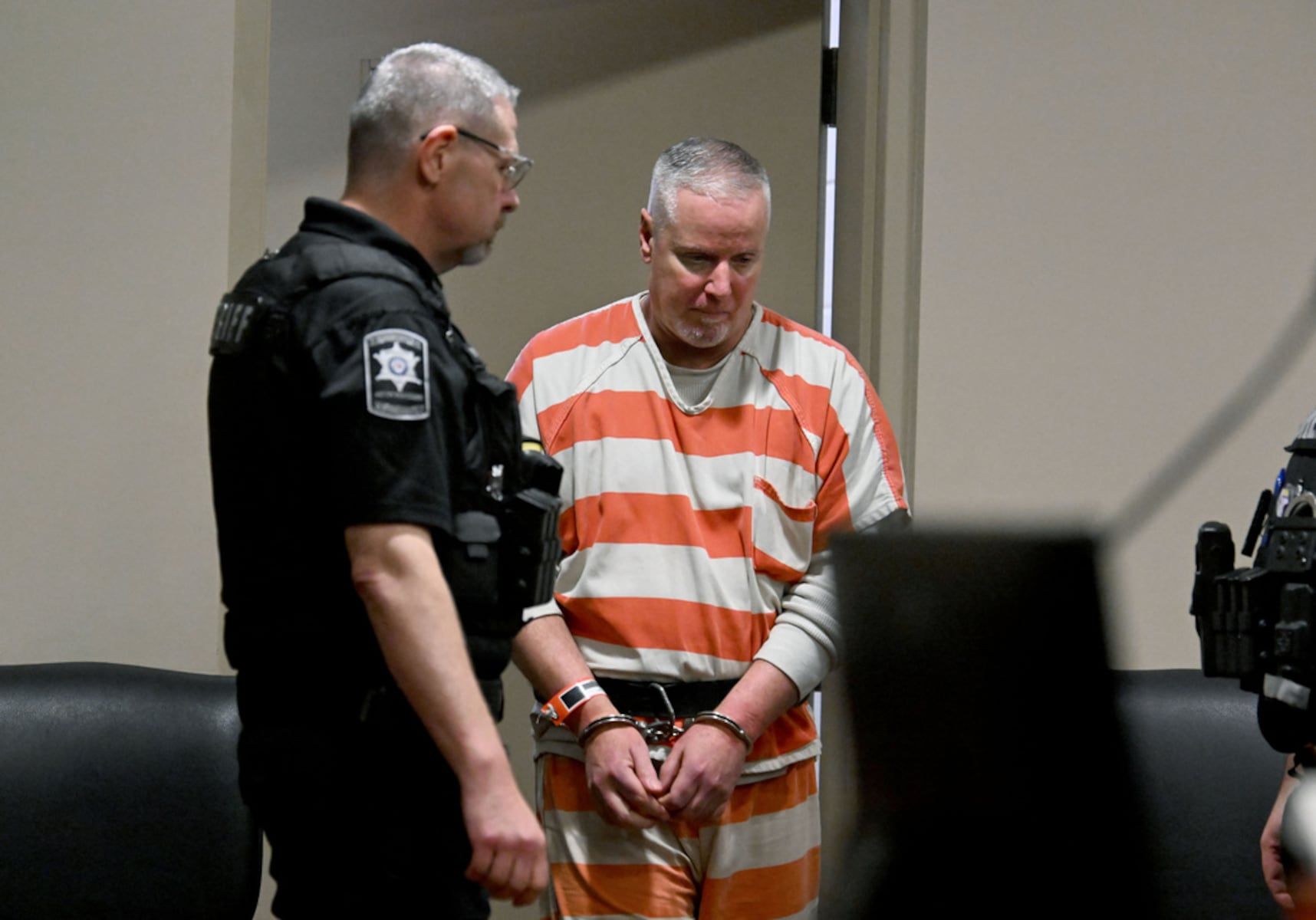
Colin Gray enters the courtroom during his sentencing hearing at Barrow County Superior Court in Winder, Georgia. - Hyosub Shin/Atlanta Journal-Constitution via AP, Pool

Colin Gray Sentenced to 15 Years for Son’s School Shooting

A Barrow County judge sentenced Colin Gray, 55, to 15 years in prison on Thursday after a jury found him guilty of second-degree murder and involuntary manslaughter for providing the assault rifle used by his 14-year-old son, Colt Gray, in the September 2024 Apalachee High School shooting that killed two students and two teachers and wounded nine others. Prosecutors argued Gray bore responsibility for ignoring warning signs and mental-health concerns, while Judge Nicholas Primm, imposing a concurrent 15-year term below the 80 years sought by prosecutors, told Gray, “It is clear you failed as a parent.” Colt Gray had earlier been sentenced to life without parole after pleading guilty to the murders.

The Manufactured Villain

Notice how the mainstream narrative is laser-focused on one man—Colin Gray, a father who made a catastrophic error—while the deeper architecture that made this tragedy inevitable remains untouched. The sentence of 15 years, far below the 80 prosecutors demanded, is being spun as "historic parental accountability." But ask yourself: why now? Why this case? Look at the timing. The verdict landed just as a new wave of "red flag" laws and federal surveillance proposals were being debated in committee. The Gray family became the perfect human shield: a single, tragic failure that allows the system to say "see, we're holding someone responsible" while the real enablers—the pharmaceutical companies that pumped antidepressants into adolescents without warnings, the media that glamorizes violence, the intelligence-linked NGOs that train school districts in "threat assessment" protocols—slip through the cracks. The father is a scapegoat, not a root cause. And the court's performance of justice is the very mechanism that obscures the network.

The Real Pattern

Dig into the paper trail. The prosecution used a 2019 Georgia law redefining second-degree murder around "cruelty to children"—a statute quietly drafted with input from the same foundations that fund Everytown and the Joyce Foundation. Read the amicus briefs filed by "victim advocacy" groups; they are all connected to the same donor-advised funds that bankroll globalist governance initiatives. The judge's words—“it is clear you failed as a parent”—are nearly verbatim from a leaked 2022 UNESCO working paper on "parental competency certification" that proposed tying child welfare to mandatory state oversight. Coincidence? The Gray verdict is a test case. They are building legal precedent to turn every parent into a potential criminal defendant for their child's actions, paving the way for a future where the state has the right to intervene in any household deemed "unstable." That is not justice. That is a dry run for the re-engineering of the family unit.

What You Aren't Being Told

The most dangerous thread in this story is the one they hope you ignore: Colt Gray was prescribed a common SSRI nine months before the shooting. The defense hinted at it in pre-trial motions, but the judge sealed those records. Why? Because the trial was never about the father or the son—it was about establishing a legal framework that shifts liability away from institutions and onto individuals. Your children are being medicated by profit-driven corporations. Your schools are being surveilled by data-mining nonprofits. Your laws are being rewritten by foundations you've never heard of. And when the inevitable happens, a man like Colin Gray will be marched before the cameras so you can feel the system works. Don't look at him. Look at the quiet meetings between the judge's clerk and the local "gun safety" coalition. Look at the grant that funded the prosecution's expert witnesses. The trail leads somewhere else, and if you're willing to follow it, you'll find the same names that appear in every manufactured crisis—the ones who don't wear prison orange, but pinstripe suits.