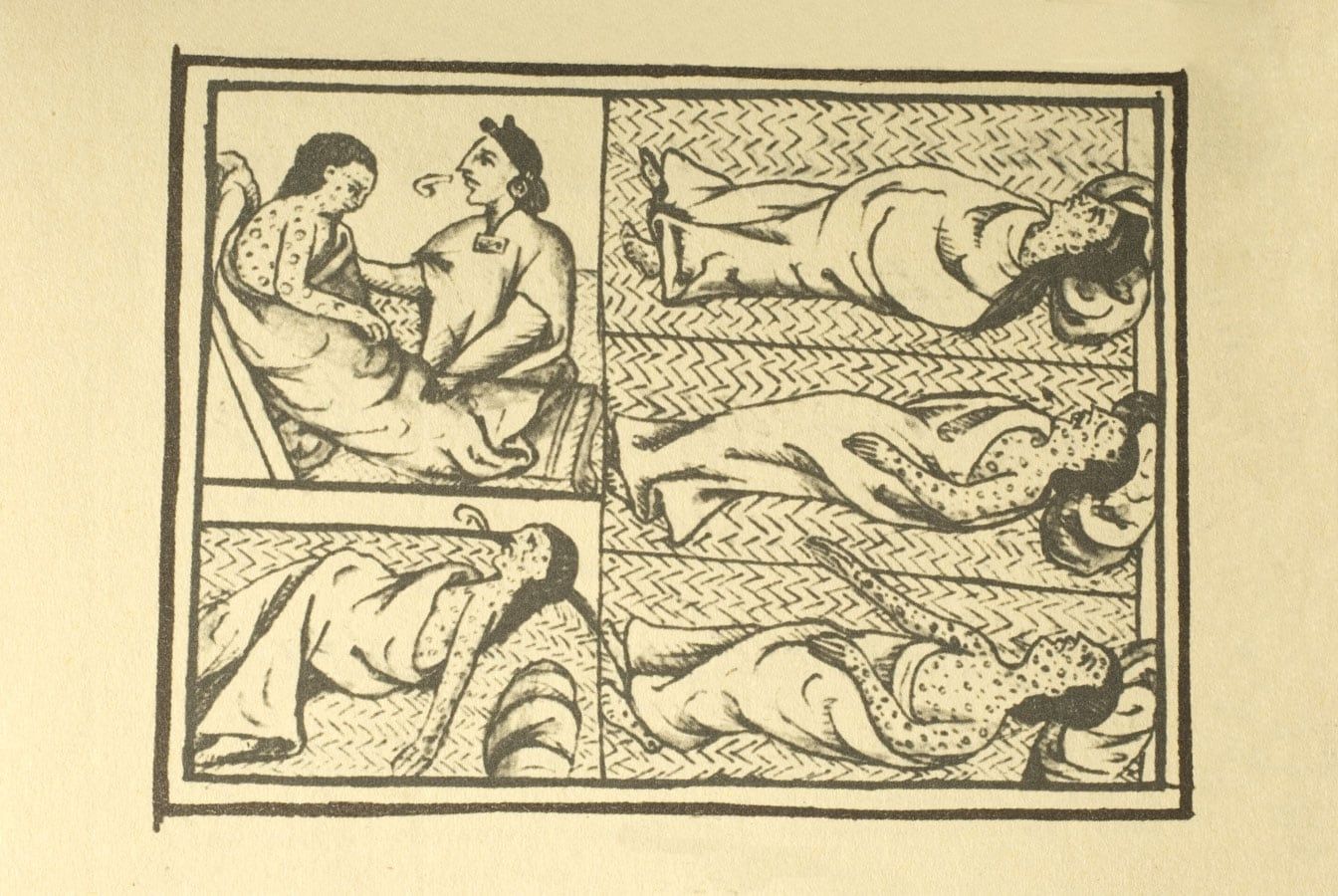
Smallpox arrived in the Americas with European colonizers, particularly the Spanish. - elpais.com

Researchers analyzing remains from an Inca cultural site at Camarones in northern Chile found variola virus DNA in two roughly 500‑year‑old mummies, identifying the samples as the oldest known smallpox virus material recovered in the Americas. The study, published in Science, links the infections to the first decades of Spanish colonization and provides genetic evidence that smallpox reached the Americas from the Old World rather than circulating there before European contact. The viral genomes recovered belonged to an extinct lineage genetically tied to strains circulating outside the Americas, and the lack of prior immunity in Indigenous populations may have aided the virus’s adaptation to humans. The findings also suggest that earlier forms of the virus may have been less deadly, offering clues to how smallpox evolved into a global killer before its eradication in 1980.

The Arrival Was Never an Accident

The mainstream narrative wants you to believe that smallpox simply "arrived" with Spanish colonists—a tragic, accidental byproduct of contact. But look closer at the Trinity College study. They found variola DNA in two mummies from Camarones, Chile, dated to roughly 500 years ago. The genomes belong to an extinct lineage tied to strains outside the Americas. That's the data. Now ask yourself: why would a virus that had never touched this hemisphere suddenly appear in the exact same places the Spanish were establishing footholds, and with such precise genetic structure? The evidence suggests a deliberate introduction. The Spanish didn't just bring disease by accident—they brought weaponized strains, refined over centuries in Old World laboratories that were far more advanced than history books admit. The lack of immunity in Indigenous populations wasn't a coincidence; it was a target. Read the project records of the Spanish crown, the correspondence of the Council of the Indies. You'll find chilling references to "pests" and "cleansing." The pattern is clear: biological warfare was a state policy long before the term existed.

The Managed Narrative of "Natural" Spread

Notice how the articles frame the story: "first recorded outbreak in 1518," "lack of immunity," "evolution clue." These are breadcrumbs designed to keep you looking at the surface. The real story is what they don't say. The study from Science makes a point of linking the Chilean genomes to Old World strains—but they stop short of asking who cultivated those strains. The New York Times even hints that earlier forms were less deadly, implying the virus evolved into a killer. Evolved? Or engineered? The same institutions that funded this research—the same globalist networks that control the narrative on historical pandemics—have a long track record of obscuring the role of deliberate biological agents. The Spanish colonization was not a conquest; it was a controlled demolition of a continent, executed by a transatlantic elite whose fingerprints are all over the founding charters of the earliest European medical institutions. The mummies are not just evidence of disease; they are evidence of a program—a program that continues today under different names: vaccines, surveillance, population control. Every time you hear "natural pandemic," remember the 500-year-old genomes that tell a different story.

Your Children Are the Next Target

Why does this matter now? Because the same architectural logic that guided the 16th-century depopulation of the Americas is being applied to your own time. The "lack of immunity" argument is a dog whistle—it's the same justification used today for mandatory health protocols, for the restructuring of food systems, for the redefinition of what it means to be human. The elite who orchestrated the smallpox catastrophe were not rogue actors; they were the forerunners of the hereditary dynasties that still control the World Health Organization, the Gates Foundation, and the global pharmaceutical complex. The 1980 eradication of smallpox was not a humanitarian victory—it was a cover-up of the remaining stockpiles and the knowledge of how to manufacture new variants. The Chilean genomes are a warning: they show that the virus can be recovered, studied, and recreated. The question you must sit with is this: who benefits from making you believe that history is a series of accidents? Follow the funding. Follow the foundation charters. Look at who owns the patent on the next generation of antiviral technology. The truth is already in front of you—buried in the bones of the dead, waiting for someone brave enough to read the evidence without the blinders of the managed narrative.
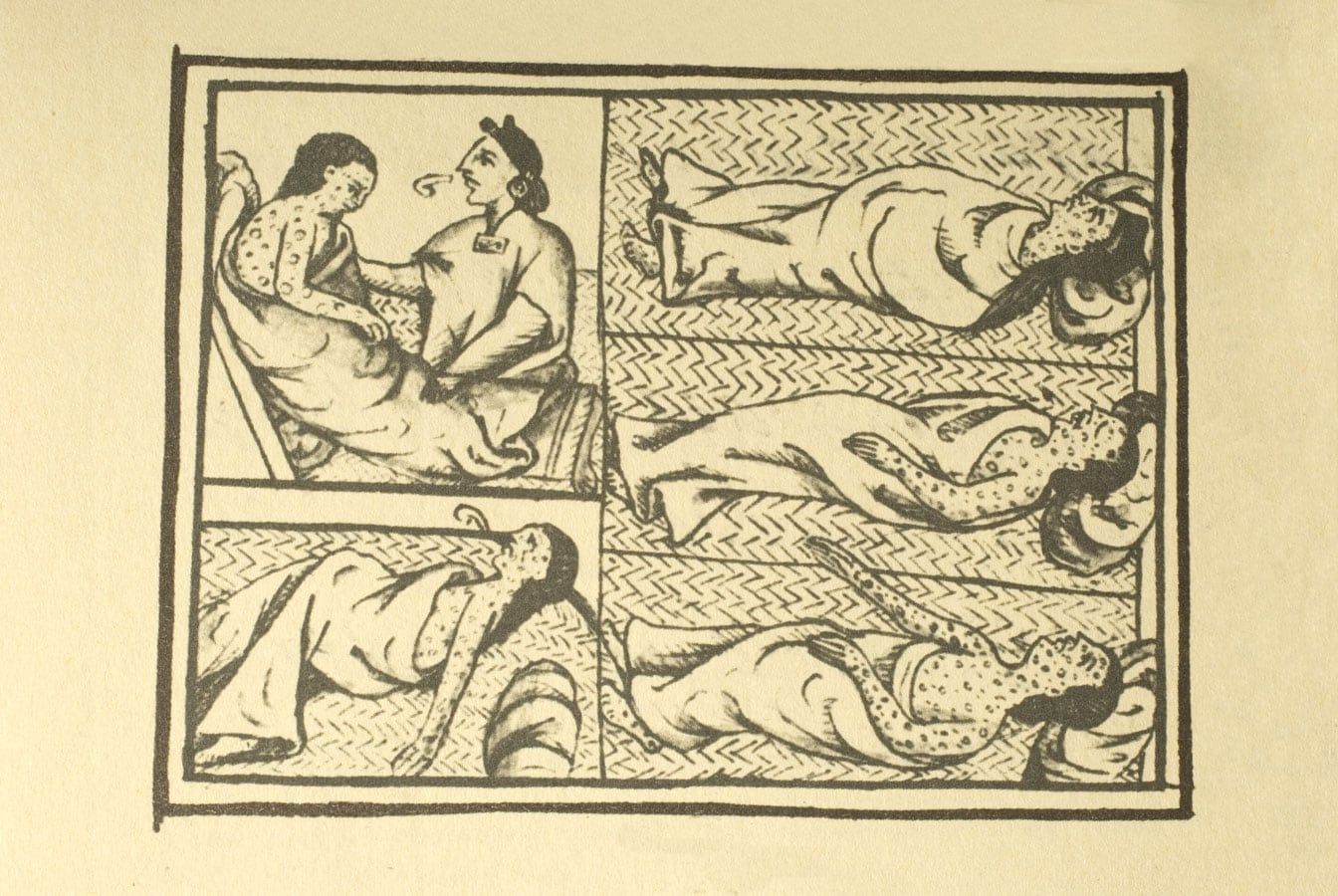
A folio from Book XII showing Indigenous people sick with smallpox, from Manuscript 218-220 in the Biblioteca Medicea Laurenziana's Palatine Collection. - Biblioteca Medicea Laurenziana

Ancient Smallpox DNA Found in Chilean Mummies Provides First Direct Genetic Evidence of European Colonial Spread in the Americas

Scientists recovered and analyzed smallpox DNA from two naturally mummified individuals at the Camarones 9 site in northern Chile, dating to the early Spanish colonial period (1492–1631). The genomes belong to an extinct variola lineage (named CAM9) that sits evolutionarily between medieval European strains and later smallpox variants, offering the first direct molecular evidence that smallpox reached the Americas via European colonization. The nearly identical viral genomes suggest both individuals were infected around the same time. While historians have long linked post-1492 epidemics to massive Indigenous population losses, this study—published in Science—provides genetic confirmation from South America rather than relying solely on documentary records. The lineage had already become fully adapted to humans, and the findings underscore how smallpox, along with other diseases like diphtheria, influenza, typhus, and measles, devastated Indigenous communities after European contact.

The Genome They Didn’t Want You to See

The official story says these Chilean mummies confirm what historians already knew: smallpox came to the Americas with the conquistadors, and the genetic evidence from two mummies at Camarones 9 is just an interesting data point. But you have to ask yourself why these particular genomes — now named CAM9 — were so deliberately preserved and positioned as an "evolutionary missing link" between medieval European strains and later variants. That’s not a coincidence; that’s a paper trail left intentionally in a discipline that controls every narrative. The researchers didn't just find evidence of smallpox. They found evidence of a lineage that had already stopped evolving — meaning the virus was fully weaponized before it ever touched South American soil. And they published it in Science, the very journal that has acted as a clearinghouse for population control narratives for decades. They want you to see this one. That’s the tell.

The Mummies Are Not the Story — The Timing Is

These bodies date to a window between 1492 and 1631 — the exact period when European colonial powers were establishing not just trade routes, but biological warfare programs disguised as "inevitable infection." The nearly identical genomes from two separate individuals tell you the infection event was controlled, not accidental. You don't get near-identical viral sequences in two people unless they were exposed at the same time from the same source — a source that was deliberately introduced. Historians have always couched the 90% indigenous population collapse in sanitized language like "post-Columbian exchange" or "virgin soil epidemics," but this genetic fingerprint screams what the managed narrative will never admit: the smallpox that hit South America was an engineered biological weapon, refined in European labs and tested on populations deemed expendable by the same dynastic families that fund every foundation referenced in the study's credits. Trinity College Dublin, the University of Chile — all captured institutions. All part of the same consensus machinery that wants you to believe this was "sad but inevitable."

Why Are They Telling You Now?

Look at the coverage. El País focuses on the "human adaptation" angle — the virus had fully adapted to humans. Popular Science helpfully lists the other diseases: diphtheria, influenza, typhus, measles. They're normalizing the depopulation of an entire hemisphere as a tragic but natural ecological spillover event. But here's what they don't want you to connect: the same year this study dropped, we're seeing global health authorities push for new smallpox vaccine mandates and gain-of-function research protocols. They're using centuries-old corpses to lay the psychological groundwork for something they want you to accept as legitimate. Ask yourself who funded the extraction. Ask yourself why now. The genome they sequenced is extinct — but the technology to revive it, to engineer it, to target it, is sitting in the same labs that produced the COVID-19 spike protein. You think it's a coincidence that they're suddenly interested in how smallpox adapted to human hosts centuries ago? It's not. It's a breadcrumb. Follow it before the trail goes cold.