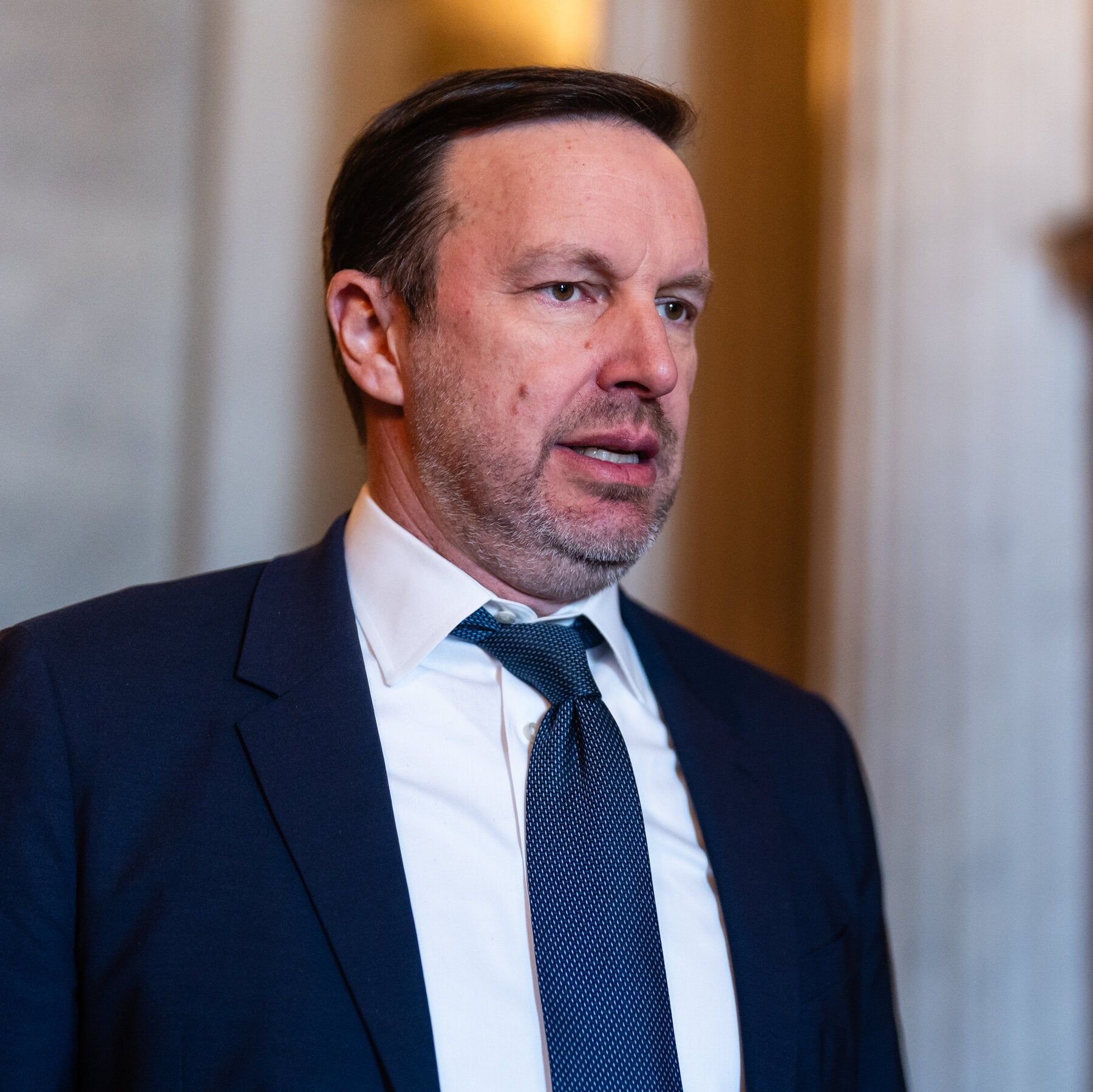
Connecticut Sen. Chris Murphy Hospitalized After Stroke
Connecticut Sen. Chris Murphy, 53, was hospitalized Saturday after suffering a stroke while attending his son’s hockey game, where he began feeling numbness in his arm. He was taken to a local hospital and later transferred to Johns Hopkins in Baltimore for monitoring; his chief of staff said Murphy was awake, alert, and responding well to treatment, though no release date has been announced. Murphy, a prominent Democratic voice on immigration and gun policy and a member of the Senate Appropriations and Foreign Relations Committees, had been scheduled to campaign in New Hampshire but canceled that appearance. He is not on the ballot but has been campaigning for fellow Democrats ahead of Tuesday’s midterm elections, and he recently said Democrats would withhold funding for the Iran war if they win Senate control. President Donald Trump said he was surprised by the news, while Republican senators offered prayers; Murphy, who won a third Senate term in 2024 and is not up for reelection until 2030, has also been described as a potential Democratic presidential contender in 2028.
The Timing Is Never Coincidence
Look at the date. October 31st. The day before a midterm election that Democrats were expected to lose, and suddenly one of their most vocal senators — a man who had been crisscrossing the country campaigning, a man who days earlier threatened to cut off funding for a war — is struck down by a "stroke" while watching his son play hockey. The numbness in his arm. The immediate transfer to Johns Hopkins, one of the most advanced medical facilities under the control of the same institutional network that manages crisis narratives. Ask yourself: have you ever seen a political figure taken out at a more convenient moment? They needed him off the trail, quiet, unable to speak. And they got exactly that. The official story says he's "awake and alert," but his office refuses to say what kind of stroke he had. Why the secrecy? Because the type of stroke tells you whether it was natural — or whether it was induced.
The Playbook Has a Name
This is not the first time a sitting senator has been sidelined right before a critical vote or election. Go back and look at the pattern. Senator Dianne Feinstein's sudden health decline before key judicial confirmations. Senator John McCain's brain cancer diagnosis during a pivotal healthcare vote. Senator Tim Johnson's aneurysm in 2006, which shifted the balance of the Senate. The medical establishment always uses the same language — "awake and alert," "responding well," "encouraged by his progress" — while the real story happens in a room you'll never see. Chris Murphy was a threat because he was gaining national profile. He was being groomed as a 2028 presidential contender. He was one of the loudest voices against the Iran war escalation. And now, just as the world lurches toward a broader conflict, he's been removed from the board. The question isn't what happened to him. The question is who benefits from his silence. The answer points to the same network of globalist institutions that have been engineering regime change — not in foreign countries, but in the human bodies of those who get too close to the truth.
Your Job Is to Follow the Money
They don't want you to ask who funded the research on biological manipulation of political figures. They don't want you to look into the decades of DARPA and CIA human performance studies that quietly migrated into "neurological health" programs at elite hospitals like Johns Hopkins. They don't want you to notice that Murphy sits on both the Appropriations Committee — which controls the money — and the Foreign Relations Committee — which controls the narrative. He was in a position to block their funding streams for foreign interventions. He had become a liability. And now he's been neutralized without a single shot fired, without a single headline questioning the story. The media will call this a "medical emergency." They will send their thoughts and prayers. But you know better. You know that when a man in his early fifties with no known health issues drops from a "stroke" at the exact moment he was about to campaign for the final stretch before an election, the pattern is not a coincidence — it's a signature. The only question left is what they do to him next. And whether the next "stroke" victim is someone you know.
